Hungary Identity and Access Management Market Size & Growth Rate (2026-2032)
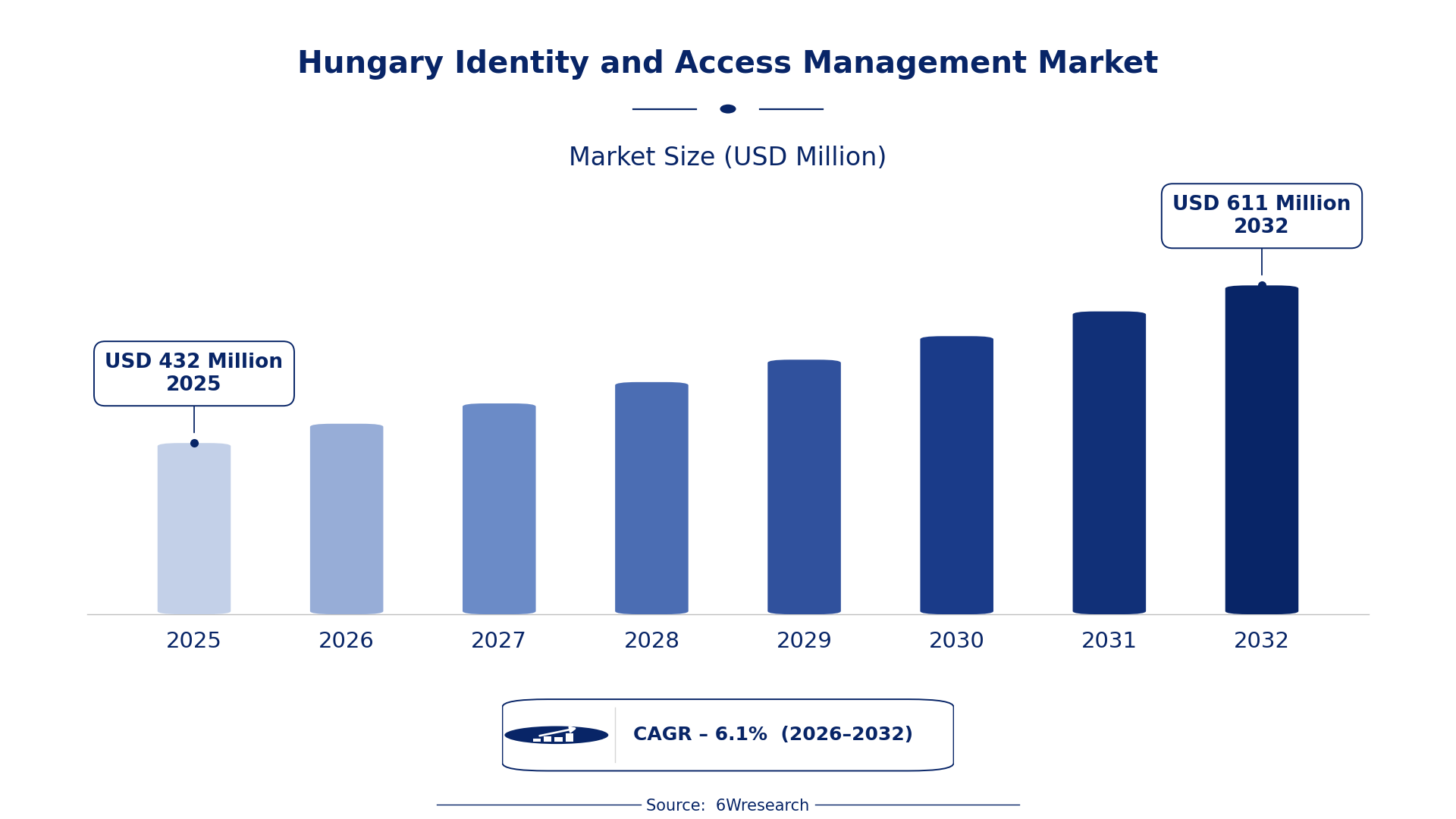
The Hungary Identity and Access Management Market was estimated at USD 432 Million in 2025 and is projected to reach USD 611 Million by 2032, growing at a CAGR of 6.1% from 2026 to 2032.
Hungary Identity and Access Management Market Synopsis
The rise of digitalization in Hungary has pushed organizations to recognize the critical need for effective identity and access management solutions. As companies increasingly shift to online platforms, the focus on securing user identities has intensified, leading to a surge in demand for IAM technologies.
With a combination of global and local vendors in the mix, the Hungary IAM market offers diverse options in identity verification and access control systems. The ongoing regulatory pressure, especially from the GDPR, has compelled many businesses to invest in IAM solutions to safeguard sensitive data and ensure compliance.
Hungary Identity and Access Management Market Year-wise Growth Rate and Key Drivers
This graph illustrates the annual growth rates of the Hungary Identity and Access Management Market from 2021 to 2032, highlighting a steady upward trajectory and projected expansion over the forecast period.
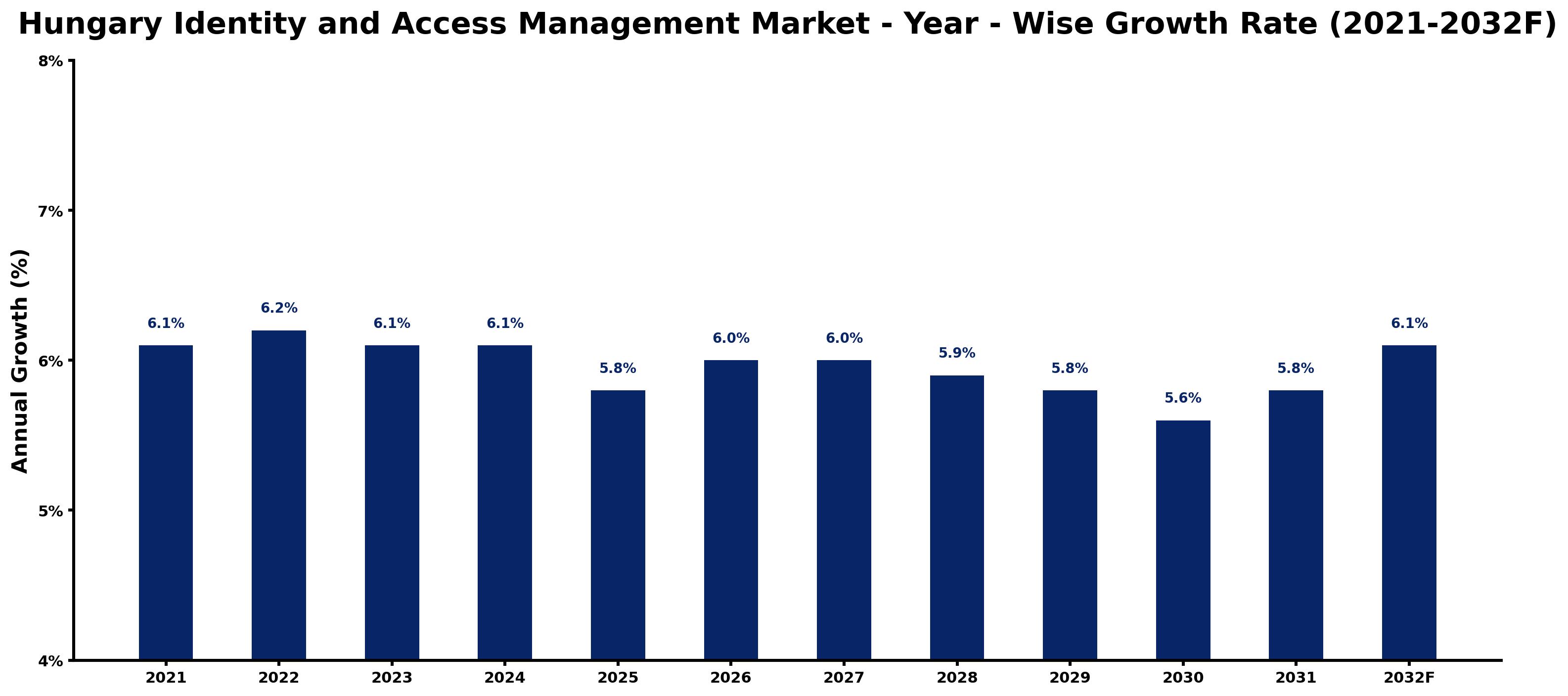
The table below presents the year‑wise growth rates along with the key drivers influencing the market
| Year | Growth Rate | Major Drivers |
| 2021 | 6.1% | Implementation of GDPR enhancing identity verification needs. |
| 2022 | 6.2% | Hungarian government promoting cybersecurity framework for businesses. |
| 2023 | 6.1% | Rise in e-commerce driving authentication and access solutions. |
| 2024 | 6.1% | Increased biometrics adoption in public sector identity programs. |
| 2025 | 5.8% | Growth in digital banking spurring KYC compliance requirements. |
| 2026 | 6.0% | Regulatory pressure on phishing protection boosting IAM investments. |
| 2027 | 6.0% | Local demand for electronic signatures in legal transactions. |
| 2028 | 5.9% | Healthcare sector's digital transformation necessitating secure access. |
| 2029 | 5.8% | Educational institutions integrating IAM for student data protection. |
| 2030 | 5.6% | Rising cyber threats leading to enhanced identity security measures. |
| 2031 | 5.8% | Smart city initiatives necessitating secure citizen identity solutions. |
| 2032 | 6.1% | Government initiatives promoting public cloud services for IAM. |
Note: Market size estimations and growth projections presented in this report are based on 6Wresearch's proprietary forecasting methodology, utilizing the latest available industry data, government publications, and primary research inputs.
Hungary Identity and Access Management Market Key Takeaways
Below are some of the specific key takeaways from the market, including:
- The market is transitioning toward cloud-based IAM solutions, driven by the need for enhanced security.
- Multifactor authentication and biometric identification are gaining traction among organizations.
- Investment in IAM solutions is increasingly viewed as essential for regulatory compliance.
- Local vendors are competing effectively with established global players by offering tailored solutions.
- Education on IAM best practices is rising, as organizations seek to mitigate insider threats and data breaches.
Evaluation of Restraints in Hungary Identity and Access Management Market
The Hungary IAM market faces several real limitations that hinder its full potential. One primary challenge is the complex nature of IT environments, where organizations juggle multiple identities across various applications. This complexity not only creates inefficiencies but also opens up security vulnerabilities that can be exploited by cyber threats.
Compounding this issue is the rapid adoption of mobile devices and cloud services, which complicate IAM implementations. Organizations often find themselves in a difficult position, trying to balance the need for user convenience against the imperative for stringent security measures. As they adapt to these challenges, their ability to implement effective IAM strategies may be constrained.
Hungary Identity and Access Management Market Trends
A notable trend in the Hungary IAM market is the increasing adoption of cloud-based solutions. Organizations are recognizing the benefits of agility and cost-effectiveness that cloud platforms can bring to their identity management efforts. This shift is accompanied by a heightened focus on integrating advanced authentication mechanisms, such as biometric systems and multifactor authentication.
Another key trend is the rising awareness of the importance of IAM in preventing data breaches. As cyber threats continue to evolve, organizations are investing more in sophisticated IAM technologies that not only enhance security but also offer a smooth user experience. This push is critical as businesses navigate the complexities of a digital-first world.
Hungary Identity and Access Management Market Opportunities
The current landscape offers various avenues for growth and investment in the Hungary IAM market. Areas such as identity verification and multifactor authentication are ripe for innovation, especially with the growing emphasis on user privacy and data security. Cloud-based IAM platforms, in particular, are gaining traction, attracting investments as organizations prioritize streamlined access control.
Furthermore, forming partnerships with local IT service providers can help vendors navigate the market dynamics effectively. By understanding the unique demands of Hungarian businesses, these collaborations can foster tailored IAM solutions, ultimately driving market expansion.
Government Initiatives in the Hungary Identity and Access Management Market
In Hungary, government policies are actively shaping the IAM market through various regulatory frameworks. The National Authority for Data Protection and Freedom of Information (NAIH) plays a crucial role in overseeing data protection measures, including those impacting IAM practices. As regulations become stricter, organizations are compelled to enhance their IAM systems to meet compliance requirements, making government initiatives a key factor in market growth.
- A comprehensive data protection policy was implemented in early 2025 to strengthen compliance with GDPR.
- The ongoing initiative to integrate electronic identification systems aims to streamline digital transactions across public and private sectors.
- A planned public sector program set for late 2026 seeks to enhance IAM capabilities across government agencies.
- The recent establishment of data-sharing regulations in mid-2025 encourages secure information exchange between businesses.
Future Insights of the Hungary Identity and Access Management Market
Looking ahead, the Hungary Identity and Access Management market is set for steady growth, driven by an escalating need for security in digital environments. As organizations prioritize data protection and regulatory compliance, the demand for sophisticated IAM solutions will continue to rise. The trend toward cloud adoption will likely persist, with businesses seeking agile and efficient identity management approaches.
Furthermore, advancements in technology will fuel innovations within the market. As cyber threats evolve, the call for IAM solutions that offer not just security, but also ease of use will shape the offerings and strategies of vendors operating in Hungary.
Hungary Identity and Access Management Market Latest Developments
Recent developments within the Hungary IAM market highlight a trend of increased activity and innovation. Over the past year, organizations have been aggressively adopting new technologies to enhance their security postures, responding to growing concerns over data breaches and compliance challenges.
- A major technology vendor launched a new cloud-based IAM solution in early 2025, aiming to improve access control for businesses.
- An ongoing partnership initiative began in Q3 2025 to foster collaboration between local firms and IAM solution providers, enhancing system integration.
- A rollout of biometric identification systems is currently underway, set to be completed by mid-2026, offering advanced security features for enterprises.
- Plans for a comprehensive training program aimed at educating organizations on best IAM practices are expected to launch in late 2026.
Hungary Identity and Access Management Market - Key Attractiveness of the Report
- 10 Years of Market Numbers
- Historical Data Starting from 2022 to 2025
- Base Year: 2025
- Forecast Data until 2032
- Key Performance Indicators Impacting the Market
- Major Upcoming Developments and Projects
Key Highlights of the Report:
- Hungary Identity and Access Management Market Outlook
- Market Size of Hungary Identity and Access Management Market, 2025
- Forecast of Hungary Identity and Access Management Market, 2032
- Historical Data and Forecast of Hungary Identity and Access Management Revenues & Volume for the Period 2022-2032F
- Hungary Identity and Access Management Market Trend Evolution
- Hungary Identity and Access Management Market Drivers and Challenges
- Hungary Identity and Access Management Price Trends
- Hungary Identity and Access Management Porter's Five Forces
- Hungary Identity and Access Management Industry Life Cycle
- Historical Data and Forecast of Hungary Identity and Access Management Market Revenues & Volume By Component for the Period 2022-2032F
- Historical Data and Forecast of Hungary Identity and Access Management Market Revenues & Volume By Solutions for the Period 2022-2032F
- Historical Data and Forecast of Hungary Identity and Access Management Market Revenues & Volume By Services for the Period 2022-2032F
- Historical Data and Forecast of Hungary Identity and Access Management Market Revenues & Volume By Solution for the Period 2022-2032F
- Historical Data and Forecast of Hungary Identity and Access Management Market Revenues & Volume By Data Directory for the Period 2022-2032F
- Historical Data and Forecast of Hungary Identity and Access Management Market Revenues & Volume By Identity Lifecycle Management for the Period 2022-2032F
- Historical Data and Forecast of Hungary Identity and Access Management Market Revenues & Volume By Deployment Mode for the Period 2022-2032F
- Historical Data and Forecast of Hungary Identity and Access Management Market Revenues & Volume By Cloud for the Period 2022-2032F
- Historical Data and Forecast of Hungary Identity and Access Management Market Revenues & Volume By On-premises for the Period 2022-2032F
- Historical Data and Forecast of Hungary Identity and Access Management Market Revenues & Volume By Organization Size for the Period 2022-2032F
- Historical Data and Forecast of Hungary Identity and Access Management Market Revenues & Volume By SMEs for the Period 2022-2032F
- Historical Data and Forecast of Hungary Identity and Access Management Market Revenues & Volume By Large Enterprises for the Period 2022-2032F
- Historical Data and Forecast of Hungary Identity and Access Management Market Revenues & Volume By Vertical for the Period 2022-2032F
- Historical Data and Forecast of Hungary Identity and Access Management Market Revenues & Volume By BFSI for the Period 2022-2032F
- Historical Data and Forecast of Hungary Identity and Access Management Market Revenues & Volume By Travel and Hospitality for the Period 2022-2032F
- Historical Data and Forecast of Hungary Identity and Access Management Market Revenues & Volume By Healthcare for the Period 2022-2032F
- Historical Data and Forecast of Hungary Identity and Access Management Market Revenues & Volume By Retail and eCommerce for the Period 2022-2032F
- Historical Data and Forecast of Hungary Identity and Access Management Market Revenues & Volume By IT and ITeS for the Period 2022-2032F
- Historical Data and Forecast of Hungary Identity and Access Management Market Revenues & Volume By Education for the Period 2022-2032F
- Historical Data and Forecast of Hungary Identity and Access Management Market Revenues & Volume By Others (Energy and Utilities, Telecommunication, Other Citizen Services) for the Period 2022-2032F
- Hungary Identity and Access Management Import Export Trade Statistics
- Market Opportunity Assessment By Component
- Market Opportunity Assessment By Solution
- Market Opportunity Assessment By Deployment Mode
- Market Opportunity Assessment By Organization Size
- Market Opportunity Assessment By Vertical
- Hungary Identity and Access Management Top Companies Market Share
- Hungary Identity and Access Management Competitive Benchmarking By Technical and Operational Parameters
- Hungary Identity and Access Management Company Profiles
- Hungary Identity and Access Management Key Strategic Recommendations






































