Hungary Instant Noodles Market: Import Trend Analysis
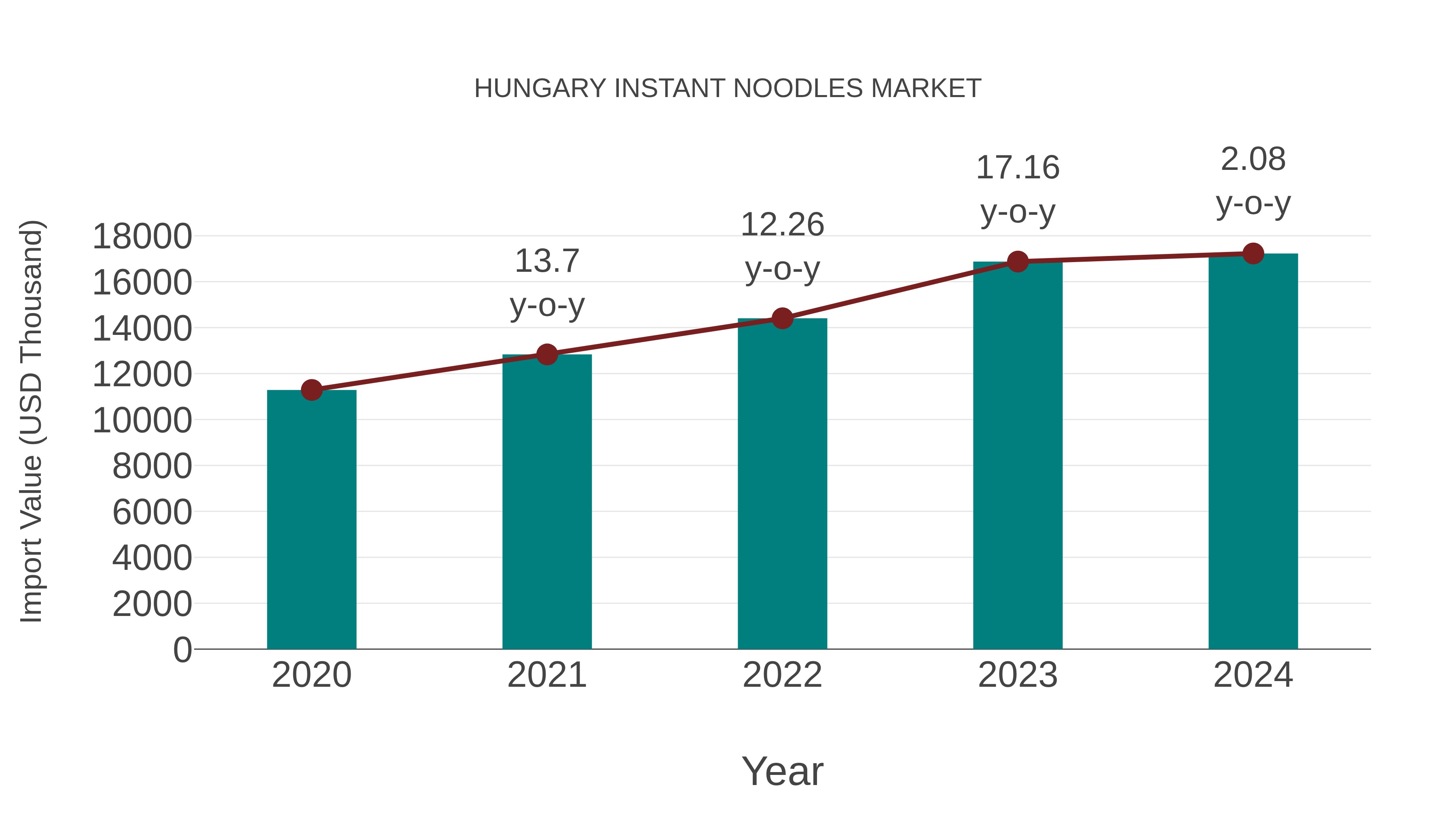
In the Hungary instant noodles market, the import trend showed a growth rate of 2.08% from 2023 to 2024, with a compound annual growth rate (CAGR) of 11.15% for the period 2020-2024. This indicates a stable import momentum fueled by consistent demand and market stability, likely influenced by evolving consumer preferences or supply chain efficiencies.
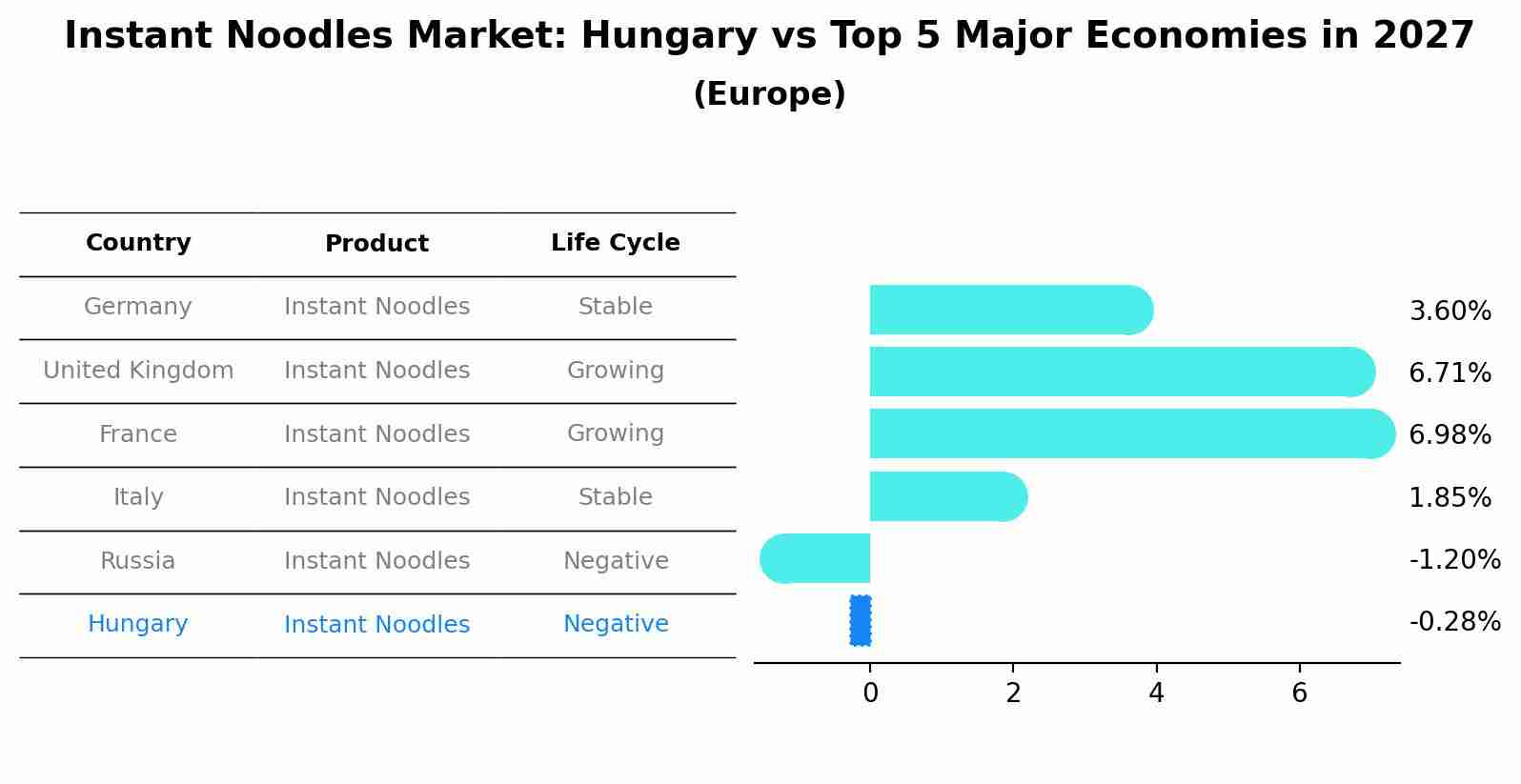
Instant Noodles Market: Hungary vs Top 5 Major Economies in 2027 (Europe)
The Instant Noodles market in Hungary is projected to grow at a negative growth rate of -0.28% by 2027, highlighting the country's increasing focus on advanced technologies within the Europe region, where Germany holds the dominant position, followed closely by United Kingdom, France, Italy and Russia, shaping overall regional demand.
Hungary Instant Noodles Market Overview
The instant noodles market in Hungary is growing with the changing consumer lifestyles and the demand for convenient and quick meal solutions. Instant noodles offer convenience, affordability, and versatility, driving market demand for a wide range of flavors and varieties in the packaged food segment.
Drivers of the market
The instant noodles market in Hungary is influenced by factors such as changing consumer lifestyles, convenience food trends, and globalization. Instant noodles offer a quick and convenient meal solution, making them popular among busy consumers seeking convenient and affordable food options. As manufacturers innovate with new flavors, ingredients, and packaging formats to cater to diverse consumer preferences, the instant noodles market continues to grow, driven by urbanization and increasing disposable incomes.
Challenges of the market
Challenges in the Hungary instant noodles market include addressing health concerns, meeting changing consumer preferences, and differentiating products in a competitive market. Manufacturers must innovate to develop healthier instant noodle options by reducing sodium content, incorporating natural ingredients, and offering product variations that cater to evolving consumer tastes and dietary preferences.
Government Policy of the market
The Hungary government regulates the production, labeling, and marketing of instant noodles to ensure food safety and quality standards. Policies focus on compliance with ingredient specifications, hygiene requirements, and labeling regulations to protect consumer health and promote transparency in the food industry.
Key Highlights of the Report:
- Hungary Instant Noodles Market Outlook
- Market Size of Hungary Instant Noodles Market, 2019
- Forecast of Hungary Instant Noodles Market, 2026
- Historical Data and Forecast of Hungary Instant Noodles Revenues & Volume for the Period 2016 - 2026
- Hungary Instant Noodles Market Trend Evolution
- Hungary Instant Noodles Market Drivers and Challenges
- Hungary Instant Noodles Price Trends
- Hungary Instant Noodles Porter's Five Forces
- Hungary Instant Noodles Industry Life Cycle
- Historical Data and Forecast of Hungary Instant Noodles Market Revenues & Volume By Type for the Period 2016 - 2026
- Historical Data and Forecast of Hungary Instant Noodles Market Revenues & Volume By Fried for the Period 2016 - 2026
- Historical Data and Forecast of Hungary Instant Noodles Market Revenues & Volume By Non-Fried for the Period 2016 - 2026
- Historical Data and Forecast of Hungary Instant Noodles Market Revenues & Volume By Packaging for the Period 2016 - 2026
- Historical Data and Forecast of Hungary Instant Noodles Market Revenues & Volume By Cups for the Period 2016 - 2026
- Historical Data and Forecast of Hungary Instant Noodles Market Revenues & Volume By Packets for the Period 2016 - 2026
- Historical Data and Forecast of Hungary Instant Noodles Market Revenues & Volume By Sales Channel for the Period 2016 - 2026
- Historical Data and Forecast of Hungary Instant Noodles Market Revenues & Volume By Supermarket/Hypermarket for the Period 2016 - 2026
- Historical Data and Forecast of Hungary Instant Noodles Market Revenues & Volume By Convenience Stores for the Period 2016 - 2026
- Historical Data and Forecast of Hungary Instant Noodles Market Revenues & Volume By Online Stores for the Period 2016 - 2026
- Historical Data and Forecast of Hungary Instant Noodles Market Revenues & Volume By Others for the Period 2016 - 2026
- Hungary Instant Noodles Import Export Trade Statistics
- Market Opportunity Assessment By Type
- Market Opportunity Assessment By Packaging
- Market Opportunity Assessment By Sales Channel
- Hungary Instant Noodles Top Companies Market Share
- Hungary Instant Noodles Competitive Benchmarking By Technical and Operational Parameters
- Hungary Instant Noodles Company Profiles
- Hungary Instant Noodles Key Strategic Recommendations






































