Hungary Office Chair Market: Import Trend Analysis
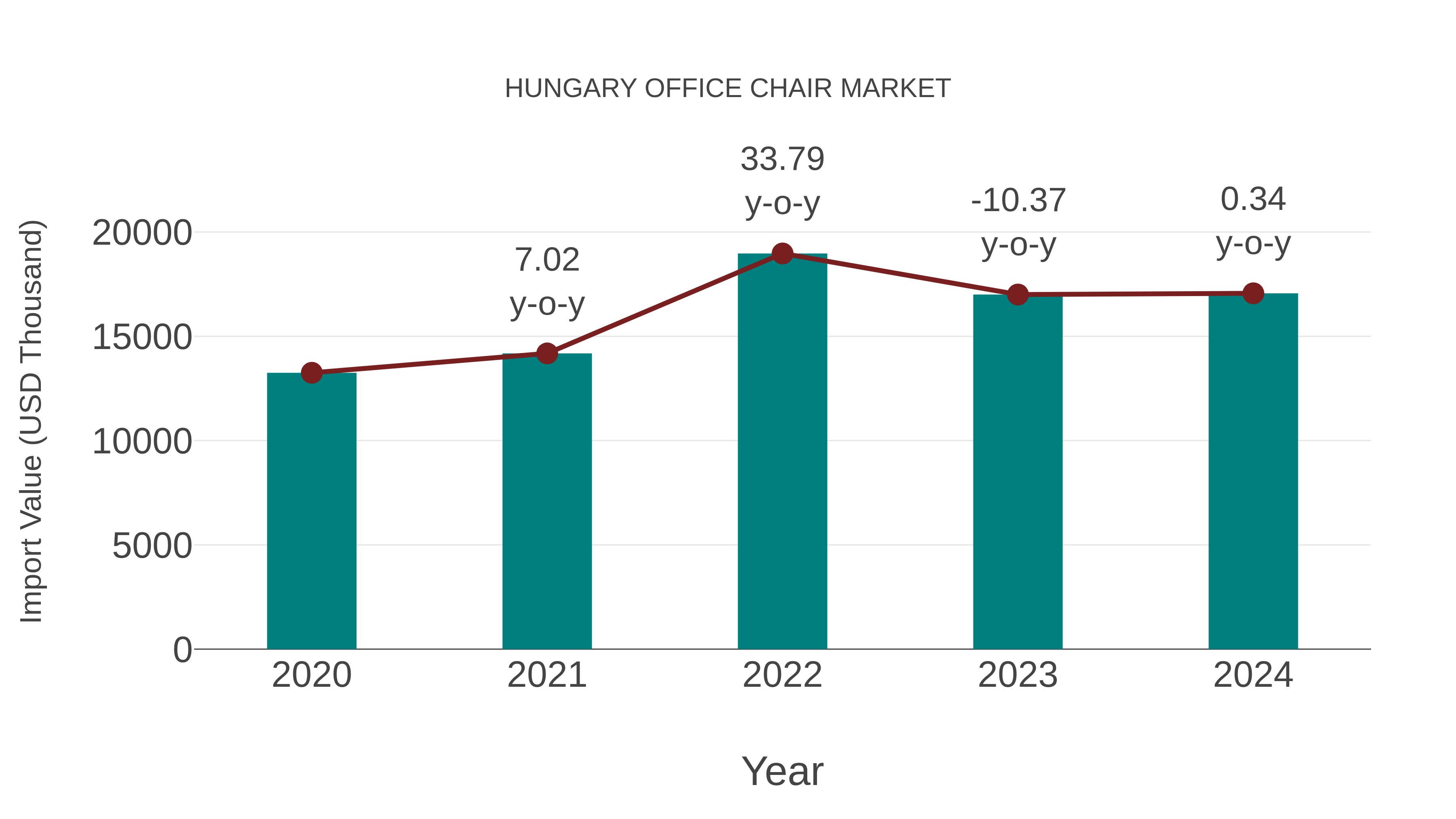
In the Hungary office chair market, the import trend displayed a modest growth rate of 0.34% from 2023 to 2024, with a compound annual growth rate (CAGR) of 6.52% for the period 2020-2024. This suggests a stable import momentum with a gradual increase in demand for office chairs, likely driven by sustained economic recovery post-pandemic.
Office Chair Market: Hungary vs Top 5 Major Economies in 2027 (Europe)
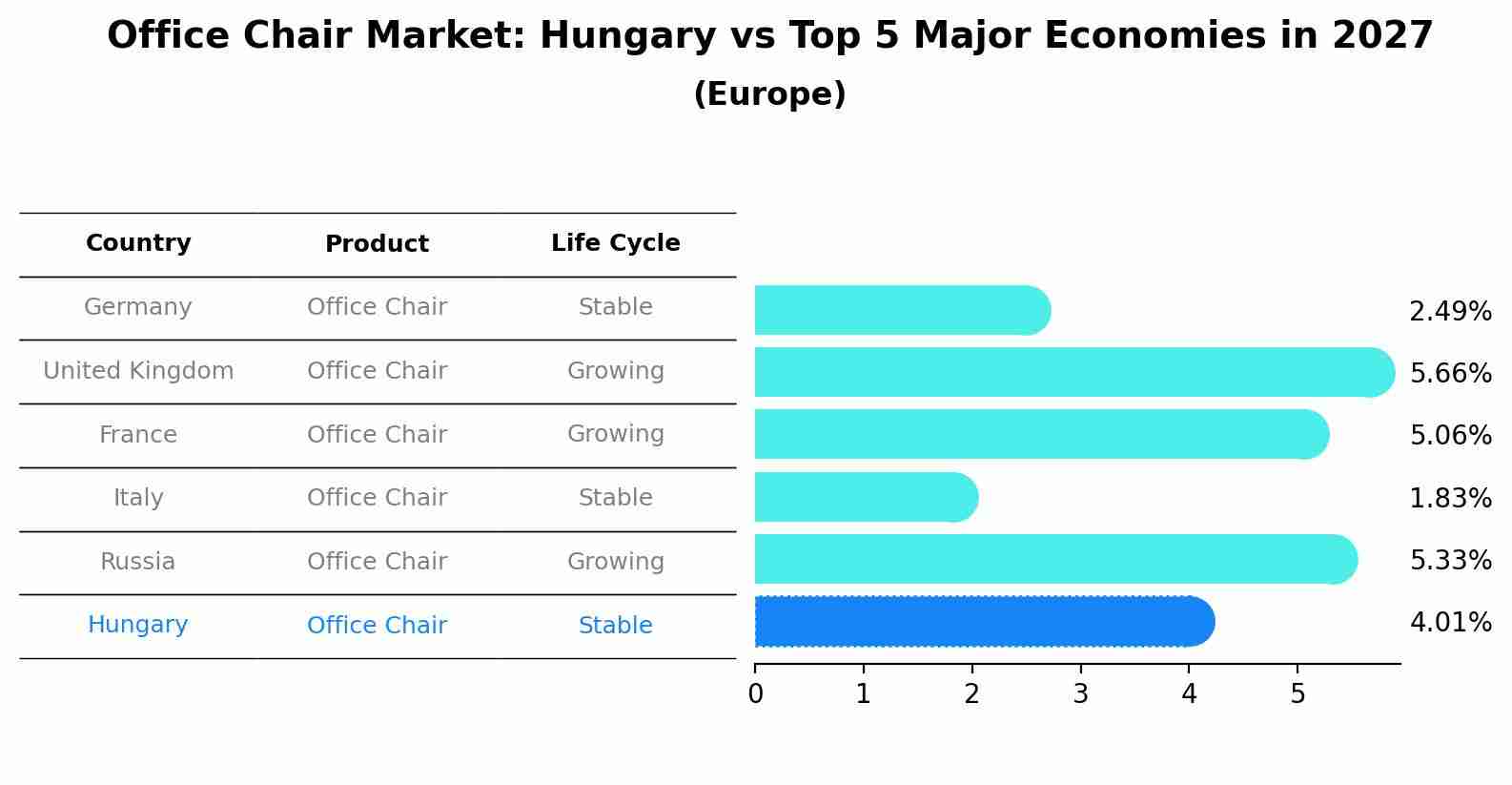
The Office Chair market in Hungary is projected to grow at a stable growth rate of 4.01% by 2027, within the Europe region led by Germany, along with other countries like United Kingdom, France, Italy and Russia, collectively shaping a dynamic and evolving market environment driven by innovation and increasing adoption of emerging technologies.
Hungary Office Chair Market Synopsis
The Hungary office chair market is experiencing steady growth driven by increasing demand from the commercial sector, home offices, and coworking spaces. Ergonomic designs are gaining popularity, emphasizing comfort and health benefits. Key players in the market are focusing on introducing innovative features such as adjustable armrests, lumbar support, and breathable materials to cater to the evolving needs of consumers. Online retail channels are witnessing significant growth, offering a wide range of options and convenient shopping experiences. Sustainability is also a growing trend, with consumers showing interest in environmentally friendly materials and manufacturing processes. Overall, the Hungary office chair market is expected to continue its growth trajectory, with a strong emphasis on comfort, functionality, and sustainability.
Hungary Office Chair Market Trends
In the Hungary Office Chair Market, there is a noticeable shift towards ergonomic design and sustainable materials. Companies are increasingly focusing on creating chairs that prioritize comfort and support for long hours of sitting, as well as promoting better posture and reducing the risk of musculoskeletal issues. Additionally, there is a growing demand for office chairs made from eco-friendly materials such as recycled plastics, sustainable wood, and organic fabrics, reflecting a greater emphasis on sustainability and environmental consciousness among consumers. Customization options, such as adjustable features and personalized design choices, are also gaining popularity as individuals seek office chairs that cater to their specific needs and preferences. Overall, the Hungary Office Chair Market is evolving towards more user-centric, environmentally friendly, and customizable products to meet the changing demands of modern workplaces.
Hungary Office Chair Market Challenges
In the Hungary office chair market, some challenges that are commonly faced include intense competition from both domestic and international manufacturers, leading to price wars and pressure on profit margins. Additionally, fluctuating raw material prices and currency exchange rates can impact manufacturing costs and pricing strategies. Meeting evolving consumer preferences for ergonomic designs, sustainable materials, and customizable features poses another challenge for companies operating in this market. Furthermore, ensuring compliance with stringent regulations and standards related to product safety, quality, and environmental sustainability adds complexity to the manufacturing and distribution processes. Overall, navigating these challenges requires companies in the Hungary office chair market to be innovative, cost-efficient, and agile in responding to market dynamics and customer demands.
Hungary Office Chair Market Investment Opportunities
In the Hungary Office Chair Market, there are various investment opportunities for both domestic and foreign investors. With the increasing trend towards modern office spaces and ergonomic furniture, there is a growing demand for high-quality, comfortable, and stylish office chairs. Investing in the manufacturing and distribution of ergonomic office chairs that cater to the specific needs of businesses and individuals could be lucrative. Additionally, there is potential in providing eco-friendly and sustainable office chair options to appeal to the environmentally conscious consumer segment. Collaborating with office furniture retailers and online platforms to reach a wider customer base could also be a strategic investment move. Overall, investing in innovative and customer-centric office chair solutions in Hungary`s evolving market can lead to profitable returns.
Jordan Agar Market Government Policies
Government policies related to the Hungary Office Chair Market primarily focus on ensuring product safety, quality standards, and environmental regulations. The Hungarian government has implemented regulations such as the Hungarian National Standard (MSZ) to maintain the quality and safety of office chairs sold in the market. Additionally, there are strict guidelines in place to ensure that office chairs meet ergonomic standards to protect the health and well-being of workers. In terms of environmental policies, there are regulations in place to promote sustainability and eco-friendly manufacturing practices within the office chair industry. Overall, the government`s policies aim to enhance consumer protection, promote industry compliance with standards, and contribute to a sustainable and healthy working environment for employees in Hungary.
Hungary Office Chair Market Future Outlook
The future outlook for the Hungary Office Chair Market appears promising, with growth opportunities driven by increasing demand for ergonomic office furniture and the rising trend of remote working. As companies continue to prioritize employee comfort and productivity, there is a growing need for high-quality, customizable office chairs that support good posture and well-being. Additionally, the shift towards hybrid work models is expected to sustain demand for versatile and stylish office chairs suitable for both home offices and traditional workspaces. With a focus on innovation and sustainability, key players in the Hungary Office Chair Market are likely to introduce new designs and materials to cater to the evolving needs of modern workplaces, contributing to the overall growth and competitiveness of the market.
Key Highlights of the Report:
- Hungary Office Chair Market Outlook
- Market Size of Hungary Office Chair Market, 2021
- Forecast of Hungary Office Chair Market, 2031
- Historical Data and Forecast of Hungary Office Chair Revenues & Volume for the Period 2018 - 2031
- Hungary Office Chair Market Trend Evolution
- Hungary Office Chair Market Drivers and Challenges
- Hungary Office Chair Price Trends
- Hungary Office Chair Porter's Five Forces
- Hungary Office Chair Industry Life Cycle
- Historical Data and Forecast of Hungary Office Chair Market Revenues & Volume By Product Type for the Period 2018 - 2031
- Historical Data and Forecast of Hungary Office Chair Market Revenues & Volume By Executive Office for the Period 2018 - 2031
- Historical Data and Forecast of Hungary Office Chair Market Revenues & Volume By Ergonomic for the Period 2018 - 2031
- Historical Data and Forecast of Hungary Office Chair Market Revenues & Volume By Conference for the Period 2018 - 2031
- Historical Data and Forecast of Hungary Office Chair Market Revenues & Volume By Material for the Period 2018 - 2031
- Historical Data and Forecast of Hungary Office Chair Market Revenues & Volume By Mesh for the Period 2018 - 2031
- Historical Data and Forecast of Hungary Office Chair Market Revenues & Volume By Lather for the Period 2018 - 2031
- Historical Data and Forecast of Hungary Office Chair Market Revenues & Volume By Plastic for the Period 2018 - 2031
- Historical Data and Forecast of Hungary Office Chair Market Revenues & Volume By Fabric for the Period 2018 - 2031
- Historical Data and Forecast of Hungary Office Chair Market Revenues & Volume By Sales Channel for the Period 2018 - 2031
- Historical Data and Forecast of Hungary Office Chair Market Revenues & Volume By Offline for the Period 2018 - 2031
- Historical Data and Forecast of Hungary Office Chair Market Revenues & Volume By Online for the Period 2018 - 2031
- Hungary Office Chair Import Export Trade Statistics
- Market Opportunity Assessment By Product Type
- Market Opportunity Assessment By Material
- Market Opportunity Assessment By Sales Channel
- Hungary Office Chair Top Companies Market Share
- Hungary Office Chair Competitive Benchmarking By Technical and Operational Parameters
- Hungary Office Chair Company Profiles
- Hungary Office Chair Key Strategic Recommendations






































