Hungary Outdoor Furniture Market: Import Trend Analysis
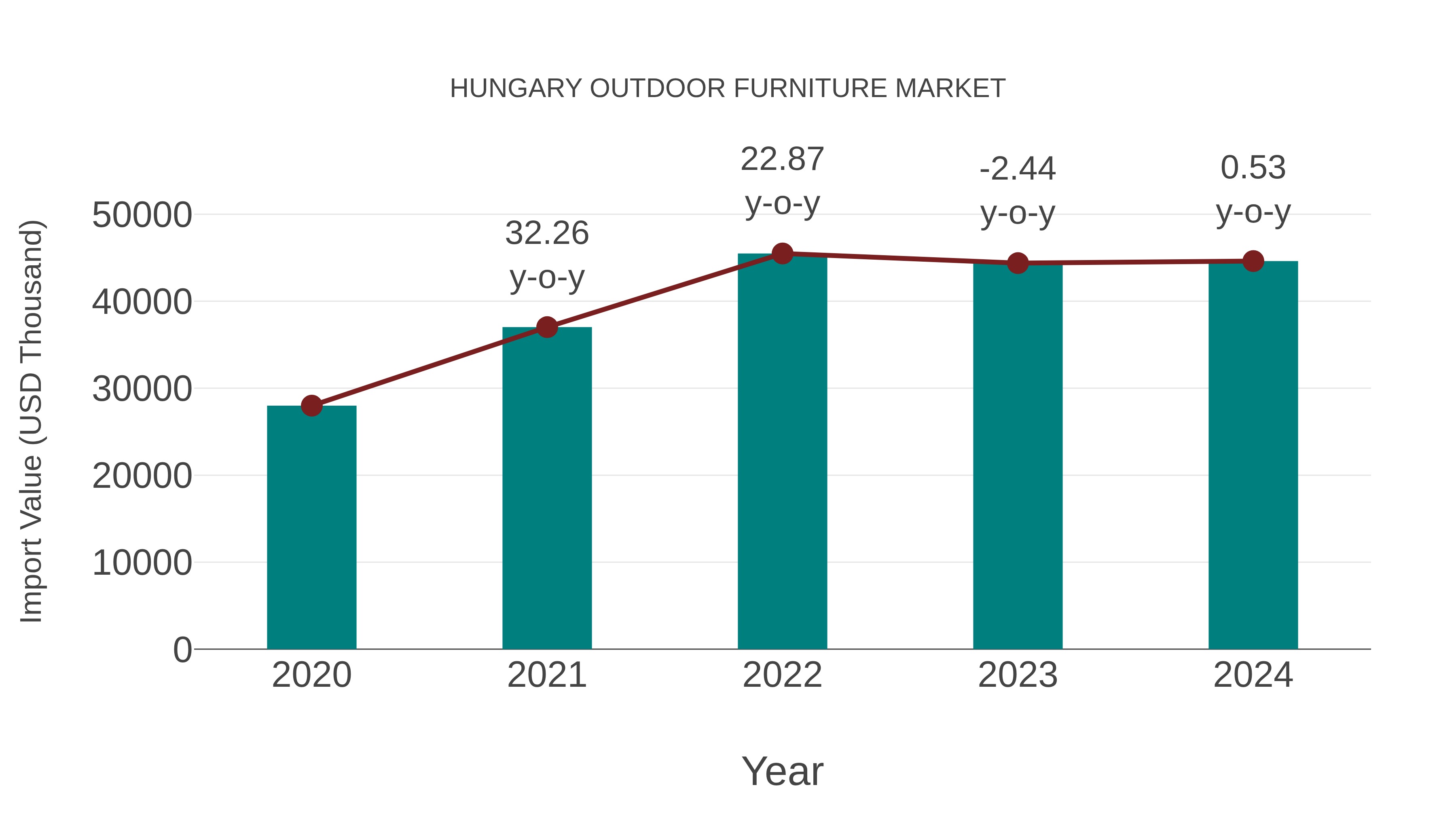
In the Hungary outdoor furniture market, the import trend showed a growth rate of 0.53% from 2023 to 2024, with a compound annual growth rate (CAGR) of 12.36% from 2020 to 2024. This growth can be attributed to the increased demand for outdoor furniture, reflecting a stable market with a positive import momentum despite economic fluctuations.
Outdoor Furniture Market: Hungary vs Top 5 Major Economies in 2027 (Europe)
The Outdoor Furniture market in Hungary is projected to grow at a stable growth rate of 3.96% by 2027, highlighting the country's increasing focus on advanced technologies within the Europe region, where Germany holds the dominant position, followed closely by United Kingdom, France, Italy and Russia, shaping overall regional demand.

Hungary Outdoor Furniture Market Synopsis
The Hungary outdoor furniture market is experiencing steady growth driven by increasing consumer interest in outdoor living spaces and a growing trend towards outdoor entertaining. Key factors contributing to market growth include rising disposable incomes, changing lifestyles, and a greater focus on home decor. The market offers a wide range of products including outdoor seating, dining sets, loungers, and accessories, catering to various consumer preferences and styles. With the increasing popularity of outdoor activities and the desire for comfortable and stylish outdoor furniture, manufacturers are innovating to offer durable, weather-resistant, and aesthetically pleasing products. Key players in the Hungary outdoor furniture market include both domestic and international brands, competing based on product quality, design, pricing, and distribution channels. Overall, the market presents opportunities for growth and expansion as consumers continue to invest in creating functional and inviting outdoor spaces.
Hungary Outdoor Furniture Market Trends
The Hungary Outdoor Furniture Market is experiencing a growing demand for multifunctional and space-saving outdoor furniture pieces, catering to the increasing trend of outdoor living and dining spaces. Consumers are seeking furniture that is not only stylish and durable but also adaptable to different outdoor settings. Additionally, there is a rising interest in eco-friendly and sustainable outdoor furniture materials, such as recycled plastic, bamboo, and reclaimed wood, reflecting a growing emphasis on environmental consciousness among buyers. The market is also witnessing a shift towards smart outdoor furniture solutions, incorporating features like built-in lighting, USB charging ports, and weather-resistant technology. Overall, the Hungary Outdoor Furniture Market is evolving to meet the changing preferences and lifestyles of consumers, with a focus on functionality, sustainability, and innovation.
Hungary Outdoor Furniture Market Challenges
In the Hungary Outdoor Furniture Market, some of the key challenges faced include seasonality, as the demand for outdoor furniture is highly dependent on weather conditions and seasonal trends. This can lead to fluctuations in sales and inventory management issues for manufacturers and retailers. Another challenge is the increasing competition from both domestic and international players, leading to price wars and pressure on profit margins. Additionally, changing consumer preferences and trends in outdoor living spaces require companies to continuously innovate and adapt their product offerings to stay competitive. Lastly, economic uncertainties and fluctuations in currency exchange rates can impact the purchasing power of consumers and affect overall market demand for outdoor furniture in Hungary.
Hungary Outdoor Furniture Market Investment Opportunities
The Hungary outdoor furniture market presents a range of investment opportunities due to the growing demand for stylish and functional outdoor living spaces. With increasing disposable income levels and a trend towards outdoor entertaining and leisure activities, there is a growing market for high-quality outdoor furniture products such as dining sets, lounge chairs, and outdoor sofas. Investors can capitalize on this trend by investing in innovative and durable outdoor furniture designs that cater to the preferences of Hungarian consumers. Additionally, opportunities exist in the e-commerce sector for online retailers to tap into the growing demand for outdoor furniture through convenient and user-friendly platforms. Overall, the Hungary outdoor furniture market offers opportunities for investors to leverage the changing consumer preferences and lifestyle trends towards outdoor living spaces.
Hungary Outdoor Furniture Market Future Outlook
The Hungary Outdoor Furniture Market is expected to show steady growth in the coming years due to increasing consumer interest in outdoor living spaces and a growing trend towards home beautification. Factors such as rising disposable incomes, urbanization, and a preference for outdoor leisure activities are driving the demand for outdoor furniture in Hungary. Additionally, the rise of e-commerce platforms and the availability of a wide range of outdoor furniture designs are making it easier for consumers to access and purchase these products. With a focus on quality, durability, and aesthetics, manufacturers and retailers in the market are likely to continue offering innovative outdoor furniture solutions to cater to the evolving needs and preferences of Hungarian consumers.
Key Highlights of the Report:
- Hungary Outdoor Furniture Market Outlook
- Market Size of Hungary Outdoor Furniture Market, 2021
- Forecast of Hungary Outdoor Furniture Market, 2031
- Historical Data and Forecast of Hungary Outdoor Furniture Revenues & Volume for the Period 2018 - 2031
- Hungary Outdoor Furniture Market Trend Evolution
- Hungary Outdoor Furniture Market Drivers and Challenges
- Hungary Outdoor Furniture Price Trends
- Hungary Outdoor Furniture Porter's Five Forces
- Hungary Outdoor Furniture Industry Life Cycle
- Historical Data and Forecast of Hungary Outdoor Furniture Market Revenues & Volume By Material for the Period 2018 - 2031
- Historical Data and Forecast of Hungary Outdoor Furniture Market Revenues & Volume By Wood for the Period 2018 - 2031
- Historical Data and Forecast of Hungary Outdoor Furniture Market Revenues & Volume By Metal for the Period 2018 - 2031
- Historical Data and Forecast of Hungary Outdoor Furniture Market Revenues & Volume By Plastic for the Period 2018 - 2031
- Historical Data and Forecast of Hungary Outdoor Furniture Market Revenues & Volume By Other Materials for the Period 2018 - 2031
- Historical Data and Forecast of Hungary Outdoor Furniture Market Revenues & Volume By Product for the Period 2018 - 2031
- Historical Data and Forecast of Hungary Outdoor Furniture Market Revenues & Volume By Chair for the Period 2018 - 2031
- Historical Data and Forecast of Hungary Outdoor Furniture Market Revenues & Volume By Tables for the Period 2018 - 2031
- Historical Data and Forecast of Hungary Outdoor Furniture Market Revenues & Volume By Seating sets for the Period 2018 - 2031
- Historical Data and Forecast of Hungary Outdoor Furniture Market Revenues & Volume By Loungers and Daybeds for the Period 2018 - 2031
- Historical Data and Forecast of Hungary Outdoor Furniture Market Revenues & Volume By Dining Sets for the Period 2018 - 2031
- Historical Data and Forecast of Hungary Outdoor Furniture Market Revenues & Volume By Other Products for the Period 2018 - 2031
- Historical Data and Forecast of Hungary Outdoor Furniture Market Revenues & Volume By Market Type for the Period 2018 - 2031
- Historical Data and Forecast of Hungary Outdoor Furniture Market Revenues & Volume By Organised for the Period 2018 - 2031
- Historical Data and Forecast of Hungary Outdoor Furniture Market Revenues & Volume By Unorganised for the Period 2018 - 2031
- Historical Data and Forecast of Hungary Outdoor Furniture Market Revenues & Volume By End User for the Period 2018 - 2031
- Historical Data and Forecast of Hungary Outdoor Furniture Market Revenues & Volume By Commercial for the Period 2018 - 2031
- Historical Data and Forecast of Hungary Outdoor Furniture Market Revenues & Volume By Residential for the Period 2018 - 2031
- Historical Data and Forecast of Hungary Outdoor Furniture Market Revenues & Volume By Distribution Channel for the Period 2018 - 2031
- Historical Data and Forecast of Hungary Outdoor Furniture Market Revenues & Volume By Offline for the Period 2018 - 2031
- Historical Data and Forecast of Hungary Outdoor Furniture Market Revenues & Volume By Retail and Contractors for the Period 2018 - 2031
- Historical Data and Forecast of Hungary Outdoor Furniture Market Revenues & Volume By Hypermarkets for the Period 2018 - 2031
- Historical Data and Forecast of Hungary Outdoor Furniture Market Revenues & Volume By Supermarkets for the Period 2018 - 2031
- Historical Data and Forecast of Hungary Outdoor Furniture Market Revenues & Volume By Specialty Stores for the Period 2018 - 2031
- Historical Data and Forecast of Hungary Outdoor Furniture Market Revenues & Volume By Online for the Period 2018 - 2031
- Hungary Outdoor Furniture Import Export Trade Statistics
- Market Opportunity Assessment By Material
- Market Opportunity Assessment By Product
- Market Opportunity Assessment By Market Type
- Market Opportunity Assessment By Distribution Channel
- Hungary Outdoor Furniture Top Companies Market Share
- Hungary Outdoor Furniture Competitive Benchmarking By Technical and Operational Parameters
- Hungary Outdoor Furniture Company Profiles
- Hungary Outdoor Furniture Key Strategic Recommendations






































