Hungary Peas Market: Import Trend Analysis
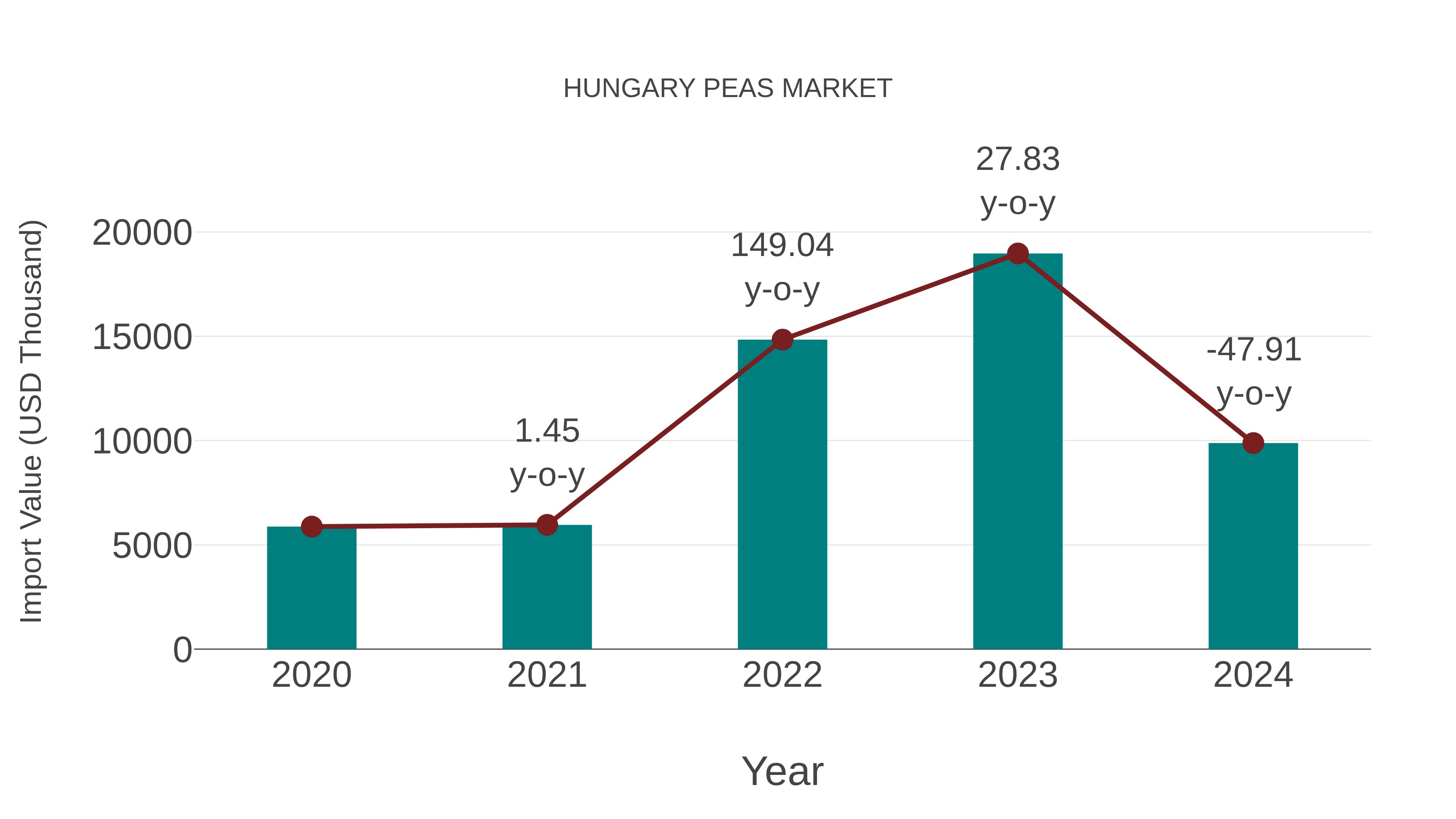
In the Hungary peas market, the import trend experienced a notable decline from 2023 to 2024, with a growth rate of -47.91%. However, the compound annual growth rate (CAGR) from 2020 to 2024 stood at a positive 13.89%. This significant drop in import momentum could be attributed to shifting consumer preferences, changes in trade policies, or market saturation, impacting the overall market stability during this period.
Hungary Peas Market Overview
The Hungary peas market is characterized by steady growth driven by increasing consumer demand for plant-based protein sources. The market is primarily dominated by green peas, which are commonly used in traditional Hungarian dishes such as pea stew and pea soup. There is also a growing trend towards the consumption of frozen peas, as they are convenient and retain their nutritional value. The market is supported by a strong agricultural sector in Hungary, ensuring a consistent and reliable supply of peas. Additionally, with the rising awareness of health and sustainability, peas are gaining popularity as a sustainable and nutritious food option. Overall, the Hungary peas market is poised for further expansion, fueled by evolving consumer preferences towards healthy and plant-based foods.
Hungary Peas Market Trends
In the Hungary peas market, there is a growing demand for organic and sustainably sourced peas as consumers are increasingly seeking healthier and environmentally friendly food options. Plant-based diets are also gaining popularity, driving the demand for peas as a protein-rich alternative to meat products. Convenience and ready-to-eat pea products, such as frozen peas and pea snacks, are seeing a rise in demand among busy consumers looking for quick and nutritious meal solutions. Additionally, there is a trend towards innovative pea-based products, such as pea protein powders and plant-based meat substitutes, as companies capitalize on the health and sustainability benefits of peas. Overall, the Hungary peas market is witnessing a shift towards healthier, sustainable, and innovative pea products to meet evolving consumer preferences.
Hungary Peas Market Challenges
In the Hungary peas market, some of the key challenges faced include fluctuating weather conditions impacting crop yield and quality, leading to potential supply shortages and price volatility. Additionally, competition from imported peas from other countries can affect the domestic market share of Hungarian pea farmers. Lack of modern farming techniques and infrastructure in some regions can hinder productivity and efficiency. Furthermore, changing consumer preferences towards alternative protein sources and convenience foods pose a challenge to traditional pea products. Adapting to these challenges by investing in sustainable farming practices, enhancing distribution networks, and promoting the nutritional benefits of peas could help Hungarian pea producers overcome these obstacles and remain competitive in the market.
Hungary Peas Market Investment Opportunities
The Hungary peas market offers various investment opportunities for both domestic and international investors. With an increasing demand for plant-based protein sources and healthy food options, investing in the production and processing of peas can be lucrative. Additionally, there is a growing trend towards sustainable agriculture practices in Hungary, creating opportunities for investments in organic pea farming. Value-added products such as pea protein isolates, pea flour, and ready-to-eat pea snacks are also gaining popularity, presenting opportunities for investors to capitalize on the rising consumer interest in plant-based foods. Collaborating with local farmers and leveraging government incentives for agricultural investments can further enhance the profitability of investments in the Hungary peas market.
Hungary Peas Market Government Policy
The Hungarian government has implemented various policies to support the peas market in the country. These policies include subsidies for peas farmers to encourage production, promote sustainable farming practices, and ensure food security. Additionally, the government has introduced regulations to maintain quality standards and support the export of Hungarian peas to international markets. Furthermore, there are initiatives in place to provide technical assistance and training to improve efficiency and productivity in the peas sector. Overall, the government`s policies aim to boost the competitiveness of the Hungarian peas market, support local farmers, and meet the growing demand for high-quality peas both domestically and internationally.
Hungary Peas Market Future Outlook
The future outlook for the Hungary peas market appears positive, driven by increasing consumer awareness of the health benefits of peas, which are rich in protein, fiber, and essential nutrients. The growing trend towards plant-based diets and sustainable food choices is also expected to boost demand for peas as a versatile and environmentally friendly source of nutrition. Additionally, the rise of convenience food products incorporating peas as an ingredient, such as plant-based meat alternatives and snacks, is likely to further drive market growth. With advancements in agricultural practices and technology, Hungary is well-positioned to increase its pea production capacity and meet the rising demand both domestically and internationally, making the country a key player in the global peas market.
Key Highlights of the Report:
- Hungary Peas Market Outlook
- Market Size of Hungary Peas Market, 2025
- Forecast of Hungary Peas Market, 2032
- Historical Data and Forecast of Hungary Peas Revenues & Volume for the Period 2022 - 2032F
- Hungary Peas Market Trend Evolution
- Hungary Peas Market Drivers and Challenges
- Hungary Peas Price Trends
- Hungary Peas Porter's Five Forces
- Hungary Peas Industry Life Cycle
- Historical Data and Forecast of Hungary Peas Market Revenues & Volume By Type for the Period 2022 - 2032F
- Historical Data and Forecast of Hungary Peas Market Revenues & Volume By Field Peas for the Period 2022 - 2032F
- Historical Data and Forecast of Hungary Peas Market Revenues & Volume By Garden Peas for the Period 2022 - 2032F
- Historical Data and Forecast of Hungary Peas Market Revenues & Volume By Others for the Period 2022 - 2032F
- Historical Data and Forecast of Hungary Peas Market Revenues & Volume By Application for the Period 2022 - 2032F
- Historical Data and Forecast of Hungary Peas Market Revenues & Volume By Food for the Period 2022 - 2032F
- Historical Data and Forecast of Hungary Peas Market Revenues & Volume By Others for the Period 2022 - 2032F
- Historical Data and Forecast of Hungary Peas Market Revenues & Volume By Distribution Channel for the Period 2022 - 2032F
- Historical Data and Forecast of Hungary Peas Market Revenues & Volume By Online for the Period 2022 - 2032F
- Historical Data and Forecast of Hungary Peas Market Revenues & Volume By Offline for the Period 2022 - 2032F
- Historical Data and Forecast of Hungary Peas Market Revenues & Volume By Others for the Period 2022 - 2032F
- Hungary Peas Import Export Trade Statistics
- Market Opportunity Assessment By Type
- Market Opportunity Assessment By Application
- Market Opportunity Assessment By Distribution Channel
- Hungary Peas Top Companies Market Share
- Hungary Peas Competitive Benchmarking By Technical and Operational Parameters
- Hungary Peas Company Profiles
- Hungary Peas Key Strategic Recommendations






































