Hungary Processed Food Market: Import Trend Analysis
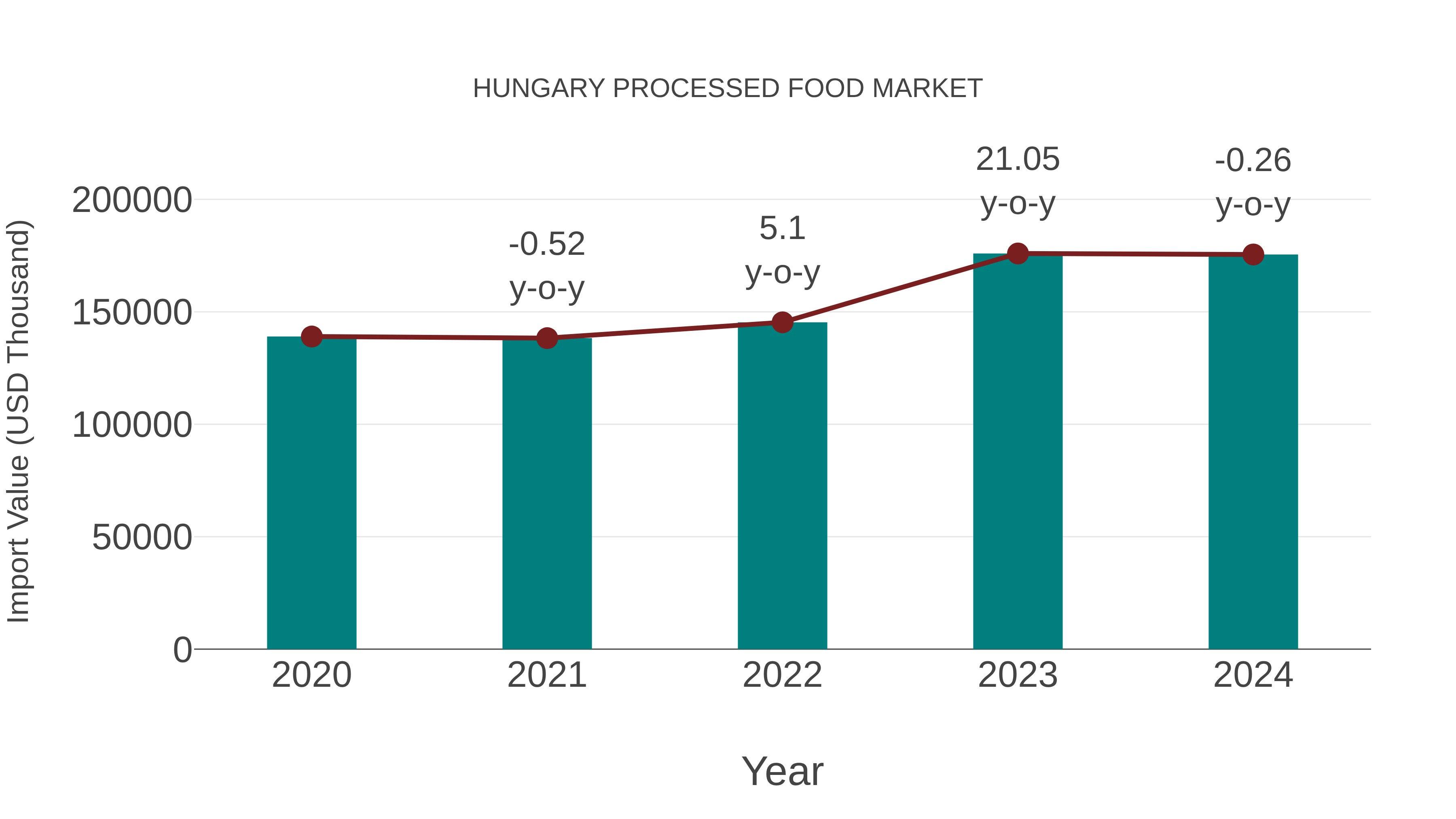
In the Hungary processed food market, the import trend showed a slight decline from 2023 to 2024, with a growth rate of -0.26%. However, the compound annual growth rate (CAGR) for imports between 2020 and 2024 stood at a healthy 6.0%. This dip in import momentum could be attributed to shifting consumer preferences or changes in trade policies impacting the market`s stability during that period.
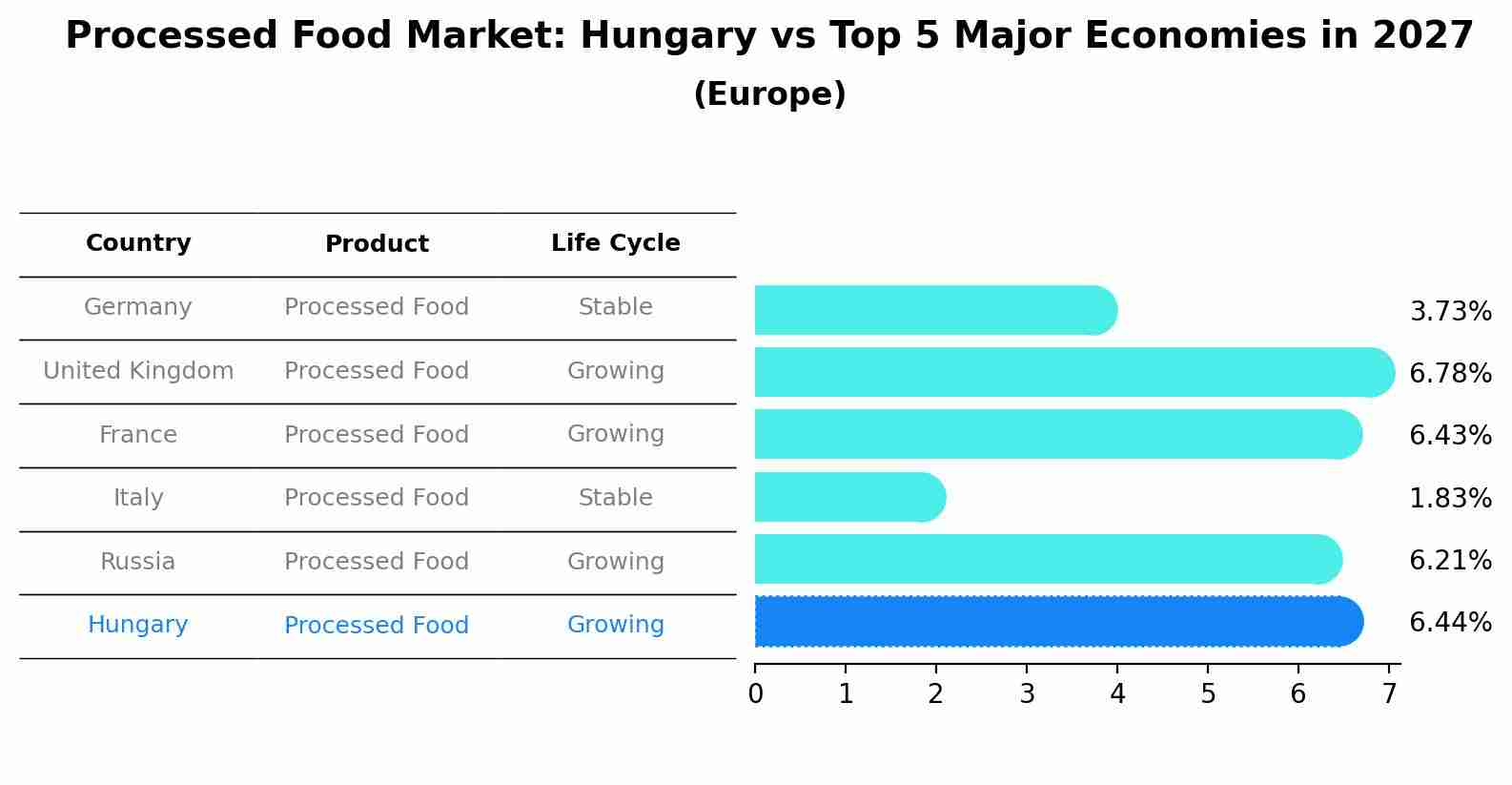
Processed Food Market: Hungary vs Top 5 Major Economies in 2027 (Europe)
By 2027, the Processed Food market in Hungary is anticipated to reach a growth rate of 6.44%, as part of an increasingly competitive Europe region, where Germany remains at the forefront, supported by United Kingdom, France, Italy and Russia, driving innovations and market adoption across sectors.
Hungary Processed Food Market Overview
The processed food market in Hungary is undergoing significant changes, driven by shifting consumer preferences, urbanization, and lifestyle changes. Processed food products, including snacks, ready-to-eat meals, bakery products, dairy products, beverages, and convenience foods, offer convenience, variety, and longer shelf life compared to fresh foods. With the increasing pace of life and the growing demand for on-the-go meals, there is a rising consumption of processed foods in Hungary. Manufacturers are responding to changing consumer trends by introducing healthier, natural, and organic alternatives, as well as products with clean labels and transparent sourcing. Moreover, the COVID-19 pandemic has accelerated the adoption of online grocery shopping and home meal delivery services, further driving the demand for processed foods in Hungary retail and foodservice sectors.
Drivers of the market
The processed food market in Hungary is experiencing growth driven by changing lifestyles, urbanization, and increasing disposable incomes. Processed food products offer convenience, longer shelf life, and ready-to-eat options, which are driving their consumption among consumers. Moreover, the growing demand for snacks, convenience meals, and packaged foods is fueling market growth. Additionally, the expansion of retail channels, including supermarkets, hypermarkets, and online platforms, is creating new opportunities for market players in Hungary.
Challenges of the market
The Hungary processed food market encounters various challenges in meeting consumer demand for convenient, nutritious, and affordable food products while addressing concerns about food safety, quality, and sustainability. One significant challenge is the increasing scrutiny of processed food ingredients, additives, and preservatives, leading to demand for clean-label and natural products with minimal processing. This requires processed food manufacturers to reformulate their products, remove artificial ingredients, and use natural alternatives to meet changing consumer preferences and regulatory requirements. Moreover, the rising competition from fresh and organic food segments poses challenges for market players to innovate and differentiate their processed food offerings through product innovation, branding, and marketing strategies.
Government Policy of the market
In response to changing consumer preferences and global food trends, the Hungary government implements policies to promote innovation, quality, and safety in the processed food industry. Regulatory frameworks governing food labeling, additives, and hygiene standards ensure consumer confidence and trust in processed food products. Moreover, support for research and development, market access facilitation, and export promotion initiatives help Hungary food manufacturers capitalize on emerging opportunities in domestic and international markets, driving industry growth and competitiveness.
Key Highlights of the Report:
- Hungary Processed Food Market Outlook
- Market Size of Hungary Processed Food Market, 2021
- Forecast of Hungary Processed Food Market, 2028
- Historical Data and Forecast of Hungary Processed Food Revenues & Volume for the Period 2018 - 2028
- Hungary Processed Food Market Trend Evolution
- Hungary Processed Food Market Drivers and Challenges
- Hungary Processed Food Price Trends
- Hungary Processed Food Porter's Five Forces
- Hungary Processed Food Industry Life Cycle
- Historical Data and Forecast of Hungary Processed Food Market Revenues & Volume By Process for the Period 2018 - 2028
- Historical Data and Forecast of Hungary Processed Food Market Revenues & Volume By Minimally for the Period 2018 - 2028
- Historical Data and Forecast of Hungary Processed Food Market Revenues & Volume By Highly for the Period 2018 - 2028
- Historical Data and Forecast of Hungary Processed Food Market Revenues & Volume By Product type for the Period 2018 - 2028
- Historical Data and Forecast of Hungary Processed Food Market Revenues & Volume By Plant based for the Period 2018 - 2028
- Historical Data and Forecast of Hungary Processed Food Market Revenues & Volume By Fruits for the Period 2018 - 2028
- Historical Data and Forecast of Hungary Processed Food Market Revenues & Volume By Vegetables for the Period 2018 - 2028
- Historical Data and Forecast of Hungary Processed Food Market Revenues & Volume By Legumes for the Period 2018 - 2028
- Historical Data and Forecast of Hungary Processed Food Market Revenues & Volume By Extracted foods for the Period 2018 - 2028
- Historical Data and Forecast of Hungary Processed Food Market Revenues & Volume By Others for the Period 2018 - 2028
- Historical Data and Forecast of Hungary Processed Food Market Revenues & Volume By Animal based for the Period 2018 - 2028
- Historical Data and Forecast of Hungary Processed Food Market Revenues & Volume By Milk for the Period 2018 - 2028
- Historical Data and Forecast of Hungary Processed Food Market Revenues & Volume By Application for the Period 2018 - 2028
- Historical Data and Forecast of Hungary Processed Food Market Revenues & Volume By Baked foods for the Period 2018 - 2028
- Historical Data and Forecast of Hungary Processed Food Market Revenues & Volume By Baby food for the Period 2018 - 2028
- Historical Data and Forecast of Hungary Processed Food Market Revenues & Volume By Breakfast Cereal for the Period 2018 - 2028
- Historical Data and Forecast of Hungary Processed Food Market Revenues & Volume By Biscuits for the Period 2018 - 2028
- Historical Data and Forecast of Hungary Processed Food Market Revenues & Volume By Cheese for the Period 2018 - 2028
- Historical Data and Forecast of Hungary Processed Food Market Revenues & Volume By Chocolate confectionary for the Period 2018 - 2028
- Historical Data and Forecast of Hungary Processed Food Market Revenues & Volume By Ice creams for the Period 2018 - 2028
- Historical Data and Forecast of Hungary Processed Food Market Revenues & Volume By Instant Noodles for the Period 2018 - 2028
- Hungary Processed Food Import Export Trade Statistics
- Market Opportunity Assessment By Process
- Market Opportunity Assessment By Product type
- Market Opportunity Assessment By Application
- Hungary Processed Food Top Companies Market Share
- Hungary Processed Food Competitive Benchmarking By Technical and Operational Parameters
- Hungary Processed Food Company Profiles
- Hungary Processed Food Key Strategic Recommendations






































