Hungary Public Cloud Market Size & Growth Rate (2026-2032)
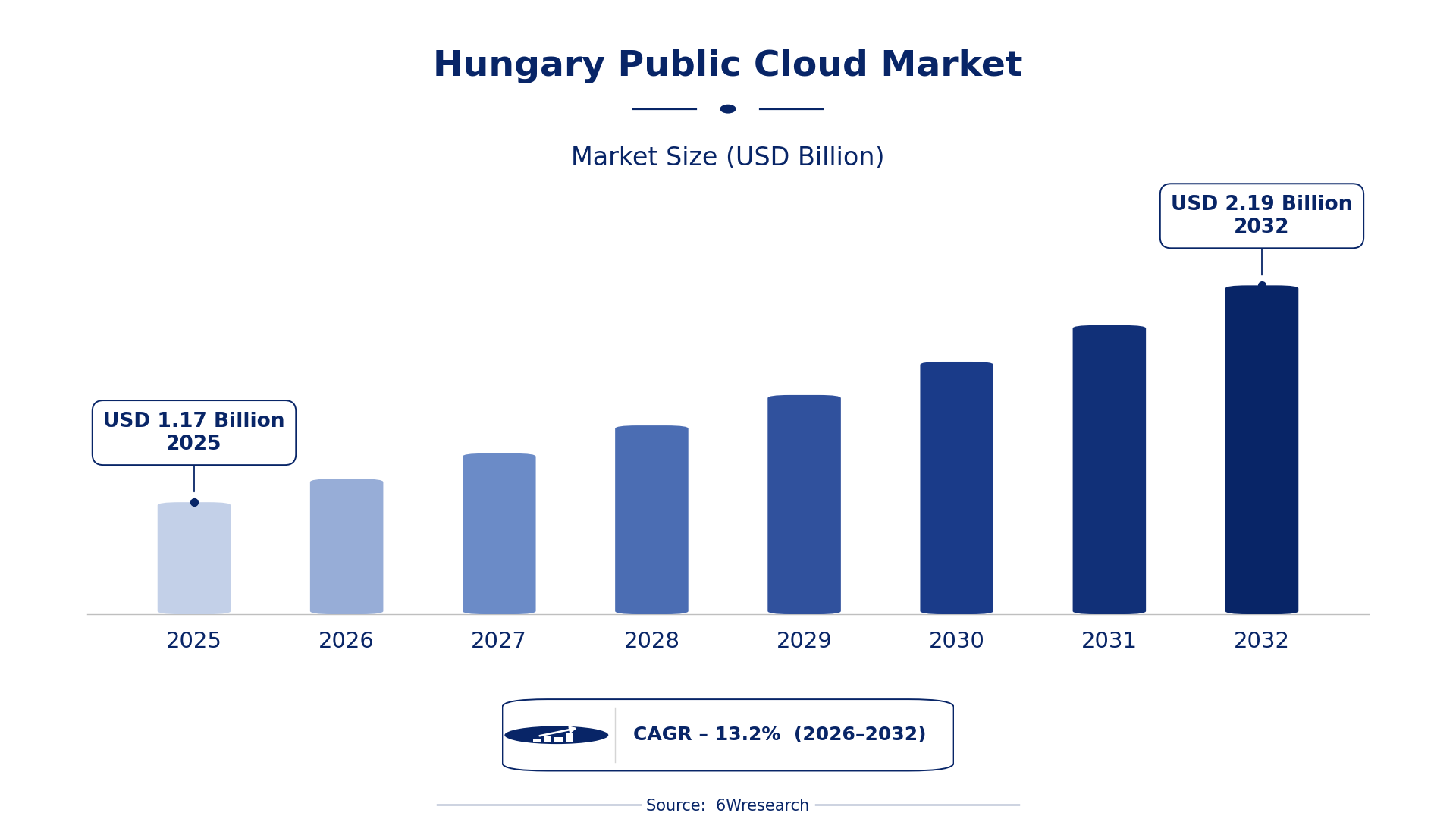
The Hungary Public Cloud Market was estimated at USD 1171 Million in 2025 and is projected to reach USD 2190 Million by 2032, growing at a CAGR of 13.2% from 2026 to 2032.
Hungary Public Cloud Market Synopsis
The rapid digital transformation across various sectors is the strongest force currently shaping the Hungary Public Cloud Market. Enterprises are increasingly recognizing the necessity of cloud solutions to enhance operational efficiency and drive innovation.
As the demand for scalable IT infrastructure surges, small and medium-sized enterprises (SMEs) are leading the charge towards public cloud adoption. This trend is significantly bolstered by government initiatives aimed at fostering digitalization and supporting a more connected economy.
Hungary Public Cloud Market Year-wise Growth Rate and Key Drivers
This graph illustrates the annual growth rates of the Hungary Public Cloud Market from 2021 to 2032, highlighting a steady upward trajectory and projected expansion over the forecast period.
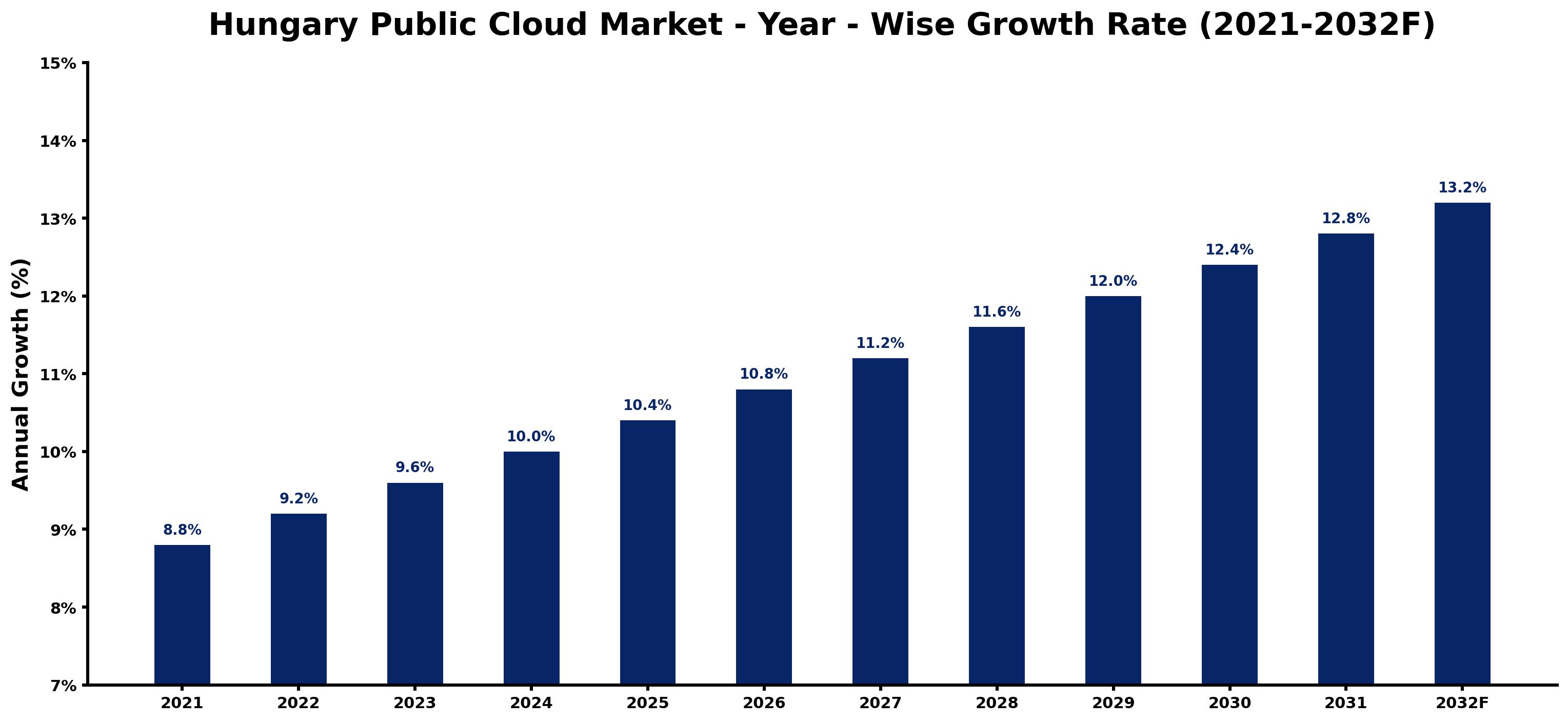
The table below presents the year‑wise growth rates along with the key drivers influencing the market
| Year | Growth Rate | Major Drivers |
| 2021 | 8.8% | Government's Digital Hungary Program boosts cloud adoption. |
| 2022 | 9.2% | Increased data privacy regulations spur local cloud investments. |
| 2023 | 9.6% | Rising startup ecosystem demands scalable cloud solutions. |
| 2024 | 10.0% | Local SMEs transitioning to cloud for operational efficiency. |
| 2025 | 10.4% | Increased cybersecurity threats drive demand for cloud security. |
| 2026 | 10.8% | Growing IoT adoption requires robust cloud infrastructure. |
| 2027 | 11.2% | Surge in remote workforces boosts cloud collaboration tools. |
| 2028 | 11.6% | Adoption of AI technologies favors cloud-native solutions. |
| 2029 | 12.0% | National initiatives promote digital transformation across industries. |
| 2030 | 12.4% | Cloud services enable enhanced data analytics for businesses. |
| 2031 | 12.8% | Healthcare digitization leads to increased cloud storage needs. |
| 2032 | 13.2% | Increased governmental funding for digitalization accelerates cloud use. |
Note: Market size estimations and growth projections presented in this report are based on 6Wresearch's proprietary forecasting methodology, utilizing the latest available industry data, government publications, and primary research inputs.
Hungary Public Cloud Market Key Takeaways
Below are some of the specific key takeaways from the market, including:
- Growing adoption of public cloud services among SMEs is a key driver of market expansion.
- Government policies are increasingly favoring digital transformation and cloud technology integration.
- The shift towards hybrid cloud solutions is becoming more pronounced in response to evolving business needs.
- There is a rising demand for advanced AI and machine learning capabilities within cloud platforms.
- Data security and regulatory compliance remain critical concerns for organizations transitioning to the cloud.
Evaluation of Restraints in Hungary Public Cloud Market
Despite its growth trajectory, the Hungary Public Cloud Market faces several restraints that hinder its full potential. A significant challenge is the prevalent reliance on traditional on-premises systems, with many businesses reluctant to migrate to cloud solutions due to fears regarding data security and regulatory compliance. Additionally, the shortage of skilled IT professionals proficient in cloud technologies poses a substantial barrier for companies aiming to implement cloud services effectively. This skills gap, combined with a limited number of local cloud service providers, can lead to issues surrounding data sovereignty and latency, which further complicate the migration process for organizations.
Hungary Public Cloud Market Trends
Current trends indicate a marked shift towards hybrid cloud solutions as organizations seek to balance flexibility with control. Increasingly, businesses are looking to integrate AI and machine learning capabilities into their cloud platforms to enhance operational efficiency and decision-making processes. Data security continues to gain prominence, with companies prioritizing compliance and protection measures as they transition to cloud environments. on top of that, the pandemic has accelerated digital transformation efforts, compelling businesses to adopt cloud-based collaboration tools and remote work solutions more rapidly.
Hungary Public Cloud Market Opportunities
The Hungary Public Cloud Market presents various opportunities for growth and investment. With a growing number of SMEs seeking affordable and scalable cloud solutions, there is a clear demand for industry-specific cloud offerings. Providers who can cater to niche markets or verticals may find significant potential. Additionally, the increasing focus on managed cloud services represents an avenue for organizations looking to optimize their IT infrastructure without the complexities of in-house management. As digitalization continues across sectors, innovative service offerings will be crucial in meeting evolving customer needs.
Government Initiatives in the Hungary Public Cloud Market
The Hungarian government has adopted a proactive approach to foster the growth of the public cloud market, with various initiatives aimed at promoting digital transformation and enhancing public services. Policies are designed to create a conducive regulatory environment while encouraging businesses to embrace cloud technologies. This focus is essential for improving operational efficiency and competitiveness in the marketplace.
- A recently completed initiative focused on funding programs to support businesses in adopting cloud technologies, enhancing digital capabilities.
- A currently ongoing national digital infrastructure upgrade program aims to improve internet connectivity and accessibility across urban and rural areas.
- A planned public-private partnership expected to launch in 2026 will focus on expanding the number of local data centers to address data sovereignty concerns.
- New regulatory frameworks introduced in 2025 will mandate transparency in cloud billing practices, promoting consumer trust.
- Current efforts to harmonize regulations with European Union standards are underway to facilitate cross-border data flows.
Future Insights of the Hungary Public Cloud Market
Looking ahead to 2026-2032, the Hungary Public Cloud Market is set to expand significantly. The drive for digital transformation across various industries will continue to fuel demand for cloud services. As businesses increasingly recognize the advantages of cloud solutions in terms of agility, flexibility, and cost efficiency, adoption rates are expected to rise. on top of that, advancements in AI and data analytics will likely create new opportunities for cloud providers to innovate their offerings and cater to the specific needs of diverse sectors.
Hungary Public Cloud Market Latest Developments
In the last 12-14 months, the Hungary Public Cloud Market has seen several noteworthy developments, reflecting an active industry environment. Companies are increasingly focusing on enhancing their cloud service offerings and addressing the specific needs of local businesses. This trend is indicative of a broader shift toward more tailored solutions in the cloud space.
- A major technology vendor launched an enhanced cloud platform in early 2025, aimed at improving scalability and integrating AI capabilities for businesses.
- A leading regional operator is currently rolling out a new cloud service designed for SMEs, which emphasizes user-friendly interfaces and cost-effective solutions.
- A public-private initiative began in Q1 2025, focused on creating training programs to develop cloud expertise among IT professionals in Hungary.
- An upcoming collaboration expected to start in late 2026 will involve local businesses working with global cloud providers to enhance service delivery.
- A recent partnership was formed between universities and tech companies to foster innovation in cloud computing technologies, with projects already underway.
Hungary Public Cloud Market - Key Attractiveness of the Report
- 10 Years of Market Numbers
- Historical Data Starting from 2022 to 2025
- Base Year: 2025
- Forecast Data until 2032
- Key Performance Indicators Impacting the Market
- Major Upcoming Developments and Projects
Key Highlights of the Report:
- Hungary Public Cloud Market Outlook
- Market Size of Hungary Public Cloud Market, 2025
- Forecast of Hungary Public Cloud Market, 2032
- Historical Data and Forecast of Hungary Public Cloud Revenues & Volume for the Period 2022-2032F
- Hungary Public Cloud Market Trend Evolution
- Hungary Public Cloud Market Drivers and Challenges
- Hungary Public Cloud Price Trends
- Hungary Public Cloud Porter's Five Forces
- Hungary Public Cloud Industry Life Cycle
- Historical Data and Forecast of Hungary Public Cloud Market Revenues & Volume By Service Model for the Period 2022-2032F
- Historical Data and Forecast of Hungary Public Cloud Market Revenues & Volume By Infrastructure as a Service for the Period 2022-2032F
- Historical Data and Forecast of Hungary Public Cloud Market Revenues & Volume By Platform as a Service for the Period 2022-2032F
- Historical Data and Forecast of Hungary Public Cloud Market Revenues & Volume By Software as a Service for the Period 2022-2032F
- Historical Data and Forecast of Hungary Public Cloud Market Revenues & Volume By Organization Size Large enterprises for the Period 2022-2032F
- Historical Data and Forecast of Hungary Public Cloud Market Revenues & Volume By Small for the Period 2022-2032F
- Historical Data and Forecast of Hungary Public Cloud Market Revenues & Volume By Medium Enterprises SMEs for the Period 2022-2032F
- Historical Data and Forecast of Hungary Public Cloud Market Revenues & Volume By Verticals for the Period 2022-2032F
- Historical Data and Forecast of Hungary Public Cloud Market Revenues & Volume By BFSI for the Period 2022-2032F
- Historical Data and Forecast of Hungary Public Cloud Market Revenues & Volume By Telecommunication for the Period 2022-2032F
- Historical Data and Forecast of Hungary Public Cloud Market Revenues & Volume By IT & ITeS for the Period 2022-2032F
- Historical Data and Forecast of Hungary Public Cloud Market Revenues & Volume By Government & Public Sector for the Period 2022-2032F
- Historical Data and Forecast of Hungary Public Cloud Market Revenues & Volume By Retail & Consumer Goods for the Period 2022-2032F
- Historical Data and Forecast of Hungary Public Cloud Market Revenues & Volume By Manufacturing for the Period 2022-2032F
- Historical Data and Forecast of Hungary Public Cloud Market Revenues & Volume By Energy & Utility for the Period 2022-2032F
- Historical Data and Forecast of Hungary Public Cloud Market Revenues & Volume By Media & Entertainment for the Period 2022-2032F
- Hungary Public Cloud Import Export Trade Statistics
- Market Opportunity Assessment By Service Model
- Market Opportunity Assessment By Organization Size Large enterprises
- Market Opportunity Assessment By Verticals
- Hungary Public Cloud Top Companies Market Share
- Hungary Public Cloud Competitive Benchmarking By Technical and Operational Parameters
- Hungary Public Cloud Company Profiles
- Hungary Public Cloud Key Strategic Recommendations






































