Hungary Small Mammal and Reptile Food Market Size, Share & Growth Rate
The Hungary Small Mammal and Reptile Food Market was estimated at USD 374 Million in 2025 and is projected to reach USD 495 Million by 2032, growing at a CAGR of 4.1% from 2026 to 2032. This growth is primarily fueled by the increasing pet ownership trends, especially among small mammals and reptiles, as families in Hungary are increasingly drawn to these exotic pets. Moreover, a heightened awareness regarding optimal pet nutrition has encouraged consumers to seek out premium, specialized food products tailored to the unique dietary needs of their pets.
Hungary Small Mammal and Reptile Food Market Year-wise Growth Rate and Key Drivers
This graph highlights how the Hungary Small Mammal and Reptile Food Market has steadily grown over the years, supported by major growth factors.
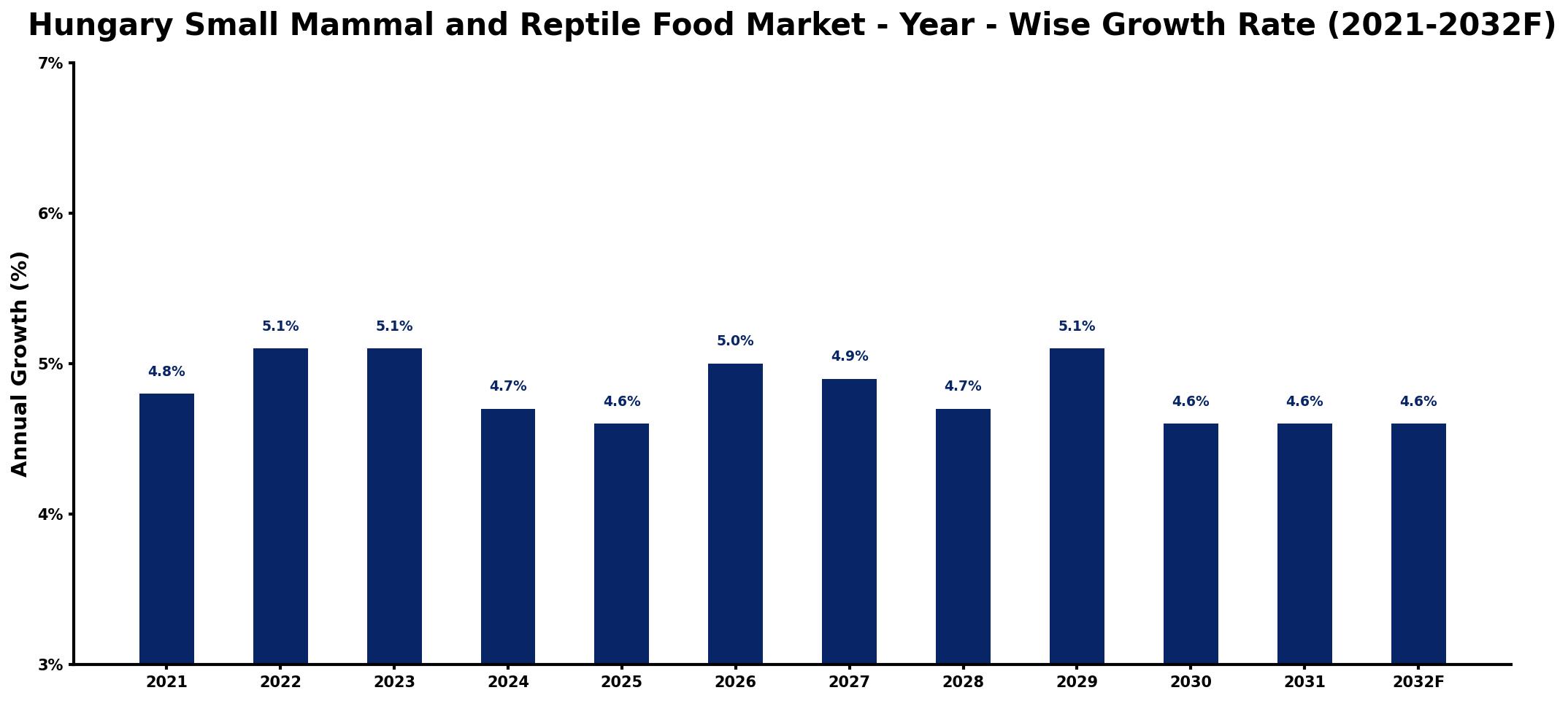
The table below presents the year‑wise growth rates along with the key drivers influencing the market
| Year | Growth Rate | Major Drivers |
| 2021 | 4.8% | Increase in pet ownership rates |
| 2022 | 5.1% | Rising demand for premium products |
| 2023 | 5.1% | Expansion of specialty retailers |
| 2024 | 4.7% | Growth in online shopping platforms |
| 2025 | 4.6% | Surge in eco-friendly packaging |
| 2026 | 5.0% | Increased consumer health awareness |
| 2027 | 4.9% | Emergence of innovative suppliers |
| 2028 | 4.7% | Boost in urban pet services |
| 2029 | 5.1% | Higher disposable income spending |
| 2030 | 4.6% | Interest in sustainable sourcing |
| 2031 | 4.6% | Development of niche markets |
| 2032 | 4.6% | Advancements in product formulations |
Note: Market size estimations and growth projections presented in this report are based on 6Wresearch's proprietary forecasting methodology, utilizing the latest available industry data, government publications, and primary research inputs.
Hungary Small Mammal and Reptile Food Market Synopsis
The growing trend of humanization of pets is significantly influencing the demand for small mammal and reptile food in Hungary. Pet owners are more inclined than ever to invest in high-quality nutrition, actively seeking products that ensure their pets health and longevity. This market trend underscores a shift toward holistic pet care, where food quality becomes an integral aspect of pet ownership.
In response, manufacturers are innovating with a range of specialized food options that incorporate natural and organic ingredients. The online retail sector is becoming increasingly significant in this market, offering consumers a convenient avenue to explore a broader array of products, catering to the diverse dietary preferences of small mammals and reptiles.
Hungary Small Mammal and Reptile Food Market Key Takeaways
- Growing pet ownership of small mammals and reptiles is driving market expansion.
- Consumers increasingly demand premium, natural, and organic food products for their pets.
- Online retail is transforming the distribution landscape for pet food products.
- Rising awareness of pet nutrition is shaping purchasing behaviors among consumers.
- Investment in product innovation is critical for manufacturers seeking to stand out in a niche market.
Evaluation of Restraints in Hungary Small Mammal and Reptile Food Market
Despite the positive growth trajectory, the Hungary Small Mammal and Reptile Food Market faces notable restraints. One primary limitation is the general lack of consumer education regarding the specific dietary requirements of these pets. Many pet owners may not fully grasp what constitutes proper nutrition for small mammals and reptiles, leading to feeding practices that could jeopardize their pets health. Furthermore, the size of this niche market is smaller when compared to mainstream pet food categories, which can hinder the aggressive scaling of businesses in this sector. The costs associated with sourcing specialized ingredients also present challenges, particularly for pricing and competitiveness.
Hungary Small Mammal and Reptile Food Market Trends
One of the defining trends in the Hungary Small Mammal and Reptile Food Market is the burgeoning demand for natural and organic products. Owners are increasingly opting for food that is free from artificial additives and fillers, showing a preference for ingredients that closely align with their pets' natural diets. Alongside this, there is a growing interest in grain-free and insect-based protein options, reflecting a broader shift towards sustainable and ethical pet care practices. Furthermore, innovative manufacturing processes such as freeze-drying are becoming more prevalent, catering to evolving consumer preferences.
Hungary Small Mammal and Reptile Food Market Opportunities
Investment opportunities abound in the Hungary Small Mammal and Reptile Food Market, particularly as pet ownership continues to rise. There is significant potential for growth in producing specialized, nutritionally balanced food that addresses the unique dietary needs of small mammals and reptiles. Expanding distribution channels, including enhanced online platforms and collaborations with pet specialty stores, can broaden market reach. Furthermore, partnerships with veterinarians to endorse products could foster trust and credibility, ultimately driving consumer purchases.
Government Initiatives in the Hungary Small Mammal and Reptile Food Market
The Hungarian government has instituted various policies to regulate the Small Mammal and Reptile Food Market, focusing on quality and safety standards. Guidelines are in place for the import and export of pet food products to ensure that they meet strict safety requirements. Furthermore, regulations encouraging the use of natural ingredients promote sustainability in sourcing and manufacturing practices. These initiatives aim to enhance consumer confidence and ensure the well-being of small mammals and reptiles within the market.
Future Insights of the Hungary Small Mammal and Reptile Food Market
Looking ahead to 2026-2032, the Hungary Small Mammal and Reptile Food Market is anticipated to maintain a robust growth pattern. As awareness surrounding pet nutrition continues to grow, consumers will increasingly demand high-quality, specialized food products that support their pets health. Additionally, the ongoing focus on animal welfare is likely to drive a preference for organic and natural options. Manufacturers will need to remain agile, innovating continuously to meet these evolving consumer demands and capitalize on the promising growth opportunities in the sector.
Hungary Small Mammal and Reptile Food Market Latest Developments (2025 - 2026)
Recent developments in the Hungary Small Mammal and Reptile Food Market indicate a shift towards more innovative product offerings. Companies are increasingly focusing on developing new formulations that align with health-conscious consumer preferences. The rise of online shopping has also led to enhanced strategies for distribution and marketing, allowing brands to reach a broader audience more effectively. Furthermore, collaborations with animal nutritionists and veterinarians are becoming more common, reinforcing the importance of proper nutrition in the health and well-being of small mammals and reptiles.
Hungary Small Mammal and Reptile Food Market - Key Attractiveness of the Report
- 10 Years of Market Numbers
- Historical Data Starting from 2022 to 2025
- Base Year: 2025
- Forecast Data until 2032
- Key Performance Indicators Impacting the Market
- Major Upcoming Developments and Projects
Key Highlights of the Report:
- Hungary Small Mammal and Reptile Food Market Outlook
- Market Size of Hungary Small Mammal and Reptile Food Market, 2025
- Forecast of Hungary Small Mammal and Reptile Food Market, 2032
- Historical Data and Forecast of Hungary Small Mammal and Reptile Food Revenues & Volume for the Period 2022-2032F
- Hungary Small Mammal and Reptile Food Market Trend Evolution
- Hungary Small Mammal and Reptile Food Market Drivers and Challenges
- Hungary Small Mammal and Reptile Food Price Trends
- Hungary Small Mammal and Reptile Food Porter's Five Forces
- Hungary Small Mammal and Reptile Food Industry Life Cycle
- Historical Data and Forecast of Hungary Small Mammal and Reptile Food Market Revenues & Volume By Type for the Period 2022-2032F
- Historical Data and Forecast of Hungary Small Mammal and Reptile Food Market Revenues & Volume By Rabbits Food for the Period 2022-2032F
- Historical Data and Forecast of Hungary Small Mammal and Reptile Food Market Revenues & Volume By Rodents Food for the Period 2022-2032F
- Historical Data and Forecast of Hungary Small Mammal and Reptile Food Market Revenues & Volume By Small Reptiles Food for the Period 2022-2032F
- Historical Data and Forecast of Hungary Small Mammal and Reptile Food Market Revenues & Volume By Other for the Period 2022-2032F
- Historical Data and Forecast of Hungary Small Mammal and Reptile Food Market Revenues & Volume By Application for the Period 2022-2032F
- Historical Data and Forecast of Hungary Small Mammal and Reptile Food Market Revenues & Volume By Pet-Speciality Stores for the Period 2022-2032F
- Historical Data and Forecast of Hungary Small Mammal and Reptile Food Market Revenues & Volume By Supermarkets and Hypermarkets for the Period 2022-2032F
- Historical Data and Forecast of Hungary Small Mammal and Reptile Food Market Revenues & Volume By Convenience Stores for the Period 2022-2032F
- Historical Data and Forecast of Hungary Small Mammal and Reptile Food Market Revenues & Volume By Other for the Period 2022-2032F
- Hungary Small Mammal and Reptile Food Import Export Trade Statistics
- Market Opportunity Assessment By Type
- Market Opportunity Assessment By Application
- Hungary Small Mammal and Reptile Food Top Companies Market Share
- Hungary Small Mammal and Reptile Food Competitive Benchmarking By Technical and Operational Parameters
- Hungary Small Mammal and Reptile Food Company Profiles
- Hungary Small Mammal and Reptile Food Key Strategic Recommendations






































