Hungary Sunflower Seeds Market: Import Trend Analysis
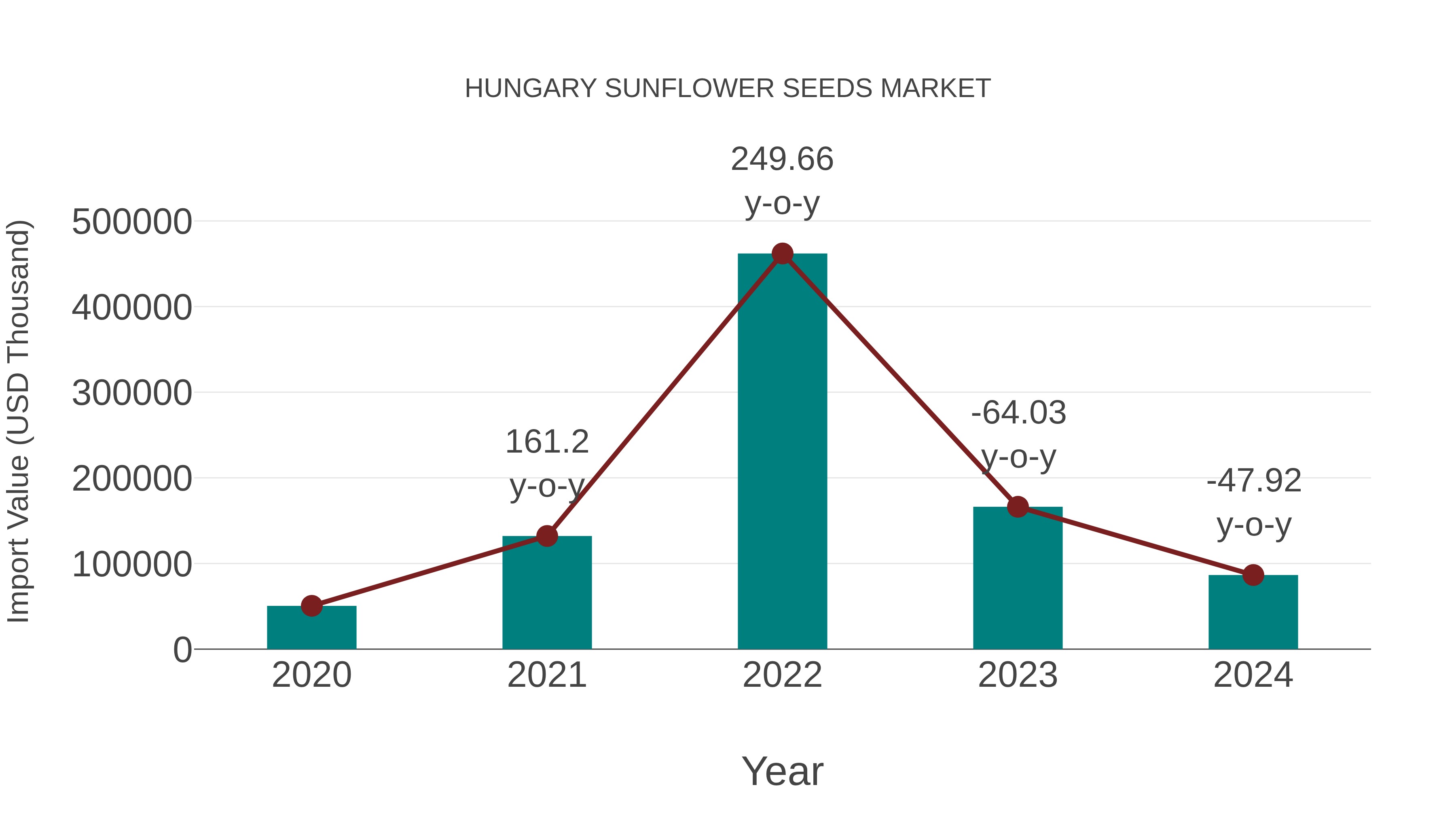
In 2024, Hungary`s import of sunflower seeds experienced a notable decline, with a growth rate of -47.92% compared to the previous year. However, the compound annual growth rate (CAGR) for the period of 2020-2024 stood at a positive 14.37%. This significant drop in import momentum in 2024 could be attributed to various factors such as shifts in demand patterns, changing trade policies, or market volatility.
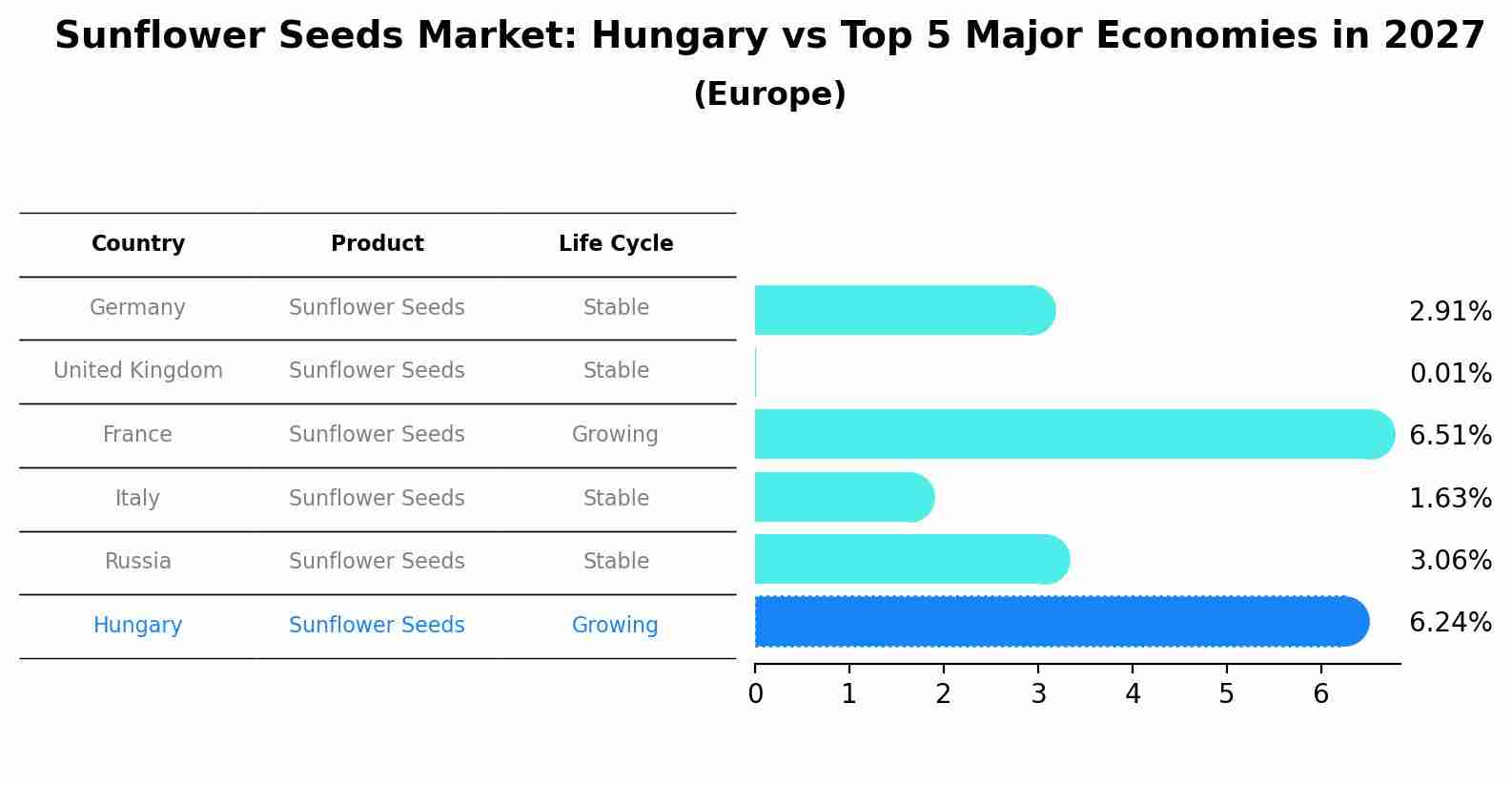
Sunflower Seeds Market: Hungary vs Top 5 Major Economies in 2027 (Europe)
In the Europe region, the Sunflower Seeds market in Hungary is projected to expand at a growing growth rate of 6.24% by 2027. The largest economy is Germany, followed by United Kingdom, France, Italy and Russia.
Hungary Sunflower Seeds Market Overview
The Hungary sunflower seeds market is experiencing steady growth driven by increasing consumer awareness of the health benefits associated with sunflower seeds. These seeds are rich in nutrients like vitamin E, magnesium, and selenium, making them a popular choice among health-conscious individuals. The market is also influenced by the growing demand for sunflower oil, as sunflower seeds are a key ingredient in its production. Hungary`s favorable climate for sunflower cultivation further boosts the market, ensuring a consistent supply of high-quality seeds. Key players in the market include both domestic and international companies offering a variety of sunflower seed products, from raw seeds to flavored and roasted options, catering to diverse consumer preferences. Overall, the Hungary sunflower seeds market shows promising potential for further expansion and innovation.
Hungary Sunflower Seeds Market Trends
In the Hungary Sunflower Seeds Market, there is a growing trend towards increased consumption of flavored and seasoned sunflower seeds, catering to consumer preferences for unique and diverse snack options. Health-conscious consumers are also driving demand for organic and non-GMO sunflower seeds, leading to a rise in products that are marketed as natural and healthy. Additionally, there is a focus on sustainability and ethical sourcing practices among both producers and consumers, with a preference for sunflower seeds that are grown and processed using environmentally friendly methods. The market is also witnessing the introduction of innovative packaging solutions to enhance product visibility and convenience for on-the-go snacking. Overall, the Hungary Sunflower Seeds Market is evolving to meet changing consumer preferences for flavorful, healthy, and sustainably produced snacks.
Hungary Sunflower Seeds Market Challenges
In the Hungary Sunflower Seeds Market, challenges include unpredictable weather conditions impacting crop yield and quality, leading to fluctuating supply levels and potentially affecting prices. Additionally, competition from other sunflower seed-producing countries can put pressure on Hungarian producers to maintain competitiveness in terms of pricing and quality. Managing agricultural inputs such as fertilizers and pesticides efficiently to ensure sustainable production while complying with regulations is another challenge. Furthermore, fluctuations in currency exchange rates can impact export revenues for Hungarian sunflower seed producers. Overall, staying abreast of market trends, investing in technological advancements for increased efficiency, and maintaining strong relationships with buyers are crucial for navigating the challenges faced in the Hungary Sunflower Seeds Market.
Hungary Sunflower Seeds Market Investment Opportunities
In the Hungary Sunflower Seeds Market, there are several promising investment opportunities to consider. One potential avenue is investing in sunflower seed production and processing companies to capitalize on the country`s significant sunflower cultivation and processing industry. Another opportunity lies in investing in technology and innovation within the sector to enhance productivity and efficiency. Additionally, there is growing demand for value-added sunflower seed products such as snacks, oils, and supplements, presenting a chance for investment in product development and marketing. Overall, the Hungary Sunflower Seeds Market offers diverse investment prospects across the value chain, from cultivation to processing and marketing, with the potential for growth and profitability in the long term.
Hungary Sunflower Seeds Market Government Policy
In Hungary, the sunflower seeds market is influenced by various government policies aimed at supporting agricultural production and export competitiveness. Key policies include subsidies for sunflower seed producers to ensure stable incomes and promote domestic production. The government also implements quality control measures to maintain high standards in sunflower seed cultivation and processing. Additionally, trade agreements and tariff regulations play a role in shaping the market dynamics, with efforts to facilitate market access and promote exports of Hungarian sunflower seeds. Overall, government policies in Hungary are focused on supporting the growth of the sunflower seeds market through financial incentives, quality assurance, and trade facilitation measures to enhance the competitiveness of local producers in both domestic and international markets.
Hungary Sunflower Seeds Market Future Outlook
The Hungary Sunflower Seeds Market is expected to witness steady growth in the coming years, driven by factors such as increasing consumer awareness of the health benefits associated with sunflower seeds, growing demand for natural and healthy snack options, and the rising popularity of plant-based diets. The market is also likely to benefit from the expanding use of sunflower seeds in various food products such as bakery items, snacks, and salads. Additionally, the focus on sustainable farming practices and the availability of high-quality sunflower seeds are expected to further propel market growth. However, challenges such as fluctuating raw material prices and competition from other seed varieties may impact market dynamics. Overall, the Hungary Sunflower Seeds Market is poised for moderate but steady growth in the foreseeable future.
Key Highlights of the Report:
- Hungary Sunflower Seeds Market Outlook
- Market Size of Hungary Sunflower Seeds Market, 2021
- Forecast of Hungary Sunflower Seeds Market, 2031
- Historical Data and Forecast of Hungary Sunflower Seeds Revenues & Volume for the Period 2018 - 2031
- Hungary Sunflower Seeds Market Trend Evolution
- Hungary Sunflower Seeds Market Drivers and Challenges
- Hungary Sunflower Seeds Price Trends
- Hungary Sunflower Seeds Porter's Five Forces
- Hungary Sunflower Seeds Industry Life Cycle
- Historical Data and Forecast of Hungary Sunflower Seeds Market Revenues & Volume By Type for the Period 2018 - 2031
- Historical Data and Forecast of Hungary Sunflower Seeds Market Revenues & Volume By Open Pollinated for the Period 2018 - 2031
- Historical Data and Forecast of Hungary Sunflower Seeds Market Revenues & Volume By Hybrids for the Period 2018 - 2031
- Hungary Sunflower Seeds Import Export Trade Statistics
- Market Opportunity Assessment By Type
- Hungary Sunflower Seeds Top Companies Market Share
- Hungary Sunflower Seeds Competitive Benchmarking By Technical and Operational Parameters
- Hungary Sunflower Seeds Company Profiles
- Hungary Sunflower Seeds Key Strategic Recommendations






































