Hungary Used Car Market Summary
The hungary used car market was estimated at USD 116 Million in 2025 and is projected to reach USD 127 Million by 2032, growing at a CAGR of 1.1% from 2026 to 2032.
Hungary Used Car Market Year-wise Growth Rate and Key Drivers
This graph highlights how the Hungary Used Car Market has steadily grown over the past five years, supported by major growth factors.
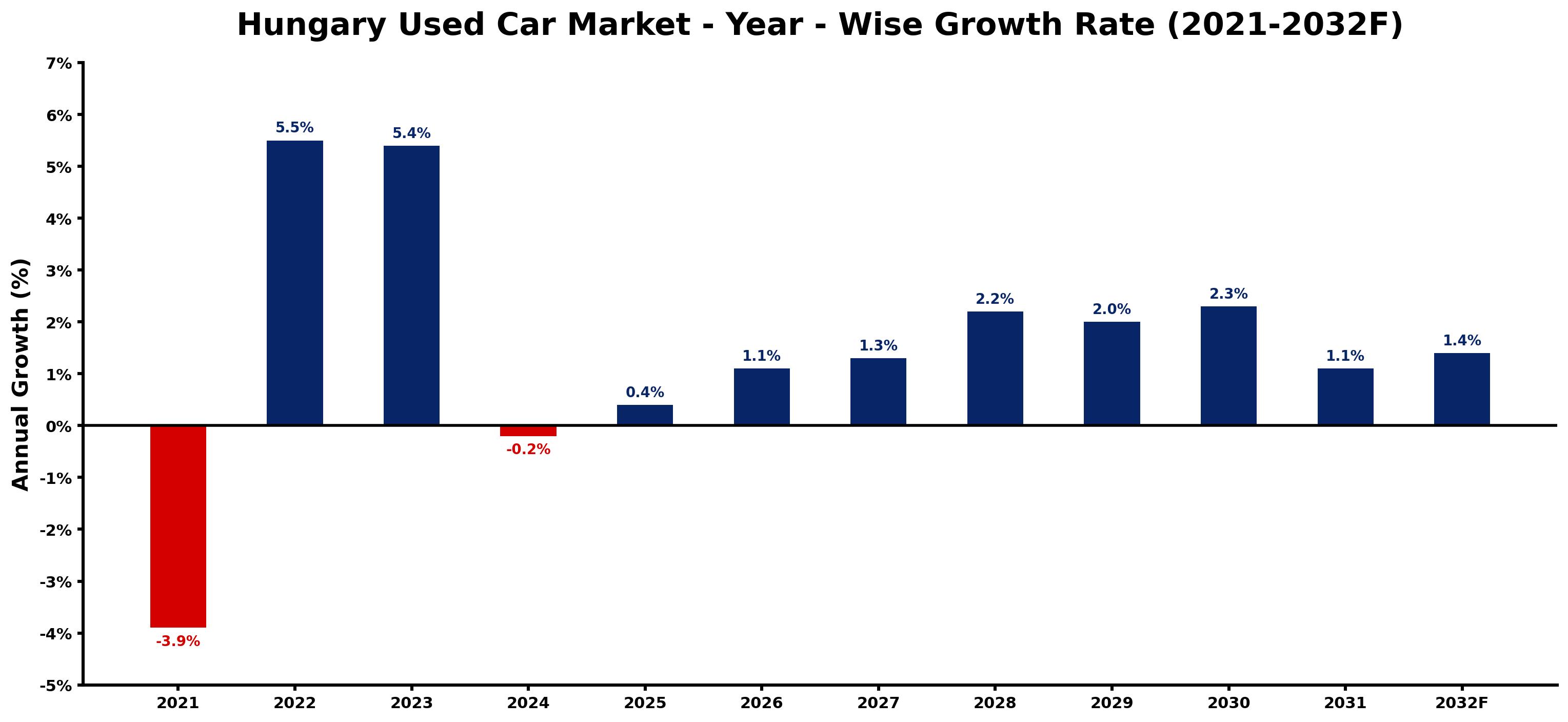
The table below presents the year wise growth rates along with the key drivers influencing the market
| Year | Growth Rate | Major Drivers |
| 2021 | -3.9% | Economic uncertainty and tightening budgets led consumers to postpone used car purchases. |
| 2022 | 5.5% | Economic recovery post-pandemic leads to a higher turnover of used vehicles. |
| 2023 | 5.4% | Rising fuel prices shift preferences toward smaller, fuel-efficient second-hand cars. |
| 2024 | -0.2% | Increased availability of affordable electric vehicles diminished demand for traditional used cars in Hungary. |
| 2025 | 0.4% | Digital marketplaces for used cars create wider access to potential buyers. |
| 2026 | 1.1% | Improved financing options enable more consumers to buy used vehicles easily. |
| 2027 | 1.3% | Growing environmental awareness drives interest in hybrid and electric used cars. |
| 2028 | 2.2% | Urbanization trends result in increased demand for compact and city-friendly automobiles. |
| 2029 | 2.0% | A booming logistics sector boosts sales of used commercial vehicles and vans. |
| 2030 | 2.3% | Changing consumer preferences favor certified pre-owned vehicles for added assurance. |
| 2031 | 1.1% | Increased online vehicle inspections enhance buyer confidence in pre-owned purchases. |
| 2032 | 1.4% | Sustainability trends encourage consumers to choose quality used vehicles over new. |
Note - Market size estimations and growth projections presented in this report are based on 6Wresearch's advanced forecasting approach, validated with industry datasets as of June 2026.
Hungary Used Car Market Synopsis
The Hungary Used Car Market is projected to reach 1.1% and witness significant growth during the forecast period (2026-2032). This expansion is fueled by a combination of increasing disposable income levels, a shifting consumer preference towards pre-owned vehicles, and the growing necessity for affordable transportation solutions. As the market evolves, it presents a diverse array of vehicles, ranging from budget-friendly to luxury segments, catering to a wide spectrum of consumer needs.
Hungary Used Car Market Growth Drivers
The growth of the Hungary Used Car Market can be attributed to several key drivers:
- Rising disposable incomes are empowering consumers to make spending decisions that favor higher-quality vehicles, thereby increasing demand for used cars.
- There is a growing trend of consumers opting for pre-owned cars due to lower depreciation costs compared to new vehicles, making them financially appealing.
- The impact of digital transformation is leading to the proliferation of online platforms, enhancing the ease of buying and selling used vehicles.
- Government initiatives promoting sustainability are nudging consumers towards more fuel-efficient and environmentally friendly options, which are often available in the used car segment.
- Increased consumer knowledge about vehicle conditions and market prices is leading to a more informed buying process, positively influencing market dynamics.
Hungary Used Car Market Trends and Opportunities
The Hungary Used Car Market has been marked by several noteworthy trends that are shaping its future landscape:
- The rising interest in electric and hybrid vehicles reflects a broader societal push towards sustainability, presenting unique opportunities for dealers to cater to environmentally conscious customers.
- The digitalization of the automotive sector is enhancing the appeal of online marketplaces, facilitating seamless transactions between buyers and sellers.
- There is an increasing preference for certified pre-owned vehicles, providing buyers with reassurance through warranties and thorough inspections.
- Fuel price fluctuations are driving demand for smaller, more efficient vehicles, aligning with urban preferences for compact car solutions.
- The trend towards vehicle customization and personalization is growing, enabling consumers to tailor pre-owned cars to their specific preferences.
Hungary Used Car Market Challenges and Restraints
Despite its growth potential, the Hungary Used Car Market faces several challenges that could impede development:
- Transparency in vehicle history remains a significant concern, with potential buyers wary of fraud and misrepresented vehicle conditions.
- A market saturated with older, high-mileage vehicles could dampen consumer confidence, particularly regarding safety and emissions compliance.
- Limited financing options and prevailing high interest rates can deter potential buyers from making purchases.
- The absence of standardized pricing practices complicates negotiations and may result in consumer skepticism regarding fair market value.
- Regulatory compliance, particularly concerning emission standards, adds a layer of complexity for both buyers and sellers in the market.
Hungary Used Car Market Investment Opportunities
Investment opportunities in the Hungary Used Car Market are diverse and appealing for those looking to capitalize on emerging trends:
- Establishing dealerships focused on high-quality certified pre-owned vehicles can attract cost-conscious consumers seeking reliability.
- Creating innovative online platforms that prioritize user experience could set a business apart in a digital marketplace.
- Investing in vehicle inspection and certification services can enhance credibility and foster trust among buyers.
- Collaborating with financial institutions to provide competitive loan options can encourage more consumers to pursue used car purchases.
- Engaging in the development of sustainable vehicle options and services may tap into the environmentally conscious consumer segment.
Hungary Used Car Market Government Investment and Initiatives
The Hungarian government has rolled out a series of initiatives aimed at creating a more regulated and transparent used car market. One of the critical policies mandates that sellers must furnish accurate information about a vehicle's history, including accidents and maintenance history, which serves to protect consumers from purchasing unsafe vehicles. Additionally, there are regulations in place to ensure equitable competition among dealers, curbing fraudulent activities within the sector. The government has also established strict emission standards applicable to used vehicles, reinforcing its commitment to sustainability and environmental responsibility. These efforts are designed to enhance consumer protection, thereby fostering a more robust and trustworthy market environment.
Hungary Used Car Market Latest Developments (May 2025 - June 2026)
In the recent months from May 2025 to June 2026, the Hungary Used Car Market has seen significant shifts towards digitalization and sustainability. The adoption of online platforms for used car transactions has intensified, enabling more efficient browsing and purchasing experiences for consumers. Additionally, there has been a growing focus on introducing more stringent regulations regarding vehicle emissions, aligning with global sustainability efforts. The demand for electric and hybrid used vehicles has also surged, indicating a shift in consumer preferences towards greener options. Market players have responded with enhanced service offerings, including improved warranties and vehicle certification processes, bolstering buyer confidence and facilitating a more robust marketplace.
Hungary Used Car Market - Key Attractiveness of the Report
- 10 Years of Market Numbers
- Historical Data Starting from 2022 to 2025
- Base Year: 2025
- Forecast Data until 2032
- Key Performance Indicators Impacting the Market
- Major Upcoming Developments and Projects
Key Highlights of the Report:
- Hungary Used Car Market Outlook
- Market Size of Hungary Used Car Market, 2025
- Forecast of Hungary Used Car Market, 2032F
- Historical Data and Forecast of Hungary Used Car Revenues & Volume for the Period 2022-2032F
- Hungary Used Car Market Trend Evolution
- Hungary Used Car Market Drivers and Challenges
- Hungary Used Car Price Trends
- Hungary Used Car Porter's Five Forces
- Hungary Used Car Industry Life Cycle
- Historical Data and Forecast of Hungary Used Car Market Revenues & Volume By Vehicle Type for the Period 2022-2032F
- Historical Data and Forecast of Hungary Used Car Market Revenues & Volume By Hatchbacks for the Period 2022-2032F
- Historical Data and Forecast of Hungary Used Car Market Revenues & Volume By Sedan for the Period 2022-2032F
- Historical Data and Forecast of Hungary Used Car Market Revenues & Volume By Sports Utility Vehicle for the Period 2022-2032F
- Historical Data and Forecast of Hungary Used Car Market Revenues & Volume By Others for the Period 2022-2032F
- Historical Data and Forecast of Hungary Used Car Market Revenues & Volume By Vendor for the Period 2022-2032F
- Historical Data and Forecast of Hungary Used Car Market Revenues & Volume By Organized for the Period 2022-2032F
- Historical Data and Forecast of Hungary Used Car Market Revenues & Volume By Unorganized for the Period 2022-2032F
- Historical Data and Forecast of Hungary Used Car Market Revenues & Volume By Fuel Type for the Period 2022-2032F
- Historical Data and Forecast of Hungary Used Car Market Revenues & Volume By Gasoline for the Period 2022-2032F
- Historical Data and Forecast of Hungary Used Car Market Revenues & Volume By Diesel for the Period 2022-2032F
- Historical Data and Forecast of Hungary Used Car Market Revenues & Volume By Alternative Fuel Vehicles for the Period 2022-2032F
- Hungary Used Car Import Export Trade Statistics
- Market Opportunity Assessment By Vehicle Type
- Market Opportunity Assessment By Vendor
- Market Opportunity Assessment By Fuel Type
- Hungary Used Car Top Companies Market Share
- Hungary Used Car Competitive Benchmarking By Technical and Operational Parameters
- Hungary Used Car Company Profiles
- Hungary Used Car Key Strategic Recommendations






































