Hungary Vending Machines Market: Import Trend Analysis
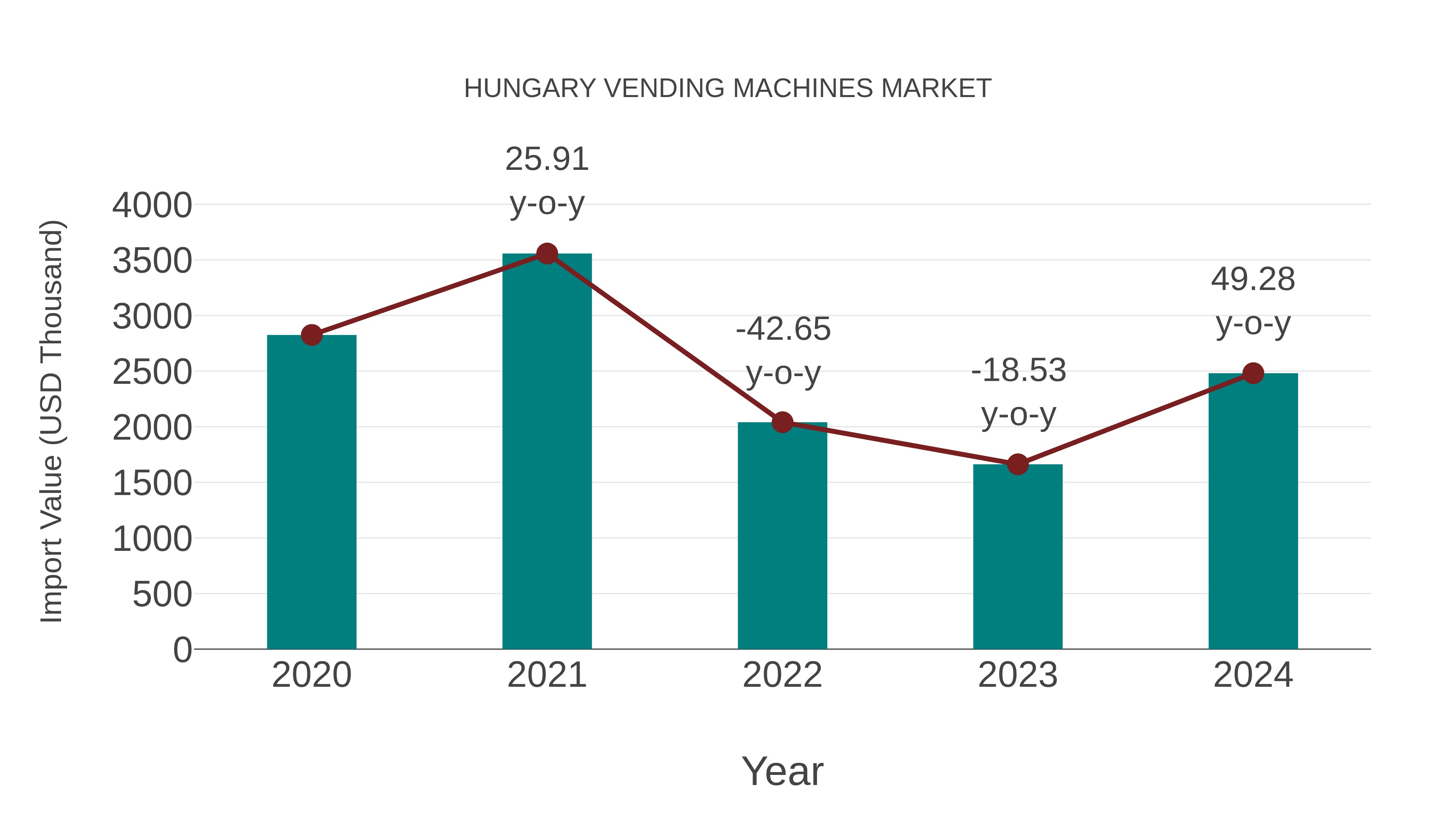
In 2024, Hungary`s import trend for vending machines experienced a notable growth rate of 49.28% compared to the previous year, while the compound annual growth rate (CAGR) for 2020-2024 stood at -3.19%. This significant uptick in import momentum in 2024 could be attributed to a shift in consumer preferences towards more automated and contactless solutions, reflecting a potential market recovery following the pandemic-induced slowdown.
Hungary Vending machines Market Overview
The Hungary Vending Machines Market encompasses the deployment and operation of vending machines for dispensing a variety of products such as snacks, beverages, convenience items, and personal care products in public spaces, workplaces, schools, and retail locations. Vending machines offer convenience, 24/7 accessibility, and self-service options for consumers, while providing revenue opportunities for operators and suppliers. This market is driven by factors such as changing consumer lifestyles, demand for on-the-go convenience, and technological innovations in vending machine design.
Drivers of the market
The Hungary Vending Machines Market is experiencing growth due to evolving consumer preferences, convenience trends, and technological advancements. Vending machines offer convenient access to a wide range of products, including snacks, beverages, and everyday essentials, in various locations such as workplaces, transportation hubs, and public spaces. With Hungary fast-paced lifestyle and urbanization trends, there`s a rising demand for vending machines to provide on-the-go solutions for food and beverage consumption, personal care items, and electronic gadgets. Moreover, advancements in vending machine technology, such as cashless payment options, touchless interfaces, and IoT integration, are driving further market expansion, enabling Hungary to offer innovative vending solutions that enhance user experience, operational efficiency, and product offerings in a competitive market landscape.
Challenges of the market
Challenges include meeting consumer demand for healthy and customizable vending options, addressing concerns related to hygiene and food safety, and leveraging technology to enhance vending machine functionality and user experience.
Government Policy of the market
Government policies in Hungary related to the vending machines market may encompass regulations on food safety, consumer protection, and vending machine placement. This could involve licensing requirements for vending machine operators, hygiene standards for food vending, and zoning regulations to prevent vending machine clustering in certain areas.
Key Highlights of the Report:
- Hungary Vending machines Market Outlook
- Market Size of Hungary Vending machines Market, 2025
- Forecast of Hungary Vending machines Market, 2032
- Historical Data and Forecast of Hungary Vending machines Revenues & Volume for the Period 2022-2032F
- Hungary Vending machines Market Trend Evolution
- Hungary Vending machines Market Drivers and Challenges
- Hungary Vending machines Price Trends
- Hungary Vending machines Porter's Five Forces
- Hungary Vending machines Industry Life Cycle
- Historical Data and Forecast of Hungary Vending machines Market Revenues & Volume By Applications for the Period 2022-2032F
- Historical Data and Forecast of Hungary Vending machines Market Revenues & Volume By Commercial Places for the Period 2022-2032F
- Historical Data and Forecast of Hungary Vending machines Market Revenues & Volume By Offices for the Period 2022-2032F
- Historical Data and Forecast of Hungary Vending machines Market Revenues & Volume By Public Places for the Period 2022-2032F
- Historical Data and Forecast of Hungary Vending machines Market Revenues & Volume By Others for the Period 2022-2032F
- Historical Data and Forecast of Hungary Vending machines Market Revenues & Volume By Payment Mode for the Period 2022-2032F
- Historical Data and Forecast of Hungary Vending machines Market Revenues & Volume By Cash for the Period 2022-2032F
- Historical Data and Forecast of Hungary Vending machines Market Revenues & Volume By Cashless for the Period 2022-2032F
- Hungary Vending machines Import Export Trade Statistics
- Market Opportunity Assessment By Applications
- Market Opportunity Assessment By Payment Mode
- Hungary Vending machines Top Companies Market Share
- Hungary Vending machines Competitive Benchmarking By Technical and Operational Parameters
- Hungary Vending machines Company Profiles
- Hungary Vending machines Key Strategic Recommendations






































