Iceland Boilers Market Growth Rate Analysis (2025 - 2031)
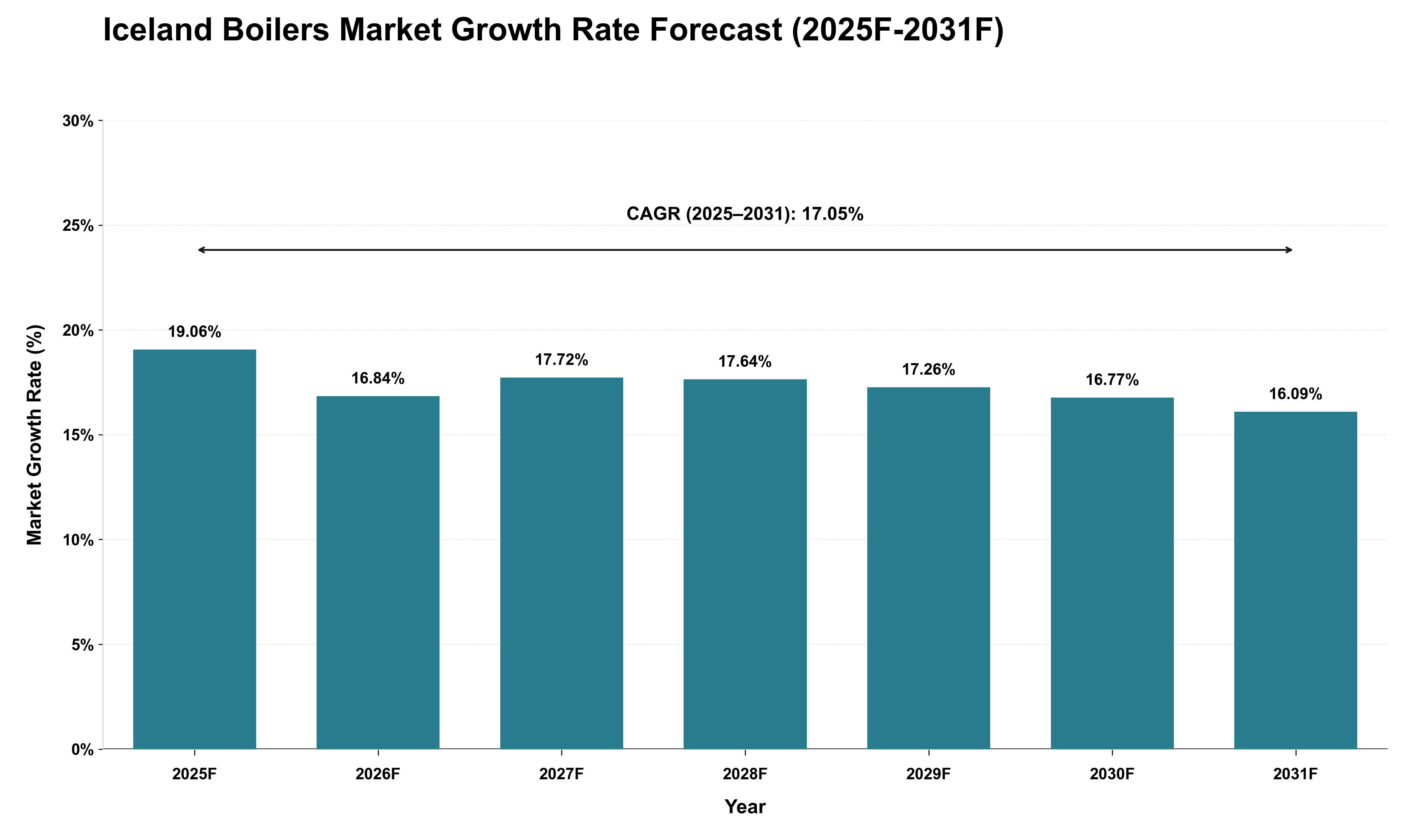
The Iceland boilers market is poised for robust growth, driven by increasing energy efficiency demands and a shift towards sustainable heating solutions. From 2025 onward, the market will experience a compound annual growth rate (CAGR) of 17.05%, with initial growth peaking at 19.06% in 2025 before stabilizing around the mid-16% range through 2031. This trajectory reflects heightened import dependencies as domestic production may not fully meet rising demand, particularly in renewable energy sectors. The anticipated cyclical trends will likely be influenced by global supply chain dynamics and technological advancements in boiler efficiency, which will enhance competitiveness in both domestic and export markets. As international trade flows adapt to these changes, Iceland's strategic positioning within the European energy landscape will further facilitate its integration into broader markets, ultimately supporting sustained demand for advanced boiler systems throughout the forecast period.
Key Highlights of the Report:
- Iceland Boilers Market Outlook
- Market Size of Iceland Boilers Market, 2025
- Forecast of Iceland Boilers Market, 2032
- Historical Data and Forecast of Iceland Boilers Revenues & Volume for the Period 2022-2032F
- Iceland Boilers Market Trend Evolution
- Iceland Boilers Market Drivers and Challenges
- Iceland Boilers Price Trends
- Iceland Boilers Porter`s Five Forces
- Iceland Boilers Industry Life Cycle
- Historical Data and Forecast of Iceland Boilers Market Revenues & Volume By Capacity for the Period 2022-2032F
- Historical Data and Forecast of Iceland Boilers Market Revenues & Volume By <10 MMBtu/hr for the Period 2022-2032F
- Historical Data and Forecast of Iceland Boilers Market Revenues & Volume By 10-50 MMBtu/hr for the Period 2022-2032F
- Historical Data and Forecast of Iceland Boilers Market Revenues & Volume By 50-100 MMBtu/hr for the Period 2022-2032F
- Historical Data and Forecast of Iceland Boilers Market Revenues & Volume By 100-250 MMBtu/hr for the Period 2022-2032F
- Historical Data and Forecast of Iceland Boilers Market Revenues & Volume By >250 MMBtu/hr for the Period 2022-2032F
- Historical Data and Forecast of Iceland Boilers Market Revenues & Volume By Product for the Period 2022-2032F
- Historical Data and Forecast of Iceland Boilers Market Revenues & Volume By Fire-tube for the Period 2022-2032F
- Historical Data and Forecast of Iceland Boilers Market Revenues & Volume By Water-tube for the Period 2022-2032F
- Historical Data and Forecast of Iceland Boilers Market Revenues & Volume By Fuel for the Period 2022-2032F
- Historical Data and Forecast of Iceland Boilers Market Revenues & Volume By Natural Gas for the Period 2022-2032F
- Historical Data and Forecast of Iceland Boilers Market Revenues & Volume By Oil for the Period 2022-2032F
- Historical Data and Forecast of Iceland Boilers Market Revenues & Volume By Coal for the Period 2022-2032F
- Historical Data and Forecast of Iceland Boilers Market Revenues & Volume By Application for the Period 2022-2032F
- Historical Data and Forecast of Iceland Boilers Market Revenues & Volume By Residential for the Period 2022-2032F
- Historical Data and Forecast of Iceland Boilers Market Revenues & Volume By Commercial for the Period 2022-2032F
- Historical Data and Forecast of Iceland Boilers Market Revenues & Volume By Industrial for the Period 2022-2032F
- Historical Data and Forecast of Iceland Boilers Market Revenues & Volume By Utility for the Period 2022-2032F
- Iceland Boilers Import Export Trade Statistics
- Market Opportunity Assessment By Capacity
- Market Opportunity Assessment By Product
- Market Opportunity Assessment By Fuel
- Market Opportunity Assessment By Application
- Iceland Boilers Top Companies Market Share
- Iceland Boilers Competitive Benchmarking By Technical and Operational Parameters
- Iceland Boilers Company Profiles
- Iceland Boilers Key Strategic Recommendations






































