Iceland Container Glass Market Growth Rate Analysis (2025 - 2031)
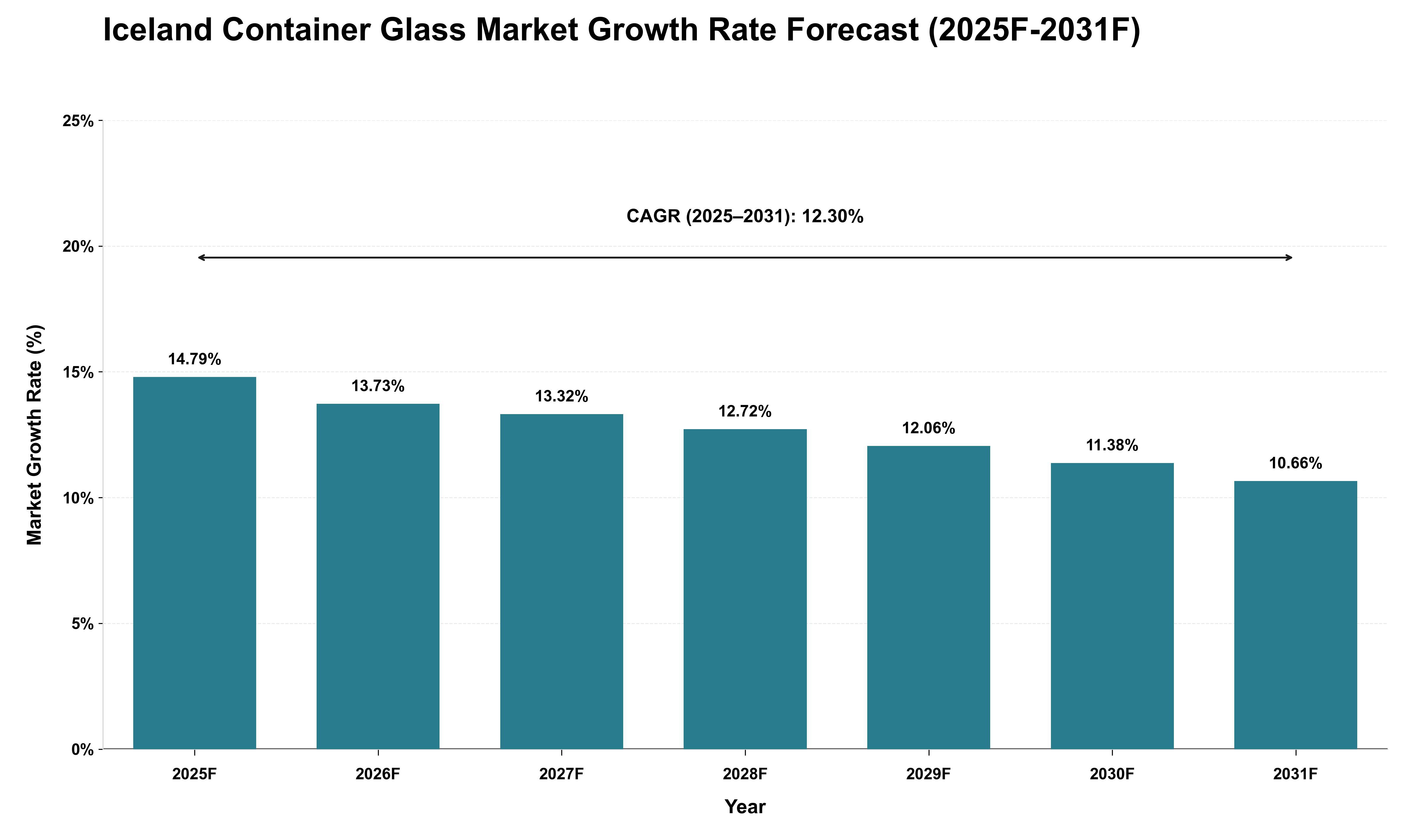
The Iceland container glass market will experience significant growth driven by evolving supply chain dynamics and fluctuating input costs over the forecast period. As demand for sustainable packaging solutions intensifies, manufacturers will likely face increased pressure to optimize production processes, which may lead to higher operational efficiencies. The projected CAGR of 12.30% reflects a robust trajectory, with annual growth rates peaking at 14.79% in 2025 before gradually tapering off. This trend suggests that while initial demand surges may be fueled by heightened consumer awareness and regulatory shifts towards eco-friendly materials, subsequent years will require adaptation to potential import dependencies on raw materials and energy costs. Additionally, cyclical trends in construction and beverage industries will influence glass consumption patterns, necessitating strategic adjustments in supply chain management to mitigate risks associated with price volatility and availability of inputs throughout the period from 2025 to 2031.
Key Highlights of the Report:
- Iceland Container Glass Market Outlook
- Market Size of Iceland Container Glass Market, 2024
- Forecast of Iceland Container Glass Market, 2031
- Historical Data and Forecast of Iceland Container Glass Revenues & Volume for the Period 2021-2031
- Iceland Container Glass Market Trend Evolution
- Iceland Container Glass Market Drivers and Challenges
- Iceland Container Glass Price Trends
- Iceland Container Glass Porter`s Five Forces
- Iceland Container Glass Industry Life Cycle
- Historical Data and Forecast of Iceland Container Glass Market Revenues & Volume By Glass Type for the Period 2021-2031
- Historical Data and Forecast of Iceland Container Glass Market Revenues & Volume By Borosilicate-based for the Period 2021-2031
- Historical Data and Forecast of Iceland Container Glass Market Revenues & Volume By Soda-lime-silica-based for the Period 2021-2031
- Historical Data and Forecast of Iceland Container Glass Market Revenues & Volume By Forming Method for the Period 2021-2031
- Historical Data and Forecast of Iceland Container Glass Market Revenues & Volume By Blow & Blow for the Period 2021-2031
- Historical Data and Forecast of Iceland Container Glass Market Revenues & Volume By Press & Blow for the Period 2021-2031
- Historical Data and Forecast of Iceland Container Glass Market Revenues & Volume By Narrow Neck Press & Blow for the Period 2021-2031
- Historical Data and Forecast of Iceland Container Glass Market Revenues & Volume By End Use for the Period 2021-2031
- Historical Data and Forecast of Iceland Container Glass Market Revenues & Volume By Food & Beverages for the Period 2021-2031
- Historical Data and Forecast of Iceland Container Glass Market Revenues & Volume By Cosmetics & Personal Care for the Period 2021-2031
- Historical Data and Forecast of Iceland Container Glass Market Revenues & Volume By Pharmaceuticals for the Period 2021-2031
- Historical Data and Forecast of Iceland Container Glass Market Revenues & Volume By Chemical for the Period 2021-2031
- Historical Data and Forecast of Iceland Container Glass Market Revenues & Volume By Others for the Period 2021-2031
- Iceland Container Glass Import Export Trade Statistics
- Market Opportunity Assessment By Glass Type
- Market Opportunity Assessment By Forming Method
- Market Opportunity Assessment By End Use
- Iceland Container Glass Top Companies Market Share
- Iceland Container Glass Competitive Benchmarking By Technical and Operational Parameters
- Iceland Container Glass Company Profiles
- Iceland Container Glass Key Strategic Recommendations






































