Iceland Cosmetic Market Growth Rate Analysis (2021 - 2031)
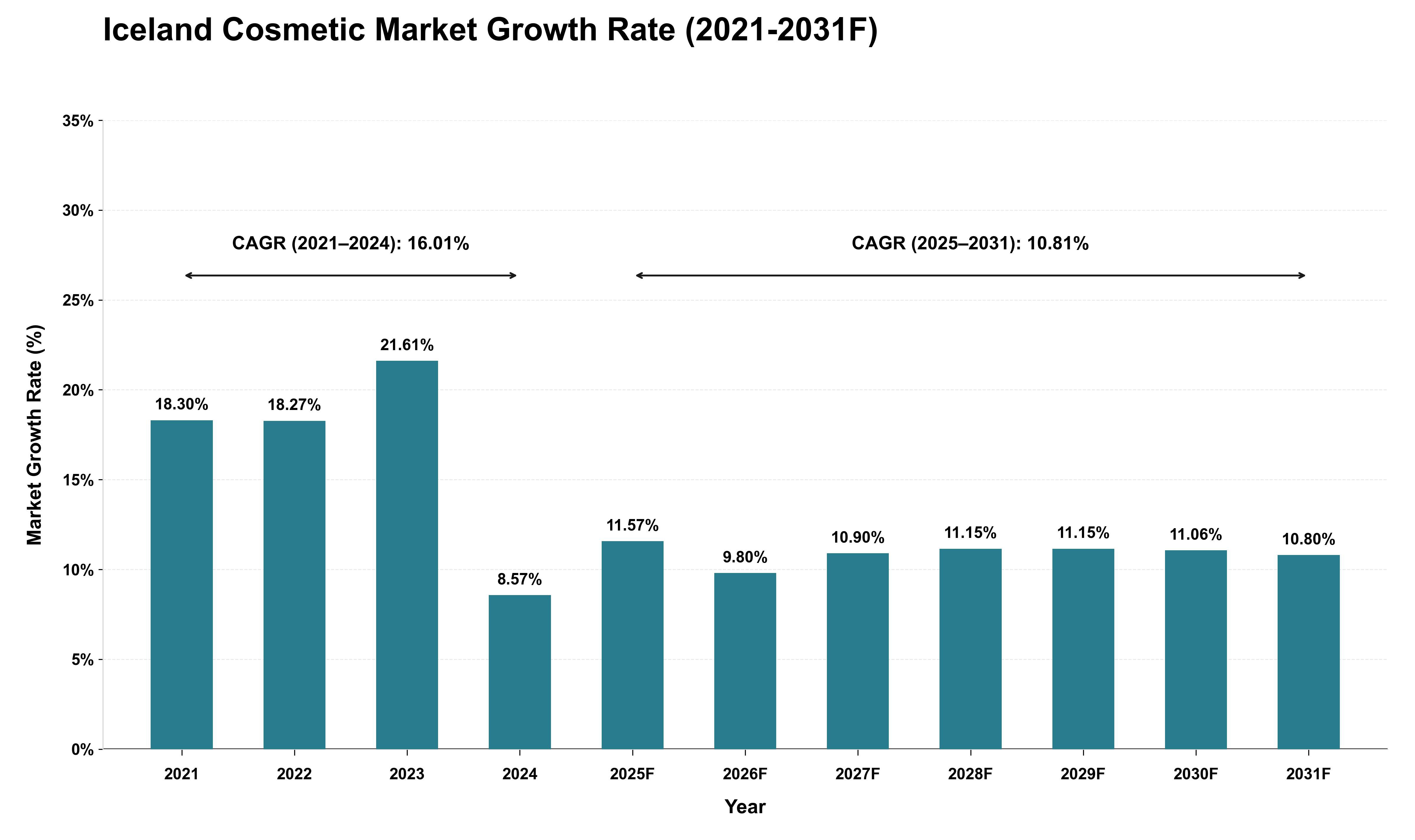
Between 2021 and 2024, the Icelandic cosmetic market experienced a robust CAGR of 16.01%, driven by heightened consumer demand for beauty products amid post-pandemic recovery and increased global shipping efficiencies. The annual growth peaked in 2023 at 21.61%, reflecting a surge in both domestic consumption and import reliance as international brands capitalized on the reopening of tourism and hospitality sectors. However, growth decelerated to 8.57% in 2024, likely influenced by inflationary pressures and shifting consumer preferences towards sustainability, which prompted a reevaluation of product offerings. Looking ahead to 2025-2031, the forecasted CAGR of 10.81% suggests a more stable competitive landscape as brands adapt to evolving market dynamics, with anticipated annual growth rates stabilizing around the low double digits, indicating sustained interest but also an increasingly discerning consumer base focused on quality and ethical sourcing in cosmetics.
Key Highlights of the Report:
- Iceland Cosmetic Market Outlook
- Market Size of Iceland Cosmetic Market, 2025
- Forecast of Iceland Cosmetic Market, 2032
- Historical Data and Forecast of Iceland Cosmetic Revenues & Volume for the Period 2022-2032F
- Iceland Cosmetic Market Trend Evolution
- Iceland Cosmetic Market Drivers and Challenges
- Iceland Cosmetic Price Trends
- Iceland Cosmetic Porter's Five Forces
- Iceland Cosmetic Industry Life Cycle
- Historical Data and Forecast of Iceland Cosmetic Market Revenues & Volume By Product Type for the Period 2022-2032F
- Historical Data and Forecast of Iceland Cosmetic Market Revenues & Volume By Skin Care for the Period 2022-2032F
- Historical Data and Forecast of Iceland Cosmetic Market Revenues & Volume By Hair Care for the Period 2022-2032F
- Historical Data and Forecast of Iceland Cosmetic Market Revenues & Volume By Makeup for the Period 2022-2032F
- Historical Data and Forecast of Iceland Cosmetic Market Revenues & Volume By Application for the Period 2022-2032F
- Historical Data and Forecast of Iceland Cosmetic Market Revenues & Volume By Face for the Period 2022-2032F
- Historical Data and Forecast of Iceland Cosmetic Market Revenues & Volume By Hair for the Period 2022-2032F
- Historical Data and Forecast of Iceland Cosmetic Market Revenues & Volume By Lips for the Period 2022-2032F
- Historical Data and Forecast of Iceland Cosmetic Market Revenues & Volume By Ingredient Type for the Period 2022-2032F
- Historical Data and Forecast of Iceland Cosmetic Market Revenues & Volume By Natural for the Period 2022-2032F
- Historical Data and Forecast of Iceland Cosmetic Market Revenues & Volume By Organic for the Period 2022-2032F
- Historical Data and Forecast of Iceland Cosmetic Market Revenues & Volume By Synthetic for the Period 2022-2032F
- Historical Data and Forecast of Iceland Cosmetic Market Revenues & Volume By Packaging Type for the Period 2022-2032F
- Historical Data and Forecast of Iceland Cosmetic Market Revenues & Volume By Bottles for the Period 2022-2032F
- Historical Data and Forecast of Iceland Cosmetic Market Revenues & Volume By Tubes for the Period 2022-2032F
- Historical Data and Forecast of Iceland Cosmetic Market Revenues & Volume By Jars for the Period 2022-2032F
- Historical Data and Forecast of Iceland Cosmetic Market Revenues & Volume By Distribution Channel for the Period 2022-2032F
- Historical Data and Forecast of Iceland Cosmetic Market Revenues & Volume By Online for the Period 2022-2032F
- Historical Data and Forecast of Iceland Cosmetic Market Revenues & Volume By Offline for the Period 2022-2032F
- Historical Data and Forecast of Iceland Cosmetic Market Revenues & Volume By Supers for the Period 2022-2032F
- Iceland Cosmetic Import Export Trade Statistics
- Market Opportunity Assessment By Product Type
- Market Opportunity Assessment By Application
- Market Opportunity Assessment By Ingredient Type
- Market Opportunity Assessment By Packaging Type
- Market Opportunity Assessment By Distribution Channel
- Iceland Cosmetic Top Companies Market Share
- Iceland Cosmetic Competitive Benchmarking By Technical and Operational Parameters
- Iceland Cosmetic Company Profiles
- Iceland Cosmetic Key Strategic Recommendations






































