Iceland Narrow Woven Fabrics Market Growth Rate Analysis (2025 - 2031)
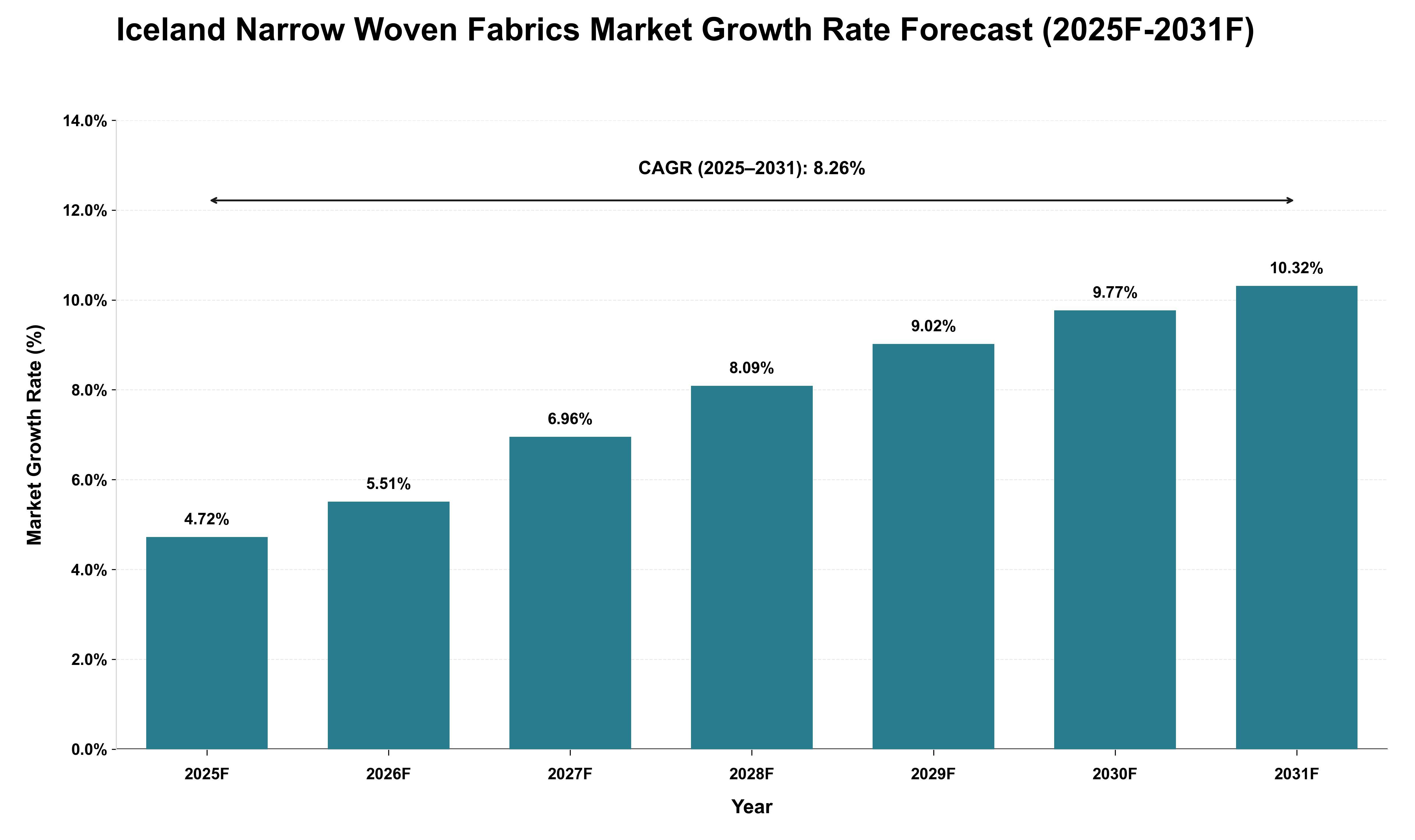
The Iceland narrow woven fabrics market is projected to experience a compound annual growth rate of 8.26% from 2025 to 2031, reflecting an upward trajectory in demand driven by evolving consumer preferences and increased applications across various industries. The annual growth rates will escalate from 4.72% in 2025 to an impressive 10.32% by 2031, indicating a robust competitive landscape where manufacturers will likely enhance production capacities to meet rising demand. This growth will be influenced by macroeconomic factors such as global supply chain dynamics and import dependencies, particularly as Iceland navigates its unique geographic position and trade relationships. Additionally, cyclical trends in fashion and industrial applications are expected to further stimulate market expansion, compelling firms to innovate and diversify their product offerings while optimizing operational efficiencies to capitalize on the anticipated demand surge.
Key Highlights of the Report:
- Iceland Narrow Woven Fabrics Market Outlook
- Market Size of Iceland Narrow Woven Fabrics Market, 2024
- Forecast of Iceland Narrow Woven Fabrics Market, 2031
- Historical Data and Forecast of Iceland Narrow Woven Fabrics Revenues & Volume for the Period 2021-2031
- Iceland Narrow Woven Fabrics Market Trend Evolution
- Iceland Narrow Woven Fabrics Market Drivers and Challenges
- Iceland Narrow Woven Fabrics Price Trends
- Iceland Narrow Woven Fabrics Porter`s Five Forces
- Iceland Narrow Woven Fabrics Industry Life Cycle
- Historical Data and Forecast of Iceland Narrow Woven Fabrics Market Revenues & Volume By Type for the Period 2021-2031
- Historical Data and Forecast of Iceland Narrow Woven Fabrics Market Revenues & Volume By Polyester for the Period 2021-2031
- Historical Data and Forecast of Iceland Narrow Woven Fabrics Market Revenues & Volume By Nylon for the Period 2021-2031
- Historical Data and Forecast of Iceland Narrow Woven Fabrics Market Revenues & Volume By PP for the Period 2021-2031
- Historical Data and Forecast of Iceland Narrow Woven Fabrics Market Revenues & Volume By Applications for the Period 2021-2031
- Historical Data and Forecast of Iceland Narrow Woven Fabrics Market Revenues & Volume By Garments for the Period 2021-2031
- Historical Data and Forecast of Iceland Narrow Woven Fabrics Market Revenues & Volume By Home Furnishing for the Period 2021-2031
- Historical Data and Forecast of Iceland Narrow Woven Fabrics Market Revenues & Volume By Other for the Period 2021-2031
- Iceland Narrow Woven Fabrics Import Export Trade Statistics
- Market Opportunity Assessment By Type
- Market Opportunity Assessment By Applications
- Iceland Narrow Woven Fabrics Top Companies Market Share
- Iceland Narrow Woven Fabrics Competitive Benchmarking By Technical and Operational Parameters
- Iceland Narrow Woven Fabrics Company Profiles
- Iceland Narrow Woven Fabrics Key Strategic Recommendations






































