Iceland Pumps Market Growth Rate Analysis (2025 - 2031)
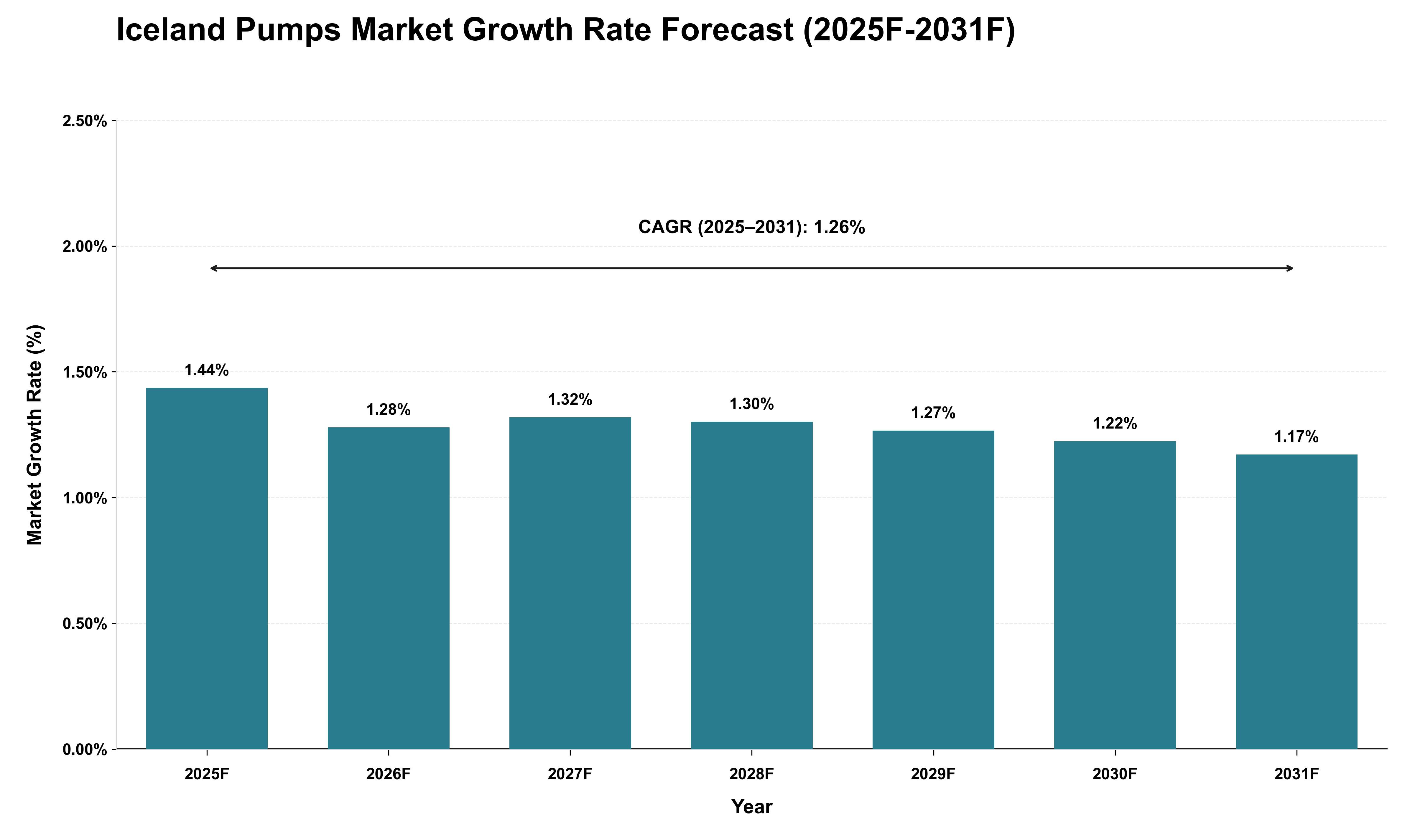
The Iceland pumps market is projected to experience a compound annual growth rate of 1.26% from 2025 to 2031, reflecting a gradual increase in demand driven by macroeconomic factors such as infrastructure development and industrial activity. The anticipated annual growth rates, peaking at 1.44% in 2025 and gradually declining to 1.17% by 2031, suggest a stable yet cautious expansion trajectory influenced by raw material availability and pricing dynamics. As global supply chains continue to adjust post-pandemic, fluctuations in the cost of essential materials like metals and plastics will play a critical role in shaping production costs and pricing strategies for pump manufacturers. Additionally, Iceland's reliance on imports for certain components may introduce vulnerabilities related to international trade policies and logistics disruptions, further impacting market performance throughout the forecast period.
Key Highlights of the Report:
- Iceland Pumps Market Outlook
- Market Size of Iceland Pumps Market, 2025
- Forecast of Iceland Pumps Market, 2032
- Historical Data and Forecast of Iceland Pumps Revenues & Volume for the Period 2022-2032F
- Iceland Pumps Market Trend Evolution
- Iceland Pumps Market Drivers and Challenges
- Iceland Pumps Price Trends
- Iceland Pumps Porter`s Five Forces
- Iceland Pumps Industry Life Cycle
- Historical Data and Forecast of Iceland Pumps Market Revenues & Volume By Product for the Period 2022-2032F
- Historical Data and Forecast of Iceland Pumps Market Revenues & Volume By Portable for the Period 2022-2032F
- Historical Data and Forecast of Iceland Pumps Market Revenues & Volume By Stationary for the Period 2022-2032F
- Historical Data and Forecast of Iceland Pumps Market Revenues & Volume By Position for the Period 2022-2032F
- Historical Data and Forecast of Iceland Pumps Market Revenues & Volume By Submersible for the Period 2022-2032F
- Historical Data and Forecast of Iceland Pumps Market Revenues & Volume By Non-submersible for the Period 2022-2032F
- Historical Data and Forecast of Iceland Pumps Market Revenues & Volume By Driving Force for the Period 2022-2032F
- Historical Data and Forecast of Iceland Pumps Market Revenues & Volume By Engine Driven for the Period 2022-2032F
- Historical Data and Forecast of Iceland Pumps Market Revenues & Volume By Electrical Driven for the Period 2022-2032F
- Historical Data and Forecast of Iceland Pumps Market Revenues & Volume By Technology for the Period 2022-2032F
- Historical Data and Forecast of Iceland Pumps Market Revenues & Volume By Centrifugal Pumps for the Period 2022-2032F
- Historical Data and Forecast of Iceland Pumps Market Revenues & Volume By Diaphragm Pumps for the Period 2022-2032F
- Historical Data and Forecast of Iceland Pumps Market Revenues & Volume By Application for the Period 2022-2032F
- Historical Data and Forecast of Iceland Pumps Market Revenues & Volume By Mining for the Period 2022-2032F
- Historical Data and Forecast of Iceland Pumps Market Revenues & Volume By Building & Construction for the Period 2022-2032F
- Historical Data and Forecast of Iceland Pumps Market Revenues & Volume By Oil & Gas for the Period 2022-2032F
- Historical Data and Forecast of Iceland Pumps Market Revenues & Volume By Industrial for the Period 2022-2032F
- Historical Data and Forecast of Iceland Pumps Market Revenues & Volume By Municipal for the Period 2022-2032F
- Iceland Pumps Import Export Trade Statistics
- Market Opportunity Assessment By Product
- Market Opportunity Assessment By Position
- Market Opportunity Assessment By Driving Force
- Market Opportunity Assessment By Technology
- Market Opportunity Assessment By Application
- Iceland Pumps Top Companies Market Share
- Iceland Pumps Competitive Benchmarking By Technical and Operational Parameters
- Iceland Pumps Company Profiles
- Iceland Pumps Key Strategic Recommendations






































