Iceland Saccharin Market Growth Rate Analysis (2025 - 2031)
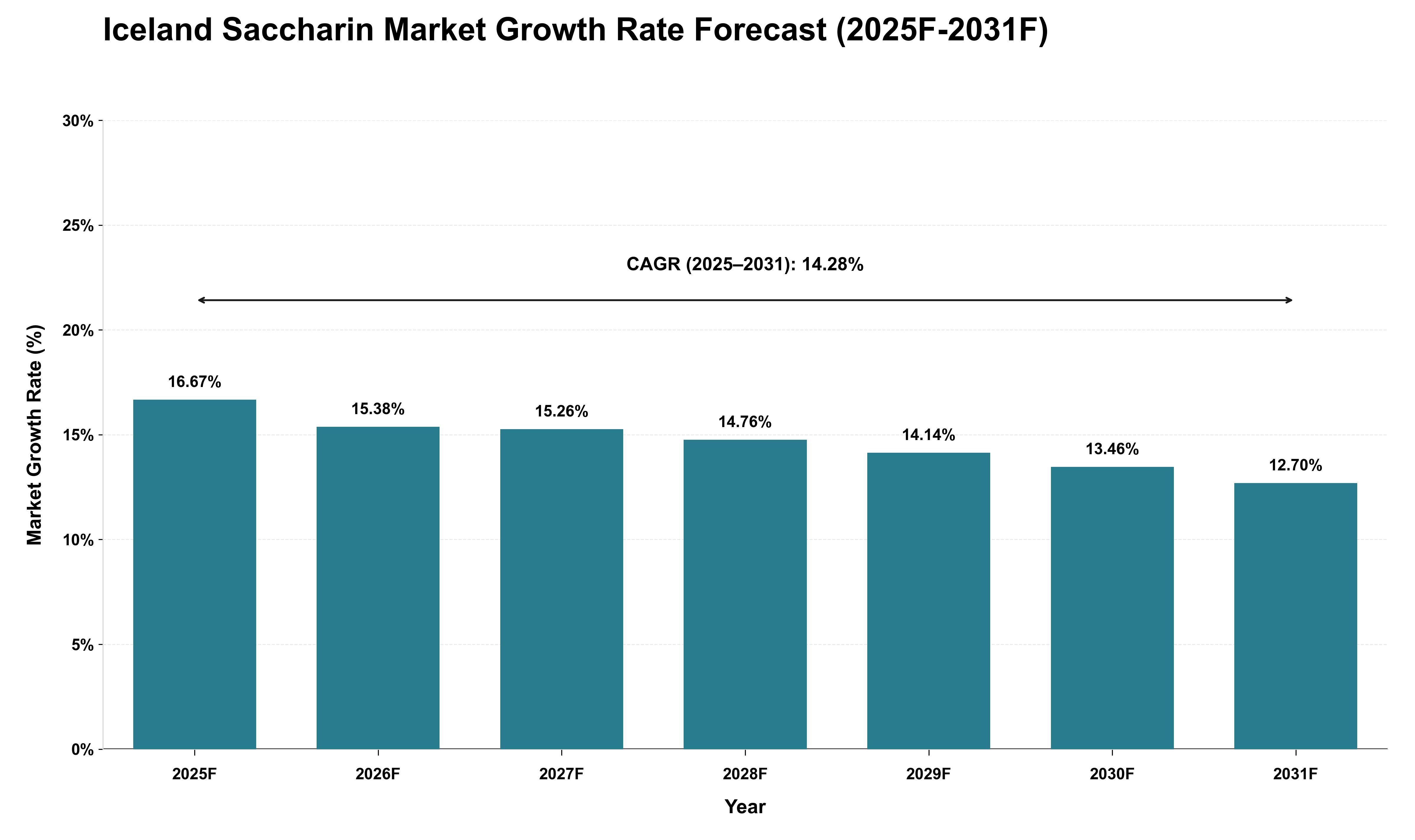
The Iceland saccharin market will exhibit a notable deceleration in growth rates from 2025 to 2031, transitioning from an initial surge of 16.67% to a projected 12.70% by the end of the period. This trend reflects underlying macroeconomic factors such as evolving consumer preferences and regulatory shifts impacting artificial sweeteners, which may influence import dependencies as domestic production capabilities adjust. The anticipated CAGR of 14.28% suggests robust demand, likely driven by increasing health consciousness and the food industry's ongoing adaptation to sugar alternatives. However, as growth moderates, import flows may stabilize, indicating a potential shift towards more localized sourcing strategies or enhanced production efficiencies within Iceland. Cyclical trends in global commodity prices and trade policies will also play critical roles in shaping these dynamics, influencing both supply chain resilience and pricing strategies for saccharin imports throughout this forecast horizon.
Key Highlights of the Report:
- Iceland Saccharin Market Outlook
- Market Size of Iceland Saccharin Market, 2024
- Forecast of Iceland Saccharin Market, 2031
- Historical Data and Forecast of Iceland Saccharin Revenues & Volume for the Period 2021-2031
- Iceland Saccharin Market Trend Evolution
- Iceland Saccharin Market Drivers and Challenges
- Iceland Saccharin Price Trends
- Iceland Saccharin Porter`s Five Forces
- Iceland Saccharin Industry Life Cycle
- Historical Data and Forecast of Iceland Saccharin Market Revenues & Volume By Form for the Period 2021-2031
- Historical Data and Forecast of Iceland Saccharin Market Revenues & Volume By Granular for the Period 2021-2031
- Historical Data and Forecast of Iceland Saccharin Market Revenues & Volume By Powder for the Period 2021-2031
- Historical Data and Forecast of Iceland Saccharin Market Revenues & Volume By Product Type for the Period 2021-2031
- Historical Data and Forecast of Iceland Saccharin Market Revenues & Volume By Sodium Saccharin for the Period 2021-2031
- Historical Data and Forecast of Iceland Saccharin Market Revenues & Volume By Calcium Saccharin for the Period 2021-2031
- Historical Data and Forecast of Iceland Saccharin Market Revenues & Volume By Insoluble Saccharin for the Period 2021-2031
- Historical Data and Forecast of Iceland Saccharin Market Revenues & Volume By Application for the Period 2021-2031
- Historical Data and Forecast of Iceland Saccharin Market Revenues & Volume By Food and Beverages for the Period 2021-2031
- Historical Data and Forecast of Iceland Saccharin Market Revenues & Volume By Agrochemicals and Chemicals for the Period 2021-2031
- Historical Data and Forecast of Iceland Saccharin Market Revenues & Volume By Dietary Supplements for the Period 2021-2031
- Historical Data and Forecast of Iceland Saccharin Market Revenues & Volume By Table-Top Sweeteners for the Period 2021-2031
- Historical Data and Forecast of Iceland Saccharin Market Revenues & Volume By Personal Care and Cosmetics Products for the Period 2021-2031
- Historical Data and Forecast of Iceland Saccharin Market Revenues & Volume By Pharmaceuticals for the Period 2021-2031
- Historical Data and Forecast of Iceland Saccharin Market Revenues & Volume By Electroplating Solutions for the Period 2021-2031
- Historical Data and Forecast of Iceland Saccharin Market Revenues & Volume By Others for the Period 2021-2031
- Iceland Saccharin Import Export Trade Statistics
- Market Opportunity Assessment By Form
- Market Opportunity Assessment By Product Type
- Market Opportunity Assessment By Application
- Iceland Saccharin Top Companies Market Share
- Iceland Saccharin Competitive Benchmarking By Technical and Operational Parameters
- Iceland Saccharin Company Profiles
- Iceland Saccharin Key Strategic Recommendations






































