Iceland Sugar Confectionery Market Growth Rate Analysis (2021 - 2031)
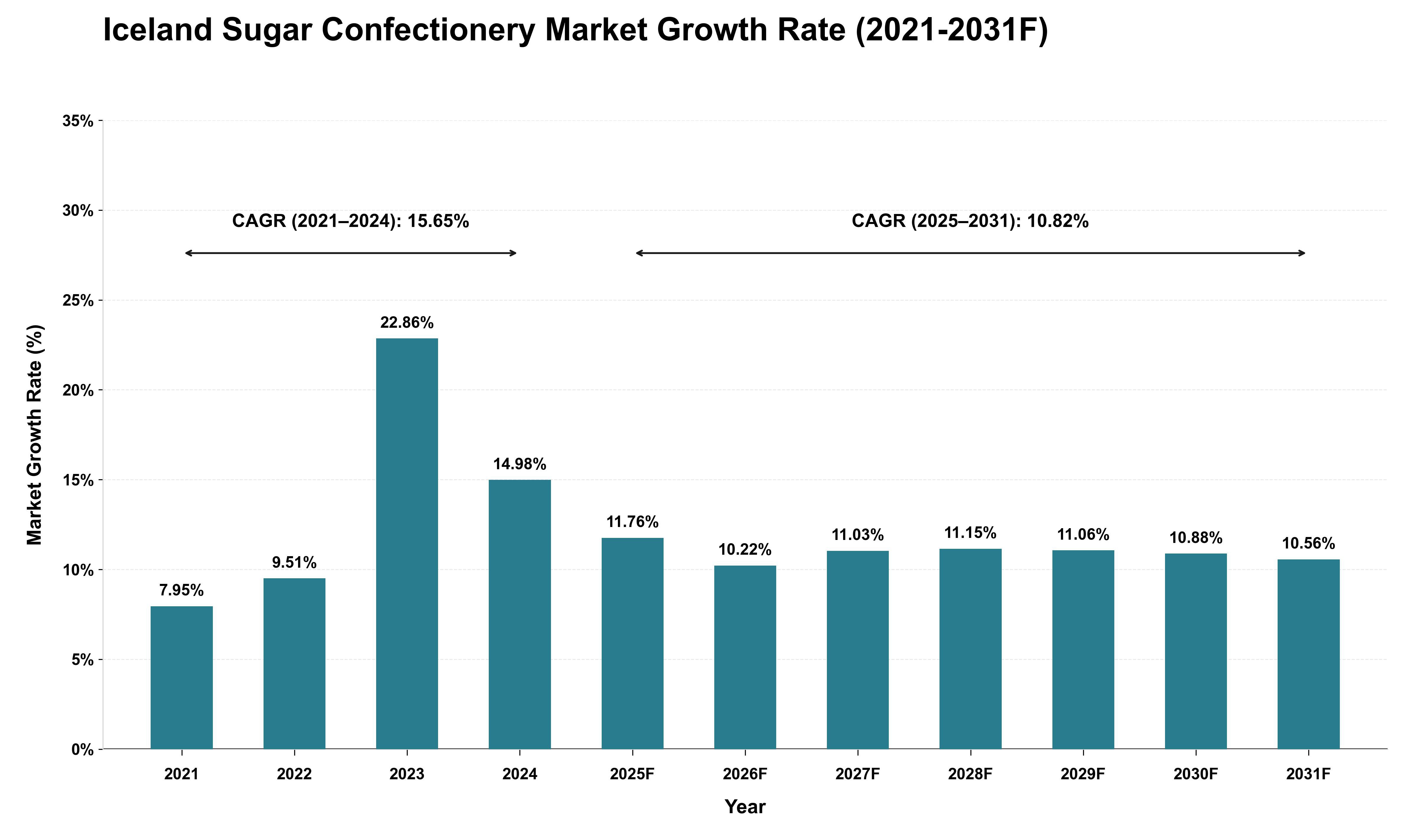
The Iceland sugar confectionery market experienced a robust historical CAGR of 15.65% from 2021 to 2024, driven by significant shifts in end-use demand as consumers increasingly sought indulgent products during post-pandemic recovery, reflected in the peak growth of 22.86% in 2023. This surge can be attributed to a resurgence in hospitality and tourism, which bolstered retail sales and consumer spending on non-essential goods. However, as the market transitions into the forecast period (2025-2031), growth is expected to moderate to a CAGR of 10.82%, aligning with broader global economic trends such as rising commodity prices and supply chain adjustments that may impact production costs and pricing strategies. The anticipated steady demand for sugar confectionery will likely be influenced by changing consumer preferences towards healthier options, alongside ongoing import reliance that could affect market dynamics as global trade patterns evolve.
Key Highlights of the Report:
- Iceland Sugar Confectionery Market Outlook
- Market Size of Iceland Sugar Confectionery Market, 2025
- Forecast of Iceland Sugar Confectionery Market, 2032
- Historical Data and Forecast of Iceland Sugar Confectionery Revenues & Volume for the Period 2022-2032F
- Iceland Sugar Confectionery Market Trend Evolution
- Iceland Sugar Confectionery Market Drivers and Challenges
- Iceland Sugar Confectionery Price Trends
- Iceland Sugar Confectionery Porter`s Five Forces
- Iceland Sugar Confectionery Industry Life Cycle
- Historical Data and Forecast of Iceland Sugar Confectionery Market Revenues & Volume By Product Type for the Period 2022-2032F
- Historical Data and Forecast of Iceland Sugar Confectionery Market Revenues & Volume By Hard-Boiled Sweets for the Period 2022-2032F
- Historical Data and Forecast of Iceland Sugar Confectionery Market Revenues & Volume By Caramel & Toffees for the Period 2022-2032F
- Historical Data and Forecast of Iceland Sugar Confectionery Market Revenues & Volume By Gums & Jellies for the Period 2022-2032F
- Historical Data and Forecast of Iceland Sugar Confectionery Market Revenues & Volume By Medicated Confectionery for the Period 2022-2032F
- Historical Data and Forecast of Iceland Sugar Confectionery Market Revenues & Volume By Mints for the Period 2022-2032F
- Historical Data and Forecast of Iceland Sugar Confectionery Market Revenues & Volume By Othersfor the Period 2022-2032F
- Historical Data and Forecast of Iceland Sugar Confectionery Market Revenues & Volume By Packaging Type for the Period 2022-2032F
- Historical Data and Forecast of Iceland Sugar Confectionery Market Revenues & Volume By Sachet for the Period 2022-2032F
- Historical Data and Forecast of Iceland Sugar Confectionery Market Revenues & Volume By Box for the Period 2022-2032F
- Historical Data and Forecast of Iceland Sugar Confectionery Market Revenues & Volume By Others for the Period 2022-2032F
- Historical Data and Forecast of Iceland Sugar Confectionery Market Revenues & Volume By Distribution Channel for the Period 2022-2032F
- Historical Data and Forecast of Iceland Sugar Confectionery Market Revenues & Volume By Retail Stores for the Period 2022-2032F
- Historical Data and Forecast of Iceland Sugar Confectionery Market Revenues & Volume By Online Stores for the Period 2022-2032F
- Historical Data and Forecast of Iceland Sugar Confectionery Market Revenues & Volume By Others for the Period 2022-2032F
- Iceland Sugar Confectionery Import Export Trade Statistics
- Market Opportunity Assessment By Product Type
- Market Opportunity Assessment By Packaging Type
- Market Opportunity Assessment By Distribution Channel
- Iceland Sugar Confectionery Top Companies Market Share
- Iceland Sugar Confectionery Competitive Benchmarking By Technical and Operational Parameters
- Iceland Sugar Confectionery Company Profiles
- Iceland Sugar Confectionery Key Strategic Recommendations






































