India Ceramic Wall and Floor Tile Market Summary
The india ceramic wall and floor tile market was estimated at USD 1331 Million in 2025 and is projected to reach USD 1905 Million by 2032, growing at a CAGR of 7.7% from 2026 to 2032.
India Ceramic Wall and Floor Tile Market Year-wise Growth Rate and Key Drivers
This graph highlights how the India Ceramic Wall and Floor Tile Market has steadily grown over the past five years, supported by major growth factors.
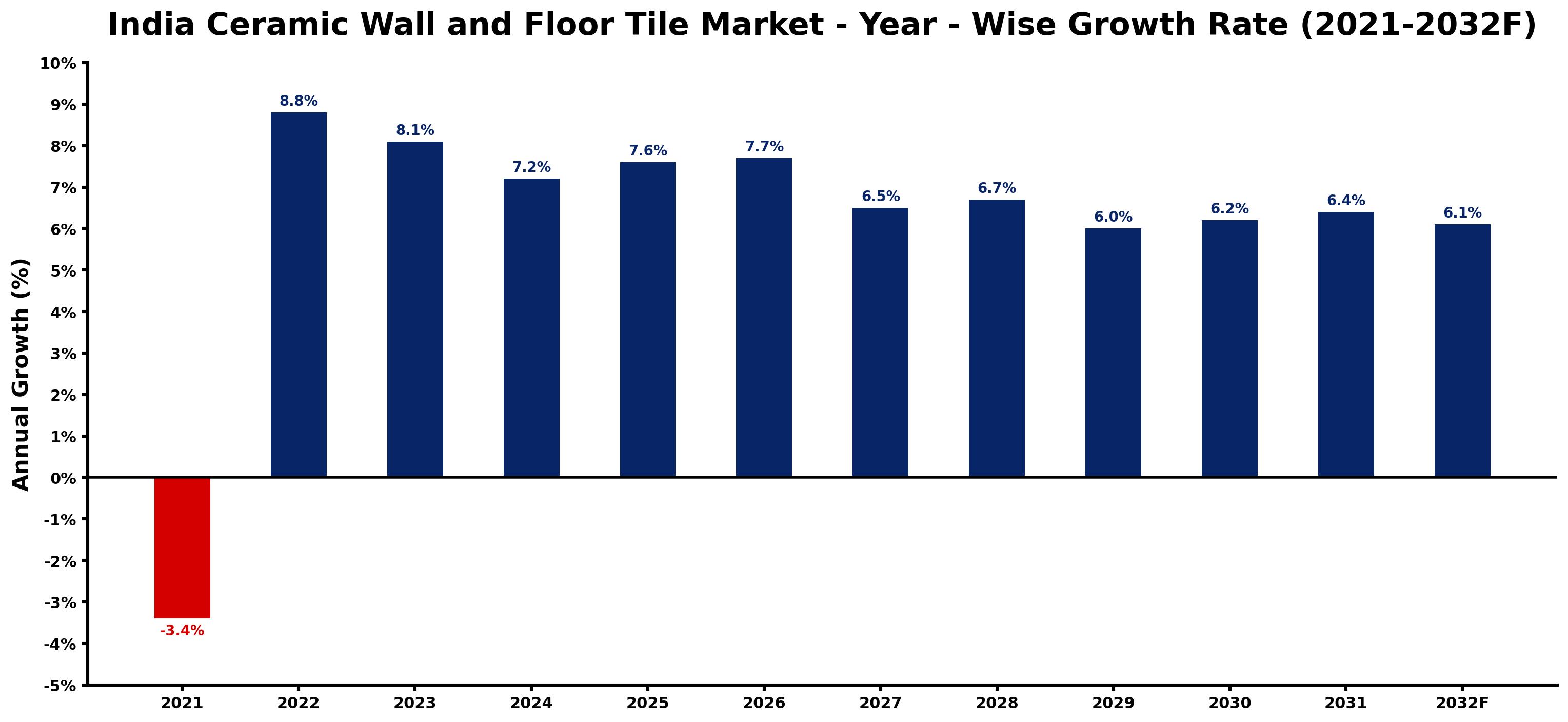
The table below presents the year wise growth rates along with the key drivers influencing the market
| Year | Growth Rate | Major Drivers |
| 2021 | -3.4% | Supply chain disruptions hindered manufacturing capabilities, leading to reduced availability of ceramic tiles in retail. |
| 2022 | 8.8% | Increased urban population density heightened demand for durable and aesthetically pleasing tiles. |
| 2023 | 8.1% | Technological enhancements in manufacturing processes improved production efficiency and quality standards. |
| 2024 | 7.2% | Architectural innovations emphasized sustainable materials, aligning with eco-friendly consumer choices. |
| 2025 | 7.6% | E-commerce platforms expanded distribution channels, reaching underserved markets and enhancing accessibility. |
| 2026 | 7.7% | Luxury residential developments fueled demand for high-end ceramic tile designs and finishes. |
| 2027 | 6.5% | Government infrastructure investments significantly boosted construction activities across major cities. |
| 2028 | 6.7% | Urbanization trends prompted a shift towards modern interior designs in residential spaces. |
| 2029 | 6.0% | Increased disposable incomes allowed consumers to prioritize aesthetic home renovations and upgrades. |
| 2030 | 6.2% | Emerging trends in smart homes integrated new technologies into the flooring and tiling sector. |
| 2031 | 6.4% | Sustainability considerations drove innovations in recyclable materials and eco-conscious production methods. |
| 2032 | 6.1% | Evolving consumer preferences emphasized personalization and unique design elements in tile products. |
Note - Market size estimations and growth projections presented in this report are based on 6Wresearch's advanced forecasting approach, validated with industry datasets as of June 2026.
India Ceramic Wall and Floor Tile Market Synopsis
The India Ceramic Wall and Floor Tile Market is projected to reach 7.7% and witness significant growth during the forecast period (2026-2032). This market is poised for robust development, underpinned by increasing demand for luxury tiles within the residential sector, along with favorable government initiatives aimed at enhancing housing accessibility. The market's growth trajectory indicates a compound annual growth rate (CAGR) of 6.4% as the sector responds to evolving consumer preferences and urbanization trends.
India Ceramic Wall and Floor Tile Market Growth Drivers
The India Ceramic Wall and Floor Tile Market is primarily influenced by several key drivers:
- The rising demand from the residential sector can be attributed to rapid urbanization across India. An increasing number of housing projects in states like Maharashtra and Gujarat have spurred interest in luxury tiles, significantly boosting revenue generation within this segment.
- The growth in disposable income among middle-class Indians has facilitated increased investments in home improvement. Homeowners are more willing to spend on premium ceramic tiles, thus contributing to overall market expansion.
- Supportive government initiatives such as the "Housing for All By 2022" program have enhanced the housing landscape, enabling consumers to access financial subsidies that encourage investments in home aesthetics and comfort.
- The trend towards modern architecture and design is leading consumers to seek innovative tile solutions, including aesthetically pleasing and durable options that meet contemporary standards.
- As urban lifestyles evolve, there is an increased emphasis on luxury living, prompting consumers to upgrade their interiors with high-quality tiles that reflect personal style and enhance property value.
India Ceramic Wall and Floor Tile Market Challenges and Restraints
The India Ceramic Wall and Floor Tile Market faces a few notable challenges:
- High production costs pose a significant barrier, mainly due to the expensive raw materials required for ceramic tile manufacturing. This situation creates thin profit margins for local manufacturers, making it difficult to compete with international players.
- Manufacturers encounter difficulties in sourcing quality raw materials domestically, further exacerbating production costs and leading to inconsistencies in product quality.
- The fluctuating prices of raw materials in the global market can affect profitability and pricing strategies, posing a risk for manufacturers planning to expand their operations.
- There is potential competition from alternative flooring solutions, such as laminates and vinyl, which can offer lower costs and easier installation processes that attract budget-conscious consumers.
- Environmental regulations surrounding tile production may require manufacturers to invest in cleaner technologies, which can strain budgets and affect competitive pricing.
India Ceramic Wall and Floor Tile Market Trends and Opportunities
The industry is witnessing several trends that present opportunities for growth:
- Digital printing technology is gaining traction within the market, allowing manufacturers to produce customized designs efficiently. This innovation not only reduces production time but also caters to the growing demand for unique interior aesthetics.
- Eco-friendly tiles, produced using sustainable materials and processes, are becoming increasingly popular among environmentally-conscious consumers. This trend signals an opportunity for manufacturers to diversify their product ranges.
- Smart home integration is influencing consumer preferences, leading to a demand for tiles that comply with modern technological standards, combining beauty with functionality.
- The increasing popularity of open-concept living spaces is boosting the demand for larger tile formats that create seamless visual transitions, compelling manufacturers to adapt their product lines accordingly.
- There is an expanding market for outdoor and landscaping tiles as homeowners invest in creating functional and aesthetic outdoor spaces, presenting a lucrative avenue for growth.
India Ceramic Wall and Floor Tile Market Government Investment and Initiatives
Government initiatives play a vital role in shaping the India Ceramic Wall and Floor Tile Market. Programs aimed at enhancing housing infrastructure and promoting urban development have captured significant public investment. The "Housing for All by 2022" initiative, for example, is a critical driver of growth, offering subsidies and support for low- and middle-income families seeking housing solutions. Furthermore, increased public spending on urban development and infrastructure projects fosters a conducive environment for the ceramic tile market as it drives demand for construction materials, including tiles. Additionally, local governments are encouraged to simplify regulatory frameworks to accelerate new housing projects, ultimately benefiting the ceramic tile industry. These investments and initiatives create a more favorable landscape for manufacturers and distributors, ultimately contributing to market resilience and growth.
India Ceramic Wall and Floor Tile Market Latest Developments (May 2025 - June 2026)
Recent developments in the India Ceramic Wall and Floor Tile Market indicate a focused shift towards innovation and sustainability. Manufacturers are increasingly adopting digital printing technologies to enhance productivity and meet evolving consumer demands for bespoke designs. There has also been a noticeable shift towards green production practices, with companies exploring sustainable sourcing of raw materials to align with global environmental standards. Furthermore, ongoing urbanization continues to create opportunities for expansion as government initiatives outline future housing projects. The market is also responding to changes in consumer behavior, with significant interest in multifunctional spaces, prompting an increase in demand for versatile tile solutions. Overall, the period from May 2025 to June 2026 has been characterized by an industry moving towards modern practices and consumer-driven product offerings.
India Ceramic Wall and Floor Tile Market - Key Attractiveness of the Report
- 10 Years of Market Numbers
- Historical Data Starting from 2022 to 2025
- Base Year: 2025
- Forecast Data until 2032
- Key Performance Indicators Impacting the Market
- Major Upcoming Developments and Projects
Key Highlights of the Report:
- India Ceramic Wall and Floor Tile Market Outlook
- Market Size of India Ceramic Wall and Floor Tile Market, 2025
- Forecast of India Ceramic Wall and Floor Tile Market, 2032
- Historical Data and Forecast of India Ceramic Wall and Floor Tile Revenues & Volume for the Period 2022-2032F
- India Ceramic Wall and Floor Tile Market Trend Evolution
- India Ceramic Wall and Floor Tile Market Drivers and Challenges
- India Ceramic Wall and Floor Tile Price Trends
- India Ceramic Wall and Floor Tile Porter's Five Forces
- India Ceramic Wall and Floor Tile Industry Life Cycle
- Historical Data and Forecast of India Ceramic Wall and Floor Tile Market Revenues & Volume By Product Type for the Period 2022-2032F
- Historical Data and Forecast of India Ceramic Wall and Floor Tile Market Revenues & Volume By Wall Tile for the Period 2022-2032F
- Historical Data and Forecast of India Ceramic Wall and Floor Tile Market Revenues & Volume By Floor Tile for the Period 2022-2032F
- Historical Data and Forecast of India Ceramic Wall and Floor Tile Market Revenues & Volume By Raw Material for the Period 2022-2032F
- Historical Data and Forecast of India Ceramic Wall and Floor Tile Market Revenues & Volume By Feldspar for the Period 2022-2032F
- Historical Data and Forecast of India Ceramic Wall and Floor Tile Market Revenues & Volume By Kaolin for the Period 2022-2032F
- Historical Data and Forecast of India Ceramic Wall and Floor Tile Market Revenues & Volume By Bentonite for the Period 2022-2032F
- Historical Data and Forecast of India Ceramic Wall and Floor Tile Market Revenues & Volume By Silica Sand for the Period 2022-2032F
- Historical Data and Forecast of India Ceramic Wall and Floor Tile Market Revenues & Volume By Application for the Period 2022-2032F
- Historical Data and Forecast of India Ceramic Wall and Floor Tile Market Revenues & Volume By Residential Replacement for the Period 2022-2032F
- Historical Data and Forecast of India Ceramic Wall and Floor Tile Market Revenues & Volume By New Residential for the Period 2022-2032F
- Historical Data and Forecast of India Ceramic Wall and Floor Tile Market Revenues & Volume By Commercial for the Period 2022-2032F
- Historical Data and Forecast of India Ceramic Wall and Floor Tile Market Revenues & Volume By Others for the Period 2022-2032F
- India Ceramic Wall and Floor Tile Import Export Trade Statistics
- Market Opportunity Assessment By Product Type
- Market Opportunity Assessment By Raw Material
- Market Opportunity Assessment By Application
- India Ceramic Wall and Floor Tile Top Companies Market Share
- India Ceramic Wall and Floor Tile Competitive Benchmarking By Technical and Operational Parameters
- India Ceramic Wall and Floor Tile Company Profiles
- India Ceramic Wall and Floor Tile Key Strategic Recommendations






































