India Cooking Oil Market Growth Rate Analysis (2025 - 2031)
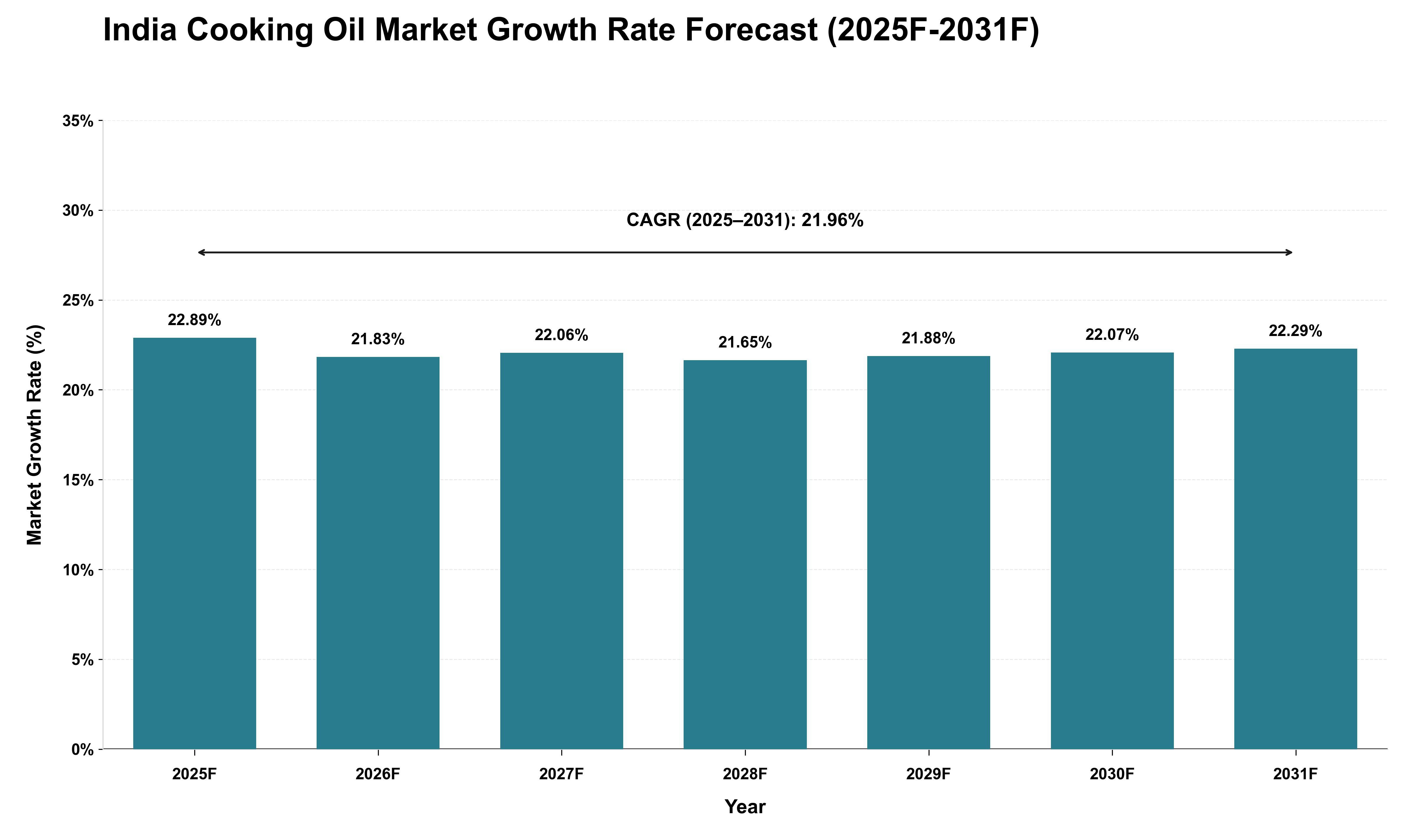
The India cooking oil market is poised for robust growth, with a projected CAGR of 21.96% from 2025 to 2031, reflecting a dynamic competitive landscape driven by increasing consumer demand and evolving dietary preferences. As the annual growth rates fluctuate between 21.65% and 22.89%, this indicates a resilient market responding to both domestic production enhancements and import dependencies, particularly in sourcing palm oil and other edible oils. The anticipated rise in disposable incomes will likely fuel consumption patterns favoring premium and health-oriented products, compelling manufacturers to innovate and diversify their offerings. Additionally, cyclical trends in agricultural output and global commodity prices will influence supply chain dynamics, potentially impacting pricing strategies. Overall, the interplay of these macroeconomic factors will shape a vibrant market environment that encourages investment and capacity expansion within the sector throughout this forecast period.
Key Highlights of the Report:
- India Cooking Oil Market Outlook
- Market Size of India Cooking Oil Market, 2024
- Forecast of India Cooking Oil Market, 2031
- Historical Data and Forecast of India Cooking Oil Revenues & Volume for the Period 2021- 2031
- India Cooking Oil Market Trend Evolution
- India Cooking Oil Market Drivers and Challenges
- India Cooking Oil Price Trends
- India Cooking Oil Porter's Five Forces
- India Cooking Oil Industry Life Cycle
- Historical Data and Forecast of India Cooking Oil Market Revenues & Volume By Product Type for the Period 2021- 2031
- Historical Data and Forecast of India Cooking Oil Market Revenues & Volume By Sunflower Oil for the Period 2021- 2031
- Historical Data and Forecast of India Cooking Oil Market Revenues & Volume By Corn Oil for the Period 2021- 2031
- Historical Data and Forecast of India Cooking Oil Market Revenues & Volume By Palm Oil for the Period 2021- 2031
- Historical Data and Forecast of India Cooking Oil Market Revenues & Volume By Others for the Period 2021- 2031
- Historical Data and Forecast of India Cooking Oil Market Revenues & Volume By Package Type for the Period 2021- 2031
- Historical Data and Forecast of India Cooking Oil Market Revenues & Volume By Retail for the Period 2021- 2031
- Historical Data and Forecast of India Cooking Oil Market Revenues & Volume By Bulk for the Period 2021- 2031
- India Cooking Oil Import Export Trade Statistics
- Market Opportunity Assessment By Product Type
- Market Opportunity Assessment By Package Type
- India Cooking Oil Top Companies Market Share
- India Cooking Oil Competitive Benchmarking By Technical and Operational Parameters
- India Cooking Oil Company Profiles
- India Cooking Oil Key Strategic Recommendations






































