India Cosmetics Market Top 5 Importing Countries and Market Competition (HHI) Analysis
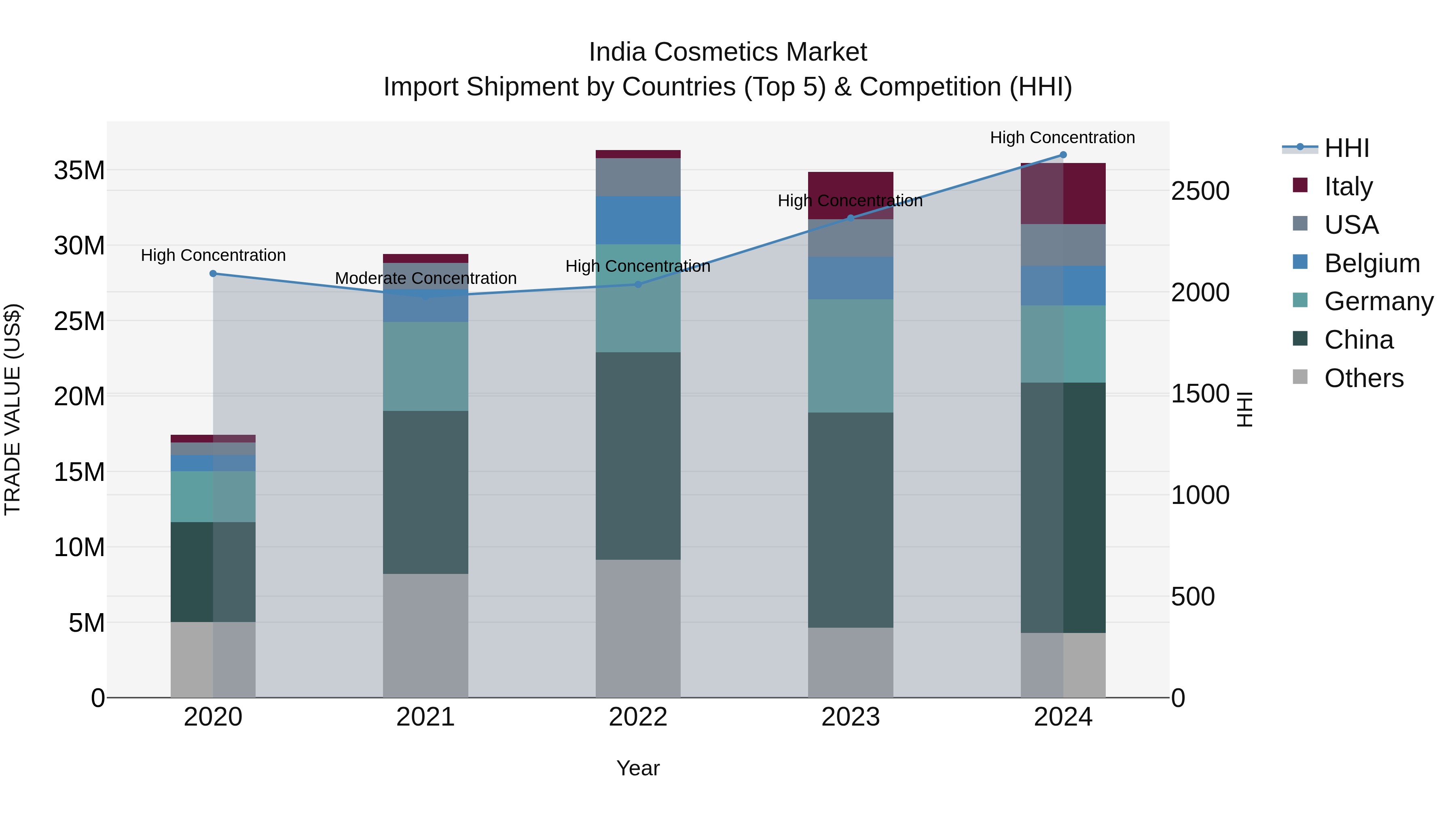
India`s cosmetics import market continued to thrive in 2024, with top exporting countries including China, Germany, Italy, USA, and Belgium. Despite high concentration with a high Herfindahl-Hirschman Index (HHI), the market demonstrated impressive growth with a Compound Annual Growth Rate (CAGR) of 19.41% from 2020 to 2024. The growth momentum remained steady, with a growth rate of 1.67% from 2023 to 2024, indicating sustained interest and demand for imported cosmetics in India.
India Cosmetics Market Growth Rate
According to 6Wresearch internal database and industry insights, the India Cosmetics Market is projected to grow at a compound annual growth rate (CAGR) of 7.4% during the forecast period 2026–2032.
Topics Covered in the India Cosmetics Market Report
The India Cosmetics Market report thoroughly covers the market by product type and category. The report provides a detailed analysis of ongoing market trends, opportunities/high-growth areas, and market drivers, helping stakeholders devise and align their market strategies according to current and future market dynamics.
India Cosmetics Market Highlights
| Report Name | India Cosmetics Market |
| Forecast period | 2026–2032 |
| CAGR | 7.4% |
| Growing Sector | Personal Care and Beauty |
India Cosmetics Market Synopsis
Due to the growing focus of consumer on personal grooming, skincare, and beauty products, the cosmetic industry in India is witnessing huge growth. Along with this, the e-commerce platforms are also expanding making cosmetic products more accessible. In addition to this, the health-conscious consumers are also rising in number giving a boost in the production of organic and natural cosmetics. The growing presence of social media and celebrity endorsements, significantly influence the choice of consumer, further driving market demand.
Evaluation of Growth Drivers in the India Cosmetics Market
Below are some prominent drivers and their influence on the market dynamics:
| Drivers | Primary Segments Affected | Why It Matters |
| Growing Beauty Consciousness | By Product Type (Face Care, Hair Care) | The increasing focus on grooming and skincare drives demand for beauty products. |
| Demand for Sustainable Products | By Category (Organic/Natural, Synthetic) | Eco-friendly and organic products are becoming more sought after. |
| E-commerce Growth | By Distribution Channel (Online Retail, Offline Retail) | E-commerce platforms provide easier access to a wide range of products. |
| Celebrity Endorsements | By Product Type (Color Cosmetics, Bath Products) | Celebrity endorsements increase the appeal and demand for products. |
| Innovations in Product Formulations | By Product Type (Face Care, Body Care) | Innovations in formulation improve product performance and safety. |
The India Cosmetics Market Size is projected to grow at a CAGR of 7.4% during the forecast period of 2026–2032. There are many constituents that contribute to market growth. First, is the consumer growing interest in personal grooming and skincare, then the e-commerce platforms are expanding widely making cosmetics more accessible. In addition to this, the government initiatives further support sustainable practices in the beauty industry. This growth is further proliferated by the influence of social media and celebrity endorsements. Along with this, the technology in product development and packaging, is also improving significantly. Another major factor boosting India Cosmetics Market Growth is the consumer growing preference for Personalized beauty solutions.
Evaluation of Restraints in the India Cosmetics Market
Below are some prominent restraints and their influence on the market dynamics:
| Restraints | Primary Segments Affected | What This Means |
| High Price of Premium Products | By Product Type (Face Care, Body Care) | Premium cosmetics may be inaccessible to price-sensitive consumers. |
| Skin Sensitivity Issues | By Product Type (Face Care, Bath Products) | Skin reactions to certain ingredients may deter some consumers. |
| Strict Regulatory Standards | By Category (Organic/Natural, Synthetic) | The production costs of organic certification and delays in product launches due to regulatory hurdles. |
| Intense Competition | By Product Type (Hair Care, Color Cosmetics) | Market share for new players is restricted due to competition from both local and international brands |
India Cosmetics Market Challenges
The market comes across challenges such as the high cost of premium cosmetics and skin sensitivity issues. The high cost of premium products may restrict their reach, with the growth of non-invasive treatments. For organic and natural products, the cost of production is raised, and introduction of new products is delayed due to the compliance with stringent regulatory requirements. Intense competition from both local and international brands further makes it difficult for smaller companies to gain market share.
India Cosmetics Market Trends
Some major trends contributing to the India Cosmetics Market growth are:
- Rise in Organic and Natural Products: The popularity of organic and natural beauty items is rising, due to the consumer surging need for eco-friendly, chemical-free products. Furthermore, awareness about sustainability and health is pushing more consumers toward these products.
- Surge in E-commerce: In tier-2 and tier-3 cities, the requirement for online shopping of cosmetic products is rising, offering consumer easy access a wider variety of beauty products.
- Personalized Beauty Solutions: As consumers demand skincare products suited to their individual skin types and personal preferences, customized beauty solutions are on the rise. And to this, the market is responding with more tailored beauty products and personalized skincare treatments.
- Celebrity and Influencer Influence: The growing influence of celebrities and influencers, particularly on social media platforms, is driving demand for cosmetic products.
Investment Opportunities in the India Cosmetics Market
Some investment opportunities that will shape the dynamics of the India Cosmetics Market include:
- Expansion in E-commerce Platforms: Firms will get better market access via investments in online avenues, helping them reach customers in tier-2 and tier-3 cities.
- Sustainable Product Lines: Companies will produce organic, natural, and environmentally friendly cosmetic products to meet the rising consumer demand for sustainable cosmetics.
- Advanced Product Development: Research into new face and hair care formulations, as well as color cosmetics, will help meet the growing consumer demand for cutting-edge beauty solutions.
- Brand Partnerships: Partnering with celebrities, influencers, and local beauty experts to promote cosmetic products will expand market visibility.
Top 5 Leading Players in the India Cosmetics Market
Below is the list of prominent companies leading the India Cosmetics Market:
1. L'Oréal Group
| Company Name | L'Oréal Group |
|---|---|
| Established Year | 1909 |
| Headquarters | Clichy, France |
| Official Website | Click Here |
L'Oréal is a global leader in beauty and personal care products, offering a wide range of skincare, haircare, and beauty products with a strong presence in India.
2. Estée Lauder Companies
| Company Name | Estée Lauder Companies |
|---|---|
| Established Year | 1946 |
| Headquarters | New York, USA |
| Official Website | Click Here |
Estée Lauder is known for premium skincare, makeup, and fragrance products. It is a widely recognized brand in India for its luxurious offerings.
3. Procter & Gamble
| Company Name | Procter & Gamble (P&G) |
|---|---|
| Established Year | 1837 |
| Headquarters | Cincinnati, Ohio, USA |
| Official Website | Click Here |
P&G offers a diverse range of personal care products in India, including popular brands like Olay and Pantene for skincare and haircare.
4. Unilever
| Company Name | Unilever |
|---|---|
| Established Year | 1930 |
| Headquarters | London, UK & Rotterdam, Netherlands |
| Official Website | Click Here |
Unilever is a global leader in personal care and beauty products, offering well-known brands such as Dove, Axe, and TRESemmé widely accessible in India.
5. Hindustan Unilever Limited
| Company Name | Hindustan Unilever Limited (HUL) |
|---|---|
| Established Year | 1933 |
| Headquarters | Mumbai, India |
| Official Website | Click Here |
Hindustan Unilever is a leader in personal care, offering products like Dove, Lux, and Pond’s in India, with a wide consumer base across the country.
Government Regulations in the India Cosmetics Market
According to Indian Government Data, there are several regulations that ensure the cosmetic products comply with safety and quality standards. There is Central Drugs Standard Control Organization (CDSCO), that handles the cosmetic industry, making sure that cosmetic products comply with safety and quality standards. Then there is, Bureau of Indian Standards (BIS), giving guidelines for the quality of cosmetic products sold in India. In addition, there are regulations revolving around labeling, ingredient disclosures, and claims made by cosmetic brands, that are strict to ensure consumer protection.
Future Insights of the India Cosmetics Market
The India Cosmetics Market Share is anticipated to rise continuously, due to rising consumer demand for personal care products, increasing preference for organic beauty solutions, and the growth of e-commerce. Furthermore, the growing advancements in product formulations, packaging advancements, and personalized beauty products will continue to propel the market forward. The increasing influence of social media and celebrity endorsements will also continue to shape the beauty landscape in India.
Market Segmentation Analysis
The report offers a comprehensive study of the following market segments and their leading categories:
By Product Type – Face Care to Lead the Market
According to Rashika, Senior Research Analyst, 6Wresearch, Face care products are expected to dominate the market due to increasing consumer interest in skincare routines, including anti-aging and everyday skincare.
By Category – Organic/Natural to Lead the Market
Organic and natural products will lead the market, due to rising consumer preference for eco-friendly and chemical-free cosmetics. This shift supports sustainability.
Key Attractiveness of the Report
- 10 Years of Market Numbers
- Historical Data Starting from 2022 to 2025
- Base Year: 2025
- Forecast Data until 2032
- Key Performance Indicators Impacting the Market
- Major Upcoming Developments and Projects
Key Highlights of the Report:
- India Cosmetics Market Outlook
- Market Size of India Cosmetics Market, 2025
- Forecast of India Cosmetics Market, 2032
- Historical Data and Forecast of India Cosmetics Revenues & Volume for the Period 2022- 2032
- India Cosmetics Market Trend Evolution
- India Cosmetics Market Drivers and Challenges
- India Cosmetics Price Trends
- India Cosmetics Porter's Five Forces
- India Cosmetics Industry Life Cycle
- Historical Data and Forecast of India Cosmetics Market Revenues & Volume By Product Type for the Period 2022- 2032
- Historical Data and Forecast of India Cosmetics Market Revenues & Volume By Face Care for the Period 2022- 2032
- Historical Data and Forecast of India Cosmetics Market Revenues & Volume By Body Care for the Period 2022- 2032
- Historical Data and Forecast of India Cosmetics Market Revenues & Volume By Hair Care for the Period 2022- 2032
- Historical Data and Forecast of India Cosmetics Market Revenues & Volume By Bath Products for the Period 2022- 2032
- Historical Data and Forecast of India Cosmetics Market Revenues & Volume By Color Cosmetics for the Period 2022- 2032
- Historical Data and Forecast of India Cosmetics Market Revenues & Volume By Category for the Period 2022- 2032
- Historical Data and Forecast of India Cosmetics Market Revenues & Volume By Organic/Natural for the Period 2022- 2032
- Historical Data and Forecast of India Cosmetics Market Revenues & Volume By Synthetic for the Period 2022- 2032
- India Cosmetics Import Export Trade Statistics
- Market Opportunity Assessment By Product Type
- Market Opportunity Assessment By Category
- India Cosmetics Top Companies Market Share
- India Cosmetics Competitive Benchmarking By Technical and Operational Parameters
- India Cosmetics Company Profiles
- India Cosmetics Key Strategic Recommendations
Market Covered
The report provides a detailed analysis of the following market segments and subsegments:
By Product Type:
- Face Care
- Body Care
- Hair Care
- Bath Products
- Color Cosmetics
By Category:
- Organic/Natural
- Synthetic






































