India Digital Signature Market Size & Growth Rate (2026-2032)
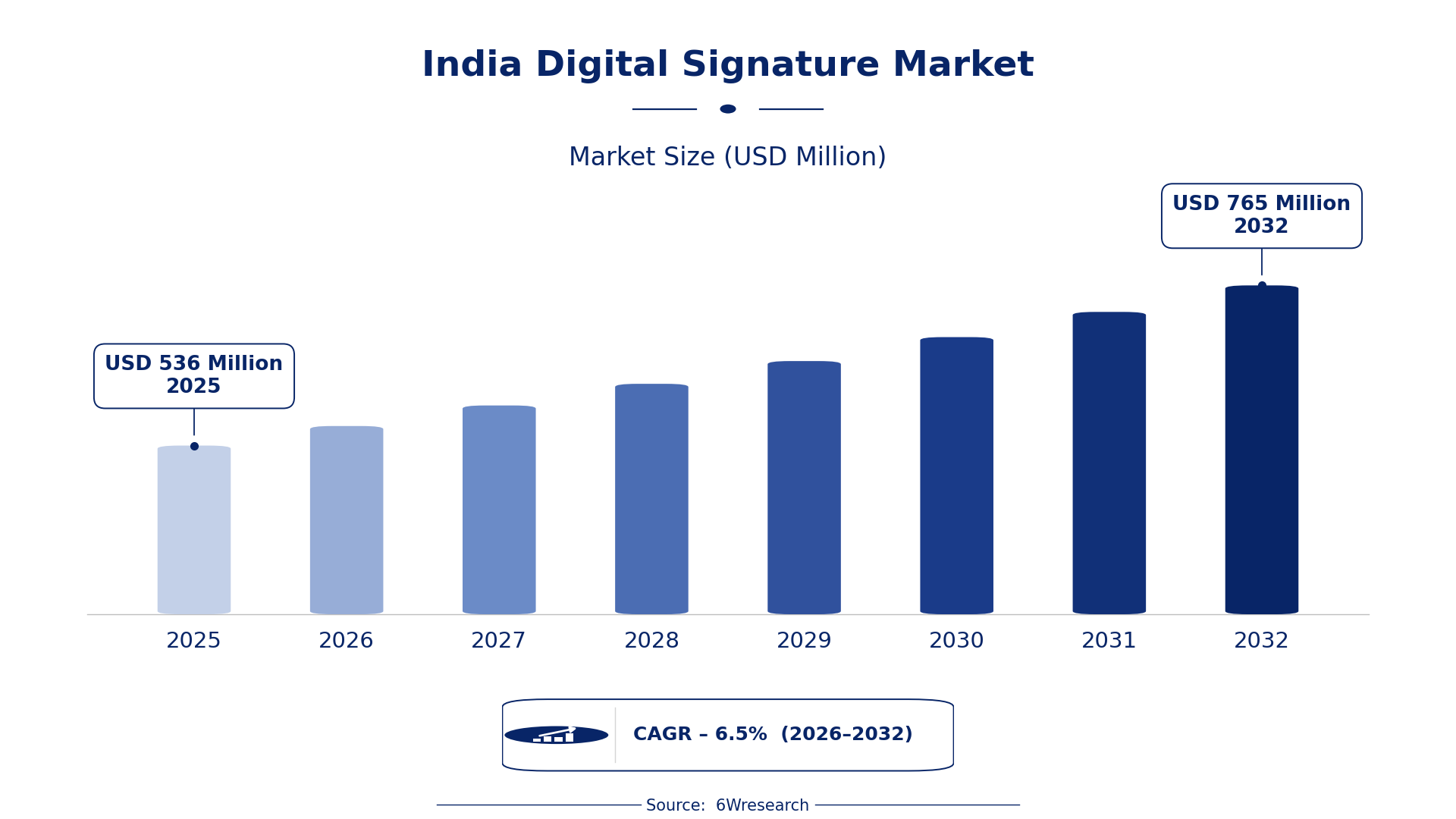
The India Digital Signature Market was estimated at USD 536 Million in 2025 and is projected to reach USD 765 Million by 2032, growing at a CAGR of 6.5% from 2026 to 2032.
India Digital Signature Market Synopsis
The rapid shift towards a digital economy is the most influential factor propelling the India Digital Signature Market. As businesses increasingly adopt online transactions, the demand for secure and legally acceptable electronic signatures has surged.
Government initiatives to enhance digital infrastructure and streamline processes are further boosting market growth. The combination of regulatory support and a push for contactless transactions has made digital signatures a necessity in various sectors including finance, e-commerce, and government services.
India Digital Signature Market Year-wise Growth Rate and Key Drivers
This graph illustrates the annual growth rates of the India Digital Signature Market from 2021 to 2032, highlighting a steady upward trajectory and projected expansion over the forecast period.
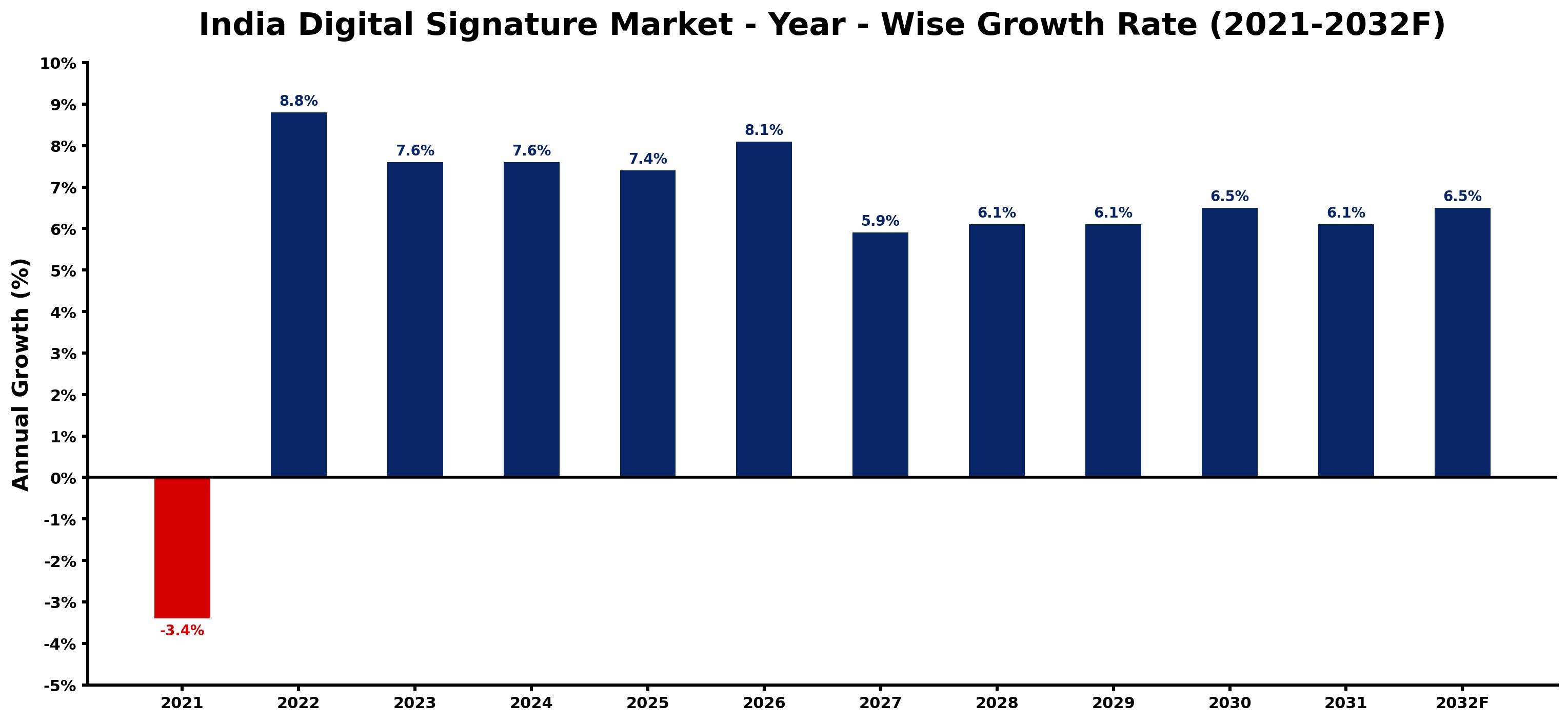
The table below presents the year‑wise growth rates along with the key drivers influencing the market
| Year | Growth Rate | Major Drivers |
| 2021 | -3.4% | Maharashtra government delays digital signature adoption policies. |
| 2022 | 8.8% | Implementation of e-Governance policies enhancing digital transactions efficiency. |
| 2023 | 7.6% | Increase in remote work driving demand for secure documents. |
| 2024 | 7.6% | Rising number of online businesses requiring compliance solutions. |
| 2025 | 7.4% | Government push for digital identity adoption boosting signatures. |
| 2026 | 8.1% | Growth in telemedicine necessitating secure patient documentation. |
| 2027 | 5.9% | Regulatory bodies promoting electronic contracts for businesses. |
| 2028 | 6.1% | Increase in startups demanding efficient digital workflow solutions. |
| 2029 | 6.1% | Local fintech companies expanding online services with digital signatures. |
| 2030 | 6.5% | Awareness campaigns on cybersecurity driving secure document usage. |
| 2031 | 6.1% | Legal reforms facilitating the acceptance of electronic signatures. |
| 2032 | 6.5% | Increased digitization in education requiring verified documents. |
Note: Market size estimations and growth projections presented in this report are based on 6Wresearch's proprietary forecasting methodology, utilizing the latest available industry data, government publications, and primary research inputs.
India Digital Signature Market Key Takeaways
Below are some of the specific key takeaways from the market, including:
- The increasing legal acceptance of electronic signatures strengthens their adoption across industries.
- Remote work trends have accelerated the need for secure digital transaction solutions.
- Regulatory frameworks are fostering an environment conducive to digital signature utilization.
- Growing concerns over document authenticity and integrity are driving demand for secure signature solutions.
- There is a pressing need for public awareness programs to enhance understanding of digital signatures.
Evaluation of Restraints in India Digital Signature Market
Despite promising growth, several factors limit the India Digital Signature Market. A pervasive lack of awareness about digital signatures and their legal validity persists among many users. Many organizations continue to rely on traditional signatures, hindering broader acceptance. Compounding these issues are concerns regarding interoperability among various digital signature providers, which can create challenges in user experience and verification processes. Additionally, worries about the security and privacy of digital signatures may make potential users hesitant to fully embrace the technology.
India Digital Signature Market Trends
The demand for advanced digital signatures is rising, driven by increasing cyber threats that necessitate higher security protocols. Innovations in biometric signatures, which integrate personal identification features, are gaining traction. Furthermore, the push for seamless user experiences is driving the development of integrated platforms combining digital signatures with other transactional services.
India Digital Signature Market Opportunities
Opportunities for growth are plentiful, particularly in sectors that have lagged in adopting digital signatures. As businesses transition to fully digital operations, the potential for integration with emerging technologies like blockchain presents a lucrative avenue. Furthermore, expanding e-commerce and digital government services are likely to increase the need for secure electronic signatures, creating a ripe environment for investment.
Government Initiatives in the India Digital Signature Market
The Indian government is actively shaping the Digital Signature Market through a variety of policy frameworks and initiatives aimed at enhancing digital infrastructure and promoting e-governance. As digital transactions become increasingly integral to business operations and public services, government support is critical in establishing the necessary legal and operational frameworks.
- A national digital infrastructure upgrade programme launched to improve the efficiency and security of online transactions.
- Ongoing efforts to educate businesses and consumers about the legal validity and usage of digital signatures.
- Current regulations encouraging the use of digital signatures in public procurement processes.
- A planned initiative expected to introduce digital signature requirements for various governmental services by 2026.
- Recent policy adjustments that streamline the process for obtaining digital signatures, simplifying compliance for businesses.
Future Insights of the India Digital Signature Market
Looking ahead, the India Digital Signature Market is expected to continue its growth trajectory driven by technological advancements and increased regulatory support. As awareness around digital signatures expands, adoption rates are set to rise across various sectors, from finance to healthcare. Anticipated developments in digital security will also play a crucial role in shaping market dynamics, making digital signatures a standard practice in transactional processes.
India Digital Signature Market Latest Developments
Recent activity in the India Digital Signature Market reveals a strong push towards innovation and expansion among key stakeholders. As organizations adapt to post-pandemic realities, the demand for secure and efficient document processing solutions continues to be a top priority. This trend is reflected in a flurry of new product launches and strategic partnerships designed to enhance digital signature offerings.
- A major technology vendor announced the launch of an advanced digital signature platform in Q1 2025, targeting e-commerce and financial services.
- In early 2025, a consortium of companies began an initiative to standardize digital signature protocols to enhance interoperability among providers.
- A regional operator initiated a pilot program in late 2025 to test biometric signature technology aimed at enhancing security and user experience.
- An ongoing effort by a leading digital signature provider to expand its service offerings in government sectors began in mid-2025 and remains underway.
- A planned rollout of a comprehensive training program for small businesses on digital signature usage is expected to start in early 2026.
India Digital Signature Market - Key Attractiveness of the Report
- 10 Years of Market Numbers
- Historical Data Starting from 2022 to 2025
- Base Year: 2025
- Forecast Data until 2032
- Key Performance Indicators Impacting the Market
- Major Upcoming Developments and Projects
Key Highlights of the Report:
- India Digital Signature Market Outlook
- Market Size of India Digital Signature Market, 2025
- Forecast of India Digital Signature Market, 2032
- Historical Data and Forecast of India Digital Signature Revenues & Volume for the Period 2022-2032F
- India Digital Signature Market Trend Evolution
- India Digital Signature Market Drivers and Challenges
- India Digital Signature Price Trends
- India Digital Signature Porter's Five Forces
- India Digital Signature Industry Life Cycle
- Historical Data and Forecast of India Digital Signature Market Revenues & Volume By Component for the Period 2022-2032F
- Historical Data and Forecast of India Digital Signature Market Revenues & Volume By Solutions for the Period 2022-2032F
- Historical Data and Forecast of India Digital Signature Market Revenues & Volume By Services for the Period 2022-2032F
- Historical Data and Forecast of India Digital Signature Market Revenues & Volume By Solution for the Period 2022-2032F
- Historical Data and Forecast of India Digital Signature Market Revenues & Volume By Software for the Period 2022-2032F
- Historical Data and Forecast of India Digital Signature Market Revenues & Volume By Hardware for the Period 2022-2032F
- Historical Data and Forecast of India Digital Signature Market Revenues & Volume By Vertical for the Period 2022-2032F
- Historical Data and Forecast of India Digital Signature Market Revenues & Volume By BFSI for the Period 2022-2032F
- Historical Data and Forecast of India Digital Signature Market Revenues & Volume By Government for the Period 2022-2032F
- Historical Data and Forecast of India Digital Signature Market Revenues & Volume By Defense for the Period 2022-2032F
- Historical Data and Forecast of India Digital Signature Market Revenues & Volume By Legal for the Period 2022-2032F
- Historical Data and Forecast of India Digital Signature Market Revenues & Volume By Real Estate for the Period 2022-2032F
- Historical Data and Forecast of India Digital Signature Market Revenues & Volume By Organization Size for the Period 2022-2032F
- Historical Data and Forecast of India Digital Signature Market Revenues & Volume By Large Enterprises for the Period 2022-2032F
- Historical Data and Forecast of India Digital Signature Market Revenues & Volume By Small and Medium-Sized Enterprises (SMEs) for the Period 2022-2032F
- Historical Data and Forecast of India Digital Signature Market Revenues & Volume By Deployment Mode for the Period 2022-2032F
- Historical Data and Forecast of India Digital Signature Market Revenues & Volume By Cloud for the Period 2022-2032F
- Historical Data and Forecast of India Digital Signature Market Revenues & Volume By On-Premises for the Period 2022-2032F
- India Digital Signature Import Export Trade Statistics
- Market Opportunity Assessment By Component
- Market Opportunity Assessment By Solution
- Market Opportunity Assessment By Vertical
- Market Opportunity Assessment By Organization Size
- Market Opportunity Assessment By Deployment Mode
- India Digital Signature Top Companies Market Share
- India Digital Signature Competitive Benchmarking By Technical and Operational Parameters
- India Digital Signature Company Profiles
- India Digital Signature Key Strategic Recommendations






































