India Fast Fashion Market Top 5 Importing Countries and Market Competition (HHI) Analysis
India`s fast fashion import market continues to show strong growth, with China, Vietnam, Turkey, Cambodia, and Bangladesh emerging as the top exporting countries in 2024. The market witnessed a shift from high concentration in 2023 to moderate concentration in 2024, indicating increased diversification. The compound annual growth rate (CAGR) from 2020 to 2024 stood at an impressive 10.74%, with a notable growth rate of 9.8% from 2023 to 2024. These trends signify a dynamic and evolving landscape in India`s fast fashion import sector, offering opportunities for further expansion and competition.
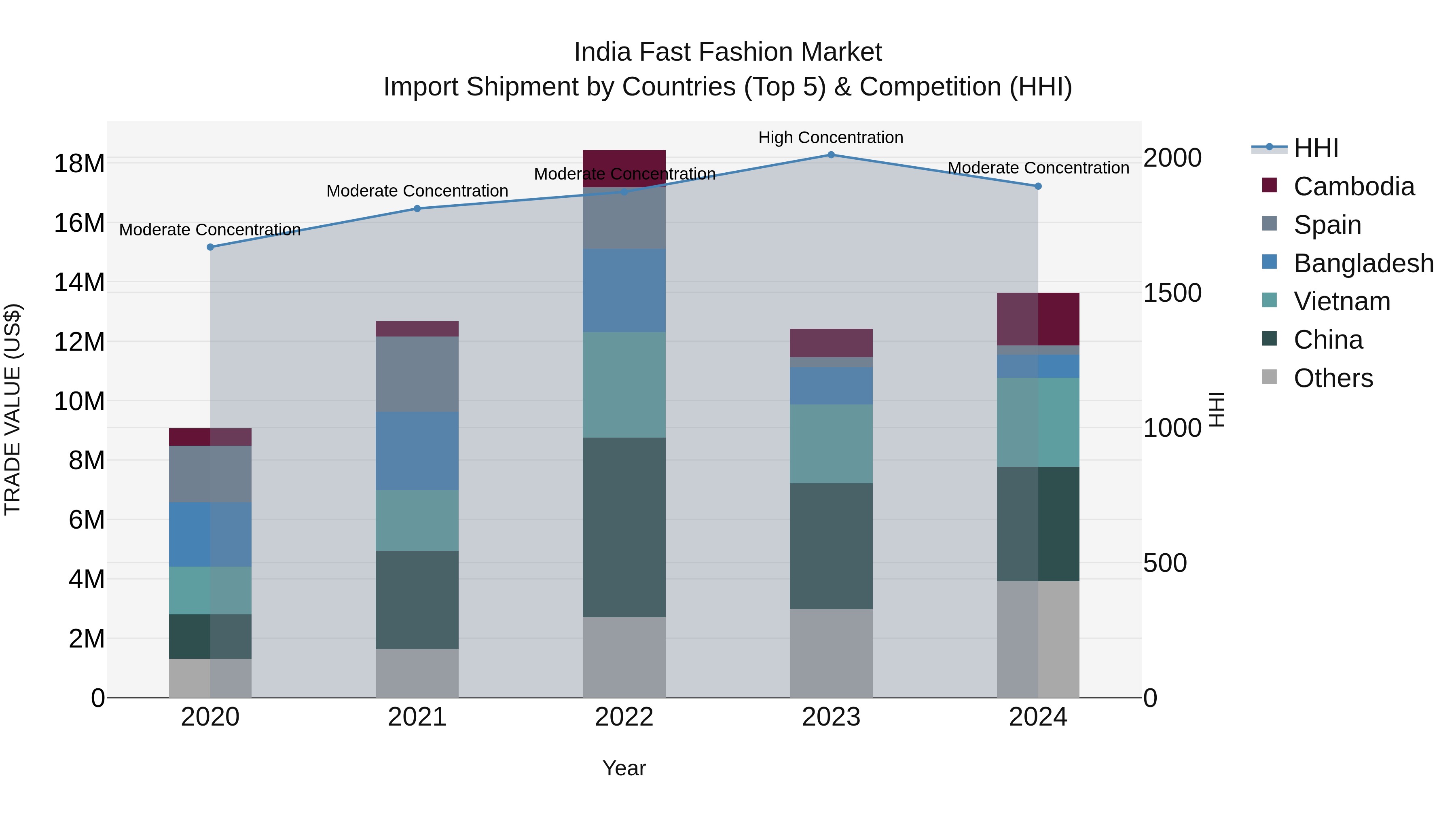
India Fast Fashion Market Overview
The fast fashion market in India is experiencing significant growth driven by the increasing disposable income of the population, changing fashion trends, and the rise of online shopping platforms. Key players such as Zara, H&M, and Forever 21 have established a strong presence in the market, offering a wide range of trendy and affordable clothing options. Domestic brands like Myntra, Jabong, and Koovs are also gaining traction, catering to the diverse preferences of Indian consumers. The fast fashion sector in India is characterized by frequent product releases, quick turnaround times, and competitive pricing strategies. As consumers seek the latest styles at affordable prices, the demand for fast fashion is expected to continue growing, presenting opportunities for both international and domestic players to expand their market share.
India Fast Fashion Market Trends
The fast fashion market in India is experiencing several key trends. Firstly, there is a growing demand for sustainable and eco-friendly fashion options, with consumers becoming more conscious of the environmental impact of their clothing choices. Secondly, online sales and e-commerce platforms are driving significant growth in the market, as more consumers opt for the convenience of shopping online. Additionally, there is a rising trend towards customization and personalization, with brands offering made-to-order or customizable options to cater to individual preferences. Lastly, influencer marketing and social media collaborations are playing a crucial role in shaping consumer preferences and driving sales in the fast fashion segment in India. Overall, these trends reflect a shift towards more conscious consumption and a focus on individuality and personal expression in the fast fashion market.
India Fast Fashion Market Challenges
In the India fast fashion market, there are several challenges that brands and retailers encounter. One significant challenge is the rapidly changing consumer preferences and demands, making it difficult for companies to keep up with the latest trends and deliver new products quickly. Another challenge is the intense competition among both domestic and international players, which puts pressure on pricing and margins. Additionally, issues related to sustainability and ethical practices are gaining more attention, requiring companies to incorporate more environmentally friendly processes and supply chain practices. Furthermore, infrastructure limitations, such as unreliable logistics and distribution networks, can hinder the efficient delivery of products to customers. Overall, navigating these challenges requires a strategic approach and continuous adaptation to succeed in the dynamic India fast fashion market.
India Fast Fashion Market Investment Opportunities
The fast fashion market in India presents a promising investment opportunity due to the country`s large and growing young population with increasing disposable income. With a rising fashion-conscious consumer base, there is a demand for trendy and affordable clothing, creating a lucrative market for fast fashion brands. Investing in establishing or expanding fast fashion retail chains, e-commerce platforms, or manufacturing units in India could yield significant returns. Additionally, collaborations with local designers or influencers can help in capturing the attention of the target audience. With the Indian fast fashion market expected to continue growing rapidly, early investments in this sector have the potential for long-term success and profitability.
India Fast Fashion Market Government Policy
The Indian government has implemented various policies that impact the fast fashion market, such as the Foreign Direct Investment (FDI) policy allowing 100% FDI in single-brand retail, encouraging international fast fashion brands to enter the market. Additionally, the implementation of the Goods and Services Tax (GST) has streamlined the taxation system, benefiting fast fashion retailers by reducing tax complexities. The Make in India initiative aims to promote domestic manufacturing, supporting the growth of local fast fashion brands. Furthermore, the National Textile Policy focuses on boosting the textile and apparel industry, which plays a crucial role in the fast fashion market. Overall, these government policies aim to attract investment, promote local manufacturing, and create a conducive environment for the fast fashion industry in India.
India Fast Fashion Market Future Outlook
The future outlook for the fast fashion market in India appears promising with continued growth expected due to factors such as increasing disposable income, urbanization, and a growing youth population. The trend of consumers seeking affordable and trendy clothing options is likely to drive further expansion in the market. Additionally, the rise of e-commerce platforms and increasing internet penetration in the country will provide ample opportunities for fast fashion brands to reach a wider audience. However, there may be challenges related to sustainability and ethical concerns that could influence consumer behavior and demand for more responsible fashion practices in the future. Overall, the India fast fashion market is poised for growth, but brands will need to adapt to changing consumer preferences and industry trends to stay competitive in the evolving landscape.
Key Highlights of the Report:
- India Fast Fashion Market Outlook
- Market Size of India Fast Fashion Market,2024
- Forecast of India Fast Fashion Market, 2031
- Historical Data and Forecast of India Fast Fashion Revenues & Volume for the Period 2021-2031
- India Fast Fashion Market Trend Evolution
- India Fast Fashion Market Drivers and Challenges
- India Fast Fashion Price Trends
- India Fast Fashion Porter's Five Forces
- India Fast Fashion Industry Life Cycle
- Historical Data and Forecast of India Fast Fashion Market Revenues & Volume By Product Type for the Period 2021-2031
- Historical Data and Forecast of India Fast Fashion Market Revenues & Volume By Trendy Apparel for the Period 2021-2031
- Historical Data and Forecast of India Fast Fashion Market Revenues & Volume By Seasonal Collections for the Period 2021-2031
- Historical Data and Forecast of India Fast Fashion Market Revenues & Volume By Rapid Clothing Production for the Period 2021-2031
- Historical Data and Forecast of India Fast Fashion Market Revenues & Volume By Fast Fashion Accessories for the Period 2021-2031
- Historical Data and Forecast of India Fast Fashion Market Revenues & Volume By Technology Type for the Period 2021-2031
- Historical Data and Forecast of India Fast Fashion Market Revenues & Volume By AI-driven Trend Analysis for the Period 2021-2031
- Historical Data and Forecast of India Fast Fashion Market Revenues & Volume By 3D Design and Printing for the Period 2021-2031
- Historical Data and Forecast of India Fast Fashion Market Revenues & Volume By Supply Chain Optimization for the Period 2021-2031
- Historical Data and Forecast of India Fast Fashion Market Revenues & Volume By E-commerce Platforms for the Period 2021-2031
- Historical Data and Forecast of India Fast Fashion Market Revenues & Volume By End User for the Period 2021-2031
- Historical Data and Forecast of India Fast Fashion Market Revenues & Volume By Millennials and Gen Z for the Period 2021-2031
- Historical Data and Forecast of India Fast Fashion Market Revenues & Volume By Fashion-Conscious Shoppers for the Period 2021-2031
- Historical Data and Forecast of India Fast Fashion Market Revenues & Volume By Fast Fashion Retailers for the Period 2021-2031
- Historical Data and Forecast of India Fast Fashion Market Revenues & Volume By Digital Shoppers for the Period 2021-2031
- Historical Data and Forecast of India Fast Fashion Market Revenues & Volume By Application for the Period 2021-2031
- Historical Data and Forecast of India Fast Fashion Market Revenues & Volume By Affordable Fast Fashion Clothing for the Period 2021-2031
- Historical Data and Forecast of India Fast Fashion Market Revenues & Volume By Quickly Updated Fashion Lines for the Period 2021-2031
- Historical Data and Forecast of India Fast Fashion Market Revenues & Volume By Fast-Paced Clothing Manufacturing for the Period 2021-2031
- Historical Data and Forecast of India Fast Fashion Market Revenues & Volume By Quick Access to the Latest Accessories for the Period 2021-2031
- India Fast Fashion Import Export Trade Statistics
- Market Opportunity Assessment By Product Type
- Market Opportunity Assessment By Technology Type
- Market Opportunity Assessment By End User
- Market Opportunity Assessment By Application
- India Fast Fashion Top Companies Market Share
- India Fast Fashion Competitive Benchmarking By Technical and Operational Parameters
- India Fast Fashion Company Profiles
- India Fast Fashion Key Strategic Recommendations






































