India Nicotine Replacement Therapy Market Size, Share & Growth Rate
The India Nicotine Replacement Therapy Market was estimated at USD 562 Million in 2025 and is projected to reach USD 804 Million by 2032, growing at a CAGR of 5.2% from 2026 to 2032. This growth trajectory is primarily fueled by the increasing prevalence of smoking and tobacco use across the country, coupled with heightened awareness of the associated health risks. As nicotine replacement products such as patches, gums, and lozenges become more accessible, they are being recognized as viable aids for those looking to quit smoking.
India Nicotine Replacement Therapy Market Growth Rate Analysis (2021-2032)
The Indian Nicotine Replacement Therapy (NRT) market has exhibited notable fluctuations, with a decline of 3.4% in 2021, primarily due to heightened regulatory scrutiny and shifting consumer perceptions about smoking cessation products. However, the market rebounded sharply in 2022, achieving a growth rate of 9.4%, fueled by increasing awareness campaigns and greater accessibility to NRT options. This upward trend continued in 2023 with a robust 7.5% growth, supported by significant investments in digital health solutions and a rising willingness among consumers to quit smoking. Projections indicate sustained growth through 2032, with rates between 6.0% and 7.8%, as ongoing government initiatives and an expanding healthcare infrastructure further bolster demand for effective smoking cessation alternatives.
India Nicotine Replacement Therapy Market Year-wise Growth Rate and Key Drivers
This graph highlights how the India Nicotine Replacement Therapy Market has steadily grown over the past five years, supported by major growth factors.
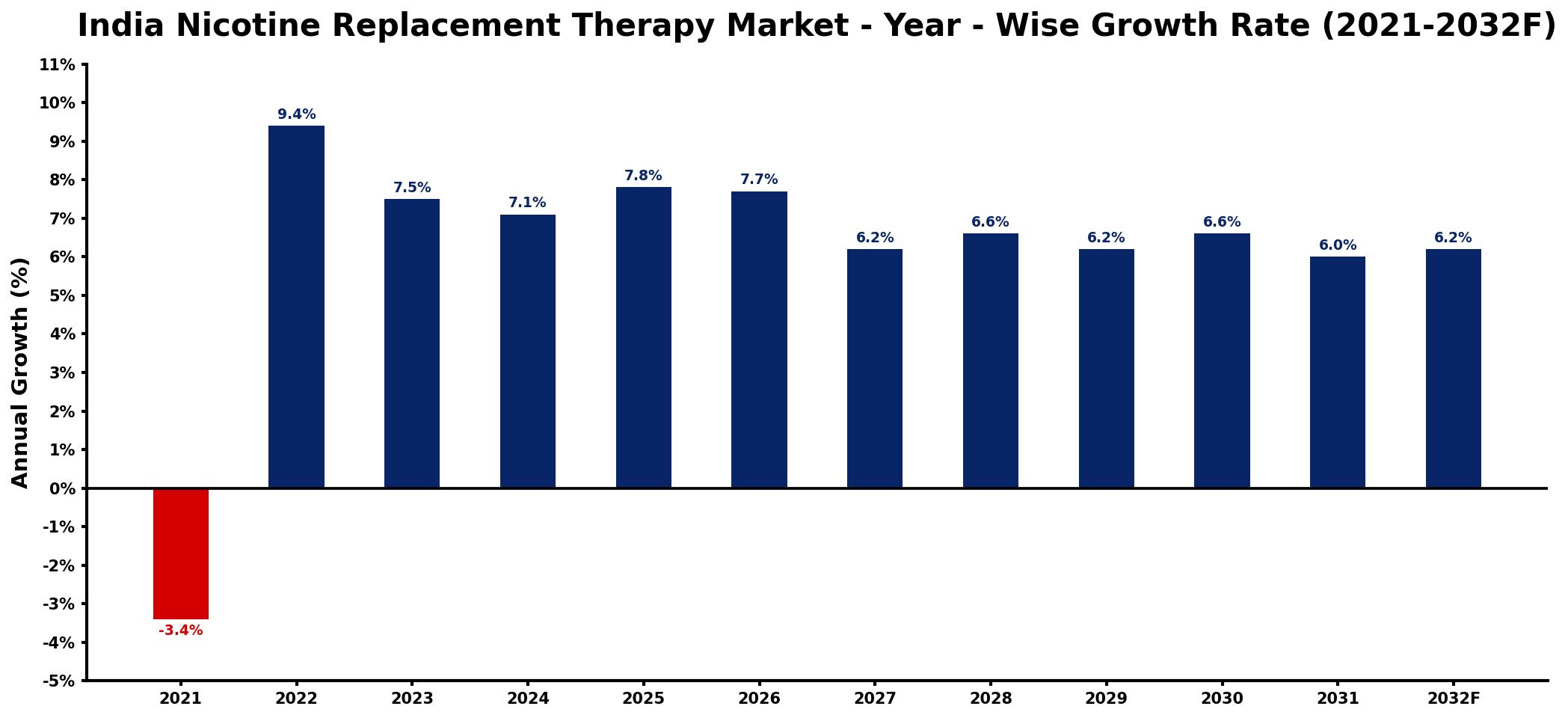
The table below presents the year‑wise growth rates along with the key drivers influencing the market
| Year | Growth Rate | Major Drivers |
| 2021 | -3.4% | decreased consumer awareness campaigns |
| 2022 | 9.4% | growing health consciousness among consumers |
| 2023 | 7.5% | increased retail distribution networks |
| 2024 | 7.1% | rising demand for wellness products |
| 2025 | 7.8% | expansion of online sales channels |
| 2026 | 7.7% | greater investment in research initiatives |
| 2027 | 6.2% | increased government health initiatives |
| 2028 | 6.6% | growing popularity of preventive healthcare |
| 2029 | 6.2% | rising export shipment volumes |
| 2030 | 6.6% | increased focus on lifestyle changes |
| 2031 | 6.0% | greater awareness of health risks |
| 2032 | 6.2% | increased domestic production output |
Note: Market size estimations and growth projections presented in this report are based on 6Wresearch's proprietary forecasting methodology, utilizing the latest available industry data, government publications, and primary research inputs.
India Nicotine Replacement Therapy Market Synopsis
The most significant force shaping the India Nicotine Replacement Therapy Market is the government's commitment to tobacco control through policy initiatives and public health campaigns. These actions not only aim to reduce tobacco consumption but also promote the utilization of NRT products as effective cessation tools.
Additionally, the broader societal shift towards healthier lifestyles is contributing to the rising adoption of NRT solutions. This cultural change, alongside greater emphasis on health education, is helping to dissolve the stigma around using such products, fostering a more conducive environment for market growth.
India Nicotine Replacement Therapy Market Key Takeaways
- The market is witnessing a steady increase in consumer awareness and acceptance of NRT products.
- Government measures to regulate tobacco use are paving the way for NRT market expansion.
- Access to NRT products remains a challenge in rural regions, limiting overall market potential.
- Innovative product offerings and marketing strategies are enhancing consumer engagement.
- The ongoing shift in public perception towards health and wellness is driving demand.
Evaluation of Restraints in India Nicotine Replacement Therapy Market
Despite promising growth, the India Nicotine Replacement Therapy Market faces notable restraints. A significant barrier is the lack of awareness regarding the effectiveness and availability of NRT products among the general population. In rural areas, limited access to these products further compounds the problem, creating disparities in market penetration. Educational initiatives aimed at raising awareness about cessation options are critical to overcoming these challenges and unlocking the full potential of the market.
India Nicotine Replacement Therapy Market Trends
Current trends in the India Nicotine Replacement Therapy Market indicate a move towards diversification in product offerings, including new flavors and formulations. Digital health technologies, such as mobile applications that assist in smoking cessation, are gaining traction, enhancing user engagement and support. Furthermore, the rise of e-commerce platforms is making NRT products more accessible to consumers, catering to the demand for convenience and availability.
India Nicotine Replacement Therapy Market Opportunities
Significant growth and investment opportunities exist in developing targeted marketing strategies tailored to specific demographics, especially younger smokers. Expanding the availability of NRT products in rural markets presents an untapped revenue stream. Additionally, partnerships with healthcare providers for integrated smoking cessation programs could foster further market development and enhance consumer trust in these products.
Government Initiatives in the India Nicotine Replacement Therapy Market
The Indian government is actively implementing policies aimed at reducing tobacco consumption, including increasing taxes on tobacco products and imposing stricter regulations on advertising. Public health campaigns promoting the dangers of smoking and advocating for the use of NRT products are also gaining momentum. These initiatives not only create a challenging environment for tobacco use but also reinforce the legitimacy of NRT solutions as effective aids for quitting.
Future Insights of the India Nicotine Replacement Therapy Market
Looking ahead to 2026-2032, the India Nicotine Replacement Therapy Market is poised for robust growth. As public awareness and education about the benefits of smoking cessation continue to evolve, the demand for NRT products will likely rise. The integration of technology in healthcare, along with supportive government policies, will further enhance the market's landscape, ensuring that quitting smoking becomes a more accessible goal for many Indians.
India Nicotine Replacement Therapy Market Latest Developments (2025 - 2026)
Recent industry movements indicate a notable push towards innovative product formulations and marketing strategies. Companies are increasingly investing in research to develop more effective NRT products that appeal to a broader audience. Additionally, partnerships with health organizations are being formed to promote the use of NRT within comprehensive smoking cessation programs, ultimately driving the market forward.
India Nicotine Replacement Therapy Market - Key Attractiveness of the Report
- 10 Years of Market Numbers
- Historical Data Starting from 2022 to 2025
- Base Year: 2025
- Forecast Data until 2032
- Key Performance Indicators Impacting the Market
- Major Upcoming Developments and Projects
Key Highlights of the Report:
- India Nicotine Replacement Therapy Market Outlook
- Market Size of India Nicotine Replacement Therapy Market, 2025
- Forecast of India Nicotine Replacement Therapy Market, 2032
- Historical Data and Forecast of India Nicotine Replacement Therapy Revenues & Volume for the Period 2022-2032F
- India Nicotine Replacement Therapy Market Trend Evolution
- India Nicotine Replacement Therapy Market Drivers and Challenges
- India Nicotine Replacement Therapy Price Trends
- India Nicotine Replacement Therapy Porter's Five Forces
- India Nicotine Replacement Therapy Industry Life Cycle
- Historical Data and Forecast of India Nicotine Replacement Therapy Market Revenues & Volume By Product for the Period 2022-2032F
- Historical Data and Forecast of India Nicotine Replacement Therapy Market Revenues & Volume By Nicotine Replacement Therapy for the Period 2022-2032F
- Historical Data and Forecast of India Nicotine Replacement Therapy Market Revenues & Volume By E-cigarettes for the Period 2022-2032F
- Historical Data and Forecast of India Nicotine Replacement Therapy Market Revenues & Volume By Heat-not-burn Tobacco Products for the Period 2022-2032F
- Historical Data and Forecast of India Nicotine Replacement Therapy Market Revenues & Volume By Distribution Channel for the Period 2022-2032F
- Historical Data and Forecast of India Nicotine Replacement Therapy Market Revenues & Volume By Offline for the Period 2022-2032F
- Historical Data and Forecast of India Nicotine Replacement Therapy Market Revenues & Volume By Online for the Period 2022-2032F
- India Nicotine Replacement Therapy Import Export Trade Statistics
- Market Opportunity Assessment By Product
- Market Opportunity Assessment By Distribution Channel
- India Nicotine Replacement Therapy Top Companies Market Share
- India Nicotine Replacement Therapy Competitive Benchmarking By Technical and Operational Parameters
- India Nicotine Replacement Therapy Company Profiles
- India Nicotine Replacement Therapy Key Strategic Recommendations






































