India Resistor Market Growth Rate Analysis (2025 - 2031)
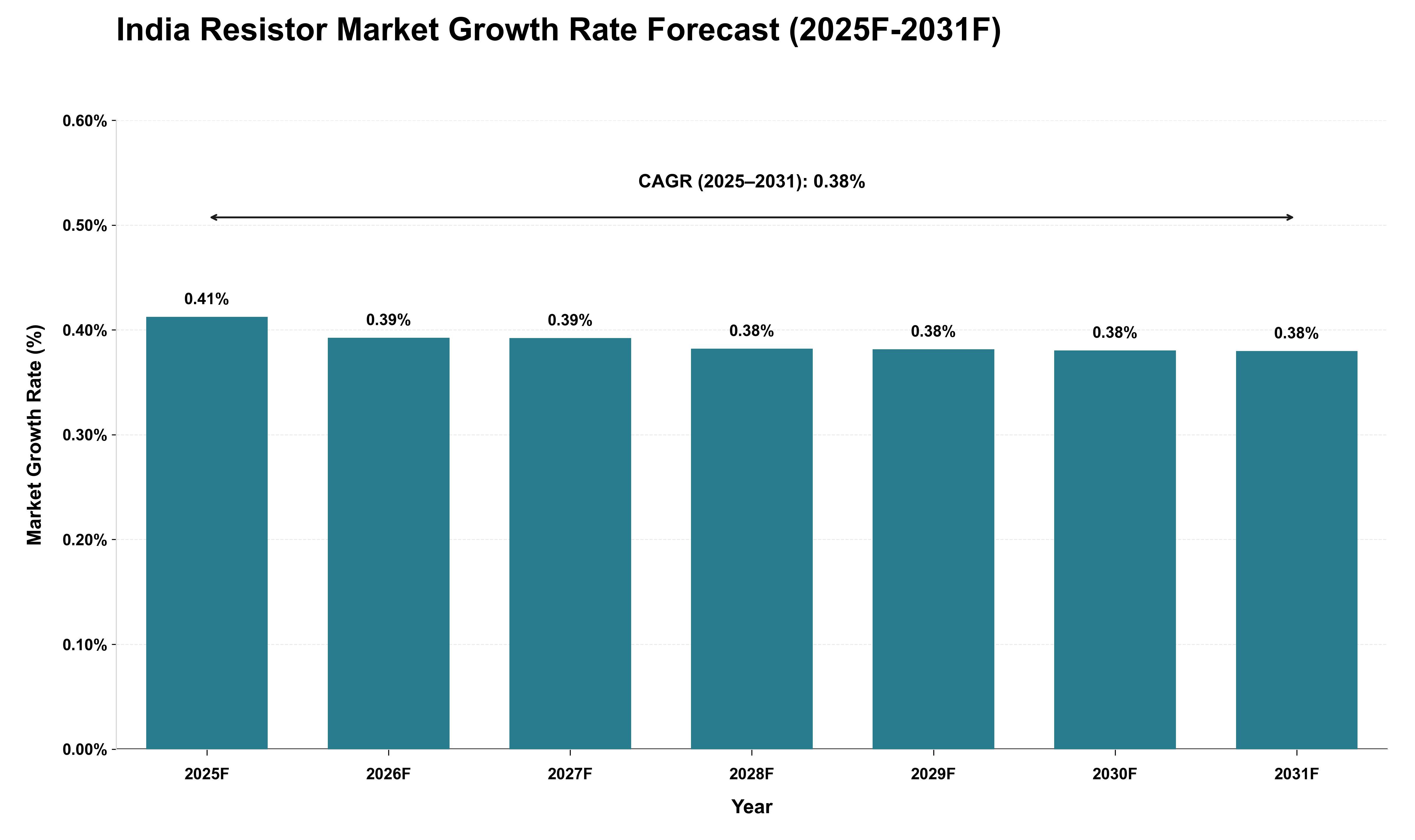
The India resistor market will experience a compound annual growth rate of 0.38% from 2025 to 2031, reflecting a gradual yet stable expansion trajectory. This modest growth can be attributed to the increasing integration of electronic components across various sectors, including automotive and consumer electronics, which will drive demand for resistors. As technology evolves, product substitution will play a crucial role; manufacturers may increasingly favor advanced materials and designs that enhance performance while reducing costs. Additionally, the reliance on imported components may influence pricing dynamics and availability, potentially impacting local production capabilities. The cyclical nature of electronic manufacturing will also contribute to fluctuations in demand, as economic conditions shift and innovation cycles progress. Overall, the interplay between technological advancements and import dependencies will shape the market landscape during this forecast period.
Key Highlights of the Report:
- India Resistor Market Outlook
- Market Size of India Resistor Market, 2024
- Forecast of India Resistor Market, 2031
- Historical Data and Forecast of India Resistor Revenues & Volume for the Period 2021- 2031
- India Resistor Market Trend Evolution
- India Resistor Market Drivers and Challenges
- India Resistor Price Trends
- India Resistor Porter's Five Forces
- India Resistor Industry Life Cycle
- Historical Data and Forecast of India Resistor Market Revenues & Volume By Type for the Period 2021- 2031
- Historical Data and Forecast of India Resistor Market Revenues & Volume By Surfae-mounted Chips for the Period 2021- 2031
- Historical Data and Forecast of India Resistor Market Revenues & Volume By Network for the Period 2021- 2031
- Historical Data and Forecast of India Resistor Market Revenues & Volume By Wirewound for the Period 2021- 2031
- Historical Data and Forecast of India Resistor Market Revenues & Volume By Film/Oxide/Foil for the Period 2021- 2031
- Historical Data and Forecast of India Resistor Market Revenues & Volume By Carbon for the Period 2021- 2031
- Historical Data and Forecast of India Resistor Market Revenues & Volume By End user for the Period 2021- 2031
- Historical Data and Forecast of India Resistor Market Revenues & Volume By Automotive for the Period 2021- 2031
- Historical Data and Forecast of India Resistor Market Revenues & Volume By Aerospace and Defense for the Period 2021- 2031
- Historical Data and Forecast of India Resistor Market Revenues & Volume By Communications for the Period 2021- 2031
- Historical Data and Forecast of India Resistor Market Revenues & Volume By Consumer Electronics and Computing for the Period 2021- 2031
- Historical Data and Forecast of India Resistor Market Revenues & Volume By Other for the Period 2021- 2031
- India Resistor Import Export Trade Statistics
- Market Opportunity Assessment By Type
- Market Opportunity Assessment By End user
- India Resistor Top Companies Market Share
- India Resistor Competitive Benchmarking By Technical and Operational Parameters
- India Resistor Company Profiles
- India Resistor Key Strategic Recommendations






































