India Soybeans Seed Market Top 5 Importing Countries and Market Competition (HHI) Analysis
India`s soybean seed import shipments in 2024 saw a significant increase in concentration, with top exporting countries being Niger, Togo, Benin, Burkina Faso, and Mozambique. Despite a relatively steady compound annual growth rate (CAGR) of 4.75% from 2020 to 2024, there was a sharp decline in growth rate from 2023 to 2024, dropping by -24.83%. The high concentration of import shipments highlights the dominance of these countries in supplying soybean seeds to India, signaling a potential shift in market dynamics that could impact the industry moving forward.
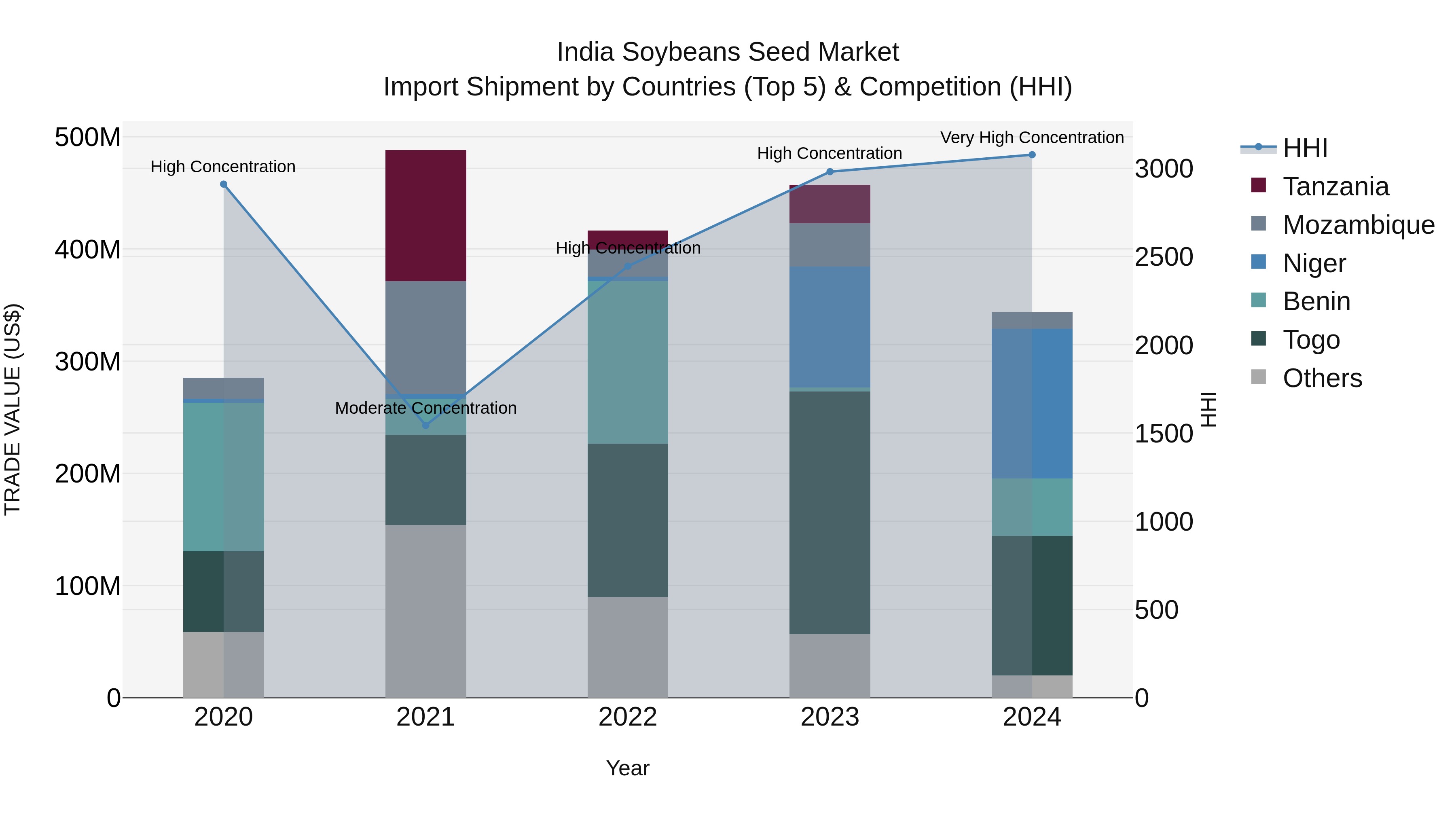
India Soybeans Seed Market is rapidly growing market, driven by factors such as the increasing demand for soybeans for oil and protein, growing awareness about the nutritional benefits of soybeans, and the increasing use of soybeans in the production of biofuels. Additionally, the government's support for the cultivation of soybeans is also contributing to the market growth. The market is segmented into different types of seeds such as conventional, hybrid and genetically modified. However, high prices of seed, lack of awareness about the benefits of using new seed varieties, and lack of government support for seed companies deters the market expansion. Overall, the market for soyabeans seed is growing at rapid pace rate.
Key Highlights of the Report:
- India Soybeans Seed Market Outlook
- Market Size of India Soybeans Seed Market, 2021
- Forecast of India Soybeans Seed Market, 2028
- Historical Data and Forecast of India Soybeans Seed Revenues & Volume for the Period 2018 - 2028
- India Soybeans Seed Market Trend Evolution
- India Soybeans Seed Market Drivers and Challenges
- India Soybeans Seed Price Trends
- India Soybeans Seed Porter's Five Forces
- India Soybeans Seed Industry Life Cycle
- Historical Data and Forecast of India Soybeans Seed Market Revenues & Volume By Type for the Period 2018 - 2028
- Historical Data and Forecast of India Soybeans Seed Market Revenues & Volume By GMO for the Period 2018 - 2028
- Historical Data and Forecast of India Soybeans Seed Market Revenues & Volume By Non-GMO for the Period 2018 - 2028
- Historical Data and Forecast of India Soybeans Seed Market Revenues & Volume By Applications for the Period 2018 - 2028
- Historical Data and Forecast of India Soybeans Seed Market Revenues & Volume By Agriculture for the Period 2018 - 2028
- Historical Data and Forecast of India Soybeans Seed Market Revenues & Volume By Scientific Research for the Period 2018 - 2028
- Historical Data and Forecast of India Soybeans Seed Market Revenues & Volume By Others for the Period 2018 - 2028
- India Soybeans Seed Import Export Trade Statistics
- Market Opportunity Assessment By Type
- Market Opportunity Assessment By Applications
- India Soybeans Seed Top Companies Market Share
- India Soybeans Seed Competitive Benchmarking By Technical and Operational Parameters
- India Soybeans Seed Company Profiles
- India Soybeans Seed Key Strategic Recommendations






































