India Version Control Systems Market Size & Growth Rate (2026-2032)
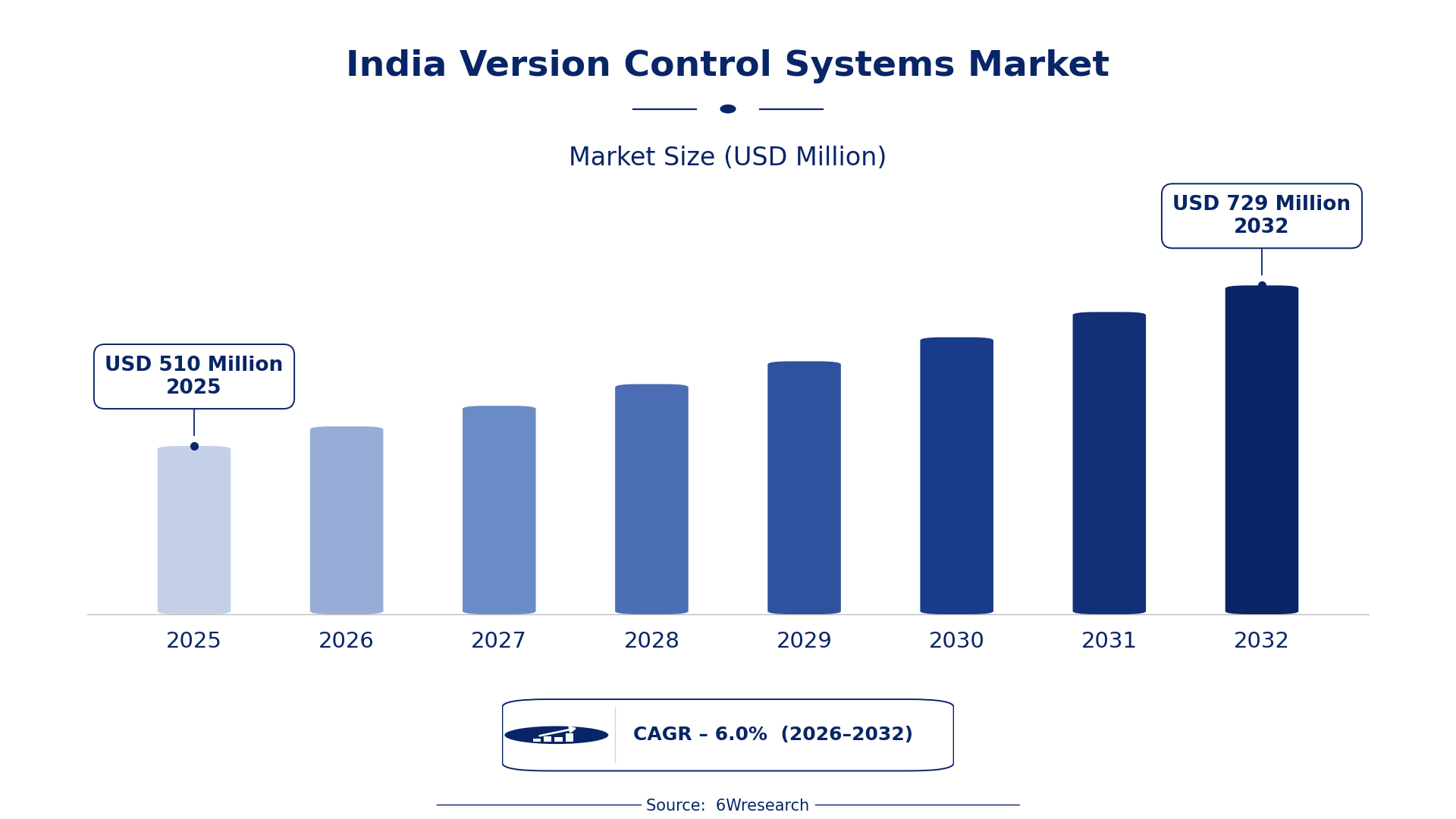
The India Version Control Systems Market was estimated at USD 510 Million in 2025 and is projected to reach USD 729 Million by 2032, growing at a CAGR of 6.0% from 2026 to 2032.
India Version Control Systems Market Synopsis
The India Version Control Systems Market is witnessing a notable surge, driven by the rapid expansion of the software development sector. As organizations prioritize collaboration and code integrity, version control systems have emerged as essential tools for managing complex projects and facilitating team communication.
With a growing emphasis on agile methodologies, developers increasingly rely on version control to streamline workflows and enhance code quality. As the Indian software landscape diversifies, the demand for effective version control solutions is set to rise, offering numerous opportunities for innovation and growth.
India Version Control Systems Market Year-wise Growth Rate and Key Drivers
This graph illustrates the annual growth rates of the India Version Control Systems Market from 2021 to 2032, highlighting a steady upward trajectory and projected expansion over the forecast period.
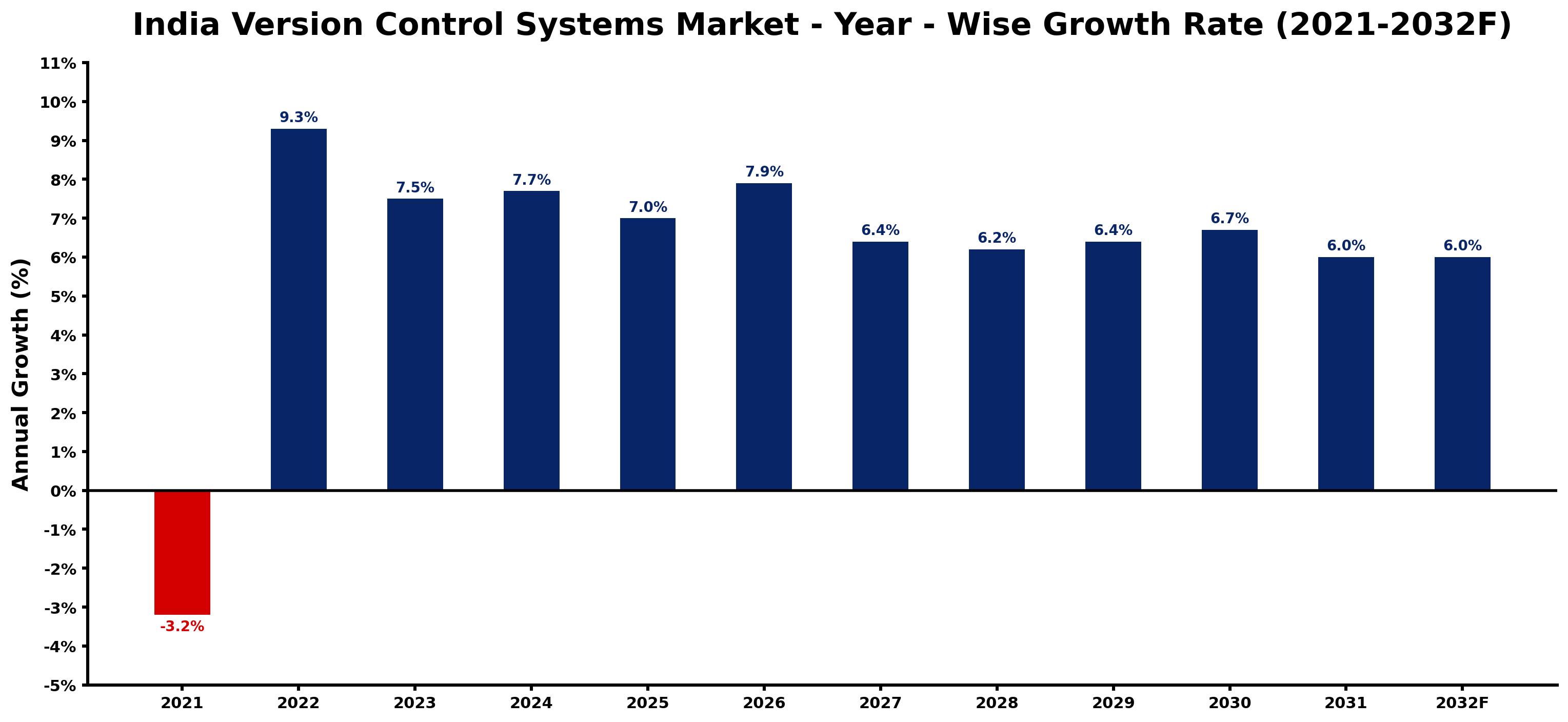
The table below presents the year‑wise growth rates along with the key drivers influencing the market
| Year | Growth Rate | Major Drivers |
| 2021 | -3.2% | GitHub's aggressive pricing undercuts local competitors. |
| 2022 | 9.3% | Increased investment in cloud infrastructure by Indian startups. |
| 2023 | 7.5% | Rising adoption of Agile methodologies across software companies. |
| 2024 | 7.7% | Government support for IT exports boosting software development. |
| 2025 | 7.0% | Growth in digital transformation initiatives among enterprises. |
| 2026 | 7.9% | Emergence of AI-driven development tools enhancing productivity. |
| 2027 | 6.4% | Higher educational output in software engineering sectors. |
| 2028 | 6.2% | Increased focus on cybersecurity compliance in the industry. |
| 2029 | 6.4% | Adoption of DevOps practices fostering version control usage. |
| 2030 | 6.7% | Growing number of tech unicorns needing robust collaboration tools. |
| 2031 | 6.0% | Regulatory push for version control in data management. |
| 2032 | 6.0% | Enhancements in mobile software development driving version control. |
Note: Market size estimations and growth projections presented in this report are based on 6Wresearch's proprietary forecasting methodology, utilizing the latest available industry data, government publications, and primary research inputs.
India Version Control Systems Market Key Takeaways
Below are some of the specific key takeaways from the market, including:
- The market is primarily driven by the need for enhanced code reliability and collaboration among development teams.
- Remote work trends have accelerated the adoption of version control systems in software development environments.
- The competitive landscape features numerous local and global vendors, creating both opportunities and challenges for new entrants.
- SMEs often struggle with awareness and understanding of version control benefits, limiting market penetration.
- Security concerns regarding code repositories remain a pressing issue for organizations in the market.
Evaluation of Restraints in India Version Control Systems Market
Several factors are inhibiting growth in the India Version Control Systems Market. A significant restraint is the lack of awareness among small and medium-sized enterprises (SMEs) regarding the advantages of version control systems. This knowledge gap leads to hesitance in adopting essential tools that can enhance productivity and code quality.
Additionally, the market's competitive nature poses challenges for new entrants, making it difficult to carve out market share. Security issues surrounding code repositories also present a formidable barrier, particularly in light of increasing data breaches. As technology continues to evolve rapidly, organizations face the challenge of keeping up with necessary updates and adaptations, often at a considerable cost.
India Version Control Systems Market Trends
The shift towards remote and hybrid work environments has spurred demand for sophisticated version control systems that enable seamless collaboration. As teams become more distributed, the ability to manage code effectively from various locations has become crucial. Additionally, the integration of AI and machine learning into version control tools is beginning to reshape how developers interact with code.
Another trend is the growing preference for cloud-based solutions, which offer flexibility and scalability for organizations. These systems allow for real-time updates and easier access to code repositories, further enhancing collaboration and efficiency in development processes.
India Version Control Systems Market Opportunities
There are substantial growth opportunities in the India Version Control Systems Market, particularly among SMEs. Educating these enterprises about the benefits of version control could drive adoption rates significantly. on top of that, the increasing emphasis on cybersecurity in software development presents a chance for version control systems to incorporate enhanced security features, thereby attracting a broader customer base.
As organizations continue to prioritize agile development and continuous integration/continuous deployment (CI/CD) practices, version control systems that support these methodologies will see heightened demand. Collaboration tools integrated with version control systems can also provide added value, creating a compelling case for investment in this sector.
Government Initiatives in the India Version Control Systems Market
Government policy is playing a critical role in shaping the India Version Control Systems Market. As the Indian government promotes digital transformation across sectors, there is a concerted effort to enhance the software development ecosystem. This includes regulatory frameworks that encourage the adoption of modern development practices and tools.
- A recently completed initiative aimed at improving digital infrastructure has provided funding for tech startups focusing on software development tools.
- Ongoing programs are currently underway to establish standards for software quality and security, thereby encouraging the adoption of version control systems.
- A planned public-private partnership is expected to launch in 2026, aimed at fostering innovation in software development and integration of version control solutions.
- The government is currently implementing a national digital skills initiative, which includes training on modern development practices such as version control.
Future Insights of the India Version Control Systems Market
Looking ahead to 2026-2032, the India Version Control Systems Market is set to experience continued growth fueled by technological advancements and a shift in how software development teams operate. As organizations increasingly adopt agile methodologies, the demand for version control systems will likely escalate.
The integration of AI into version control tools will enhance functionality and streamline workflows, making these systems even more indispensable. Additionally, as the focus on cybersecurity intensifies, version control systems that prioritize data protection will gain traction, opening new avenues for innovation and investment.
India Version Control Systems Market Latest Developments
The last year has seen a flurry of activity within the India Version Control Systems Market, reflecting a growing recognition of the importance of robust development tools. Companies are increasingly focusing on enhancing their offerings to meet the diverse needs of developers and organizations.
- A leading technology vendor launched an upgraded version of its version control software in early 2025, featuring enhanced collaboration tools and security measures.
- In Q3 2025, a major regional operator initiated a project to integrate AI capabilities into their version control system, aimed at improving code quality and conflict resolution.
- A new initiative focused on enhancing training programs for developers is currently underway, aimed at increasing awareness of version control best practices.
- Plans are in place for a major software development conference in late 2026, which will showcase the latest advancements in version control technologies.
India Version Control Systems Market - Key Attractiveness of the Report
- 10 Years of Market Numbers
- Historical Data Starting from 2022 to 2025
- Base Year: 2025
- Forecast Data until 2032
- Key Performance Indicators Impacting the Market
- Major Upcoming Developments and Projects
Key Highlights of the Report:
- India Version Control Systems Market Outlook
- Market Size of India Version Control Systems Market, 2025
- Forecast of India Version Control Systems Market, 2032
- Historical Data and Forecast of India Version Control Systems Revenues & Volume for the Period 2022-2032F
- India Version Control Systems Market Trend Evolution
- India Version Control Systems Market Drivers and Challenges
- India Version Control Systems Price Trends
- India Version Control Systems Porter's Five Forces
- India Version Control Systems Industry Life Cycle
- Historical Data and Forecast of India Version Control Systems Market Revenues & Volume By Type for the Period 2022-2032F
- Historical Data and Forecast of India Version Control Systems Market Revenues & Volume By Centralized Version Control Systems & Distributed Version Control Systems for the Period 2022-2032F
- Historical Data and Forecast of India Version Control Systems Market Revenues & Volume By Vertical for the Period 2022-2032F
- Historical Data and Forecast of India Version Control Systems Market Revenues & Volume By IT & Telecom for the Period 2022-2032F
- Historical Data and Forecast of India Version Control Systems Market Revenues & Volume By BFSI for the Period 2022-2032F
- Historical Data and Forecast of India Version Control Systems Market Revenues & Volume By Deployment Type for the Period 2022-2032F
- Historical Data and Forecast of India Version Control Systems Market Revenues & Volume By Cloud & On-Premises for the Period 2022-2032F
- Historical Data and Forecast of India Version Control Systems Market Revenues & Volume By Organization Size for the Period 2022-2032F
- Historical Data and Forecast of India Version Control Systems Market Revenues & Volume By Small and Medium-sized Enterprises (SMEs) for the Period 2022-2032F
- Historical Data and Forecast of India Version Control Systems Market Revenues & Volume By Large enterprises for the Period 2022-2032F
- India Version Control Systems Import Export Trade Statistics
- Market Opportunity Assessment By Type
- Market Opportunity Assessment By Vertical
- Market Opportunity Assessment By Deployment Type
- Market Opportunity Assessment By Organization Size
- India Version Control Systems Top Companies Market Share
- India Version Control Systems Competitive Benchmarking By Technical and Operational Parameters
- India Version Control Systems Company Profiles
- India Version Control Systems Key Strategic Recommendations






































