Indonesia Acetic Acid Market: Import Trend Analysis
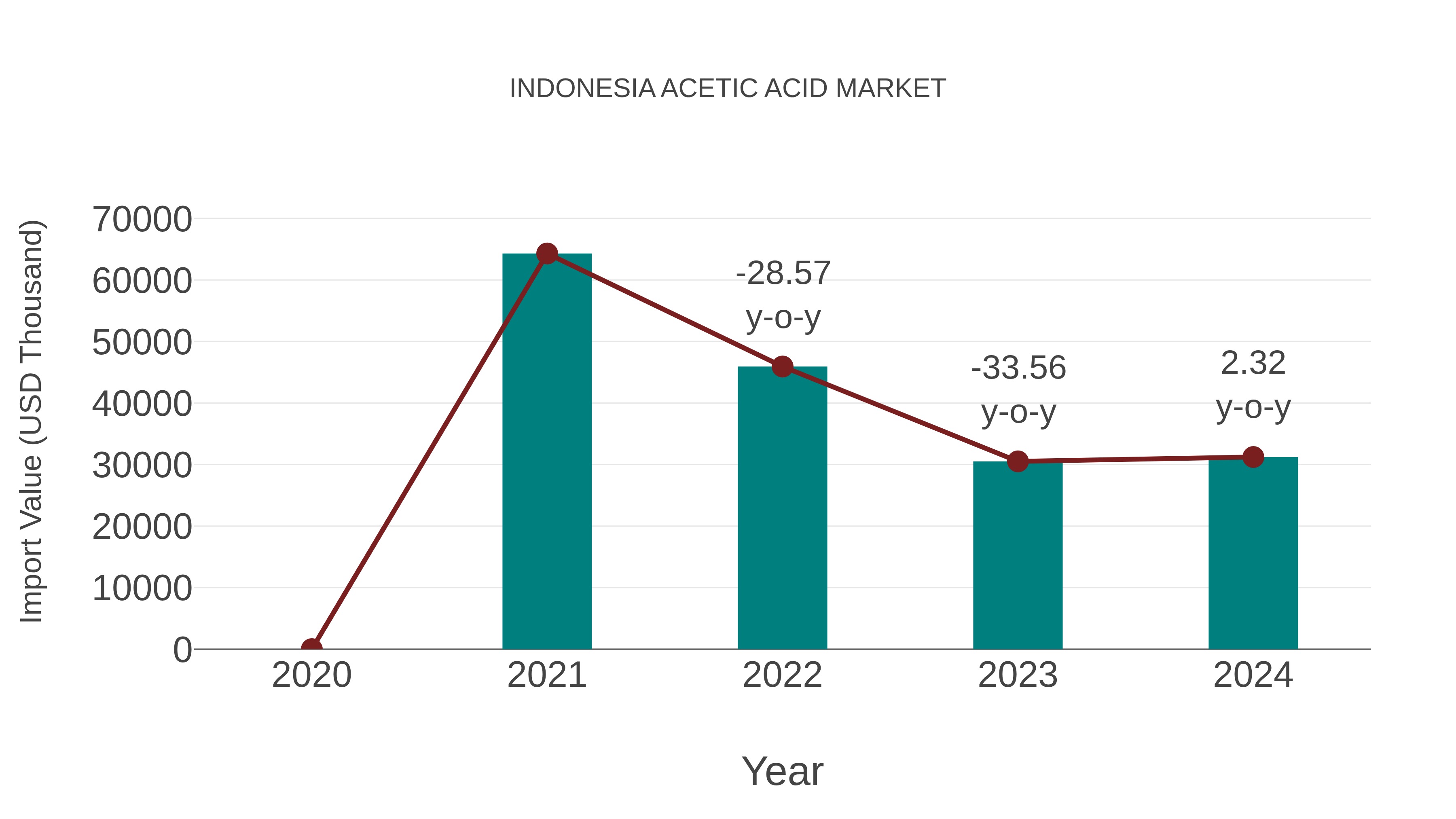
In the Indonesia acetic acid market, the import trend showed a growth rate of 2.32% from 2023 to 2024, while the compound annual growth rate (CAGR) for 2020-2024 was -21.4%. This negative CAGR can be attributed to the market`s recovery from supply chain disruptions and changing trade policies impacting import momentum.
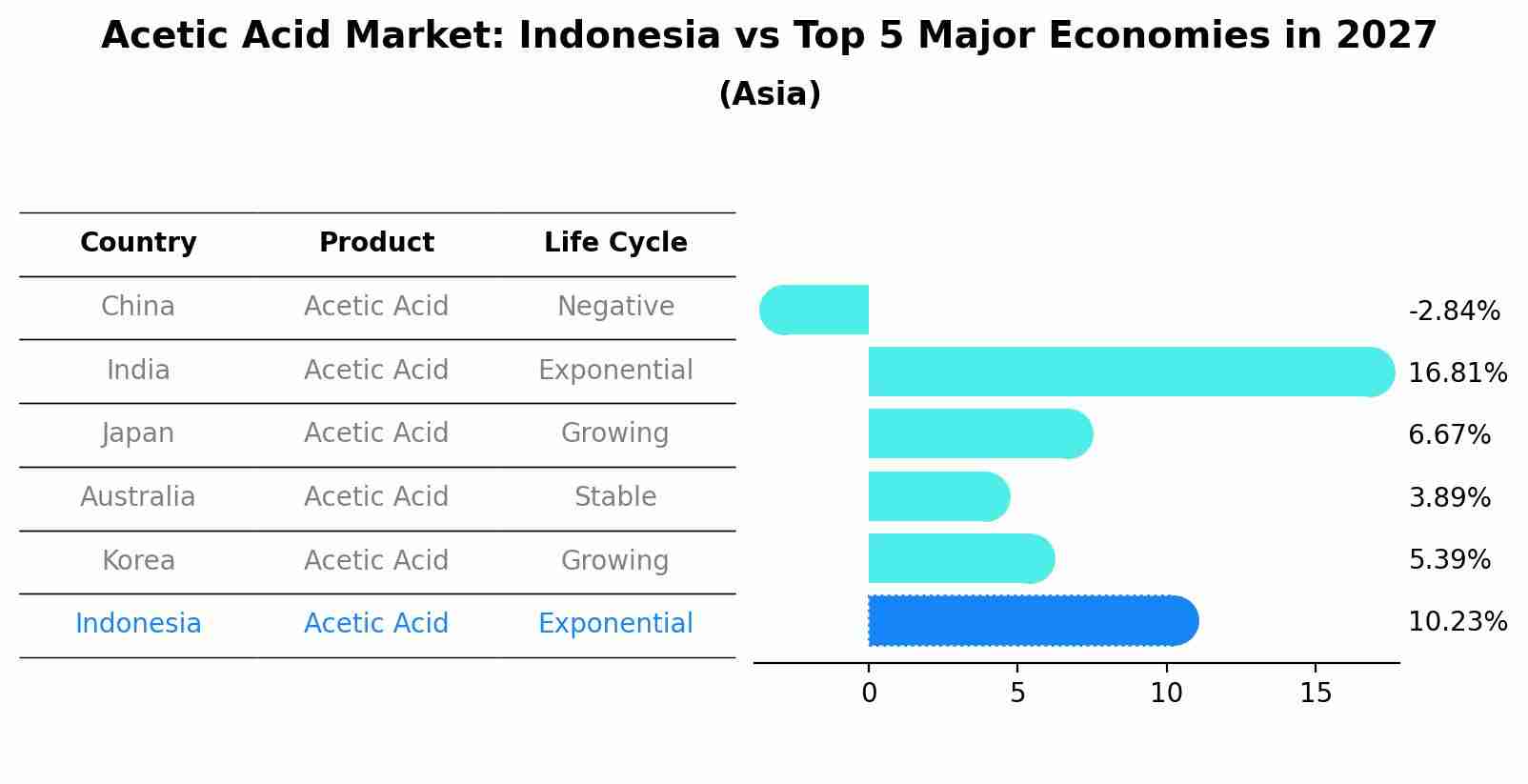
Acetic Acid Market: Indonesia vs Top 5 Major Economies in 2027 (Asia)
By 2027, Indonesia's Acetic Acid market is forecasted to achieve a high growth rate of 10.23%, with China leading the Asia region, followed by India, Japan, Australia and South Korea.
Indonesia Acetic Acid Market Synopsis
The acetic acid market in Indonesia is closely tied to various industries, including food processing, textiles, and chemicals. Acetic acid is a key chemical used in the production of vinegar and various food preservatives, which are essential in the food and beverage industry. Additionally, it is utilized in the textile industry for dyeing and finishing processes. The market is expected to witness stable growth due to these diverse applications. As industries continue to develop in Indonesia, the demand for acetic acid is likely to remain robust, making it a promising sector for both domestic production and imports.
Drivers of the Market
The Indonesia Acetic Acid market is poised for growth due to several key drivers. First, the expanding chemical and pharmaceutical industries in the country are increasing the demand for acetic acid as a vital raw material for various products. Secondly, the food and beverage sector`s growth is driving demand for acetic acid as a food preservative and flavor enhancer. Additionally, the adoption of sustainable practices and eco-friendly products is fueling the use of acetic acid in the production of biodegradable plastics and textiles. Furthermore, government initiatives to boost domestic manufacturing and exports are likely to further stimulate the acetic acid market by increasing production and reducing import dependence.
Challenges of the Market
The Indonesia Acetic Acid Market may encounter challenges related to sourcing raw materials, such as methanol and ethylene, which can be subject to price volatility. Environmental regulations and safety standards in the chemical industry can also impact production processes and costs.
COVID-19 Impact on the Market
The acetic acid market in Indonesia experienced fluctuations during the pandemic. Reduced industrial activity and supply chain disruptions affected both supply and demand. However, the market is poised for growth as industries resume operations. Additionally, the demand for acetic acid in the food industry, particularly in the production of pickles and condiments, remained stable during the pandemic, offering a reliable revenue stream.
Key Players in the Market
The Indonesia Acetic Acid market is witnessing steady growth, driven by its versatile applications in various industries. Leading players in this market, such as Acetic Chemicals Ltd. and IndoAcids, maintain a strong market presence due to their high-quality products and reliable supply chains. These companies cater to the diverse needs of industries like food processing, textiles, and pharmaceuticals, ensuring a steady demand for their products.
Key Highlights of the Report:
- Indonesia Acetic Acid Market Outlook
- Market Size of Indonesia Acetic Acid Market, 2025
- Forecast of Indonesia Acetic Acid Market, 2032
- Historical Data and Forecast of Indonesia Acetic Acid Revenues & Volume for the Period 2022-2032F
- Indonesia Acetic Acid Market Trend Evolution
- Indonesia Acetic Acid Market Drivers and Challenges
- Indonesia Acetic Acid Price Trends
- Indonesia Acetic Acid Porter's Five Forces
- Indonesia Acetic Acid Industry Life Cycle
- Historical Data and Forecast of Indonesia Acetic Acid Market Revenues & Volume By Application for the Period 2022-2032F
- Historical Data and Forecast of Indonesia Acetic Acid Market Revenues & Volume By Vinyl Acetate Monomer for the Period 2022-2032F
- Historical Data and Forecast of Indonesia Acetic Acid Market Revenues & Volume By Acetic Anhydride for the Period 2022-2032F
- Historical Data and Forecast of Indonesia Acetic Acid Market Revenues & Volume By Acetate Esters for the Period 2022-2032F
- Historical Data and Forecast of Indonesia Acetic Acid Market Revenues & Volume By Purified Terephthalic Acid for the Period 2022-2032F
- Historical Data and Forecast of Indonesia Acetic Acid Market Revenues & Volume By Ethanol for the Period 2022-2032F
- Historical Data and Forecast of Indonesia Acetic Acid Market Revenues & Volume By Others for the Period 2022-2032F
- Indonesia Acetic Acid Import Export Trade Statistics
- Market Opportunity Assessment By Application
- Indonesia Acetic Acid Top Companies Market Share
- Indonesia Acetic Acid Competitive Benchmarking By Technical and Operational Parameters
- Indonesia Acetic Acid Company Profiles
- Indonesia Acetic Acid Key Strategic Recommendations






































