Indonesia Acrylic Bathtub Market Size, Share & Growth Rate
The Indonesia Acrylic Bathtub Market was estimated at USD 320 Million in 2025 and is projected to reach USD 423 Million by 2032, growing at a CAGR of 4.1% from 2026 to 2032. This growth is underpinned by a rising population with increasing disposable incomes and a shift towards luxury home amenities. As urbanization accelerates and consumer preferences evolve, acrylic bathtubs are emerging as the preferred choice for modern bathroom renovations.
Indonesia Acrylic Bathtub Market Year-wise Growth Rate and Key Drivers
This graph highlights how the Indonesia Acrylic Bathtub Market has steadily grown over the years, supported by major growth factors.
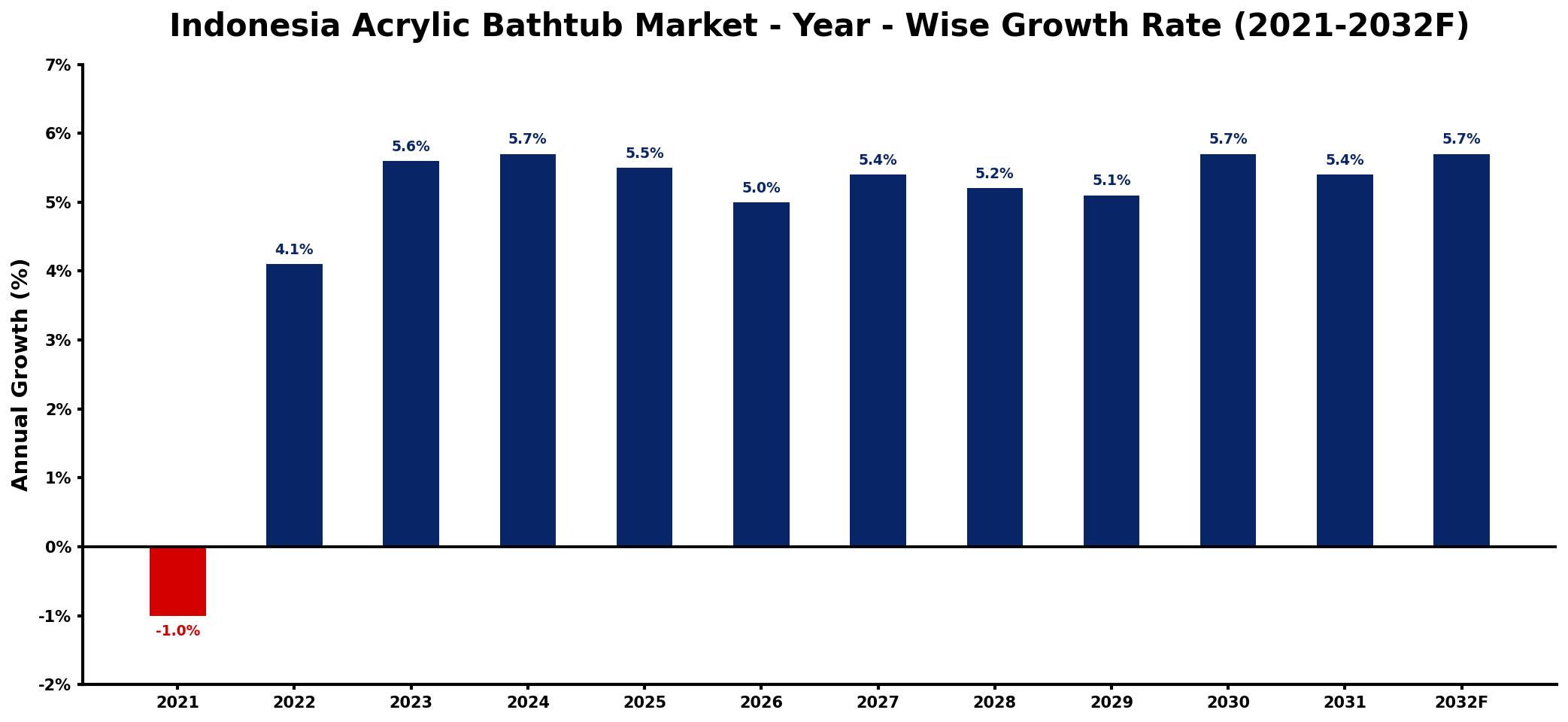
The table below presents the year‑wise growth rates along with the key drivers influencing the market
| Year | Growth Rate | Major Drivers |
| 2021 | -1.0% | decrease in construction projects |
| 2022 | 4.1% | increased residential renovation activities |
| 2023 | 5.6% | growing luxury home market |
| 2024 | 5.7% | rise in disposable income levels |
| 2025 | 5.5% | expansion of retail distribution channels |
| 2026 | 5.0% | increased focus on sustainable materials |
| 2027 | 5.4% | growing demand for home wellness |
| 2028 | 5.2% | increase in tourism and hospitality |
| 2029 | 5.1% | development of smart home technologies |
| 2030 | 5.7% | growth in eco-friendly housing trends |
| 2031 | 5.4% | expanding healthcare application demand |
| 2032 | 5.7% | growing downstream application demand |
Note: Market size estimations and growth projections presented in this report are based on 6Wresearch's proprietary forecasting methodology, utilizing the latest available industry data, government publications, and primary research inputs.
Indonesia Acrylic Bathtub Market Synopsis
The demand for acrylic bathtubs in Indonesia is driven by the burgeoning real estate and hospitality sectors, where aesthetic appeal and functionality are paramount. Moreover, an increasing awareness of interior design among consumers is pushing demand for stylish, durable bathroom fixtures.
With acrylic bathtubs known for their versatility and ease of maintenance, they offer significant advantages over traditional materials. The market is also witnessing an uptick in projects aimed at modernizing bathrooms, further fueling the adoption of acrylic bathtubs across various consumer segments.
Indonesia Acrylic Bathtub Market Key Takeaways
- The market is poised for steady growth, driven by urbanization and rising consumer spending on home improvements.
- Changing consumer preferences toward stylish and functional bathroom designs are boosting acrylic bathtub sales.
- Technological advancements in manufacturing are enhancing the quality and affordability of acrylic bathtubs.
- Increased investments in the real estate sector are positively influencing market dynamics.
- Consumer awareness regarding interior aesthetics and comfort is shaping market demand significantly.
Evaluation of Restraints in Indonesia Acrylic Bathtub Market
While the Indonesia Acrylic Bathtub market holds significant promise, several constraints could impede its growth. Notably, concerns over the quality and durability of acrylic products may hinder widespread consumer acceptance. Furthermore, the higher manufacturing costs associated with acrylic bathtubs compared to alternatives like steel and ceramic may restrict their affordability for some segments. Shifts in consumer preferences and economic fluctuations also pose challenges that could affect market stability and growth prospects.
Indonesia Acrylic Bathtub Market Trends
Current trends in the Indonesian acrylic bathtub market include a growing preference for eco-friendly and sustainable products, as consumers become increasingly conscious of their environmental impact. Additionally, innovative designs and features that enhance the bathing experience are gaining traction. The integration of smart technology in bathrooms, including smart tubs that offer temperature control and water-saving features, is also on the rise. This shift indicates a broader trend towards creating personalized and luxurious home environments.
Indonesia Acrylic Bathtub Market Opportunities
Significant growth and investment opportunities lie in the renovation sector, particularly within urban areas where older homes are being updated. As disposable income increases, homeowners are more likely to invest in luxurious bathroom upgrades. Additionally, partnerships with real estate developers to supply acrylic bathtubs for new projects present lucrative avenues. The increasing trend of wellness and spa-like amenities in homes further positions the acrylic bathtub market for expansion, making it an attractive field for new entrants and existing players alike.
Government Initiatives in the Indonesia Acrylic Bathtub Market
The Indonesian government has been actively promoting the home improvement sector through various initiatives aimed at increasing housing quality and affordability. Incentives for sustainable building practices are also encouraging the use of modern materials, including acrylic. These measures are expected to provide a conducive environment for market growth, as public spending on infrastructure and housing development continues to rise.
Future Insights of the Indonesia Acrylic Bathtub Market
Looking ahead to 2026-2032, the Indonesia Acrylic Bathtub market is projected to experience robust growth fueled by ongoing urban development and an increasing middle-class demographic eager to invest in home aesthetics. The focus on health and wellness will likely drive demand for more luxurious bathing experiences, further solidifying the acrylic bathtub's appeal. Strategic partnerships between manufacturers and real estate developers will also play a crucial role in shaping market dynamics, enhancing both production capacity and product offerings.
Indonesia Acrylic Bathtub Market Latest Developments (2025 - 2026)
The Indonesian acrylic bathtub market has been witnessing a series of advancements, particularly in product design and sustainability. Manufacturers are focusing on innovative technologies that not only improve the durability of acrylic products but also cater to environmentally-conscious consumers. Collaborations within the industry have increased, as companies explore new distribution channels and partnerships with home improvement retailers, enabling broader market reach and enhanced consumer access.
Indonesia Acrylic Bathtub Market - Key Attractiveness of the Report
- 10 Years of Market Numbers
- Historical Data Starting from 2022 to 2025
- Base Year: 2025
- Forecast Data until 2032
- Key Performance Indicators Impacting the Market
- Major Upcoming Developments and Projects
Key Highlights of the Report:
- Indonesia Acrylic Bathtub Market Outlook
- Market Size of Indonesia Acrylic Bathtub Market, 2025
- Forecast of Indonesia Acrylic Bathtub Market, 2032
- Historical Data and Forecast of Indonesia Acrylic Bathtub Revenues & Volume for the Period 2022-2032F
- Indonesia Acrylic Bathtub Market Trend Evolution
- Indonesia Acrylic Bathtub Market Drivers and Challenges
- Indonesia Acrylic Bathtub Price Trends
- Indonesia Acrylic Bathtub Porter's Five Forces
- Indonesia Acrylic Bathtub Industry Life Cycle
- Historical Data and Forecast of Indonesia Acrylic Bathtub Market Revenues & Volume By Type for the Period 2022-2032F
- Historical Data and Forecast of Indonesia Acrylic Bathtub Market Revenues & Volume By Large Type for the Period 2022-2032F
- Historical Data and Forecast of Indonesia Acrylic Bathtub Market Revenues & Volume By Medium Type for the Period 2022-2032F
- Historical Data and Forecast of Indonesia Acrylic Bathtub Market Revenues & Volume By Small Type for the Period 2022-2032F
- Historical Data and Forecast of Indonesia Acrylic Bathtub Market Revenues & Volume By Application for the Period 2022-2032F
- Historical Data and Forecast of Indonesia Acrylic Bathtub Market Revenues & Volume By Home Use for the Period 2022-2032F
- Historical Data and Forecast of Indonesia Acrylic Bathtub Market Revenues & Volume By Commercial Use for the Period 2022-2032F
- Indonesia Acrylic Bathtub Import Export Trade Statistics
- Market Opportunity Assessment By Type
- Market Opportunity Assessment By Application
- Indonesia Acrylic Bathtub Top Companies Market Share
- Indonesia Acrylic Bathtub Competitive Benchmarking By Technical and Operational Parameters
- Indonesia Acrylic Bathtub Company Profiles
- Indonesia Acrylic Bathtub Key Strategic Recommendations






































