Indonesia Alternative Building Materials Market: Import Trend Analysis
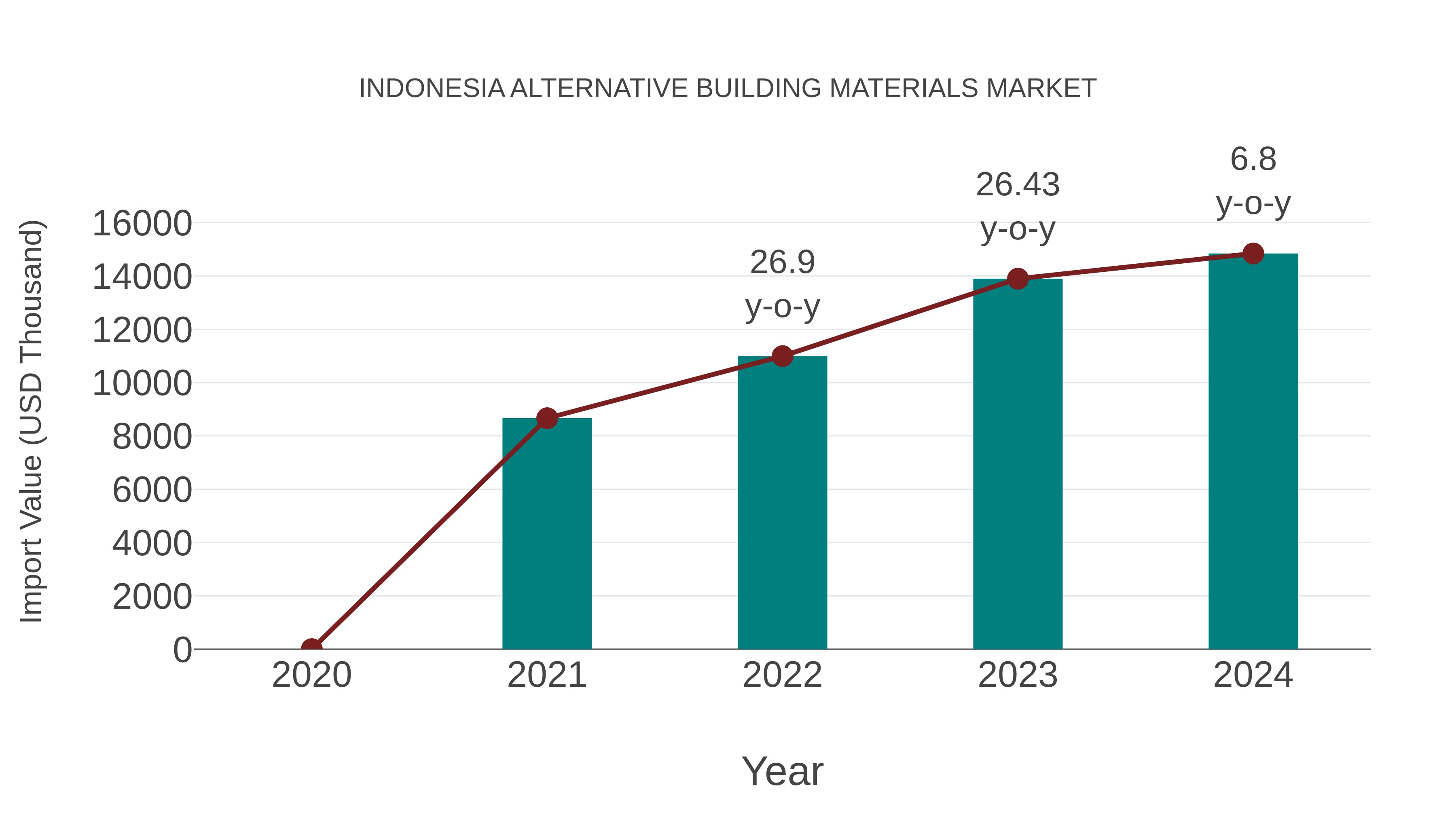
In the Indonesia alternative building materials market, the import trend showed a 6.8% growth rate from 2023 to 2024, with a compound annual growth rate (CAGR) of 19.66% from 2020 to 2024. This import momentum can be attributed to a notable demand shift towards sustainable construction practices in the region.
Indonesia Alternative Building Materials Market Synopsis
The Indonesia alternative building materials market was valued at USD 1.2 billion in 2025 and is expected to grow at a CAGR of 5.4% during the forecast period to reach a value of USD 1.7 billion by 2025. Key factors driving this growth are rising government initiatives to promote eco-friendly building materials, increasing urbanization, and growing renewable energy investments. The Indonesian Government has been actively promoting green buildings as part of their commitment towards sustainable development goals set out by the United Nations Development Programme (UNDP). Several major construction companies have already started using green building material products such as wood substitutes, fly ash bricks, recycled plastic composites, etc., due to their cost benefits and environmental advantages over traditional building materials like steel and cement. As per statistics published by the World Bank in 2018, around 64% of Indonesians reside in urban areas which is likely to increase further with ongoing industrialization programmes planned across several cities including Jakarta and Bali providing an additional impetus for demand for alternative building materials in Indonesia
Drivers of the Market
The demand for alternative building materials could be driven by factors such as sustainable construction practices, energy efficiency, and innovative materials. The market might benefit from urbanization, government initiatives promoting green building practices, and the need for cost-effective and eco-friendly construction solutions.
Challenges of the Market
The alternative building materials market in Indonesia holds potential, challenges include resistance to change and limited acceptance of new materials and construction methods. Traditional building practices are deeply entrenched, and convincing stakeholders to adopt alternative materials can be difficult. Additionally, ensuring the durability, safety, and compliance of these materials with local building codes can be a hurdle.
COVID-19 Impact on the Market
The alternative building materials market could have experienced delays in construction projects due to labor shortages and disruptions in supply chains during the pandemic. However, as construction activities resumed, demand for sustainable and innovative building materials might have regained momentum.
Key Players in the Market
The alternative building materials market could see growth as sustainable construction practices gain traction. Key players might include companies specializing in eco-friendly construction materials like PT. Bambu Runcing, Green Building Council Indonesia, and local sustainable material manufacturers.
Key Highlights of the Report:
- Indonesia Alternative Building Materials Market Outlook
- Market Size of Indonesia Alternative Building Materials Market, 2025
- Forecast of Indonesia Alternative Building Materials Market, 2032
- Historical Data and Forecast of Indonesia Alternative Building Materials Revenues & Volume for the Period 2022-2032F
- Indonesia Alternative Building Materials Market Trend Evolution
- Indonesia Alternative Building Materials Market Drivers and Challenges
- Indonesia Alternative Building Materials Price Trends
- Indonesia Alternative Building Materials Porter's Five Forces
- Indonesia Alternative Building Materials Industry Life Cycle
- Historical Data and Forecast of Indonesia Alternative Building Materials Market Revenues & Volume By Material for the Period 2022-2032F
- Historical Data and Forecast of Indonesia Alternative Building Materials Market Revenues & Volume By Bamboo for the Period 2022-2032F
- Historical Data and Forecast of Indonesia Alternative Building Materials Market Revenues & Volume By Recycled Plastic for the Period 2022-2032F
- Historical Data and Forecast of Indonesia Alternative Building Materials Market Revenues & Volume By Wood for the Period 2022-2032F
- Historical Data and Forecast of Indonesia Alternative Building Materials Market Revenues & Volume By Others for the Period 2022-2032F
- Historical Data and Forecast of Indonesia Alternative Building Materials Market Revenues & Volume By End User for the Period 2022-2032F
- Historical Data and Forecast of Indonesia Alternative Building Materials Market Revenues & Volume By Residential for the Period 2022-2032F
- Historical Data and Forecast of Indonesia Alternative Building Materials Market Revenues & Volume By Non-residential for the Period 2022-2032F
- Historical Data and Forecast of Indonesia Alternative Building Materials Market Revenues & Volume By Application for the Period 2022-2032F
- Historical Data and Forecast of Indonesia Alternative Building Materials Market Revenues & Volume By Construction for the Period 2022-2032F
- Historical Data and Forecast of Indonesia Alternative Building Materials Market Revenues & Volume By Furniture for the Period 2022-2032F
- Historical Data and Forecast of Indonesia Alternative Building Materials Market Revenues & Volume By Flooring for the Period 2022-2032F
- Indonesia Alternative Building Materials Import Export Trade Statistics
- Market Opportunity Assessment By Material
- Market Opportunity Assessment By End User
- Market Opportunity Assessment By Application
- Indonesia Alternative Building Materials Top Companies Market Share
- Indonesia Alternative Building Materials Competitive Benchmarking By Technical and Operational Parameters
- Indonesia Alternative Building Materials Company Profiles
- Indonesia Alternative Building Materials Key Strategic Recommendations






































