Indonesia Anaesthesia Drug Market Summary
The indonesia anaesthesia drug market was estimated at USD 439 Million in 2025 and is projected to reach USD 584 Million by 2032, growing at a CAGR of 5.5% from 2026 to 2032.
Indonesia Anaesthesia Drug Market Year-wise Growth Rate and Key Drivers
This graph highlights how the Indonesia Anaesthesia Drug Market has steadily grown over the past five years, supported by major growth factors.
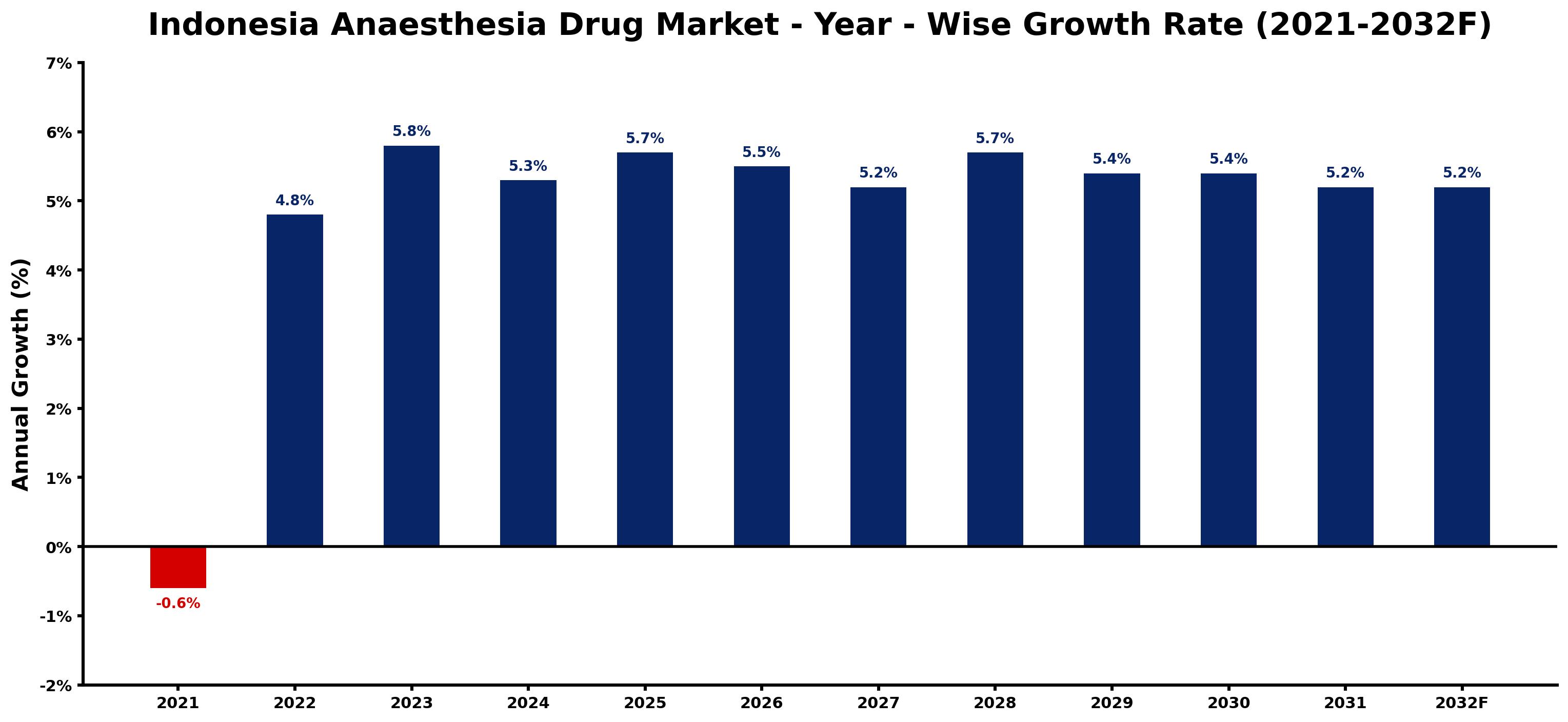
The table below presents the year wise growth rates along with the key drivers influencing the market
| Year | Growth Rate | Major Drivers |
| 2021 | -0.6% | Increased competition from alternative pain management therapies diminished the demand for anaesthesia drugs in 2021. |
| 2022 | 4.8% | Emerging healthcare infrastructure strengthens anaesthesia drug distribution channels significantly. |
| 2023 | 5.8% | Growing private healthcare investments enhance access to advanced anaesthesia technologies. |
| 2024 | 5.3% | Healthcare workforce training programs improve anaesthesia administration skills nationwide. |
| 2025 | 5.7% | Rising awareness of pain management emphasizes the importance of anaesthesia services. |
| 2026 | 5.5% | Market players introduce innovative formulations catering to diverse surgical needs. |
| 2027 | 5.2% | Increased lifestyle diseases lead to higher surgical interventions requiring anaesthesia. |
| 2028 | 5.7% | Partnerships between pharmaceutical firms and healthcare providers enhance drug availability. |
| 2029 | 5.4% | Technological evolution fosters telemedicine, impacting anaesthesia consultations positively. |
| 2030 | 5.4% | Focus on patient safety drives demand for superior anaesthesia monitoring devices. |
| 2031 | 5.2% | Regulatory frameworks streamline drug approvals, easing market entry for new products. |
| 2032 | 5.2% | Population growth and urbanization contribute to rising healthcare service demands. |
Note - Market size estimations and growth projections presented in this report are based on 6Wresearch's advanced forecasting approach, validated with industry datasets as of June 2026.
Indonesia Anaesthesia Drug Market Synopsis
The Indonesia Anaesthesia Drug Market is projected to reach 5.5% and witness significant growth during the forecast period (2026-2032). This burgeoning market is anticipated to continue expanding, driven by a myriad of factors including an increasing number of surgeries, a rising prevalence of chronic diseases, and the growth of the geriatric population in Indonesia. The introduction and availability of affordable generic anesthetic drugs have significantly boosted access and sales within this sector. Furthermore, government initiatives aimed at enhancing healthcare infrastructure are expected to serve as an additional catalyst for market growth. The presence of a skilled workforce and advancements in anesthetic technologies are poised to offer lucrative opportunities for market participants throughout this forecast period.
Indonesia Anaesthesia Drug Market Growth Drivers
The demand for anesthetic drugs in Indonesia is significantly influenced by the increasing frequency of surgical procedures performed across various age demographics. This surge is primarily a consequence of a heightened prevalence of chronic diseases such as diabetes, cancer, and neurological disorders.
- The escalating number of surgeries performed on patients necessitates the use of general anesthesia, thereby propelling market demand. As chronic diseases become more pervasive, the requirement for surgical interventions has risen sharply.
- A rapidly aging population is contributing to a rise in elderly individuals facing health issues that require surgical solutions. This demographic shift further intensifies the demand for effective anesthetic drugs.
- The growth of surgical facilities and enhanced healthcare infrastructure can be attributed to both increased government spending and private sector investment, ensuring that anesthetic drugs are readily available and safely administered.
- Technological innovations in anesthesia administration and monitoring are enhancing patient safety and comfort, which in turn fosters greater acceptance and use of anesthesia in surgical settings.
- The rise of medical tourism in Indonesia is also influencing the market, as international patients require anesthesia for various procedures, thus increasing domestic demand.
Indonesia Anaesthesia Drug Market Challenges and Restraints
Despite its robust growth prospects, the Indonesia Anaesthesia Drug Market faces inherent challenges that could impede its progress. The rising costs associated with the production of analgesic drugs, driven by complex manufacturing processes, are a primary concern.
- The fluctuating prices of raw materials and regulatory compliance costs add to the economic burden for manufacturers, potentially leading to higher prices for consumers and healthcare facilities.
- Economic disparities in the region may result in unequal access to quality healthcare services, particularly in anesthetic treatments, for lower-income populations.
- The gradual pace of technological adoption within some healthcare facilities can limit the efficiency and safety of anesthesia practices, impacting overall patient care.
- Concerns related to the safety and side effects of anesthetic drugs may deter both healthcare providers and patients from utilizing certain products, which could stall market growth.
- Competition from alternative pain management therapies may shift focus away from traditional anesthetics, reducing market share for established products.
Indonesia Anaesthesia Drug Market Government Investment and Initiatives
The Indonesian government has undertaken various initiatives to bolster the healthcare sector, positively impacting the Indonesia Anaesthesia Drug Market. Investments in health infrastructure are aimed at enhancing the quality and accessibility of medical services throughout the nation.
- Government policy reforms have prioritized the modernization of healthcare facilities, which includes upgrading surgical theaters equipped with advanced anesthetic technology.
- Increased public spending on healthcare aims to provide broader access to essential medical procedures, prompting a corresponding rise in demand for anesthesia.
- Incentive programs designed to support the production of generic anesthetic drugs have led to a reduction in costs, making these treatments more accessible to healthcare providers.
- Collaborations with international organizations have facilitated knowledge transfer and best practices in anesthesia management, boosting local capabilities and safety standards.
- National health campaigns focusing on chronic disease awareness and prevention have indirectly encouraged surgical intervention, thus increasing the use of anesthetic drugs.
Indonesia Anaesthesia Drug Market Latest Developments (May 2025 - June 2026)
The Indonesia Anaesthesia Drug Market has witnessed several noteworthy developments during the period from May 2025 to June 2026. A key trend has been the ongoing efforts to enhance the regulatory framework governing anesthesia drugs, aimed at ensuring utmost safety and efficacy for patients.
- The introduction of new regulations has facilitated a streamlined approval process for generic anesthetic drugs, making them available more swiftly to the market.
- Innovations in anesthetic delivery systems, including regional anesthesia techniques, have gained traction, improving patient outcomes and satisfaction.
- Healthcare institutions are increasingly investing in training programs for medical professionals, focusing on the latest anesthetic techniques and technologies to ensure quality care.
- Public awareness campaigns regarding the importance of safe anesthetic practices have been launched, encouraging patients to engage in discussions with healthcare providers.
- Collaborative research initiatives have emerged, focusing on the development of next-generation anesthetic agents, emphasizing safety and reduced side effects for patients undergoing surgery.
Indonesia Anaesthesia Drug Market - Key Attractiveness of the Report
- 10 Years of Market Numbers
- Historical Data Starting from 2022 to 2025
- Base Year: 2025
- Forecast Data until 2032
- Key Performance Indicators Impacting the Market
- Major Upcoming Developments and Projects
Key Highlights of the Report:
- Indonesia Anaesthesia Drug Market Outlook
- Market Size of Indonesia Anaesthesia Drug Market, 2025
- Forecast of Indonesia Anaesthesia Drug Market, 2032F
- Historical Data and Forecast of Indonesia Anaesthesia Drug Revenues & Volume for the Period 2022-2032F
- Indonesia Anaesthesia Drug Market Trend Evolution
- Indonesia Anaesthesia Drug Market Drivers and Challenges
- Indonesia Anaesthesia Drug Price Trends
- Indonesia Anaesthesia Drug Porter's Five Forces
- Indonesia Anaesthesia Drug Industry Life Cycle
- Historical Data and Forecast of Indonesia Anaesthesia Drug Market Revenues & Volume By Type for the Period 2022-2032F
- Historical Data and Forecast of Indonesia Anaesthesia Drug Market Revenues & Volume By General? for the Period 2022-2032F
- Historical Data and Forecast of Indonesia Anaesthesia Drug Market Revenues & Volume By Local for the Period 2022-2032F
- Historical Data and Forecast of Indonesia Anaesthesia Drug Market Revenues & Volume By Routes of Administration for the Period 2022-2032F
- Historical Data and Forecast of Indonesia Anaesthesia Drug Market Revenues & Volume By Inhalation for the Period 2022-2032F
- Historical Data and Forecast of Indonesia Anaesthesia Drug Market Revenues & Volume By Injection for the Period 2022-2032F
- Historical Data and Forecast of Indonesia Anaesthesia Drug Market Revenues & Volume By Other for the Period 2022-2032F
- Historical Data and Forecast of Indonesia Anaesthesia Drug Market Revenues & Volume By Applications for the Period 2022-2032F
- Historical Data and Forecast of Indonesia Anaesthesia Drug Market Revenues & Volume By General Surgery for the Period 2022-2032F
- Historical Data and Forecast of Indonesia Anaesthesia Drug Market Revenues & Volume By Plastic Surgery for the Period 2022-2032F
- Historical Data and Forecast of Indonesia Anaesthesia Drug Market Revenues & Volume By Cosmetic Surgery for the Period 2022-2032F
- Historical Data and Forecast of Indonesia Anaesthesia Drug Market Revenues & Volume By Dental Surgery for the Period 2022-2032F
- Historical Data and Forecast of Indonesia Anaesthesia Drug Market Revenues & Volume By Other for the Period 2022-2032F
- Indonesia Anaesthesia Drug Import Export Trade Statistics
- Market Opportunity Assessment By Type
- Market Opportunity Assessment By Routes of Administration
- Market Opportunity Assessment By Applications
- Indonesia Anaesthesia Drug Top Companies Market Share
- Indonesia Anaesthesia Drug Competitive Benchmarking By Technical and Operational Parameters
- Indonesia Anaesthesia Drug Company Profiles
- Indonesia Anaesthesia Drug Key Strategic Recommendations






































