Indonesia Anti-money Laundering Market Size & Growth Rate (2026-2032)
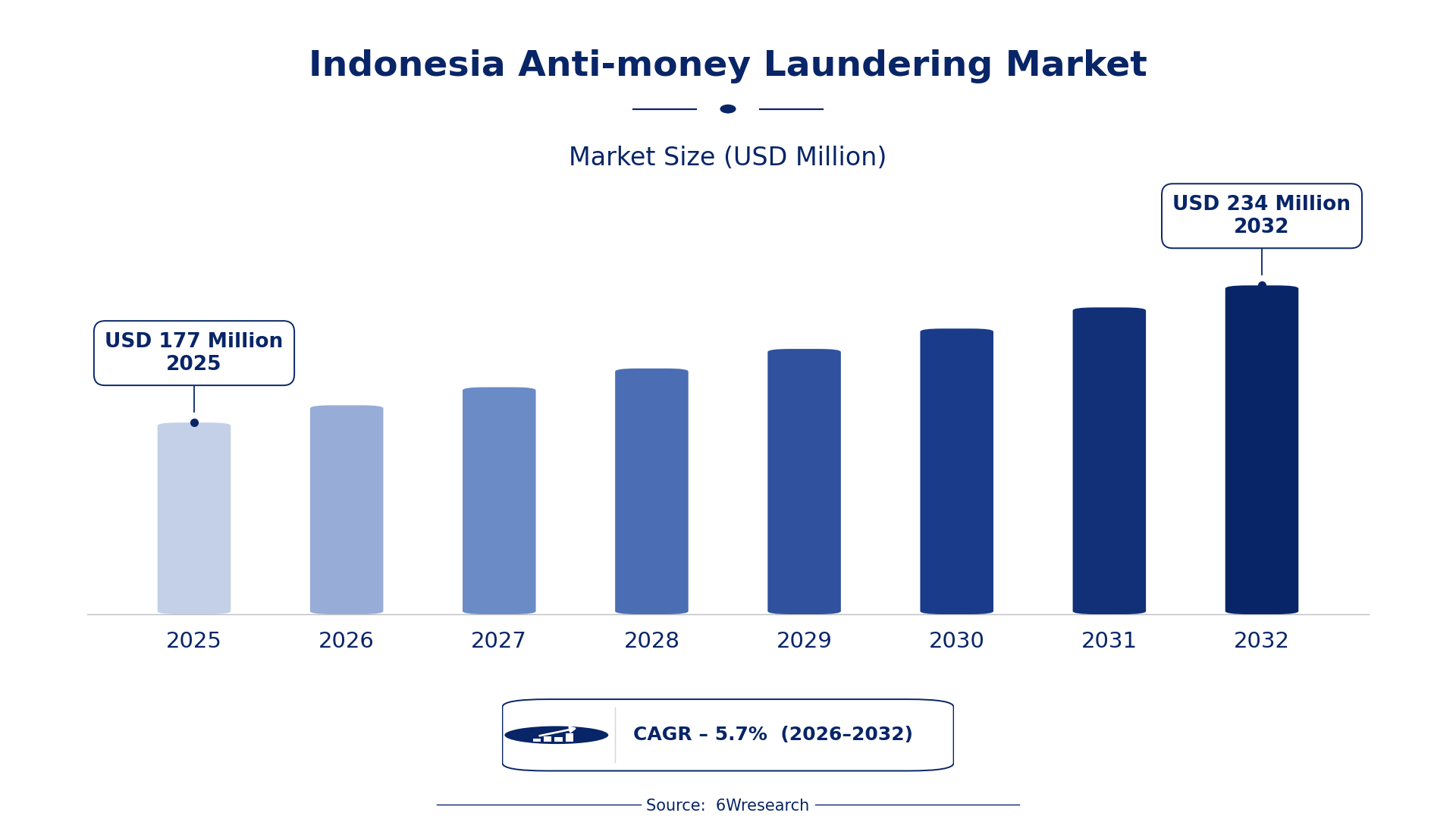
The Indonesia Anti-money Laundering Market was estimated at USD 177 Million in 2025 and is projected to reach USD 234 Million by 2032, growing at a CAGR of 5.7% from 2026 to 2032.
Indonesia Anti-money Laundering Market Synopsis
The escalating focus on financial integrity and compliance is the most influential force driving the anti-money laundering market in Indonesia. As regulatory bodies tighten enforcement mechanisms, businesses are compelled to invest in advanced AML solutions to stay compliant and protect their operations.
This market is not merely about responding to regulations; it's about safeguarding the reputation and financial health of institutions. With a growing digital economy, the complexity of financial crimes is increasing, prompting firms to adopt innovative technologies in their AML strategies.
Indonesia Anti-money Laundering Market Year-wise Growth Rate and Key Drivers
This graph illustrates the annual growth rates of the Indonesia Anti-money Laundering Market from 2021 to 2032, highlighting a steady upward trajectory and projected expansion over the forecast period.
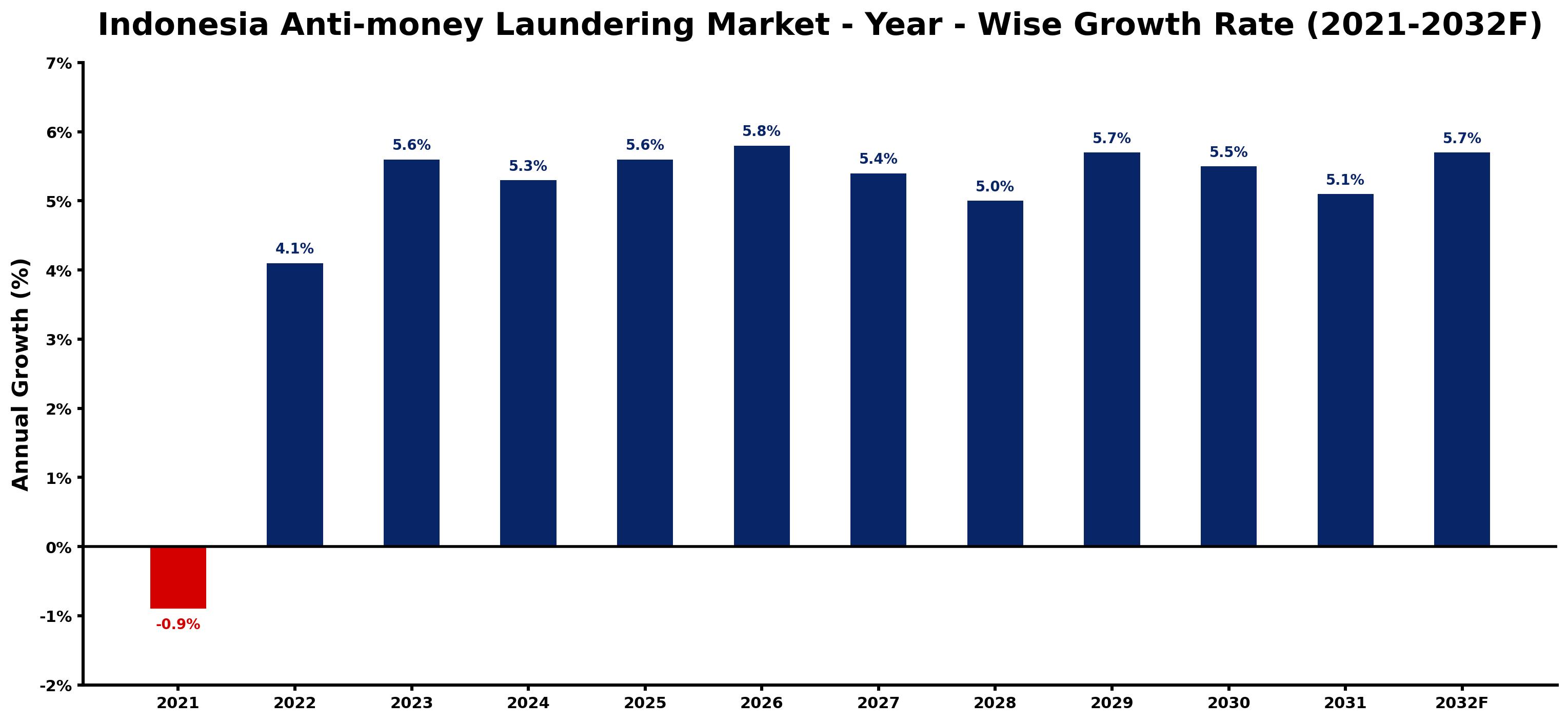
The table below presents the year‑wise growth rates along with the key drivers influencing the market
| Year | Growth Rate | Major Drivers |
| 2021 | -0.9% | Insufficient enforcement by the Financial Transaction Reports Analysis Centre |
| 2022 | 4.1% | Implementation of Financial Transaction Reports regulations by PPATK |
| 2023 | 5.6% | Increased foreign investment due to stricter compliance measures |
| 2024 | 5.3% | Enhanced digital fraud detection by Indonesian banks |
| 2025 | 5.6% | Growing emphasis on KYC regulations among local businesses |
| 2026 | 5.8% | Regulatory reforms boosting trust in financial institutions |
| 2027 | 5.4% | Collaboration with international agencies on financial crime prevention |
| 2028 | 5.0% | Mounting pressure for anti-corruption measures in finance |
| 2029 | 5.7% | Rising public awareness of money laundering risks |
| 2030 | 5.5% | Government initiatives promoting transparent financial practices |
| 2031 | 5.1% | Strengthened AML training programs for banking professionals |
| 2032 | 5.7% | Adoption of advanced analytics in financial crime detection |
Note: Market size estimations and growth projections presented in this report are based on 6Wresearch's proprietary forecasting methodology, utilizing the latest available industry data, government publications, and primary research inputs.
Indonesia Anti-money Laundering Market Key Takeaways
Below are some of the specific key takeaways from the market, including:
- The rise in regulatory scrutiny is forcing financial institutions to enhance their AML frameworks.
- Technological advancements are crucial in combating sophisticated financial crimes.
- COVID-19 has accelerated the implementation of stringent AML measures across sectors.
- Investment in compliance technologies is expected to grow as businesses adapt to digital transactions.
- Public-private partnerships are emerging to fortify the anti-money laundering infrastructure.
Evaluation of Restraints in Indonesia Anti-money Laundering Market
The Indonesia anti-money laundering market faces challenges from a range of factors that complicate its effectiveness. Foremost, the persistent issue of resource allocation hampers the ability of regulatory bodies and institutions to implement necessary measures thoroughly. Furthermore, the evolving tactics used by financial criminals pose a constant threat, requiring ongoing adaptations in strategies and technologies. Many organizations are also grappling with the high costs associated with deploying advanced compliance systems, which can deter smaller institutions from fully engaging in anti-money laundering initiatives. Together, these factors create a complex environment where the AML sector must work diligently to stay ahead of illicit activities.
Indonesia Anti-money Laundering Market Trends
The market is witnessing a surge in the adoption of artificial intelligence and machine learning technologies. These tools facilitate real-time transaction monitoring and more sophisticated risk assessments. Additionally, regulatory bodies are increasingly favoring comprehensive reporting standards, pressuring institutions to refine their data handling processes. The trend toward integrated compliance solutions is also evident, as businesses look to streamline operations and enhance overall effectiveness in their AML efforts.
Indonesia Anti-money Laundering Market Opportunities
Investment opportunities within the Indonesian AML market lie primarily in technology enhancement and training programs. As financial institutions expand their digital services, they will require advanced software capable of detecting suspicious transactions. Moreover, public-private collaborations can yield innovative solutions, ultimately leading to more resilient financial systems. The ongoing drive for regulatory compliance also opens doors for firms to introduce new service offerings that address emerging AML needs.
Government Initiatives in the Indonesia Anti-money Laundering Market
The Indonesian government is actively shaping the anti-money laundering market through a variety of regulatory initiatives aimed at strengthening financial integrity. This includes an emphasis on compliance with international standards and enhanced monitoring practices. As global financial crime evolves, the government's proactive stance is vital in ensuring that local institutions are equipped to combat these challenges.
- A national AML compliance program launched in early 2025 focused on enhancing financial transparency across sectors.
- Currently ongoing efforts to implement advanced technology solutions for transaction monitoring in financial institutions.
- A planned initiative to develop a centralized data repository expected to bolster collaboration between regulatory bodies by late 2026.
- Recent regulations introduced mandating increased reporting frequency on high-risk transactions by mid-2025.
- An upcoming training program targeted at financial sector employees to improve understanding of AML practices, slated for rollout in early 2027.
Future Insights of the Indonesia Anti-money Laundering Market
As we look toward 2032, the Indonesia anti-money laundering market is set to evolve significantly. A growing emphasis on financial technology is expected to drive further investments in compliance solutions, fundamentally transforming how institutions approach AML. With increasing regulatory requirements, firms will likely prioritize the integration of innovative technologies into their operations. The collaboration between public entities and private firms is anticipated to foster a more cohesive and effective AML framework, promoting financial integrity across the nation.
Indonesia Anti-money Laundering Market Latest Developments
Recent activity in the Indonesia anti-money laundering market highlights a trend of increasing collaboration and technological innovation. Institutions are responding to regulatory pressures by enhancing their compliance strategies, paving the way for a more effective response to financial crimes.
- A new transaction monitoring solution was launched by a major technology vendor in Q2 2025, aimed at improving detection capabilities for financial institutions.
- An ongoing partnership between regulatory authorities and fintech companies, initiated in late 2024, is focused on developing a unified compliance framework.
- A service upgrade that began in mid-2025 aims to enhance user interfaces for AML software, making compliance processes more intuitive.
- A pilot program expected to roll out in late 2026 will test advanced AI algorithms in monitoring for money laundering activities.
- Industry forums established in 2025 continue to bring together stakeholders to discuss emerging threats and best practices in AML.
Indonesia Anti-money Laundering Market - Key Attractiveness of the Report
- 10 Years of Market Numbers
- Historical Data Starting from 2022 to 2025
- Base Year: 2025
- Forecast Data until 2032
- Key Performance Indicators Impacting the Market
- Major Upcoming Developments and Projects
Key Highlights of the Report:
- Indonesia Anti-money Laundering Market Outlook
- Market Size of Indonesia Anti-money Laundering Market, 2025
- Forecast of Indonesia Anti-money Laundering Market, 2032
- Historical Data and Forecast of Indonesia Anti-money Laundering Revenues & Volume for the Period 2022-2032F
- Indonesia Anti-money Laundering Market Trend Evolution
- Indonesia Anti-money Laundering Market Drivers and Challenges
- Indonesia Anti-money Laundering Price Trends
- Indonesia Anti-money Laundering Porter's Five Forces
- Indonesia Anti-money Laundering Industry Life Cycle
- Historical Data and Forecast of Indonesia Anti-money Laundering Market Revenues & Volume By Component for the Period 2022-2032F
- Historical Data and Forecast of Indonesia Anti-money Laundering Market Revenues & Volume By Services for the Period 2022-2032F
- Historical Data and Forecast of Indonesia Anti-money Laundering Market Revenues & Volume By Solutions for the Period 2022-2032F
- Historical Data and Forecast of Indonesia Anti-money Laundering Market Revenues & Volume By Deployment Mode for the Period 2022-2032F
- Historical Data and Forecast of Indonesia Anti-money Laundering Market Revenues & Volume By On-Premises for the Period 2022-2032F
- Historical Data and Forecast of Indonesia Anti-money Laundering Market Revenues & Volume By Cloud for the Period 2022-2032F
- Historical Data and Forecast of Indonesia Anti-money Laundering Market Revenues & Volume By End User for the Period 2022-2032F
- Historical Data and Forecast of Indonesia Anti-money Laundering Market Revenues & Volume By Banking & Financial Institutes for the Period 2022-2032F
- Historical Data and Forecast of Indonesia Anti-money Laundering Market Revenues & Volume By Insurance for the Period 2022-2032F
- Historical Data and Forecast of Indonesia Anti-money Laundering Market Revenues & Volume By Gaming & Gambling for the Period 2022-2032F
- Historical Data and Forecast of Indonesia Anti-money Laundering Market Revenues & Volume By Organization Size for the Period 2022-2032F
- Historical Data and Forecast of Indonesia Anti-money Laundering Market Revenues & Volume By Large Enterprises for the Period 2022-2032F
- Historical Data and Forecast of Indonesia Anti-money Laundering Market Revenues & Volume By SMEs for the Period 2022-2032F
- Indonesia Anti-money Laundering Import Export Trade Statistics
- Market Opportunity Assessment By Component
- Market Opportunity Assessment By Deployment Mode
- Market Opportunity Assessment By End User
- Market Opportunity Assessment By Organization Size
- Indonesia Anti-money Laundering Top Companies Market Share
- Indonesia Anti-money Laundering Competitive Benchmarking By Technical and Operational Parameters
- Indonesia Anti-money Laundering Company Profiles
- Indonesia Anti-money Laundering Key Strategic Recommendations






































