Indonesia Architectural Hardware Market Summary
The indonesia architectural hardware market was estimated at USD 259 Million in 2025 and is projected to reach USD 343 Million by 2032, growing at a CAGR of 5.2% from 2026 to 2032.
Indonesia Architectural Hardware Market Year-wise Growth Rate and Key Drivers
This graph highlights how the Indonesia Architectural Hardware Market has steadily grown over the past five years, supported by major growth factors.
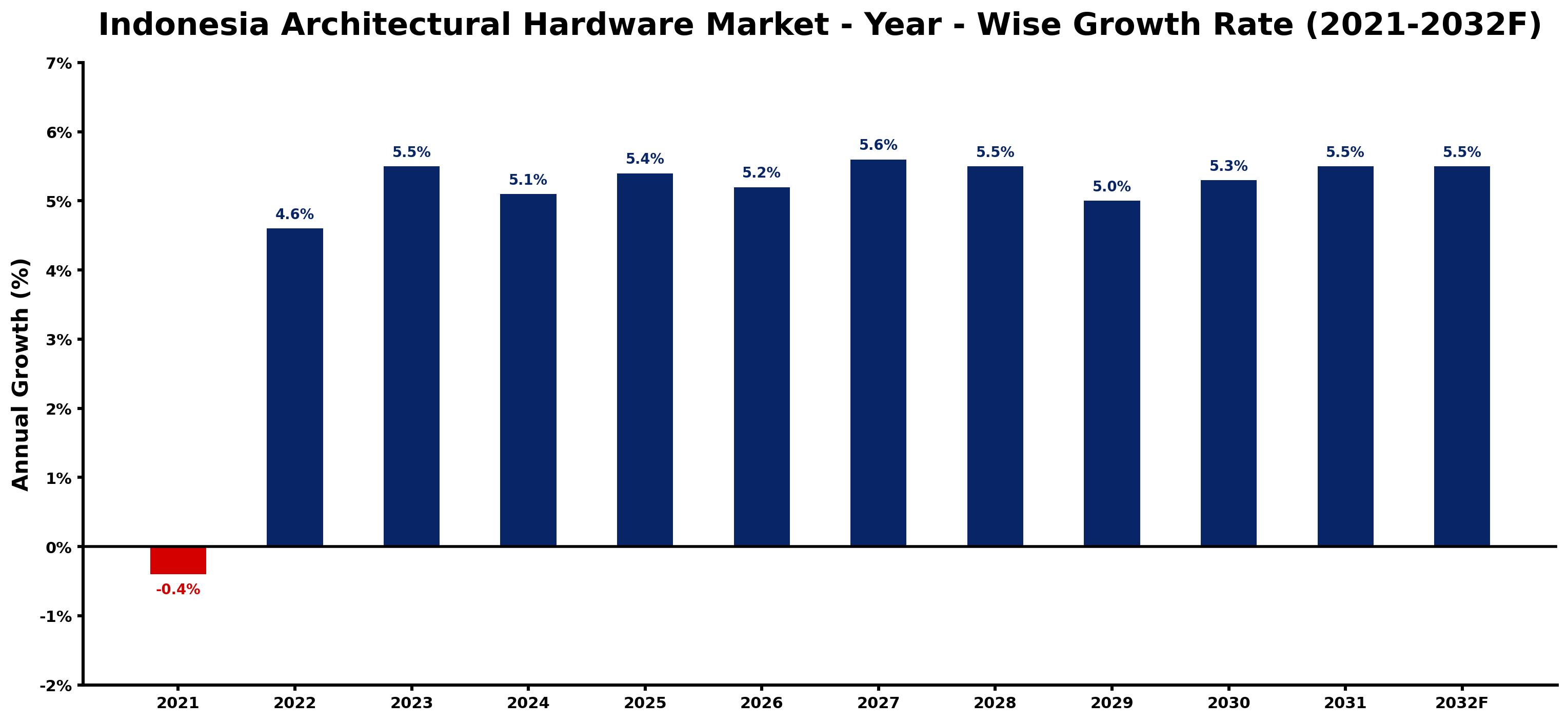
The table below presents the year wise growth rates along with the key drivers influencing the market
| Year | Growth Rate | Major Drivers |
| 2021 | -0.4% | Decreased infrastructure investment due to political uncertainty stifled growth in the architectural hardware sector. |
| 2022 | 4.6% | Increased urbanization in metropolitan areas fueled construction activities across the nation. |
| 2023 | 5.5% | Significant investments in smart city initiatives encouraged innovative hardware solutions adoption. |
| 2024 | 5.1% | Heightened focus on sustainable building practices favored eco-friendly architectural hardware materials. |
| 2025 | 5.4% | Technological advancements in manufacturing processes improved product quality and accessibility significantly. |
| 2026 | 5.2% | The construction sector experienced robust growth, reflecting increased consumer confidence and spending. |
| 2027 | 5.6% | Growing middle-class population boosted demand for premium architectural hardware in residential projects. |
| 2028 | 5.5% | Burgeoning e-commerce platforms enhanced distribution channels for architectural hardware products nationwide. |
| 2029 | 5.0% | International partnerships introduced advanced technologies into local manufacturing capabilities and standards. |
| 2030 | 5.3% | Focus on earthquake-resistant designs drove innovation in hardware for enhanced safety features. |
| 2031 | 5.5% | Cultural shifts toward modern aesthetics emphasized contemporary architectural hardware designs and styles. |
| 2032 | 5.5% | Rising interest in retrofitting older buildings with modern hardware solutions propelled market expansion. |
Note - Market size estimations and growth projections presented in this report are based on 6Wresearch's advanced forecasting approach, validated with industry datasets as of June 2026.
Indonesia Architectural Hardware Market Synopsis
The Indonesia Architectural Hardware Market is projected to reach 5.2% and witness significant growth during the forecast period (2026-2032). As one of the most populous nations globally, Indonesia's burgeoning infrastructure needs, coupled with a rapidly expanding middle-income demographic, have positioned the country as a promising landscape for architectural hardware products. This market encompasses a diverse range of items, including door locks, windowsills, hinges, handles, and various other accessories that significantly enhance building functionality and aesthetics.
Indonesia Architectural Hardware Market Growth Drivers
The growth of the Indonesia Architectural Hardware Market is underpinned by several prominent factors:
- Strong government initiatives aimed at infrastructure development are driving demand for architectural hardware. Major projects, including road networks and health facilities, are boosting investments in construction.
- Increasing disposable income levels among the population have led to higher consumer expectations for quality residential structures, demanding premium-grade hardware fittings that enhance security and aesthetics.
- Significant investments in the hospitality sector are paving the way for a surge in construction projects, generating further demand for relevant hardware solutions.
- Government policies promoting housing construction, particularly in urban areas, foster a favorable environment for manufacturers and suppliers of architectural hardware.
- Ongoing urbanization and population growth continue to create opportunities for the market, as the need for modern residential and commercial buildings increases across Indonesia.
Indonesia Architectural Hardware Market Challenges and Restraints
Despite the growth potential of the Indonesia Architectural Hardware Market, several challenges must be addressed:
- High import tariffs imposed on foreign products hinder international companies from entering the market and competing effectively against local manufacturers.
- Logistical issues stemming from a poorly developed transport network in rural regions complicate distribution, limiting market reach and profitability for suppliers.
- Local authorities maintain restrictive trade policies that can obstruct market entry for foreign entities, leading to high operational costs and reduced market competition.
- Variability in quality standards among local products can affect consumer trust, particularly for hardware items that are critical to safety and security.
- The economic repercussions of global challenges, such as supply chain disruptions and inflation, pose risks to investment and expansion in the architectural hardware sector.
Indonesia Architectural Hardware Market Government Investment and Initiatives
The Indonesian government has prioritized infrastructure development as part of its long-term economic strategy. Various initiatives are crafted to enhance the construction industry, with architectural hardware playing a crucial role in these efforts. Investments in public infrastructure, such as roads and ports, are supported by policies that provide funding and resources to developers. The government is also keen to improve housing accessibility, which includes regulations facilitating housing projects that boost the demand for quality architectural hardware. Public spending on health facilities is a priority, ensuring that infrastructure supports growing urban populations. Additionally, incentives for green building practices are being introduced, promoting the use of sustainable architectural hardware solutions.
Indonesia Architectural Hardware Market Latest Developments (May 2025 - June 2026)
In the period from May 2025 to June 2026, the Indonesia Architectural Hardware Market has seen notable developments that reflect the dynamic nature of the sector. There is an evident trend towards the adoption of smart technology in architectural hardware, aligning with global advancements in home automation. Several local manufacturers are increasingly innovating their product lines to include features such as keyless entry systems and automated locking mechanisms. Additionally, green building certifications are encouraging the integration of environmentally friendly materials and production processes in hardware manufacturing. Demand within the hospitality sector remains robust, with several high-profile hotel projects currently under construction, further increasing the need for quality architectural fittings. Furthermore, ongoing training initiatives are being introduced to enhance the skills of workers in the manufacturing and installation of architectural hardware, boosting overall market quality.
Indonesia Architectural Hardware Market - Key Attractiveness of the Report
- 10 Years of Market Numbers
- Historical Data Starting from 2022 to 2025
- Base Year: 2025
- Forecast Data until 2032
- Key Performance Indicators Impacting the Market
- Major Upcoming Developments and Projects
Key Highlights of the Report:
- Indonesia Architectural Hardware Market Outlook
- Market Size of Indonesia Architectural Hardware Market, 2025
- Forecast of Indonesia Architectural Hardware Market, 2032F
- Historical Data and Forecast of Indonesia Architectural Hardware Revenues & Volume for the Period 2022-2032F
- Indonesia Architectural Hardware Market Trend Evolution
- Indonesia Architectural Hardware Market Drivers and Challenges
- Indonesia Architectural Hardware Price Trends
- Indonesia Architectural Hardware Porter's Five Forces
- Indonesia Architectural Hardware Industry Life Cycle
- Historical Data and Forecast of Indonesia Architectural Hardware Market Revenues & Volume By Application for the Period 2022-2032F
- Historical Data and Forecast of Indonesia Architectural Hardware Market Revenues & Volume By Doors for the Period 2022-2032F
- Historical Data and Forecast of Indonesia Architectural Hardware Market Revenues & Volume By Windows for the Period 2022-2032F
- Historical Data and Forecast of Indonesia Architectural Hardware Market Revenues & Volume By Furniture for the Period 2022-2032F
- Historical Data and Forecast of Indonesia Architectural Hardware Market Revenues & Volume By Shower for the Period 2022-2032F
- Historical Data and Forecast of Indonesia Architectural Hardware Market Revenues & Volume By End-user for the Period 2022-2032F
- Historical Data and Forecast of Indonesia Architectural Hardware Market Revenues & Volume By Commercial for the Period 2022-2032F
- Historical Data and Forecast of Indonesia Architectural Hardware Market Revenues & Volume By Industrial for the Period 2022-2032F
- Historical Data and Forecast of Indonesia Architectural Hardware Market Revenues & Volume By Residential for the Period 2022-2032F
- Indonesia Architectural Hardware Import Export Trade Statistics
- Market Opportunity Assessment By Application
- Market Opportunity Assessment By End-user
- Indonesia Architectural Hardware Top Companies Market Share
- Indonesia Architectural Hardware Competitive Benchmarking By Technical and Operational Parameters
- Indonesia Architectural Hardware Company Profiles
- Indonesia Architectural Hardware Key Strategic Recommendations






































