Indonesia Asparagus Market Size, Share & Growth Rate
The Indonesia Asparagus Market was estimated at USD 210 Million in 2025 and is projected to reach USD 279 Million by 2032, growing at a CAGR of 4.1% from 2026 to 2032. This growth trajectory is fueled by the increasing health consciousness among consumers, leading to a higher demand for nutrient-rich vegetables. Additionally, asparagus's culinary versatility and its rising incorporation into local cuisines are enhancing its market appeal across diverse demographics.
Indonesia Asparagus Market Year-wise Growth Rate and Key Drivers
This graph highlights how the Indonesia Asparagus Market has steadily grown over the years, supported by major growth factors.
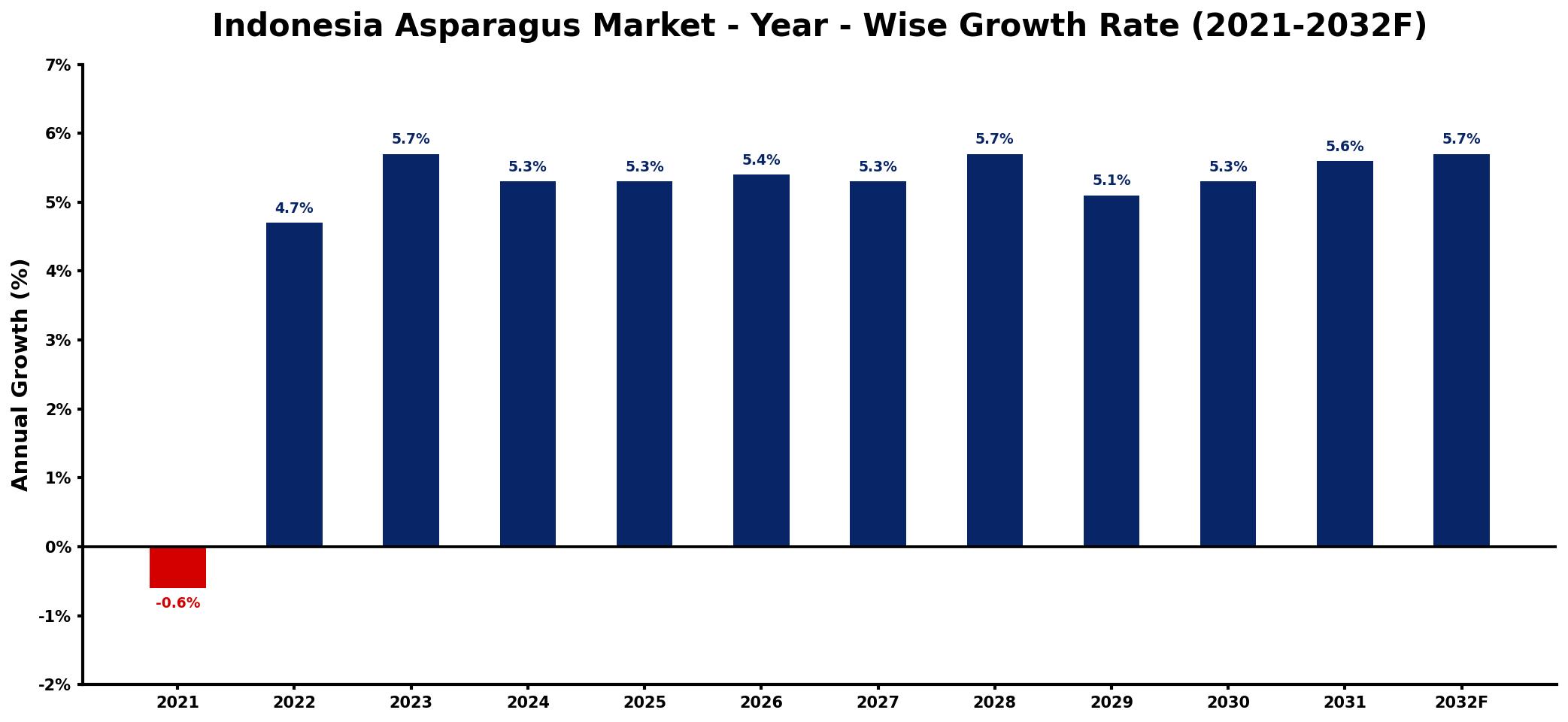
The table below presents the year‑wise growth rates along with the key drivers influencing the market
| Year | Growth Rate | Major Drivers |
| 2021 | -0.6% | Supply chain disruptions affecting availability |
| 2022 | 4.7% | Rising consumer health consciousness trends |
| 2023 | 5.7% | Increased agricultural technology adoption |
| 2024 | 5.3% | Growing interest in sustainable farming |
| 2025 | 5.3% | Expansion of organic product offerings |
| 2026 | 5.4% | Higher export market opportunities emerging |
| 2027 | 5.3% | rising export shipment volumes |
| 2028 | 5.7% | Strengthened retail partnerships driving sales |
| 2029 | 5.1% | Increased government support for farmers |
| 2030 | 5.3% | E-commerce platforms enhancing distribution channels |
| 2031 | 5.6% | Rising demand for premium products |
| 2032 | 5.7% | Growing culinary trends influencing consumption |
Note: Market size estimations and growth projections presented in this report are based on 6Wresearch's proprietary forecasting methodology, utilizing the latest available industry data, government publications, and primary research inputs.
Indonesia Asparagus Market Synopsis
In Indonesia, asparagus has emerged as a sought-after premium vegetable, particularly among urban consumers keen on adopting healthier dietary habits. As more restaurants and cafes include asparagus in their menus, the vegetable is becoming a staple for health-focused culinary creations.
The growing foodservice industry plays a critical role in propelling asparagus demand, aligning with the broader trend of increased gourmet dining options. Despite being labor-intensive to cultivate, the vegetable's popularity among health-conscious consumers and chefs is driving a shift in production and supply strategies.
Indonesia Asparagus Market Key Takeaways
- Asparagus is increasingly regarded as a premium vegetable among health-conscious consumers in Indonesia.
- The foodservice industry is a significant driver of asparagus demand, enhancing its culinary visibility.
- Despite challenges in cultivation, the market is poised for growth with a projected CAGR of 4.1% through 2032.
- Supply chain disruptions during the COVID-19 pandemic have been largely resolved, enabling recovery in demand.
- Growing awareness about asparagus's nutritional benefits contributes to its rising popularity in local diets.
Evaluation of Restraints in Indonesia Asparagus Market
The cultivation of asparagus presents real challenges for Indonesian farmers, particularly concerning labor intensity and seasonal production inconsistencies. This labor requirement often leads to higher production costs, which can impact pricing and accessibility in local markets. Moreover, the demand for asparagus can fluctuate throughout the year, complicating supply chain management and potentially leaving growers with excess inventory during off-peak seasons. These factors may limit market expansion in regions where consumer preferences are still evolving.
Indonesia Asparagus Market Trends
The asparagus market in Indonesia is witnessing several dynamic trends. A significant increase in awareness around healthy eating is shaping consumer choices, pushing asparagus further into mainstream culinary applications. As foodservice establishments increasingly emphasize gourmet offerings, they also contribute to evolving trends like plant-based diets, where asparagus stands out as a versatile ingredient. Technology adoption in farming practices is gradually improving yield and quality, aiding in better supply management.
Indonesia Asparagus Market Opportunities
The future of the Indonesia asparagus market is marked by substantial growth opportunities. Increased collaboration between farmers and local restaurants could enhance product visibility and drive sales. Additionally, investment in modern agricultural technologies can help optimize production efficiencies and reduce costs. Expanding export avenues, particularly to countries with high demand for premium vegetables, also presents a viable growth path for local producers.
Government Initiatives in the Indonesia Asparagus Market
The Indonesian government has recognized the potential of the asparagus market and is actively promoting initiatives to support its growth. Agricultural policies aimed at improving infrastructure for farmers and facilitating better access to markets are being prioritized. Furthermore, incentives for adopting sustainable farming practices are being considered to enhance crop yields while preserving the environment. These efforts reflect a commitment to bolster the local agricultural sector and ensure the sustainability of premium vegetable production.
Future Insights of the Indonesia Asparagus Market
Looking towards 2026-2032, the Indonesia asparagus market is expected to flourish with sustained demand from health-oriented consumers and the foodservice sector. The emphasis on quality and sustainability will guide production strategies, and as infrastructure improves, the supply chain will become more efficient. Additionally, ongoing culinary innovations will likely create new consumption avenues, ensuring asparagus remains a favored choice among both local and international markets.
Indonesia Asparagus Market Latest Developments (2025 - 2026)
Recent developments in the Indonesia asparagus market have highlighted a renewed focus on enhancing production techniques and supply chain efficiencies. The reopening of the foodservice industry post-COVID-19 is driving increased consumption rates, while ongoing collaborations between farmers and culinary institutions are fostering greater awareness of asparagus's versatility. As the market recovers, stakeholders are actively seeking innovative approaches to meet the growing demand for premium vegetables.
Indonesia Asparagus Market - Key Attractiveness of the Report
- 10 Years of Market Numbers
- Historical Data Starting from 2022 to 2025
- Base Year: 2025
- Forecast Data until 2032
- Key Performance Indicators Impacting the Market
- Major Upcoming Developments and Projects
Key Highlights of the Report:
- Indonesia Asparagus Market Outlook
- Market Size of Indonesia Asparagus Market, 2025
- Forecast of Indonesia Asparagus Market, 2032
- Historical Data and Forecast of Indonesia Asparagus Revenues & Volume for the Period 2022-2032F
- Indonesia Asparagus Market Trend Evolution
- Indonesia Asparagus Market Drivers and Challenges
- Indonesia Asparagus Price Trends
- Indonesia Asparagus Porter's Five Forces
- Indonesia Asparagus Industry Life Cycle
- Historical Data and Forecast of Indonesia Asparagus Market Revenues & Volume By Type for the Period 2022-2032F
- Historical Data and Forecast of Indonesia Asparagus Market Revenues & Volume By Fresh for the Period 2022-2032F
- Historical Data and Forecast of Indonesia Asparagus Market Revenues & Volume By Canned for the Period 2022-2032F
- Historical Data and Forecast of Indonesia Asparagus Market Revenues & Volume By Frozen for the Period 2022-2032F
- Historical Data and Forecast of Indonesia Asparagus Market Revenues & Volume By Colour for the Period 2022-2032F
- Historical Data and Forecast of Indonesia Asparagus Market Revenues & Volume By White for the Period 2022-2032F
- Historical Data and Forecast of Indonesia Asparagus Market Revenues & Volume By Green for the Period 2022-2032F
- Indonesia Asparagus Import Export Trade Statistics
- Market Opportunity Assessment By Type
- Market Opportunity Assessment By Colour
- Indonesia Asparagus Top Companies Market Share
- Indonesia Asparagus Competitive Benchmarking By Technical and Operational Parameters
- Indonesia Asparagus Company Profiles
- Indonesia Asparagus Key Strategic Recommendations






































