Indonesia Baby Prams and Strollers Market Size, Share & Growth Rate
The Indonesia Baby Prams and Strollers Market was estimated at USD 296 Million in 2025 and is projected to reach USD 392 Million by 2032, growing at a CAGR of 4.1% from 2026 to 2032. This growth trajectory is bolstered by the increasing number of young families entering the market, combined with a swift urbanization process that emphasizes convenience in urban living. As parents prioritize both safety and comfort for their children, the demand for quality baby transport solutions continues to rise.
Indonesia Baby Prams and Strollers Market Year-wise Growth Rate and Key Drivers
This graph highlights how the Indonesia Baby Prams and Strollers Market has steadily grown over the years, supported by major growth factors.
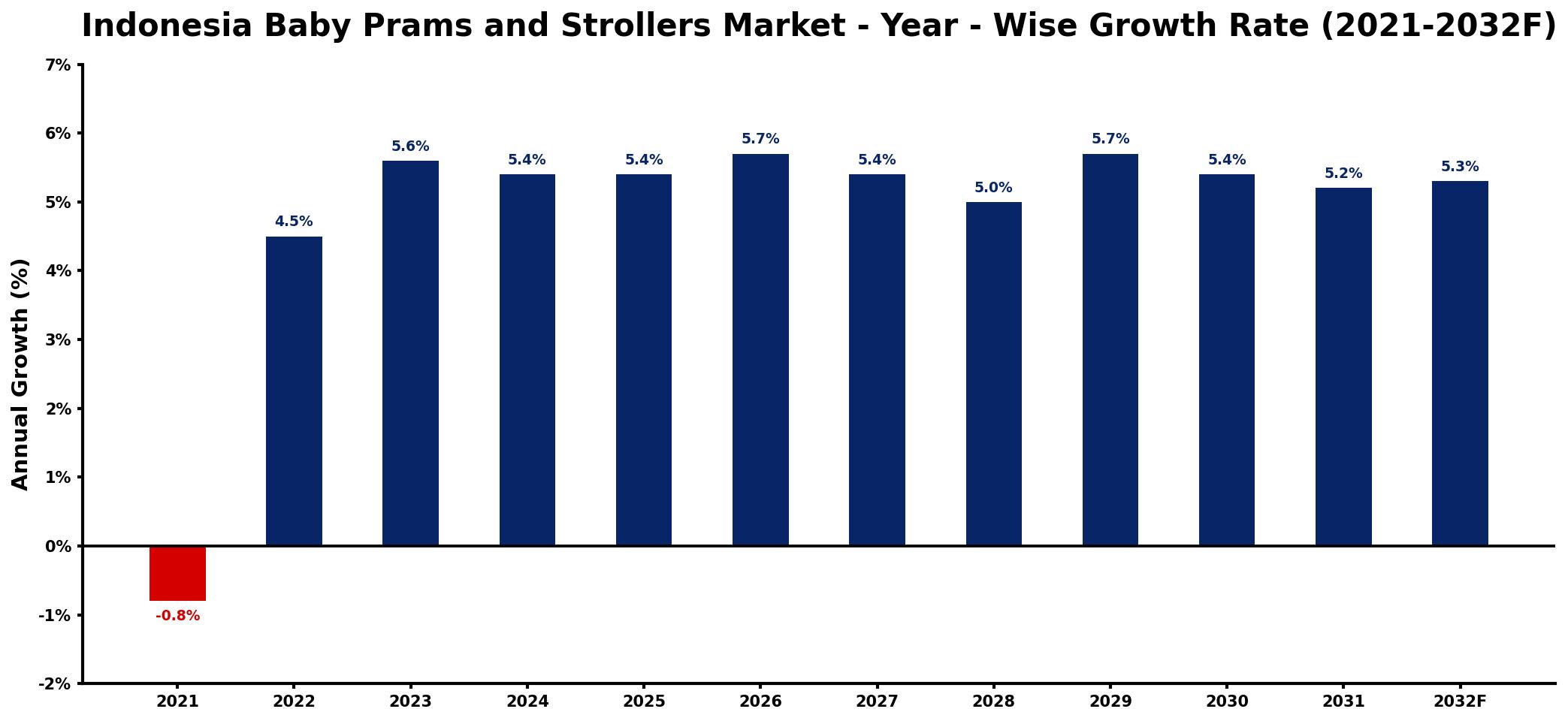
The table below presents the year‑wise growth rates along with the key drivers influencing the market
| Year | Growth Rate | Major Drivers |
| 2021 | -0.8% | Decreased consumer spending on essentials |
| 2022 | 4.5% | Rising disposable income levels |
| 2023 | 5.6% | Growing urban population trends |
| 2024 | 5.4% | Increased investment in childcare |
| 2025 | 5.4% | Expansion of e-commerce platforms |
| 2026 | 5.7% | Enhanced focus on safety standards |
| 2027 | 5.4% | Diversification of product offerings |
| 2028 | 5.0% | Strengthened distribution networks emerging |
| 2029 | 5.7% | Growing awareness of parenting trends |
| 2030 | 5.4% | Rising demand for premium options |
| 2031 | 5.2% | Increased marketing strategies effectiveness |
| 2032 | 5.3% | Heightened consumer preference for convenience |
Note: Market size estimations and growth projections presented in this report are based on 6Wresearch's proprietary forecasting methodology, utilizing the latest available industry data, government publications, and primary research inputs.
Indonesia Baby Prams and Strollers Market Synopsis
The market for baby prams and strollers in Indonesia is currently witnessing a period of steady expansion, driven primarily by the country's demographic shifts and evolving consumer preferences. Recent trends highlight a movement towards modern, high-quality baby transport options, reflecting a departure from traditional methods of carrying infants, particularly in urban areas.
Looking forward, the Indonesia Baby Prams and Strollers Market is set to further capitalize on this momentum. With an increasing focus on the durability and safety of products, manufacturers are adapting to meet the demands of discerning parents who seek both functionality and aesthetic appeal in their purchases.
Indonesia Baby Prams and Strollers Market Key Takeaways
- Significant growth projected, with a market value increase from USD 296 million in 2025 to USD 392 million by 2032.
- Urbanization trends are driving the demand for convenient and safe transport solutions for children.
- Consumer preferences are shifting towards high-quality and durable products.
- Increasing online shopping is becoming a crucial channel for sales in this market.
- Manufacturers are focusing on safety standards to enhance consumer trust and product appeal.
Evaluation of Restraints in Indonesia Baby Prams and Strollers Market
Despite the positive trajectory, the Indonesia Baby Prams and Strollers Market faces significant restraints that could hinder its expansion. Consumer attachment to traditional baby-carrying methods, particularly in less urbanized areas, poses a challenge for market penetration. Additionally, ensuring compliance with safety standards while keeping products affordable is an ongoing concern for manufacturers. Import regulations and potential supply chain disruptions further complicate the landscape, leading to availability issues that can affect sales and brand loyalty.
Indonesia Baby Prams and Strollers Market Trends
A notable trend shaping the Indonesia Baby Prams and Strollers Market is the increasing popularity of multifunctional strollers that cater to the diverse needs of modern parents. Eco-friendly and sustainable product offerings are also gaining traction, as environmentally conscious consumers seek to make responsible purchasing decisions. Additionally, the rise of smart technology in baby products is poised to influence market dynamics, attracting tech-savvy parents interested in enhanced convenience and connectivity.
Indonesia Baby Prams and Strollers Market Opportunities
The market presents several opportunities for growth, particularly in the e-commerce sector, where the shift towards online shopping has opened new avenues for reaching consumers. Enhanced distribution networks can enable manufacturers to penetrate rural areas more effectively. Furthermore, developing niche products that cater to specific lifestyles, such as lightweight or travel-friendly options, could capture additional market share and meet the evolving preferences of parents.
Government Initiatives in the Indonesia Baby Prams and Strollers Market
Government initiatives aimed at promoting child safety and welfare are expected to positively influence the Indonesia Baby Prams and Strollers Market. Public spending on health and safety regulations for children's products has been increasing, which encourages manufacturers to adhere to stricter guidelines. Additionally, various programs aimed at improving urban infrastructure contribute to a more favorable environment for families to utilize baby transportation products.
Future Insights of the Indonesia Baby Prams and Strollers Market
From 2026 to 2032, the Indonesia Baby Prams and Strollers Market is likely to witness innovations driven by consumer demands for greater functionality and safety. Enhanced production techniques and a focus on sustainability will be critical as manufacturers seek to differentiate themselves in a competitive landscape. As urbanization continues to expand, the role of smart technology and connectivity in baby transport solutions will grow, ultimately reshaping consumer expectations and driving further market development.
Indonesia Baby Prams and Strollers Market Latest Developments (2025 - 2026)
Recent industry developments indicate a shift towards more diversified product offerings, with an increase in local manufacturers entering the market. Innovations in design and safety features have become focal points for leading brands, as they seek to enhance their competitive edge. The rise of e-commerce platforms continues to facilitate access to a wider range of products, fostering a more informed consumer base and encouraging higher standards within the market.
Indonesia Baby Prams and Strollers Market - Key Attractiveness of the Report
- 10 Years of Market Numbers
- Historical Data Starting from 2022 to 2025
- Base Year: 2025
- Forecast Data until 2032
- Key Performance Indicators Impacting the Market
- Major Upcoming Developments and Projects
Key Highlights of the Report:
- Indonesia Baby Prams and Strollers Market Outlook
- Market Size of Indonesia Baby Prams and Strollers Market, 2025
- Forecast of Indonesia Baby Prams and Strollers Market, 2032
- Historical Data and Forecast of Indonesia Baby Prams and Strollers Revenues & Volume for the Period 2022-2032F
- Indonesia Baby Prams and Strollers Market Trend Evolution
- Indonesia Baby Prams and Strollers Market Drivers and Challenges
- Indonesia Baby Prams and Strollers Price Trends
- Indonesia Baby Prams and Strollers Porter's Five Forces
- Indonesia Baby Prams and Strollers Industry Life Cycle
- Historical Data and Forecast of Indonesia Baby Prams and Strollers Market Revenues & Volume By Product Type for the Period 2022-2032F
- Historical Data and Forecast of Indonesia Baby Prams and Strollers Market Revenues & Volume By Lightweight Strollers for the Period 2022-2032F
- Historical Data and Forecast of Indonesia Baby Prams and Strollers Market Revenues & Volume By Jogging Strollers for the Period 2022-2032F
- Historical Data and Forecast of Indonesia Baby Prams and Strollers Market Revenues & Volume By Standard Strollers for the Period 2022-2032F
- Historical Data and Forecast of Indonesia Baby Prams and Strollers Market Revenues & Volume By Double / Triple Strollers for the Period 2022-2032F
- Historical Data and Forecast of Indonesia Baby Prams and Strollers Market Revenues & Volume By Multi-Optional System Strollers for the Period 2022-2032F
- Historical Data and Forecast of Indonesia Baby Prams and Strollers Market Revenues & Volume By Age for the Period 2022-2032F
- Historical Data and Forecast of Indonesia Baby Prams and Strollers Market Revenues & Volume By 0 - 6 months for the Period 2022-2032F
- Historical Data and Forecast of Indonesia Baby Prams and Strollers Market Revenues & Volume By 6 - 12 months for the Period 2022-2032F
- Historical Data and Forecast of Indonesia Baby Prams and Strollers Market Revenues & Volume By 12 - 36 months for the Period 2022-2032F
- Historical Data and Forecast of Indonesia Baby Prams and Strollers Market Revenues & Volume By Sales Channel for the Period 2022-2032F
- Historical Data and Forecast of Indonesia Baby Prams and Strollers Market Revenues & Volume By BaBoutiques for the Period 2022-2032F
- Historical Data and Forecast of Indonesia Baby Prams and Strollers Market Revenues & Volume By Specialty Stores for the Period 2022-2032F
- Historical Data and Forecast of Indonesia Baby Prams and Strollers Market Revenues & Volume By Modern Trade for the Period 2022-2032F
- Historical Data and Forecast of Indonesia Baby Prams and Strollers Market Revenues & Volume By Departmental Stores for the Period 2022-2032F
- Historical Data and Forecast of Indonesia Baby Prams and Strollers Market Revenues & Volume By Mono-brand Stores for the Period 2022-2032F
- Historical Data and Forecast of Indonesia Baby Prams and Strollers Market Revenues & Volume By Online retailers for the Period 2022-2032F
- Historical Data and Forecast of Indonesia Baby Prams and Strollers Market Revenues & Volume By Other Sales Channel for the Period 2022-2032F
- Indonesia Baby Prams and Strollers Import Export Trade Statistics
- Market Opportunity Assessment By Product Type
- Market Opportunity Assessment By Age
- Market Opportunity Assessment By Sales Channel
- Indonesia Baby Prams and Strollers Top Companies Market Share
- Indonesia Baby Prams and Strollers Competitive Benchmarking By Technical and Operational Parameters
- Indonesia Baby Prams and Strollers Company Profiles
- Indonesia Baby Prams and Strollers Key Strategic Recommendations






































