Indonesia Bamboo Products Market: Import Trend Analysis
Indonesia`s import trend for bamboo products experienced a notable decline from 2023 to 2024, with a growth rate of -58.0% during that period. The compound annual growth rate (CAGR) for the years 2020 to 2024 stood at -19.17%. This sharp decrease in imports could be attributed to shifting consumer preferences, changes in trade policies, or a market correction following previous periods of high import momentum.
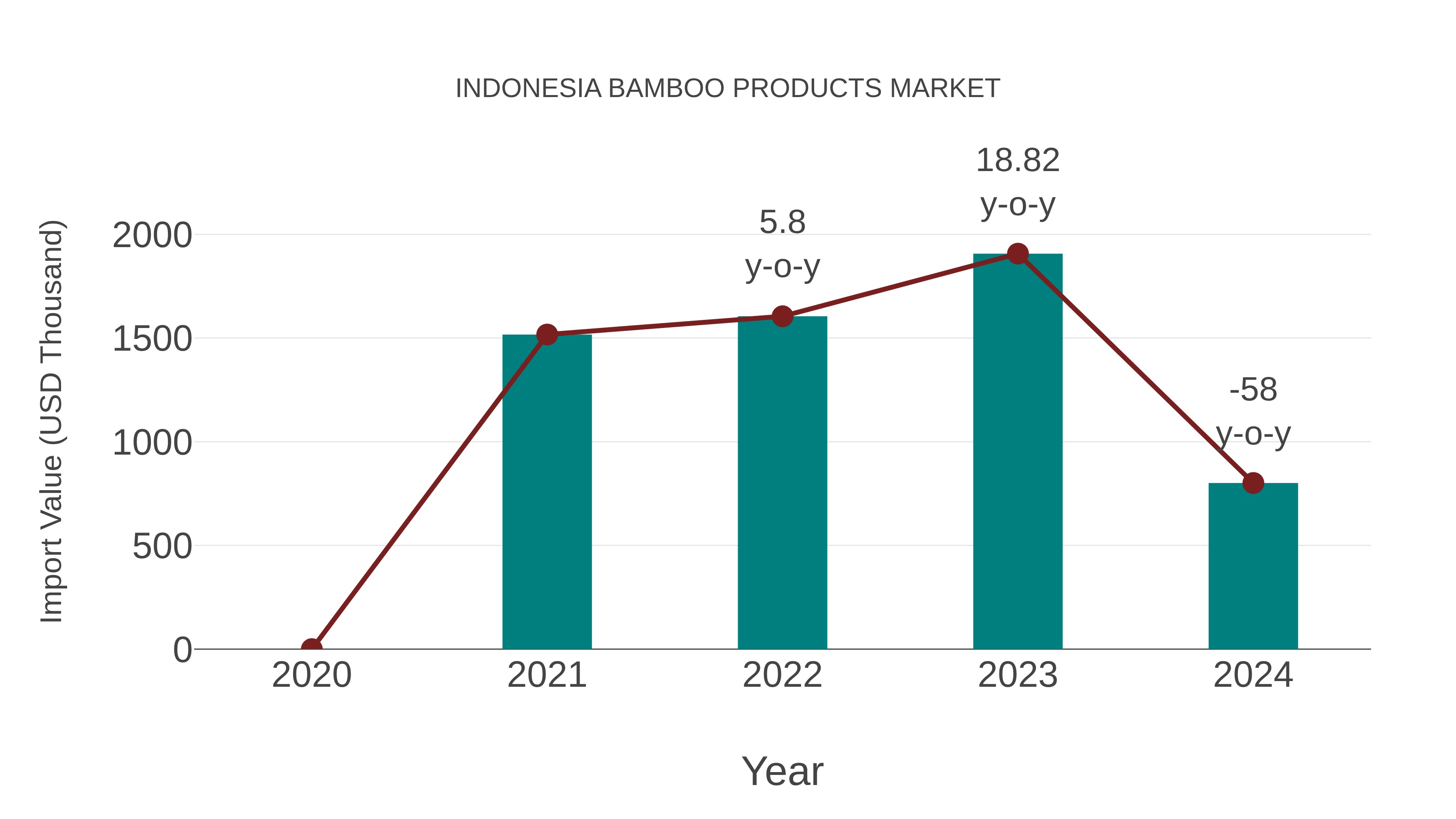
Indonesia Bamboo Products Market Synopsis
The Indonesia bamboo products market size was estimated at around USD 7 billion in 2025 and is expected to grow substantially over the forecast period owing to its wide range of uses ranging from furniture production, flooring materials & mats construction etc., This rising popularity can be attributed primarily due its eco-friendly characteristic along with aesthetic appeal provided when used within these applications which have been leading more people/consumers across multiple industrial sectors such as automotive manufacturing plants switching their preference towards using bamboo based materials instead of traditional ones made up synthetic material or wood thus driving overall growth rate witnessed within this industry vertical significantly higher than what it had been previously throughout past few years prior before now.
Drivers of the Market
Indonesia abundant bamboo resources have catalyzed the growth of the bamboo products market. Sustainable construction practices, eco-friendly furniture, and lifestyle products have fueled demand. Moreover, bamboo`s versatility, durability, and rapid growth rate make it an attractive choice for various applications. Government initiatives supporting bamboo-based industries also contribute to the market`s expansion.
Challenges of the Market
Bamboo products have gained popularity for their sustainability and versatility. Challenges include scaling up production while maintaining quality and ensuring responsible sourcing to prevent deforestation. Building a sustainable supply chain is essential.
COVID-19 Impact on the Market
The market for bamboo products in Indonesia experienced disruptions during the pandemic, affecting both supply and demand. Production of bamboo-based goods faced challenges due to lockdowns and limited workforce availability. Additionally, the closure of retail outlets impacted sales. Despite these challenges, the market saw increased interest in sustainable and eco-friendly products. As the industry regains momentum, enhancing production capacities, expanding distribution channels, and educating consumers about bamboo`s benefits will be vital.
Key Players in the Market
The Bamboo Products market in Indonesia covers a wide range of products made from bamboo, including furniture, handicrafts, and construction materials. Key players could include companies like PT Bambooku Indonesia, local artisans, and manufacturers specializing in bamboo-based products.
Key Highlights of the Report:
- Indonesia Bamboo Products Market Outlook
- Market Size of Indonesia Bamboo Products Market, 2025
- Forecast of Indonesia Bamboo Products Market, 2032
- Historical Data and Forecast of Indonesia Bamboo Products Revenues & Volume for the Period 2022-2032F
- Indonesia Bamboo Products Market Trend Evolution
- Indonesia Bamboo Products Market Drivers and Challenges
- Indonesia Bamboo Products Price Trends
- Indonesia Bamboo Products Porter's Five Forces
- Indonesia Bamboo Products Industry Life Cycle
- Historical Data and Forecast of Indonesia Bamboo Products Market Revenues & Volume By Species for the Period 2022-2032F
- Historical Data and Forecast of Indonesia Bamboo Products Market Revenues & Volume By Bambusa Tulda for the Period 2022-2032F
- Historical Data and Forecast of Indonesia Bamboo Products Market Revenues & Volume By Bambusa Bambos for the Period 2022-2032F
- Historical Data and Forecast of Indonesia Bamboo Products Market Revenues & Volume By Dendrocalamus Strictus for the Period 2022-2032F
- Historical Data and Forecast of Indonesia Bamboo Products Market Revenues & Volume By Others for the Period 2022-2032F
- Historical Data and Forecast of Indonesia Bamboo Products Market Revenues & Volume By Application for the Period 2022-2032F
- Historical Data and Forecast of Indonesia Bamboo Products Market Revenues & Volume By Raw Material for the Period 2022-2032F
- Historical Data and Forecast of Indonesia Bamboo Products Market Revenues & Volume By Industrial Products for the Period 2022-2032F
- Historical Data and Forecast of Indonesia Bamboo Products Market Revenues & Volume By Furniture for the Period 2022-2032F
- Historical Data and Forecast of Indonesia Bamboo Products Market Revenues & Volume By Shoots for the Period 2022-2032F
- Historical Data and Forecast of Indonesia Bamboo Products Market Revenues & Volume By Others for the Period 2022-2032F
- Historical Data and Forecast of Indonesia Bamboo Products Market Revenues & Volume By End User Industry for the Period 2022-2032F
- Historical Data and Forecast of Indonesia Bamboo Products Market Revenues & Volume By Wood and Furniture for the Period 2022-2032F
- Historical Data and Forecast of Indonesia Bamboo Products Market Revenues & Volume By Construction for the Period 2022-2032F
- Historical Data and Forecast of Indonesia Bamboo Products Market Revenues & Volume By Paper and Pulp for the Period 2022-2032F
- Historical Data and Forecast of Indonesia Bamboo Products Market Revenues & Volume By Chopsticks for the Period 2022-2032F
- Historical Data and Forecast of Indonesia Bamboo Products Market Revenues & Volume By Toothpicks for the Period 2022-2032F
- Indonesia Bamboo Products Import Export Trade Statistics
- Market Opportunity Assessment By Species
- Market Opportunity Assessment By Application
- Market Opportunity Assessment By End User Industry
- Indonesia Bamboo Products Top Companies Market Share
- Indonesia Bamboo Products Competitive Benchmarking By Technical and Operational Parameters
- Indonesia Bamboo Products Company Profiles
- Indonesia Bamboo Products Key Strategic Recommendations






































