Indonesia Cardboard Packagings Market Summary
The indonesia cardboard packagings market was estimated at USD 195 Million in 2025 and is projected to reach USD 257 Million by 2032, growing at a CAGR of 5.2% from 2026 to 2032.
Indonesia Cardboard Packagings Market Year-wise Growth Rate and Key Drivers
This graph highlights how the Indonesia Cardboard Packagings Market has steadily grown over the years, supported by major growth factors.
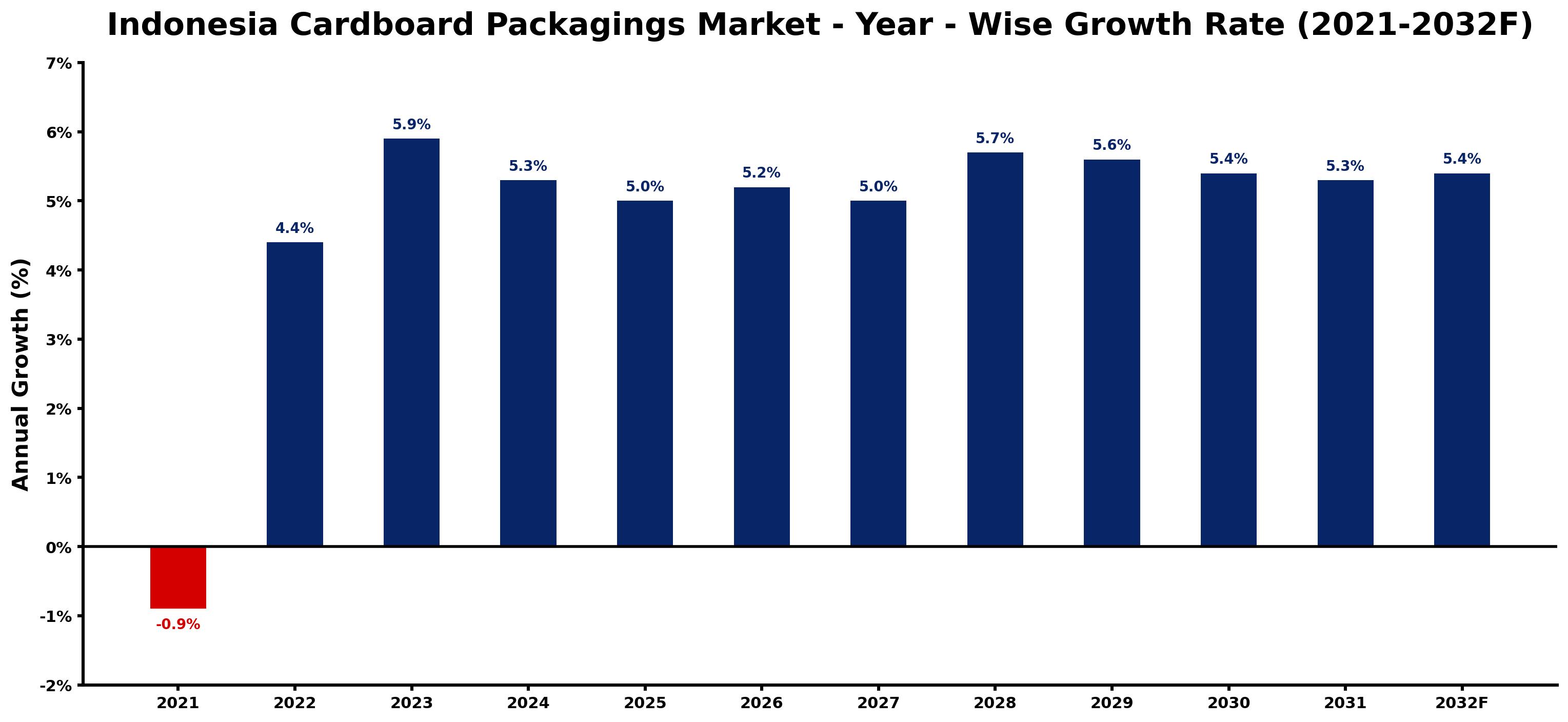
The table below presents the year wise growth rates along with the key drivers influencing the market
| Year | Growth Rate | Major Drivers |
| 2021 | -0.9% | Supply chain disruptions due to pandemic restrictions hindered production capacity and delayed delivery timelines. |
| 2022 | 4.4% | Rising consumer awareness about environmentally friendly packaging propelled demand for cardboard options. |
| 2023 | 5.9% | Shifts in manufacturing toward local sourcing increased cardboard packaging production efficiency. |
| 2024 | 5.3% | Retail dynamics changed, emphasizing the need for robust and lightweight packaging solutions. |
| 2025 | 5.0% | Growing export opportunities in ASEAN markets spurred investments in cardboard packaging technologies. |
| 2026 | 5.2% | Urbanization trends created deeper penetration of packaged goods within Indonesian cities. |
| 2027 | 5.0% | Sustainability objectives influenced large corporations to source renewable packaging materials. |
| 2028 | 5.7% | Digital printing technologies offered brands customizable and efficient packaging options. |
| 2029 | 5.6% | Burgeoning startup culture in food delivery required innovative packaging solutions for preservation. |
| 2030 | 5.4% | Consumer preferences shifted toward brands using eco-friendly, recyclable cardboard materials. |
| 2031 | 5.3% | Collaborative supply chain strategies among manufacturers enhanced the efficiency of cardboard distribution. |
| 2032 | 5.4% | Increased competition among packaging firms drove innovation and diversification of cardboard products. |
Note - Market size estimations and growth projections presented in this report are based on 6Wresearch's advanced forecasting approach, validated with industry datasets as of June 2026.
Indonesia Cardboard Packagings Market Synopsis
The Indonesia Cardboard Packagings Market is projected to reach 5.2% and witness significant growth during the forecast period (2026-2032). As the nation embraces a more sustainable approach to packaging, the market is anticipated to experience a compound annual growth rate (CAGR) of over 4.6%. Several factors are driving this growth, including robust demand from the food and beverage sector, an expanding e-commerce landscape, and increasing awareness surrounding environmentally friendly packaging alternatives.
Indonesia Cardboard Packagings Market Growth Drivers
The growth of the Indonesia cardboard packagings market can be attributed to various critical drivers:
- Increased Demand from Food and Beverage: This sector continues to be a key contributor to the market, leveraging cardboard packaging for product protection, transportation, and branding. The rising trend of convenience foods aligns with busy consumer lifestyles, thereby boosting demand for innovative cardboard packaging solutions.
- Expansion of E-Commerce: The surge in online shopping, particularly following pandemic-associated lockdowns, has led to a rapid expansion of the digital retail space in Indonesia. This shift towards online retailing has raised the need for reliable, sturdy cardboard packaging solutions to ensure product safety during transit.
- Environmentally Friendly Alternatives: As companies and consumers alike become increasingly aware of environmental issues, there is a marked shift towards sustainable packaging solutions. The adoption of cardboard over traditional plastic or metal options reflects this growing commitment to eco-friendliness.
- Rise in Consumer Durables Consumption: The improving economic landscape in Indonesia has led to higher disposable incomes, resulting in increased spending on consumer durables. This trend necessitates durable and secure packaging materials, driving demand for corrugated boxes and cartons.
- Government Support for Manufacturing: The Indonesian government has committed to various industrial development initiatives, specifically under the National Medium Term Development Plan (RPJMN) 2026-2032. These initiatives include support for local production and manufacturing, providing a conducive environment for the growth of the cardboard packaging sector.
Indonesia Cardboard Packagings Market Challenges and Restraints
While the Indonesia cardboard packagings market is poised for growth, certain challenges and restraints might impede its progress:
- Competition from Alternative Materials: The availability of cheaper and more versatile packaging materials such as plastic can hinder the adoption of cardboard options, particularly among cost-sensitive consumers and manufacturers.
- Supply Chain Disruptions: Global supply chain issues could impact the availability and cost of raw materials necessary for cardboard manufacturing. Such disruptions can lead to fluctuations in pricing and supply, affecting market stability.
- Quality Control and Consistency: Maintaining consistent quality in cardboard production is critical. Any lapses in quality can affect the reputation of manufacturers and the overall market demand.
- Consumer Behavior Trends: Shifts in consumer preferences or economic factors, such as inflation, can influence purchasing decisions and demand for packaging solutions, including cardboard.
- Technological Advancements: Rapid innovations in packaging technologies could pose a challenge for traditional cardboard manufacturers if they are unable to keep pace with advancements that improve efficiency and reduce costs.
Indonesia Cardboard Packagings Market Government Investment and Initiatives
The Indonesian government has recognized the significance of the cardboard packaging sector in supporting economic growth and sustainability. Key initiatives include:
- RPJMN 2026-2032 Objectives: This comprehensive plan emphasizes the development of the manufacturing sector, particularly in promoting sustainable practices in production, including the cardboard packaging industry.
- Regulatory Frameworks: New regulations aimed at reducing plastic usage have been implemented, incentivizing companies to transition to more environmentally responsible packaging solutions, including cardboard options.
- Investment in Infrastructure: The government is focusing on improving infrastructure, which is essential for the manufacturing and logistics sectors related to cardboard packaging, ensuring that businesses can operate more efficiently.
- Support Programs for Local Enterprises: Various programs are being introduced to provide financial and technical support to local packaging manufacturers. This includes grants for upgrading machinery and adopting new technologies.
- Tackling Climate Change: Government policies are increasingly focused on tackling climate change, which further strengthens the market for eco-friendly cardboard solutions and encourages sustainable practices among manufacturers.
Indonesia Cardboard Packagings Market Latest Developments (May 2025 - June 2026)
In the period from May 2025 to June 2026, the Indonesia cardboard packagings market has seen a number of notable developments:
- Growing Investments: There has been a marked increase in investments from both domestic and international players in the cardboard packaging sector, reflecting the growing confidence in the market.
- Technological Innovations: Manufacturers are increasingly adopting advanced technologies in production processes, leading to more efficient manufacturing and innovative product designs.
- Expansion of Sustainable Practices: More companies are incorporating sustainable practices into their operations, aligning with global trends towards eco-friendly packaging solutions.
- Consumer Engagement Efforts: Brands are actively engaging consumers with educational initiatives regarding the benefits of cardboard packaging compared to plastic alternatives.
- Partnerships for Growth: Collaborations between manufacturers and logistics companies are on the rise to streamline the supply chain and improve delivery efficiencies for cardboard products.
Indonesia Cardboard Packagings Market - Key Attractiveness of the Report
- 10 Years of Market Numbers
- Historical Data Starting from 2022 to 2025
- Base Year: 2025
- Forecast Data until 2032
- Key Performance Indicators Impacting the Market
- Major Upcoming Developments and Projects
Key Highlights of the Report:
- Indonesia Cardboard Packagings Market Outlook
- Market Size of Indonesia Cardboard Packagings Market, 2025
- Forecast of Indonesia Cardboard Packagings Market, 2032F
- Historical Data and Forecast of Indonesia Cardboard Packagings Revenues & Volume for the Period 2022-2032F
- Indonesia Cardboard Packagings Market Trend Evolution
- Indonesia Cardboard Packagings Market Drivers and Challenges
- Indonesia Cardboard Packagings Price Trends
- Indonesia Cardboard Packagings Porter's Five Forces
- Indonesia Cardboard Packagings Industry Life Cycle
- Historical Data and Forecast of Indonesia Cardboard Packagings Market Revenues & Volume By Types for the Period 2022-2032F
- Historical Data and Forecast of Indonesia Cardboard Packagings Market Revenues & Volume By Rigid Boxes for the Period 2022-2032F
- Historical Data and Forecast of Indonesia Cardboard Packagings Market Revenues & Volume By Self-Erecting Boxes for the Period 2022-2032F
- Historical Data and Forecast of Indonesia Cardboard Packagings Market Revenues & Volume By Telescope Boxes for the Period 2022-2032F
- Historical Data and Forecast of Indonesia Cardboard Packagings Market Revenues & Volume By Slotted Boxes for the Period 2022-2032F
- Historical Data and Forecast of Indonesia Cardboard Packagings Market Revenues & Volume By Others for the Period 2022-2032F
- Historical Data and Forecast of Indonesia Cardboard Packagings Market Revenues & Volume By Applications for the Period 2022-2032F
- Historical Data and Forecast of Indonesia Cardboard Packagings Market Revenues & Volume By Processed Foods for the Period 2022-2032F
- Historical Data and Forecast of Indonesia Cardboard Packagings Market Revenues & Volume By Fresh Food and Produce for the Period 2022-2032F
- Historical Data and Forecast of Indonesia Cardboard Packagings Market Revenues & Volume By Beverages for the Period 2022-2032F
- Historical Data and Forecast of Indonesia Cardboard Packagings Market Revenues & Volume By Paper Products for the Period 2022-2032F
- Historical Data and Forecast of Indonesia Cardboard Packagings Market Revenues & Volume By Electrical Products for the Period 2022-2032F
- Historical Data and Forecast of Indonesia Cardboard Packagings Market Revenues & Volume By Other End-user Industry for the Period 2022-2032F
- Indonesia Cardboard Packagings Import Export Trade Statistics
- Market Opportunity Assessment By Types
- Market Opportunity Assessment By Applications
- Indonesia Cardboard Packagings Top Companies Market Share
- Indonesia Cardboard Packagings Competitive Benchmarking By Technical and Operational Parameters
- Indonesia Cardboard Packagings Company Profiles
- Indonesia Cardboard Packagings Key Strategic Recommendations






































