Indonesia Castor Oil Market: Import Trend Analysis
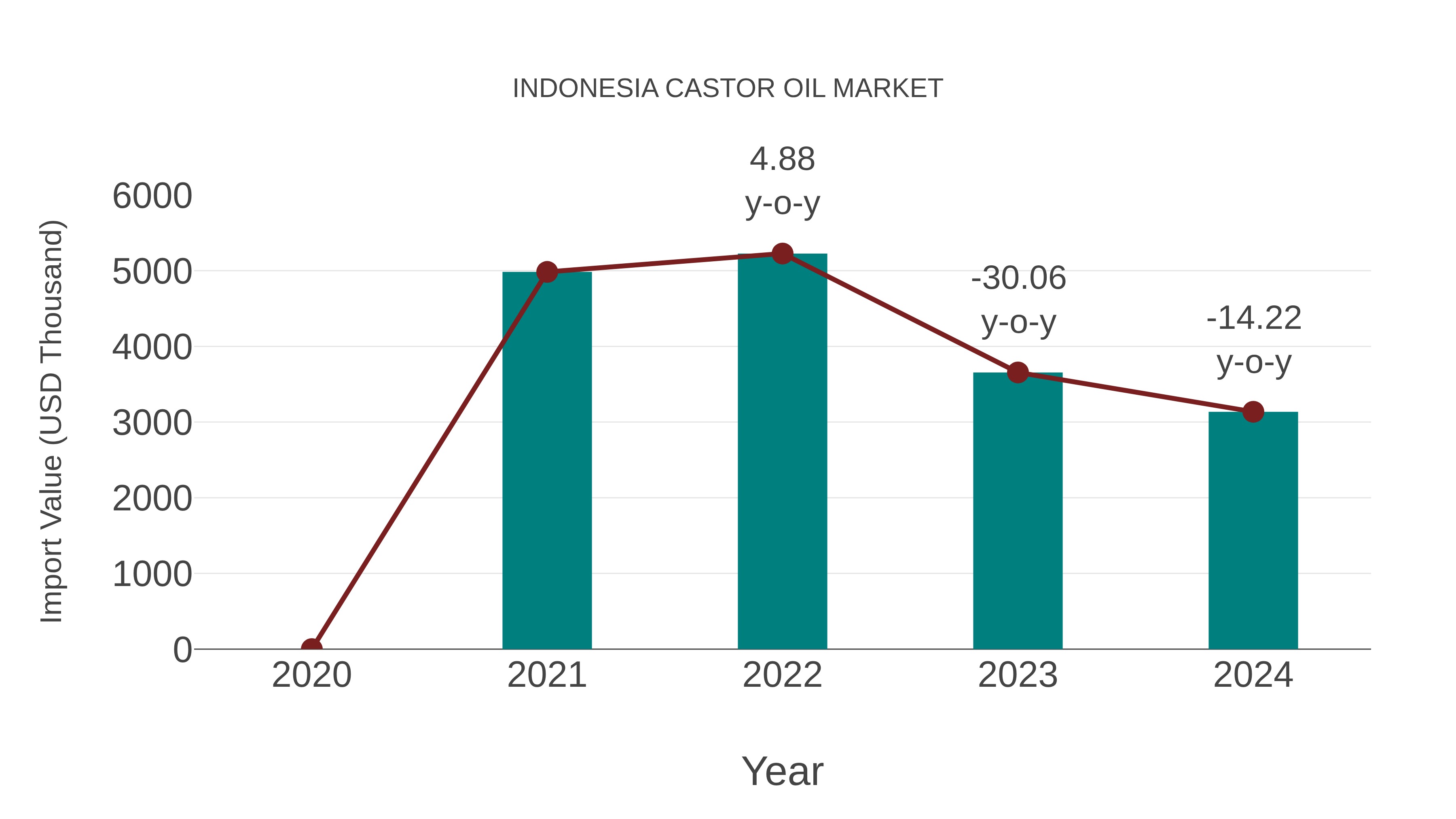
In the Indonesia castor oil market, the import trend experienced a decline from 2023 to 2024, with a growth rate of -14.22%. The compound annual growth rate (CAGR) for imports from 2020 to 2024 stood at -14.31%. This negative import momentum may have been influenced by shifts in demand patterns or changes in trade policies affecting market stability.
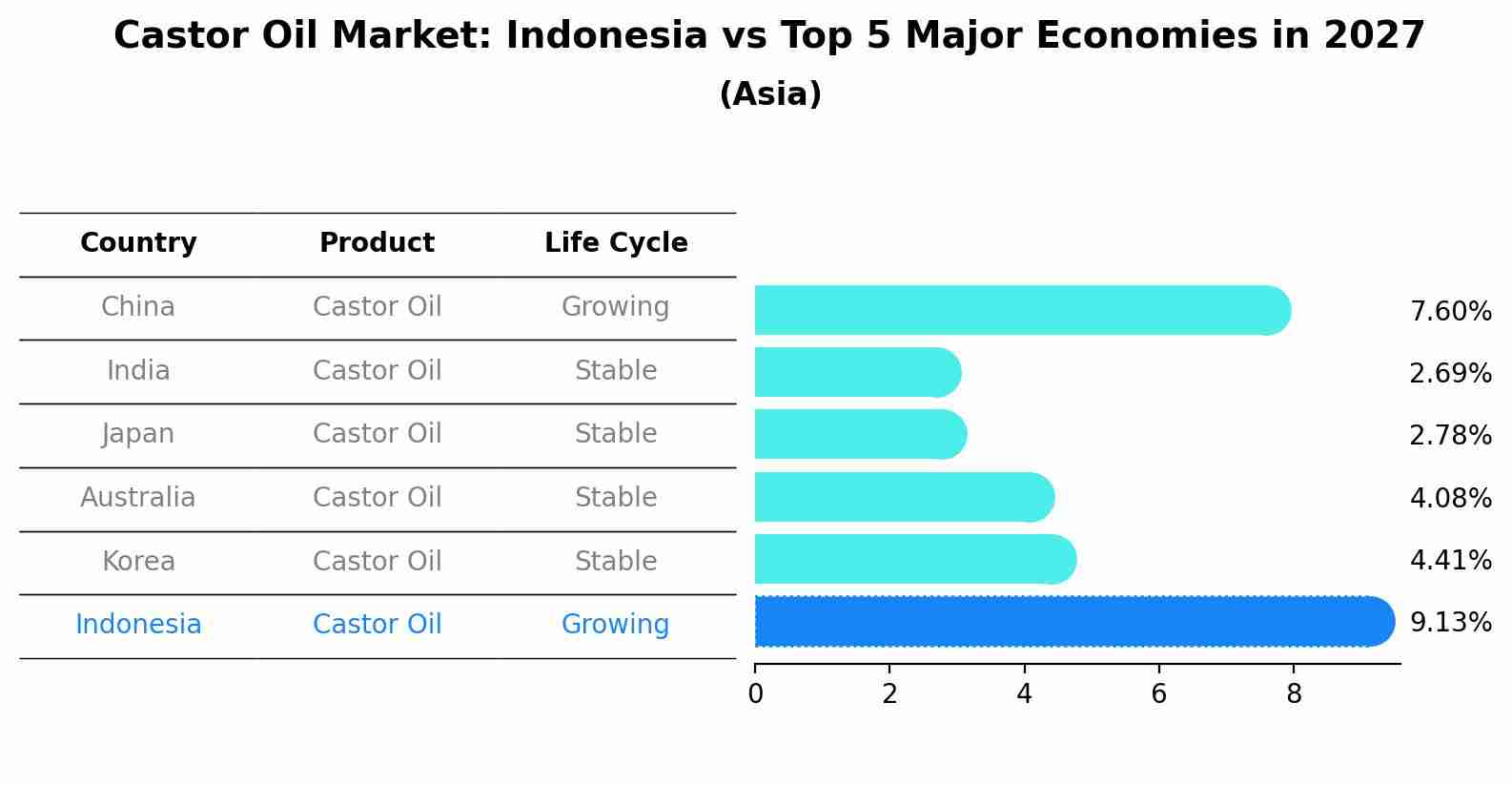
Castor Oil Market: Indonesia vs Top 5 Major Economies in 2027 (Asia)
In the Asia region, the Castor Oil market in Indonesia is projected to expand at a growing growth rate of 9.13% by 2027. The largest economy is China, followed by India, Japan, Australia and South Korea.
Indonesia Castor Oil Market Synopsis
The castor oil market in Indonesia is a niche segment within the agricultural and industrial oils industry. Castor oil has various applications, including in cosmetics, pharmaceuticals, and industrial processes. While the market is relatively small compared to other oilseed crops, there is potential for growth, especially in the cosmetics and biofuel sectors. Challenges include ensuring a consistent supply of high-quality castor seeds and improving extraction methods. Investments in research and development, as well as sustainable cultivation practices, can help expand the castor oil market in Indonesia.
Drivers of the Market
The Indonesia castor oil market outlook depends on factors such as the pharmaceutical, cosmetics, and industrial sectors. Castor oil is a versatile ingredient in various applications, including pharmaceuticals, cosmetics, and biodiesel production. Therefore, demand in these sectors, driven by consumer preferences and regulations promoting bio-based products, can significantly influence the market. Agricultural practices and the availability of castor bean crops also play a role. Additionally, innovations in castor oil extraction and purification processes can impact market growth.
Challenges of the Market
Challenges in the castor oil market include fluctuations in castor bean prices, as well as the need for improved processing and extraction techniques to meet international quality standards.
COVID-19 Impact on the Market
Castor oil is used in industries like cosmetics and pharmaceuticals. The market faced COVID-19-related disruptions, but it`s expected to rebound with increasing demand for sustainable and natural ingredients.
Key Players in the Market
The Indonesia castor oil market is witnessing steady growth, driven by the diverse applications of castor oil in industries such as cosmetics, pharmaceuticals, and lubricants. Key players in this market include PT. CastorChem and PT. Natural Oils. These companies have invested in modern extraction and refining processes, ensuring high-quality castor oil production. They are also focused on sustainability and have adopted eco-friendly practices in their operations. With increasing demand for castor oil in both domestic and international markets, these leading players are expected to maintain their market dominance.
Key Highlights of the Report:
- Indonesia Castor Oil Market Outlook
- Market Size of Indonesia Castor Oil Market, 2025
- Forecast of Indonesia Castor Oil Market, 2032
- Historical Data and Forecast of Indonesia Castor Oil Revenues & Volume for the Period 2022-2032F
- Indonesia Castor Oil Market Trend Evolution
- Indonesia Castor Oil Market Drivers and Challenges
- Indonesia Castor Oil Price Trends
- Indonesia Castor Oil Porter's Five Forces
- Indonesia Castor Oil Industry Life Cycle
- Historical Data and Forecast of Indonesia Castor Oil Market Revenues & Volume By End Use for the Period 2022-2032F
- Historical Data and Forecast of Indonesia Castor Oil Market Revenues & Volume By Pharmaceuticals for the Period 2022-2032F
- Historical Data and Forecast of Indonesia Castor Oil Market Revenues & Volume By Lubricants for the Period 2022-2032F
- Historical Data and Forecast of Indonesia Castor Oil Market Revenues & Volume By Paints for the Period 2022-2032F
- Historical Data and Forecast of Indonesia Castor Oil Market Revenues & Volume By Soaps for the Period 2022-2032F
- Historical Data and Forecast of Indonesia Castor Oil Market Revenues & Volume By Others for the Period 2022-2032F
- Indonesia Castor Oil Import Export Trade Statistics
- Market Opportunity Assessment By End Use
- Indonesia Castor Oil Top Companies Market Share
- Indonesia Castor Oil Competitive Benchmarking By Technical and Operational Parameters
- Indonesia Castor Oil Company Profiles
- Indonesia Castor Oil Key Strategic Recommendations






































