Indonesia Cellulose Acetate Fiber Market Size, Share & Growth Rate
The Indonesia Cellulose Acetate Fiber Market was estimated at USD 316 Million in 2025 and is projected to reach USD 420 Million by 2032, growing at a CAGR of 4.1% from 2026 to 2032. This growth trajectory is primarily driven by the rising consumer demand for sustainable textiles and the increasing incorporation of cellulose acetate fiber in activewear and sportswear. Furthermore, the emphasis on eco-friendly manufacturing practices is set to bolster market expansion as consumers and brands alike prioritize sustainability.
Indonesia Cellulose Acetate Fiber Market Year-wise Growth Rate and Key Drivers
This graph highlights how the Indonesia Cellulose Acetate Fiber Market has steadily grown over the years, supported by major growth factors.
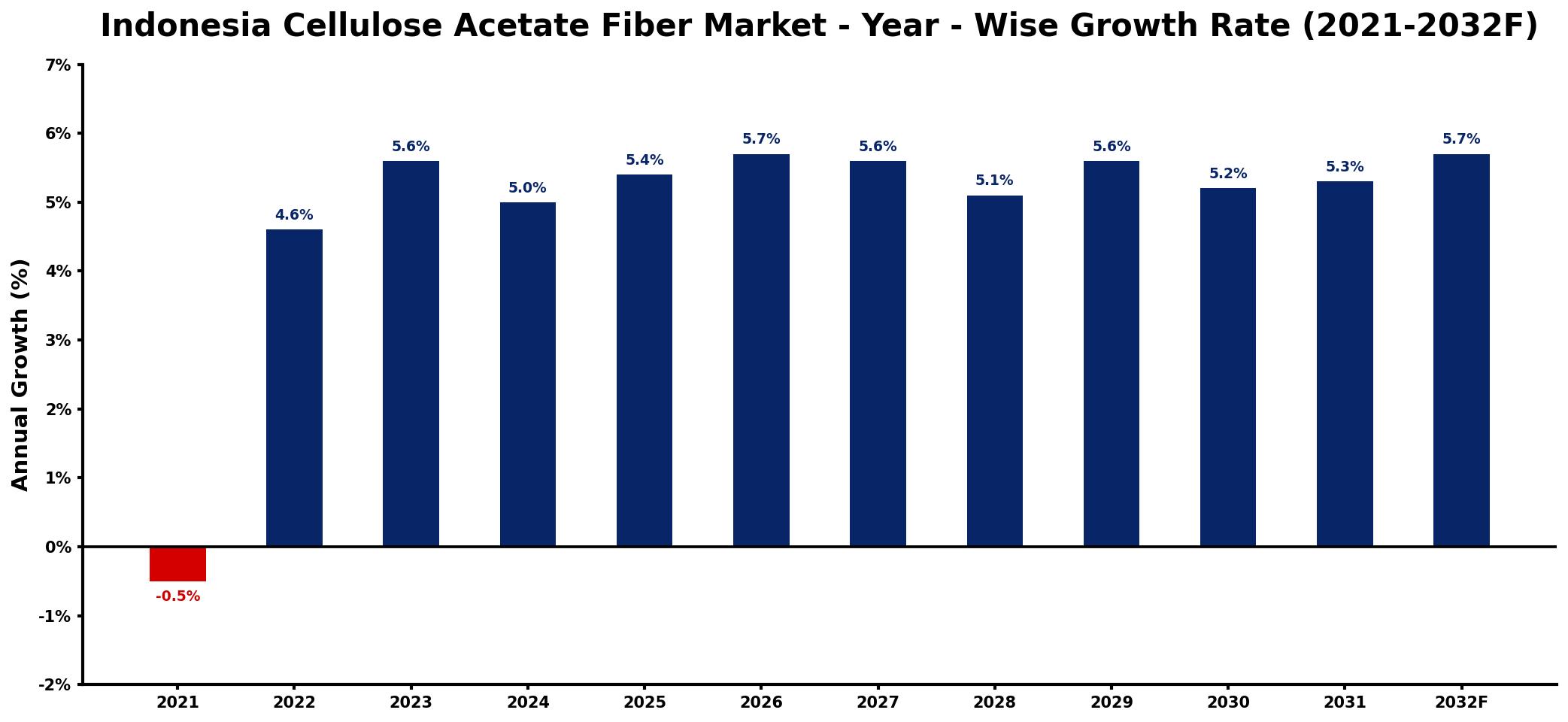
The table below presents the year‑wise growth rates along with the key drivers influencing the market
| Year | Growth Rate | Major Drivers |
| 2021 | -0.5% | decreased industrial production capacity |
| 2022 | 4.6% | growing textile manufacturing sector |
| 2023 | 5.6% | rising demand for sustainable materials |
| 2024 | 5.0% | expansion of fashion industry trends |
| 2025 | 5.4% | increased investments in innovation |
| 2026 | 5.7% | growing consumer awareness sustainability |
| 2027 | 5.6% | development of new applications market |
| 2028 | 5.1% | enhanced supply chain efficiencies |
| 2029 | 5.6% | rising exports to global markets |
| 2030 | 5.2% | increased government support initiatives |
| 2031 | 5.3% | growing interest in eco-friendly products |
| 2032 | 5.7% | rising export shipment volumes |
Note: Market size estimations and growth projections presented in this report are based on 6Wresearch's proprietary forecasting methodology, utilizing the latest available industry data, government publications, and primary research inputs.
Indonesia Cellulose Acetate Fiber Market Synopsis
Sustainability is currently the strongest force shaping the Indonesia Cellulose Acetate Fiber Market. As awareness about environmental issues grows, more manufacturers are shifting toward biodegradable materials, making cellulose acetate fiber a sought-after option. This material's biodegradability and origin from renewable resources appeal to both producers and consumers looking for green alternatives.
The market also benefits from an increasing trend towards active lifestyles, leading to greater demand for athletic and leisurewear. This shift is prompting textile producers to innovate, incorporating cellulose acetate fiber into their offerings, which enhances the comfort and performance of the garments while adhering to sustainable practices.
Indonesia Cellulose Acetate Fiber Market Key Takeaways
- Rising consumer awareness regarding sustainability drives demand for cellulose acetate fibers.
- The growth of the activewear market significantly boosts the consumption of cellulose acetate fiber.
- Raw material sourcing challenges could affect the stability and pricing of cellulose acetate fiber.
- Innovative manufacturing processes are essential to address environmental regulations and sustainability concerns.
- The post-COVID recovery phase is gradually revitalizing demand in the textile sector, supporting market growth.
Evaluation of Restraints in Indonesia Cellulose Acetate Fiber Market
Despite the promising growth prospects, the Indonesia Cellulose Acetate Fiber Market faces notable restraints. One of the primary challenges is the dependency on wood pulp, the key raw material for cellulose acetate production. Fluctuations in supply due to environmental regulations or market dynamics could impact production rates and pricing structures. Furthermore, companies must navigate the complex landscape of sustainability, ensuring compliance with regulations regarding waste management and environmental impact, which can impose additional costs and logistical challenges.
Indonesia Cellulose Acetate Fiber Market Trends
Emerging trends within the Indonesia Cellulose Acetate Fiber Market reflect a shift towards eco-conscious production techniques. Manufacturers are increasingly investing in advanced technologies that minimize waste and improve efficiency. There is also a notable rise in collaborative initiatives aimed at enhancing the supply chain for sustainable textiles. Additionally, the integration of cellulose acetate fibers in non-textile applications, such as automotive interiors and personal care products, is gaining traction, further broadening market opportunities.
Indonesia Cellulose Acetate Fiber Market Opportunities
Investment opportunities abound in the Indonesia Cellulose Acetate Fiber Market, particularly in the development of innovative production methods that enhance sustainability. Companies can explore partnerships with local suppliers to secure stable raw material sources while also contributing to community economies. Additionally, the growing emphasis on eco-friendly products presents a ripe avenue for brands that can effectively communicate their sustainability story to the consumer.
Government Initiatives in the Indonesia Cellulose Acetate Fiber Market
The Indonesian government is increasingly prioritizing sustainable industry practices, with initiatives aimed at reducing carbon emissions and promoting renewable resources. Policies favoring green technology adoption and investments in sustainable infrastructure are also being implemented. Such governmental support is likely to bolster the cellulose acetate fiber sector by enhancing the overall viability of eco-friendly textiles within the national market.
Future Insights of the Indonesia Cellulose Acetate Fiber Market
Looking ahead to the period from 2026 to 2032, the Indonesia Cellulose Acetate Fiber Market is poised for steady expansion. Increased consumer focus on eco-friendly textiles, combined with growing segments like activewear, will propel demand. Furthermore, innovation in manufacturing techniques aimed at reducing waste and enhancing product quality will play a pivotal role in shaping the industry landscape, paving the way for enhanced competitiveness and sustainability.
Indonesia Cellulose Acetate Fiber Market Latest Developments (2025 - 2026)
Recent developments indicate a notable shift towards research and development in cellulose acetate applications beyond textiles. The industry is witnessing increased investments aimed at enhancing the properties of cellulose acetate fibers, making them suitable for a wider array of products. Additionally, collaborations with environmental organizations are fostering a sense of accountability and commitment to sustainable practices within the sector, guiding production toward more eco-conscious methodologies.
Indonesia Cellulose Acetate Fiber Market - Key Attractiveness of the Report
- 10 Years of Market Numbers
- Historical Data Starting from 2022 to 2025
- Base Year: 2025
- Forecast Data until 2032
- Key Performance Indicators Impacting the Market
- Major Upcoming Developments and Projects
Key Highlights of the Report:
- Indonesia Cellulose Acetate Fiber Market Outlook
- Market Size of Indonesia Cellulose Acetate Fiber Market, 2025
- Forecast of Indonesia Cellulose Acetate Fiber Market, 2032
- Historical Data and Forecast of Indonesia Cellulose Acetate Fiber Revenues & Volume for the Period 2022-2032F
- Indonesia Cellulose Acetate Fiber Market Trend Evolution
- Indonesia Cellulose Acetate Fiber Market Drivers and Challenges
- Indonesia Cellulose Acetate Fiber Price Trends
- Indonesia Cellulose Acetate Fiber Porter's Five Forces
- Indonesia Cellulose Acetate Fiber Industry Life Cycle
- Historical Data and Forecast of Indonesia Cellulose Acetate Fiber Market Revenues & Volume By Type for the Period 2022-2032F
- Historical Data and Forecast of Indonesia Cellulose Acetate Fiber Market Revenues & Volume By Plastic for the Period 2022-2032F
- Historical Data and Forecast of Indonesia Cellulose Acetate Fiber Market Revenues & Volume By Fiber for the Period 2022-2032F
- Historical Data and Forecast of Indonesia Cellulose Acetate Fiber Market Revenues & Volume By Application for the Period 2022-2032F
- Historical Data and Forecast of Indonesia Cellulose Acetate Fiber Market Revenues & Volume By Photographic Films for the Period 2022-2032F
- Historical Data and Forecast of Indonesia Cellulose Acetate Fiber Market Revenues & Volume By Cigarette Filters for the Period 2022-2032F
- Historical Data and Forecast of Indonesia Cellulose Acetate Fiber Market Revenues & Volume By Tapes & Labels for the Period 2022-2032F
- Historical Data and Forecast of Indonesia Cellulose Acetate Fiber Market Revenues & Volume By Textiles & Apparel for the Period 2022-2032F
- Indonesia Cellulose Acetate Fiber Import Export Trade Statistics
- Market Opportunity Assessment By Type
- Market Opportunity Assessment By Application
- Indonesia Cellulose Acetate Fiber Top Companies Market Share
- Indonesia Cellulose Acetate Fiber Competitive Benchmarking By Technical and Operational Parameters
- Indonesia Cellulose Acetate Fiber Company Profiles
- Indonesia Cellulose Acetate Fiber Key Strategic Recommendations






































