Indonesia Cloud Professional Services Market Size & Growth Rate (2026-2032)
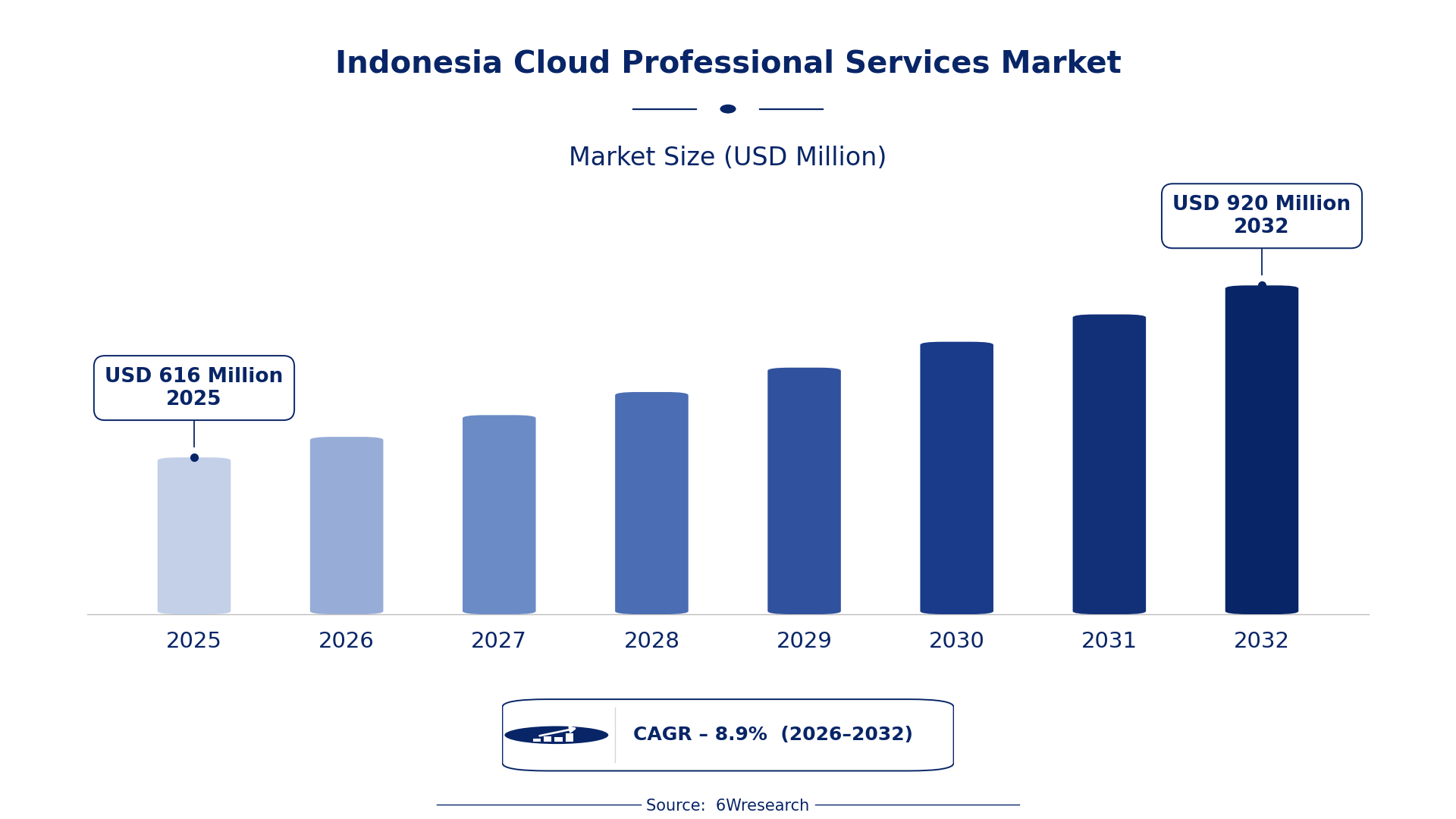
The Indonesia Cloud Professional Services Market was estimated at USD 616 Million in 2025 and is projected to reach USD 920 Million by 2032, growing at a CAGR of 8.9% from 2026 to 2032.
Indonesia Cloud Professional Services Market Synopsis
The demand for cloud professional services in Indonesia is currently driven by businesses seeking to optimize their cloud strategies. Organizations are increasingly recognizing the importance of expert guidance in navigating complex cloud environments, whether they are embracing hybrid models or fully cloud-native architectures.
As companies adapt to the digital-first paradigm, the need for effective migration and management services has surged. This trend is expected to intensify as more firms prioritize cloud integration to enhance operational efficiency and customer engagement.
Indonesia Cloud Professional Services Market Year-wise Growth Rate and Key Drivers
This graph illustrates the annual growth rates of the Indonesia Cloud Professional Services Market from 2021 to 2032, highlighting a steady upward trajectory and projected expansion over the forecast period.
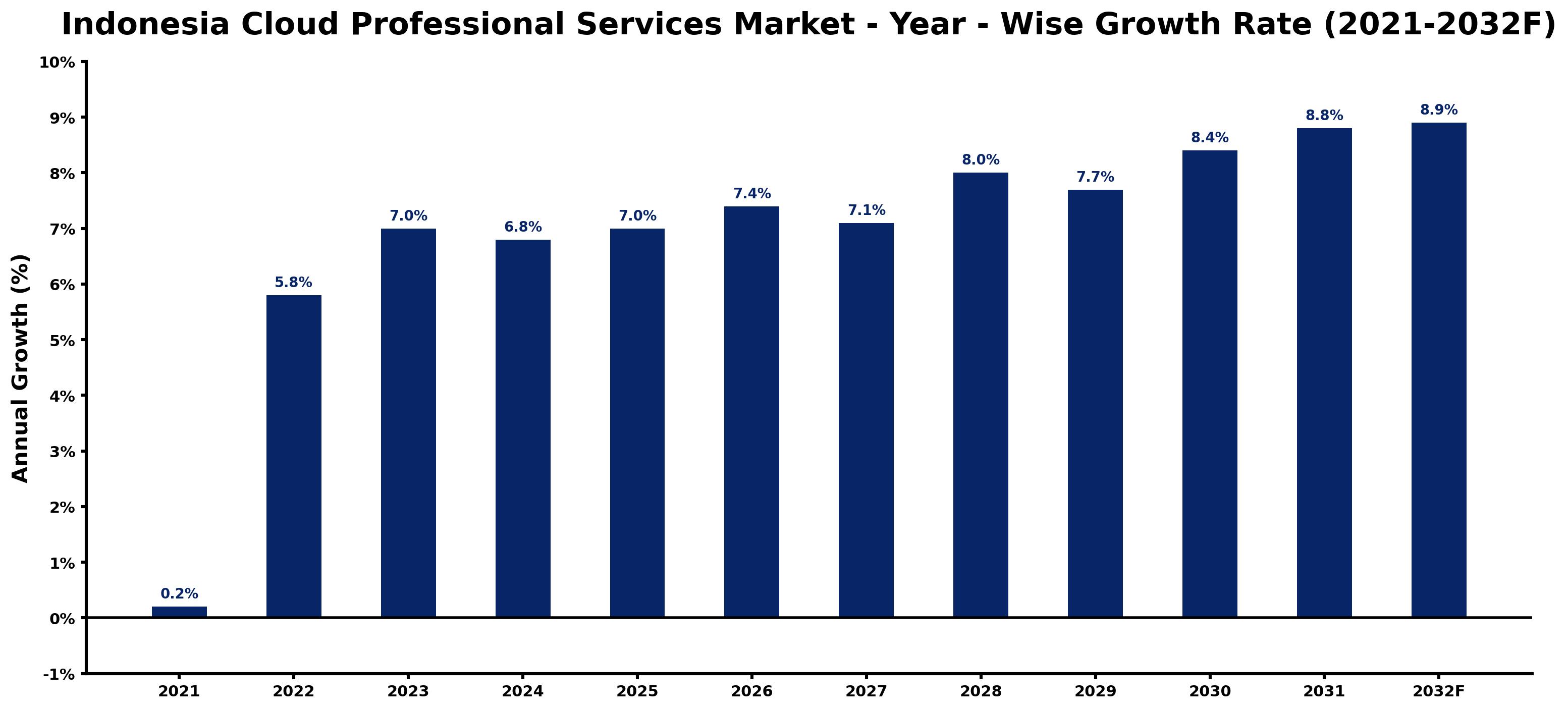
The table below presents the year‑wise growth rates along with the key drivers influencing the market
| Year | Growth Rate | Major Drivers |
| 2021 | 0.2% | Increased digital transformation efforts by Indonesian SMEs. |
| 2022 | 5.8% | Government support for startup ecosystems boosting cloud adoption. |
| 2023 | 7.0% | Growing need for remote work solutions post-pandemic. |
| 2024 | 6.8% | Expanding e-commerce sectors demanding scalable cloud resources. |
| 2025 | 7.0% | Investment in local data centers enhancing service availability. |
| 2026 | 7.4% | Regulatory push for data sovereignty encouraging local cloud solutions. |
| 2027 | 7.1% | Surge in mobile internet penetration facilitating cloud access. |
| 2028 | 8.0% | Rise of fintech solutions accelerating cloud service utilization. |
| 2029 | 7.7% | Local enterprises shifting to hybrid cloud models for efficiency. |
| 2030 | 8.4% | Mandates for digital identity solutions driving cloud service uptake. |
| 2031 | 8.8% | Increasing cybersecurity concerns prompting cloud compliance investments. |
| 2032 | 8.9% | Government initiatives promoting smart cities leveraging cloud technology. |
Note: Market size estimations and growth projections presented in this report are based on 6Wresearch's proprietary forecasting methodology, utilizing the latest available industry data, government publications, and primary research inputs.
Indonesia Cloud Professional Services Market Key Takeaways
Below are some of the specific key takeaways from the market, including:
- The increasing complexity of cloud solutions is driving demand for specialized consulting services.
- Businesses are prioritizing cloud migration to improve operational resilience in a competitive landscape.
- There is a critical shortage of skilled professionals, highlighting the urgent need for workforce development.
- COVID-19 has accelerated cloud adoption, reinforcing the importance of professional services in this transition.
- Major consulting firms are enhancing their offerings to meet the evolving needs of Indonesian businesses.
Evaluation of Restraints in Indonesia Cloud Professional Services Market
A prominent restraint in the Indonesia Cloud Professional Services market is the lack of qualified professionals. As organizations increasingly shift to cloud-based solutions, they face a skills gap that hampers effective implementation and management. This shortage not only affects service delivery but also limits innovation within companies, making it difficult for them to fully capitalize on cloud technologies. Addressing this skills deficiency is crucial for sustainable growth in the market.
Indonesia Cloud Professional Services Market Trends
One notable trend is the rising adoption of multi-cloud strategies, with businesses opting for a mix of public and private cloud solutions to enhance flexibility. This trend is driving demand for services that facilitate the integration and management of diverse cloud environments. on top of that, organizations are increasingly focusing on cloud security, necessitating expert consultation to safeguard sensitive data. The emphasis on sustainability is also gaining traction, with companies seeking cloud solutions that minimize their environmental footprint.
Indonesia Cloud Professional Services Market Opportunities
Significant growth opportunities lie in developing tailored cloud strategies for specific industries such as finance, healthcare, and retail. As these sectors evolve, they require specialized solutions that address their unique regulatory and operational challenges. Additionally, there is potential for investment in cloud training programs to bridge the skills gap, enabling more professionals to enter the market. This focus on workforce development can help ensure that businesses are equipped to meet the growing demand for cloud services.
Government Initiatives in the Indonesia Cloud Professional Services Market
The Indonesian government is actively shaping the Cloud Professional Services market through various initiatives aimed at enhancing digital infrastructure and promoting cloud adoption. These policies prioritize the development of a skilled workforce and the establishment of regulatory frameworks that facilitate cloud integration across industries. Such government support is crucial for fostering a conducive environment for businesses to thrive in the digital economy.
- A national digital infrastructure upgrade program, now in its rollout phase, aims to enhance connectivity and support cloud services.
- Current initiatives focus on creating a regulatory framework to ensure data protection and compliance in cloud operations.
- A recently launched program promotes public-private partnerships to enhance access to cloud technology in rural areas.
- Future plans include a comprehensive training initiative set to begin in early 2026 to address the cloud skills gap.
- Upcoming policies will incentivize companies to adopt cloud solutions through tax benefits and grants.
Future Insights of the Indonesia Cloud Professional Services Market
Looking ahead to 2026-2032, the Indonesia Cloud Professional Services market is expected to evolve significantly. As companies prioritize digital transformation, the demand for specialized cloud consulting and management services will surge. Innovations in artificial intelligence and machine learning are likely to further enhance cloud offerings, enabling businesses to optimize operations and improve customer experiences. The focus on security and compliance will also drive investment in professional services, ensuring that organizations can operate confidently in a digital-first world.
Indonesia Cloud Professional Services Market Latest Developments
In the past year, the Indonesia Cloud Professional Services market has witnessed a flurry of activity, reflecting the urgency of cloud adoption among businesses. As organizations seek to optimize their operations, professional service providers have ramped up their offerings to meet evolving needs. This momentum is likely to continue as more companies embrace digital transformation.
- A leading regional operator announced the launch of a comprehensive cloud migration service in Q1 2025, targeting small and medium enterprises.
- In mid-2025, a major technology vendor initiated a partnership with local firms to enhance cloud security solutions.
- Ongoing development of a cloud management platform designed to streamline operations is expected to roll out by late 2025.
- A public-private initiative aimed at expanding cloud training programs is currently underway and is set to enhance workforce capabilities.
- A major technology firm has plans to introduce an AI-driven cloud optimization tool in early 2026.
Indonesia Cloud Professional Services Market - Key Attractiveness of the Report
- 10 Years of Market Numbers
- Historical Data Starting from 2022 to 2025
- Base Year: 2025
- Forecast Data until 2032
- Key Performance Indicators Impacting the Market
- Major Upcoming Developments and Projects
Key Highlights of the Report:
- Indonesia Cloud Professional Services Market Outlook
- Market Size of Indonesia Cloud Professional Services Market, 2025
- Forecast of Indonesia Cloud Professional Services Market, 2032
- Historical Data and Forecast of Indonesia Cloud Professional Services Revenues & Volume for the Period 2022-2032F
- Indonesia Cloud Professional Services Market Trend Evolution
- Indonesia Cloud Professional Services Market Drivers and Challenges
- Indonesia Cloud Professional Services Price Trends
- Indonesia Cloud Professional Services Porter's Five Forces
- Indonesia Cloud Professional Services Industry Life Cycle
- Historical Data and Forecast of Indonesia Cloud Professional Services Market Revenues & Volume By Service Type for the Period 2022-2032F
- Historical Data and Forecast of Indonesia Cloud Professional Services Market Revenues & Volume By Consulting for the Period 2022-2032F
- Historical Data and Forecast of Indonesia Cloud Professional Services Market Revenues & Volume By Integration & Optimization for the Period 2022-2032F
- Historical Data and Forecast of Indonesia Cloud Professional Services Market Revenues & Volume By Implementation & Migration for the Period 2022-2032F
- Historical Data and Forecast of Indonesia Cloud Professional Services Market Revenues & Volume By Application Development & Modernization for the Period 2022-2032F
- Historical Data and Forecast of Indonesia Cloud Professional Services Market Revenues & Volume By Service Model for the Period 2022-2032F
- Historical Data and Forecast of Indonesia Cloud Professional Services Market Revenues & Volume By Platform as a Service (PaaS) for the Period 2022-2032F
- Historical Data and Forecast of Indonesia Cloud Professional Services Market Revenues & Volume By Software as a Service (SaaS) for the Period 2022-2032F
- Historical Data and Forecast of Indonesia Cloud Professional Services Market Revenues & Volume By Infrastructure as a Service (IaaS) for the Period 2022-2032F
- Historical Data and Forecast of Indonesia Cloud Professional Services Market Revenues & Volume By Deployment Model for the Period 2022-2032F
- Historical Data and Forecast of Indonesia Cloud Professional Services Market Revenues & Volume By Public Cloud for the Period 2022-2032F
- Historical Data and Forecast of Indonesia Cloud Professional Services Market Revenues & Volume By Private Cloud for the Period 2022-2032F
- Historical Data and Forecast of Indonesia Cloud Professional Services Market Revenues & Volume By Organization Size for the Period 2022-2032F
- Historical Data and Forecast of Indonesia Cloud Professional Services Market Revenues & Volume By Small and Medium-Sized Enterprises (SMEs) for the Period 2022-2032F
- Historical Data and Forecast of Indonesia Cloud Professional Services Market Revenues & Volume By Large Enterprises for the Period 2022-2032F
- Historical Data and Forecast of Indonesia Cloud Professional Services Market Revenues & Volume By Vertical for the Period 2022-2032F
- Historical Data and Forecast of Indonesia Cloud Professional Services Market Revenues & Volume By Baanking, Financial Services, and insurance (BFSI) for the Period 2022-2032F
- Historical Data and Forecast of Indonesia Cloud Professional Services Market Revenues & Volume By Retail & Consumer Goods for the Period 2022-2032F
- Historical Data and Forecast of Indonesia Cloud Professional Services Market Revenues & Volume By IT & ITeS for the Period 2022-2032F
- Historical Data and Forecast of Indonesia Cloud Professional Services Market Revenues & Volume By Telecommunications for the Period 2022-2032F
- Historical Data and Forecast of Indonesia Cloud Professional Services Market Revenues & Volume By Healthcare & Life Sciences for the Period 2022-2032F
- Historical Data and Forecast of Indonesia Cloud Professional Services Market Revenues & Volume By Manufacturing for the Period 2022-2032F
- Historical Data and Forecast of Indonesia Cloud Professional Services Market Revenues & Volume By Energy & Utilities for the Period 2022-2032F
- Historical Data and Forecast of Indonesia Cloud Professional Services Market Revenues & Volume By Government & Defense for the Period 2022-2032F
- Indonesia Cloud Professional Services Import Export Trade Statistics
- Market Opportunity Assessment By Service Type
- Market Opportunity Assessment By Service Model
- Market Opportunity Assessment By Deployment Model
- Market Opportunity Assessment By Organization Size
- Market Opportunity Assessment By Vertical
- Indonesia Cloud Professional Services Top Companies Market Share
- Indonesia Cloud Professional Services Competitive Benchmarking By Technical and Operational Parameters
- Indonesia Cloud Professional Services Company Profiles
- Indonesia Cloud Professional Services Key Strategic Recommendations






































