Indonesia Construction Machinery Market Growth Rate Analysis (2025 - 2031)
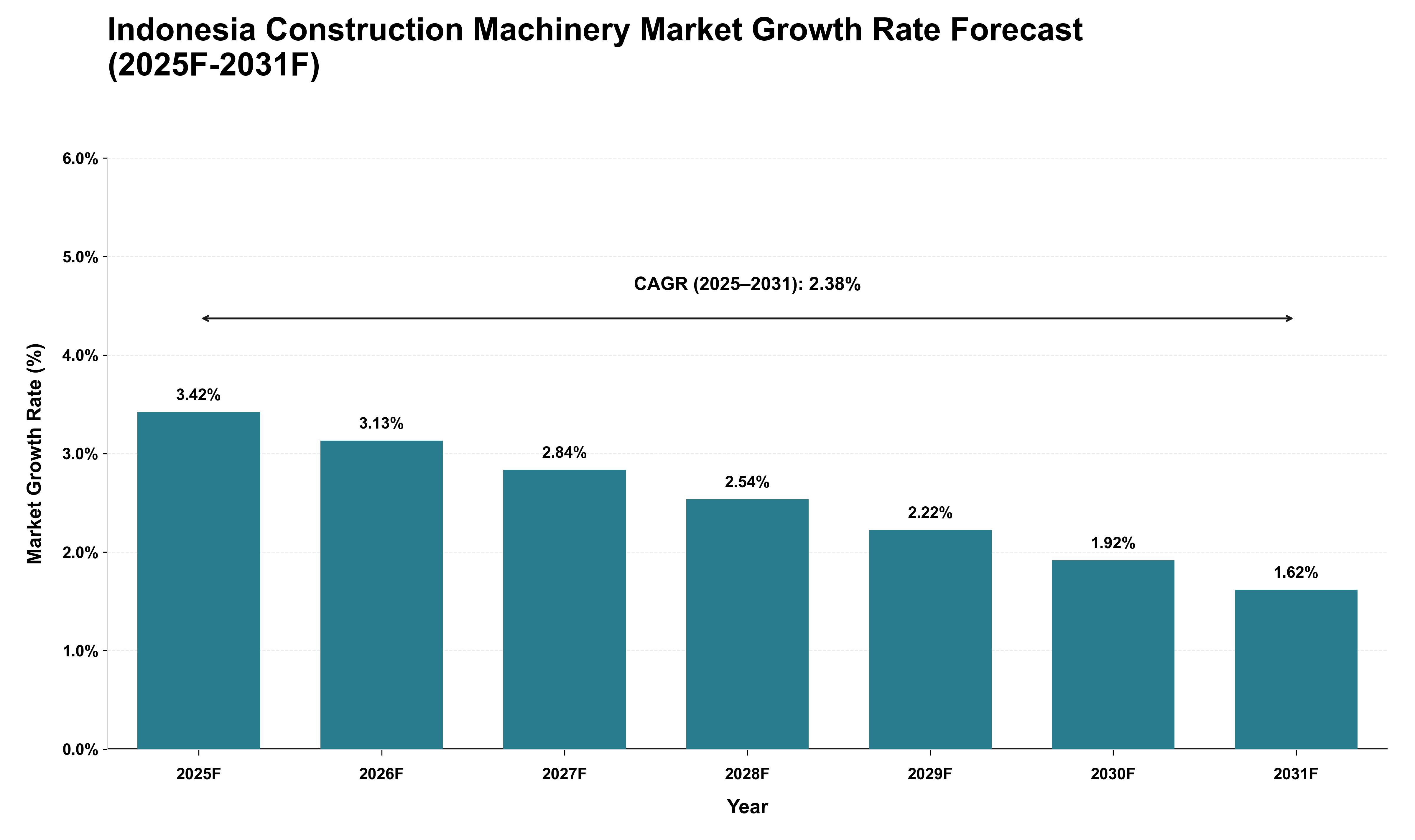
The outlook for Indonesia's construction machinery market will be shaped by several macroeconomic factors, including infrastructure development initiatives and urbanization trends that drive demand for construction equipment. As the economy continues to grow, projected annual growth rates will reflect a gradual decline from 3.42% in 2025 to 1.62% by 2031, indicating a deceleration in import demand as domestic production capabilities potentially improve. The forecasted CAGR of 2.38% suggests that while the market will experience consistent growth, it may also face challenges such as fluctuating commodity prices and global supply chain disruptions that could impact import flows. Additionally, cyclical trends in construction activity will influence machinery purchases, with periods of increased investment likely correlating with government spending on infrastructure projects aimed at boosting economic resilience and connectivity across the archipelago.
Key Highlights of the Report:
- Indonesia Construction Machinery Market Outlook
- Market Size of Indonesia Construction Machinery Market, 2024
- Forecast of Indonesia Construction Machinery Market, 2031
- Historical Data and Forecast of Indonesia Construction Machinery Revenues & Volume for the Period 2021- 2031
- Indonesia Construction Machinery Market Trend Evolution
- Indonesia Construction Machinery Market Drivers and Challenges
- Indonesia Construction Machinery Price Trends
- Indonesia Construction Machinery Porter's Five Forces
- Indonesia Construction Machinery Industry Life Cycle
- Historical Data and Forecast of Indonesia Construction Machinery Market Revenues & Volume By Machine Type for the Period 2021- 2031
- Historical Data and Forecast of Indonesia Construction Machinery Market Revenues & Volume By Cranes for the Period 2021- 2031
- Historical Data and Forecast of Indonesia Construction Machinery Market Revenues & Volume By Excavators for the Period 2021- 2031
- Historical Data and Forecast of Indonesia Construction Machinery Market Revenues & Volume By Loaders for the Period 2021- 2031
- Historical Data and Forecast of Indonesia Construction Machinery Market Revenues & Volume By Backhoe for the Period 2021- 2031
- Historical Data and Forecast of Indonesia Construction Machinery Market Revenues & Volume By Motor Graders for the Period 2021- 2031
- Historical Data and Forecast of Indonesia Construction Machinery Market Revenues & Volume By Other Machine Types for the Period 2021- 2031
- Historical Data and Forecast of Indonesia Construction Machinery Market Revenues & Volume By Application for the Period 2021- 2031
- Historical Data and Forecast of Indonesia Construction Machinery Market Revenues & Volume By Concrete and Road Construction for the Period 2021- 2031
- Historical Data and Forecast of Indonesia Construction Machinery Market Revenues & Volume By Earth Moving for the Period 2021- 2031
- Historical Data and Forecast of Indonesia Construction Machinery Market Revenues & Volume By Material Handling for the Period 2021- 2031
- Indonesia Construction Machinery Import Export Trade Statistics
- Market Opportunity Assessment By Machine Type
- Market Opportunity Assessment By Application
- Indonesia Construction Machinery Top Companies Market Share
- Indonesia Construction Machinery Competitive Benchmarking By Technical and Operational Parameters
- Indonesia Construction Machinery Company Profiles
- Indonesia Construction Machinery Key Strategic Recommendations






































