Indonesia Corticosteroids Market: Import Trend Analysis
In the Indonesia corticosteroids market, the import trend experienced a decline from 2023 to 2024, with a growth rate of -2.57%. The compound annual growth rate (CAGR) for imports between 2020 and 2024 stood at -20.73%. This downward trajectory may be attributed to shifts in demand dynamics or regulatory changes impacting import volumes.
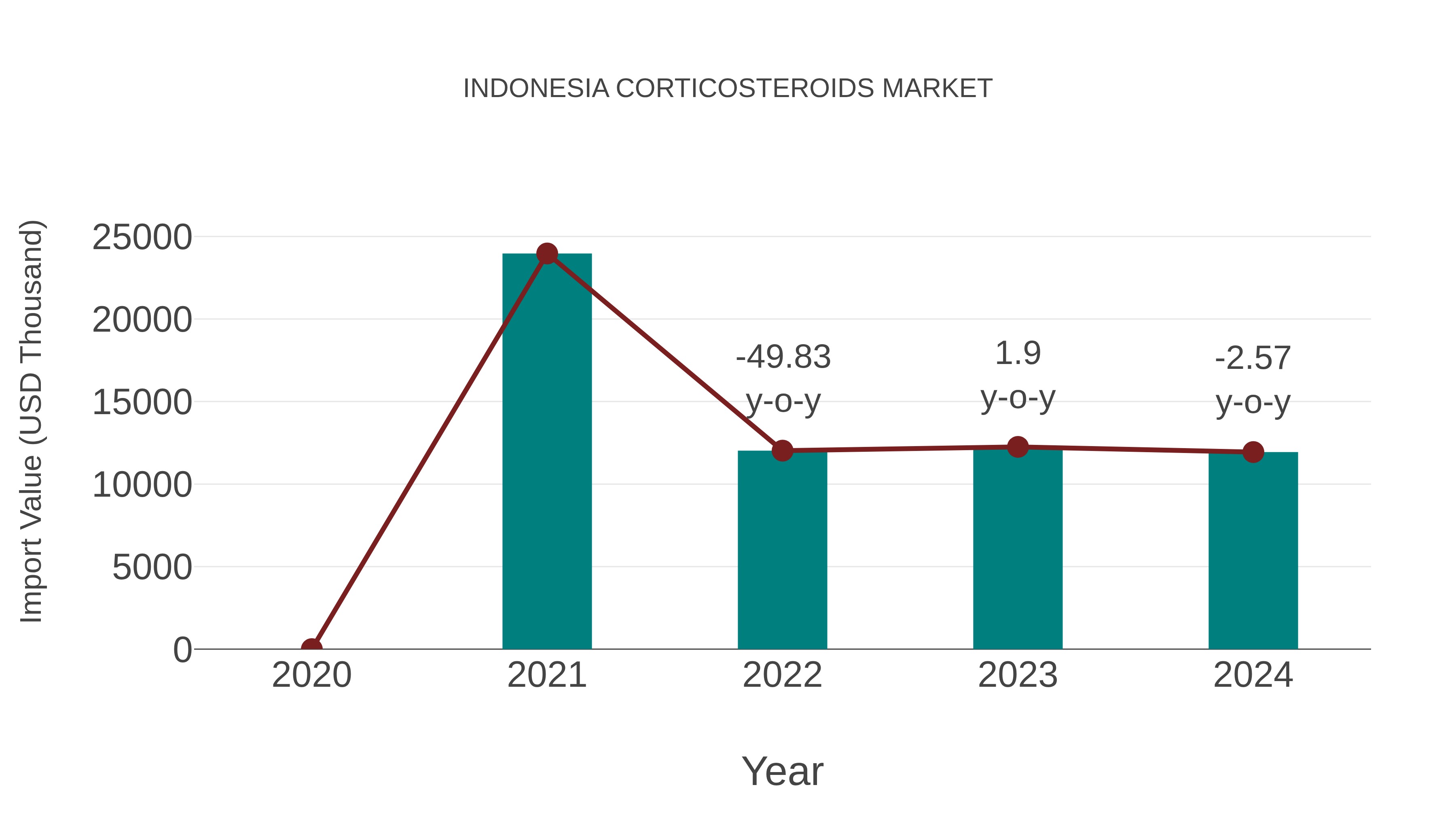
Indonesia Corticosteroids Market Synopsis
Corticosteroids are widely used in Indonesia for their anti-inflammatory and immunosuppressive properties. The market for corticosteroids is influenced by the prevalence of inflammatory diseases and dermatological conditions. Ongoing research into the development of novel corticosteroid formulations, such as topical creams and ointments, is driving innovation in this sector. However, strict regulations on the use and distribution of corticosteroids require market participants to navigate complex compliance issues.
Drivers of the Market
The Indonesia Corticosteroids market is experiencing steady growth due to several key drivers. First, the rising prevalence of inflammatory and autoimmune diseases, such as rheumatoid arthritis and asthma, has increased the demand for corticosteroid medications. Second, the aging population in Indonesia has led to a higher incidence of chronic conditions, further driving the need for corticosteroid treatments. Additionally, the expanding healthcare infrastructure and improved access to healthcare services have made these medications more accessible to the population. Lastly, increasing awareness among both healthcare professionals and patients about the benefits of corticosteroids in managing various medical conditions is positively impacting the market.
Challenges of the Market
The Corticosteroids market may encounter challenges related to concerns about side effects, regulatory compliance, and competition from generic medications.
COVID-19 Impact on the Market
Corticosteroids saw increased use in COVID-19 treatments. The market experienced both demand surges and supply chain disruptions, impacting availability and pricing.
Key Players in the Market
The Indonesia Corticosteroids market is expanding due to the rising cases of inflammatory and autoimmune disorders. Key players in this sector include PT. Dexa Medica, PT. Sanbe Farma, and PT. Kimia Farma.
Key Highlights of the Report:
- Indonesia Corticosteroids Market Outlook
- Market Size of Indonesia Corticosteroids Market, 2025
- Forecast of Indonesia Corticosteroids Market, 2032
- Historical Data and Forecast of Indonesia Corticosteroids Revenues & Volume for the Period 2022-2032F
- Indonesia Corticosteroids Market Trend Evolution
- Indonesia Corticosteroids Market Drivers and Challenges
- Indonesia Corticosteroids Price Trends
- Indonesia Corticosteroids Porter's Five Forces
- Indonesia Corticosteroids Industry Life Cycle
- Historical Data and Forecast of Indonesia Corticosteroids Market Revenues & Volume By Application for the Period 2022-2032F
- Historical Data and Forecast of Indonesia Corticosteroids Market Revenues & Volume By Skin Allergies for the Period 2022-2032F
- Historical Data and Forecast of Indonesia Corticosteroids Market Revenues & Volume By Rhuematology Indications for the Period 2022-2032F
- Historical Data and Forecast of Indonesia Corticosteroids Market Revenues & Volume By Endocrinology for the Period 2022-2032F
- Historical Data and Forecast of Indonesia Corticosteroids Market Revenues & Volume By Acute Respiratory Diseases for the Period 2022-2032F
- Historical Data and Forecast of Indonesia Corticosteroids Market Revenues & Volume By Others for the Period 2022-2032F
- Historical Data and Forecast of Indonesia Corticosteroids Market Revenues & Volume By End User for the Period 2022-2032F
- Historical Data and Forecast of Indonesia Corticosteroids Market Revenues & Volume By Hospitals for the Period 2022-2032F
- Historical Data and Forecast of Indonesia Corticosteroids Market Revenues & Volume By Clinics for the Period 2022-2032F
- Historical Data and Forecast of Indonesia Corticosteroids Market Revenues & Volume By Research Institutes for the Period 2022-2032F
- Historical Data and Forecast of Indonesia Corticosteroids Market Revenues & Volume By Others for the Period 2022-2032F
- Indonesia Corticosteroids Import Export Trade Statistics
- Market Opportunity Assessment By Application
- Market Opportunity Assessment By End User
- Indonesia Corticosteroids Top Companies Market Share
- Indonesia Corticosteroids Competitive Benchmarking By Technical and Operational Parameters
- Indonesia Corticosteroids Company Profiles
- Indonesia Corticosteroids Key Strategic Recommendations






































