Indonesia Dairy Products Market: Import Trend Analysis
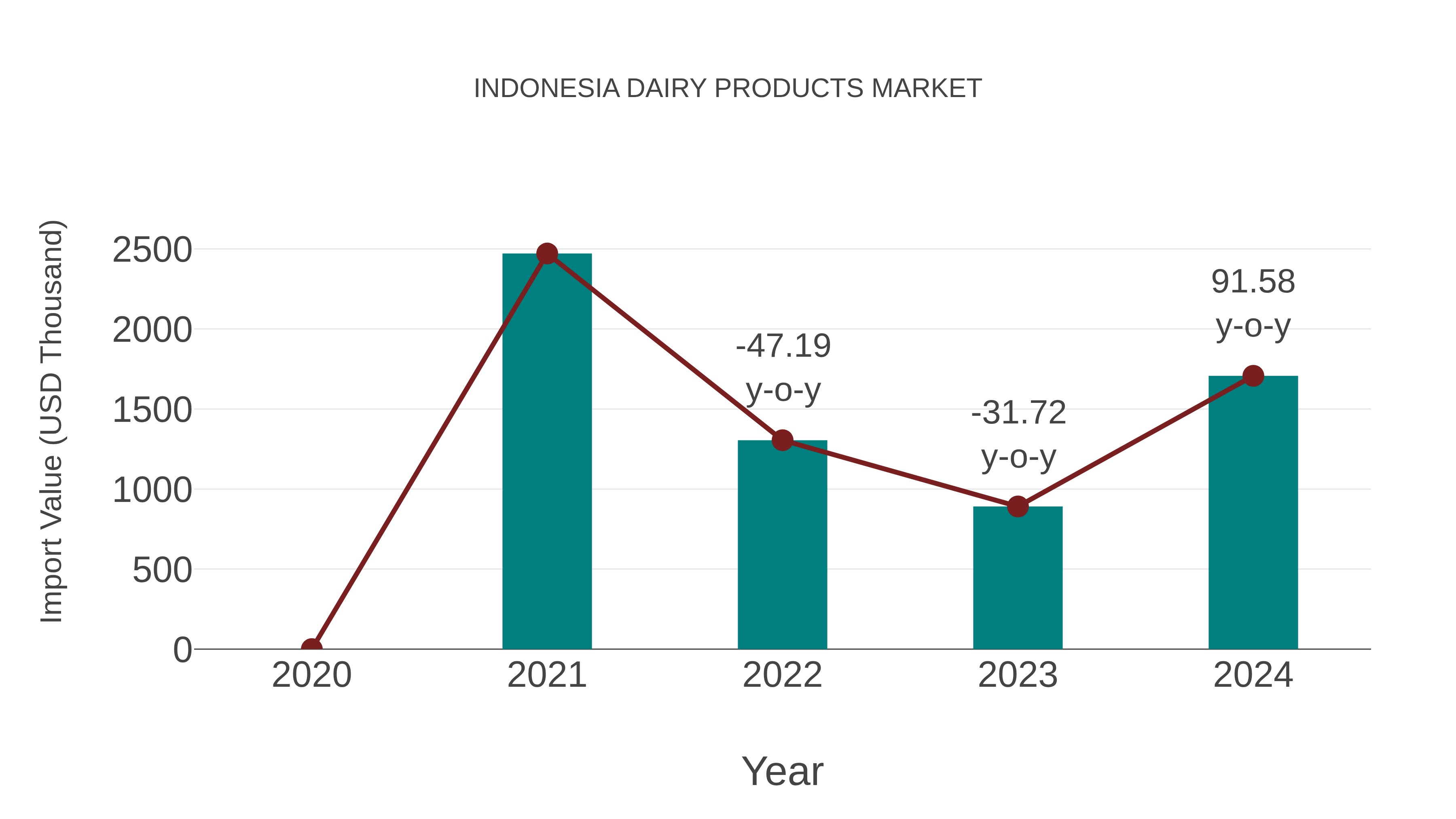
In the Indonesia dairy products market, the import trend showed a significant growth rate of 91.58% from 2023 to 2024, while the compound annual growth rate (CAGR) for 2020-2024 was -11.6%. This notable import momentum can be attributed to shifting consumer preferences towards dairy products, indicating a potential market recovery post-2020 disruptions.
Dairy products Market: Indonesia vs Top 5 Major Economies in 2027 (Asia)
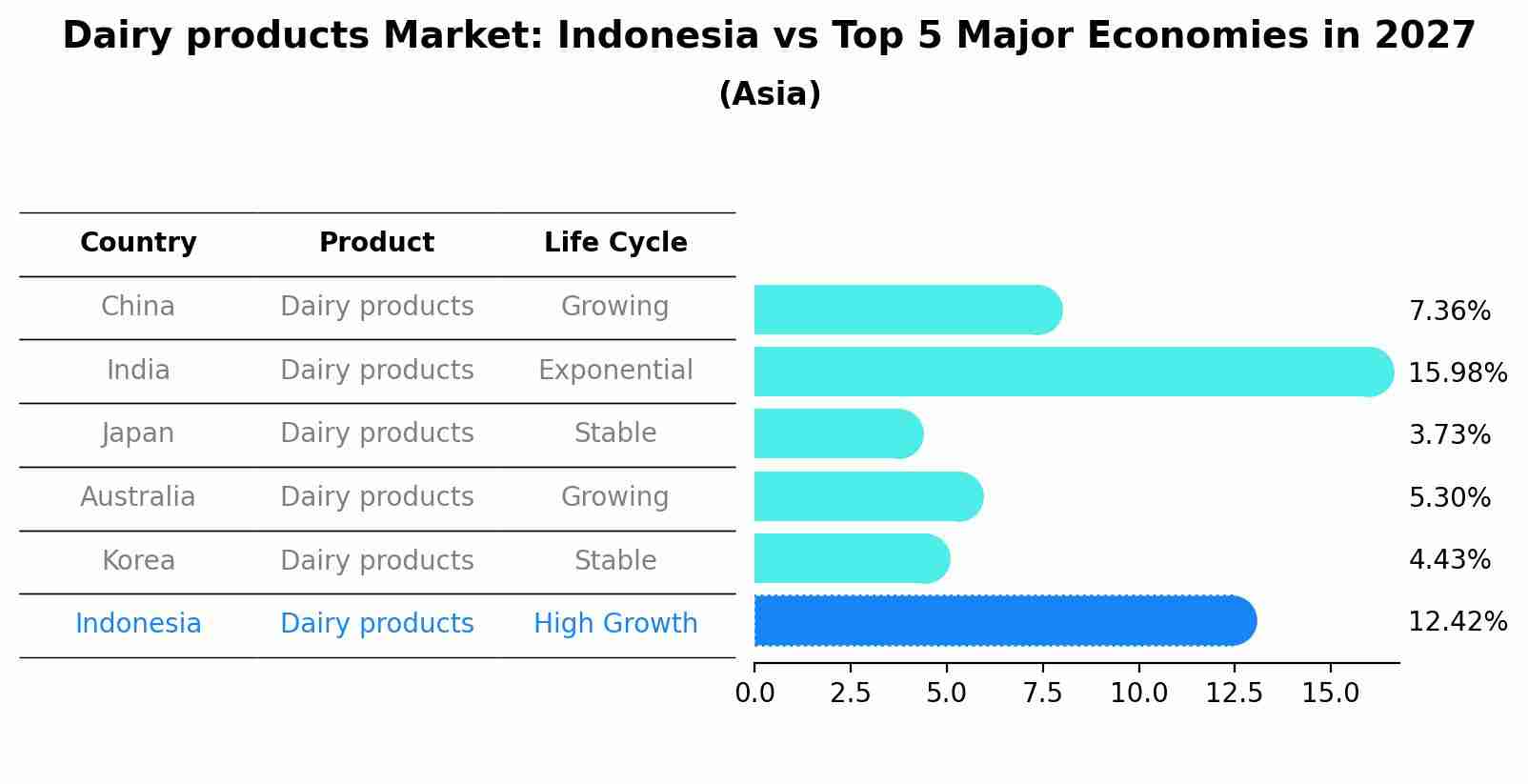
In the Asia region, the Dairy products market in Indonesia is projected to expand at a high growth rate of 12.42% by 2027. The largest economy is China, followed by India, Japan, Australia and South Korea.
Indonesia Dairy products Market Synopsis
Indonesia dairy products market is expected to witness a CAGR of 4.6% during theperiod (2020-2026) owing to increasing population and high demand for healthy food options in the country. Increasing awareness regarding health benefits associated with milk and other dairy products are also fuelling theof Indonesia`s dairy product market. The rising trend of using organic ingredients as well as increasing consumption of convenience foods containing cheese butter yogurt and others are further driving theof this sector in Indonesia.
Drivers
1) Increasing Population: With an estimated 271 million people living in 2020 Indonesia population has increased significantly over recent years which has consequentially resulted in higher demand for food items like diary products such as cheese milk etc due to its nutritional . 2) Rising Health Consciousness: There is an increase among consumers looking for healthier alternatives when it comes to their dietary choices; leading them towards consuming dairy products that provide essential nutrients such as calcium and proteins which contribute greatly towards a balanced diet.This factor has been fueling up sales within the Dairy Products Market in Indonesia over recent years and is projected to continue doing so during theperiod too because it?s one of few markets where major players can still experienceby capitalizing on consumer needs rather than price wars or competition from substitutes goods/services. 3) Increase In Demand For Convenience Foods: Along with being more health conscious there is also an increased preference amongst consumers opting for convenient foods such as cheese spread sandwichespre-packed yogurt drinks etc instead of traditional meals; thus providing ample opportunities for major producers within Dairy Product Markets to capitalize upon emerging customer demands.
Market Players
1) PT Sarihusada Generasi Mahardhika (SGM): It holds nearly 22 percentin Indonesia Dairy Products Market making it a leader amongst local brands; offering various types Milk Yogurt DrinksCheese SpreadsUHT Milk Powder Pasteurized Liquid Milk across all retail outlets including supermarkets hypermarkets throughout nation. 2) Nestle Indonesia Tbk PT : Another notable player operating within Indonesias Dairy Product Market ; they offer wide range selection including UHT MilksFruit JuicesYoghurts Cream Cheese Spreads mainly targeting mass consumer segments through both online offline channels around nation . 3) Frisian Flag Indoneisa PT : Holding near 14 percent.
Key Highlights of the Report:
- Indonesia Dairy products Market Outlook
- Market Size of Indonesia Dairy products Market, 2023
- Forecast of Indonesia Dairy products Market, 2030
- Historical Data and Forecast of Indonesia Dairy products Revenues & Volume for the Period 2020-2030
- Indonesia Dairy products Market Trend Evolution
- Indonesia Dairy products Market Drivers and Challenges
- Indonesia Dairy products Price Trends
- Indonesia Dairy products Porter's Five Forces
- Indonesia Dairy products Industry Life Cycle
- Historical Data and Forecast of Indonesia Dairy products Market Revenues & Volume By Product Type for the Period 2020-2030
- Historical Data and Forecast of Indonesia Dairy products Market Revenues & Volume By Butter for the Period 2020-2030
- Historical Data and Forecast of Indonesia Dairy products Market Revenues & Volume By Cheese for the Period 2020-2030
- Historical Data and Forecast of Indonesia Dairy products Market Revenues & Volume By Milk for the Period 2020-2030
- Historical Data and Forecast of Indonesia Dairy products Market Revenues & Volume By Cream for the Period 2020-2030
- Historical Data and Forecast of Indonesia Dairy products Market Revenues & Volume By Yoghurt for the Period 2020-2030
- Historical Data and Forecast of Indonesia Dairy products Market Revenues & Volume By Buttermilk for the Period 2020-2030
- Historical Data and Forecast of Indonesia Dairy products Market Revenues & Volume By Ice Cream for the Period 2020-2030
- Historical Data and Forecast of Indonesia Butter Dairy products Market Revenues & Volume By Lactose-Free Dairy Products for the Period 2020-2030
- Historical Data and Forecast of Indonesia Dairy products Market Revenues & Volume By Distribution Channel for the Period 2020-2030
- Historical Data and Forecast of Indonesia Dairy products Market Revenues & Volume By Supermarkets & Hypermarkets for the Period 2020-2030
- Historical Data and Forecast of Indonesia Dairy products Market Revenues & Volume By Convenience Store for the Period 2020-2030
- Historical Data and Forecast of Indonesia Dairy products Market Revenues & Volume By Online for the Period 2020-2030
- Indonesia Dairy products Import Export Trade Statistics
- Market Opportunity Assessment By Product Type
- Market Opportunity Assessment By Distribution Channel
- Indonesia Dairy products Top Companies Market Share
- Indonesia Dairy products Competitive Benchmarking By Technical and Operational Parameters
- Indonesia Dairy products Company Profiles
- Indonesia Dairy products Key Strategic Recommendations






































