Indonesia Data Protection Market Size & Growth Rate (2026-2032)
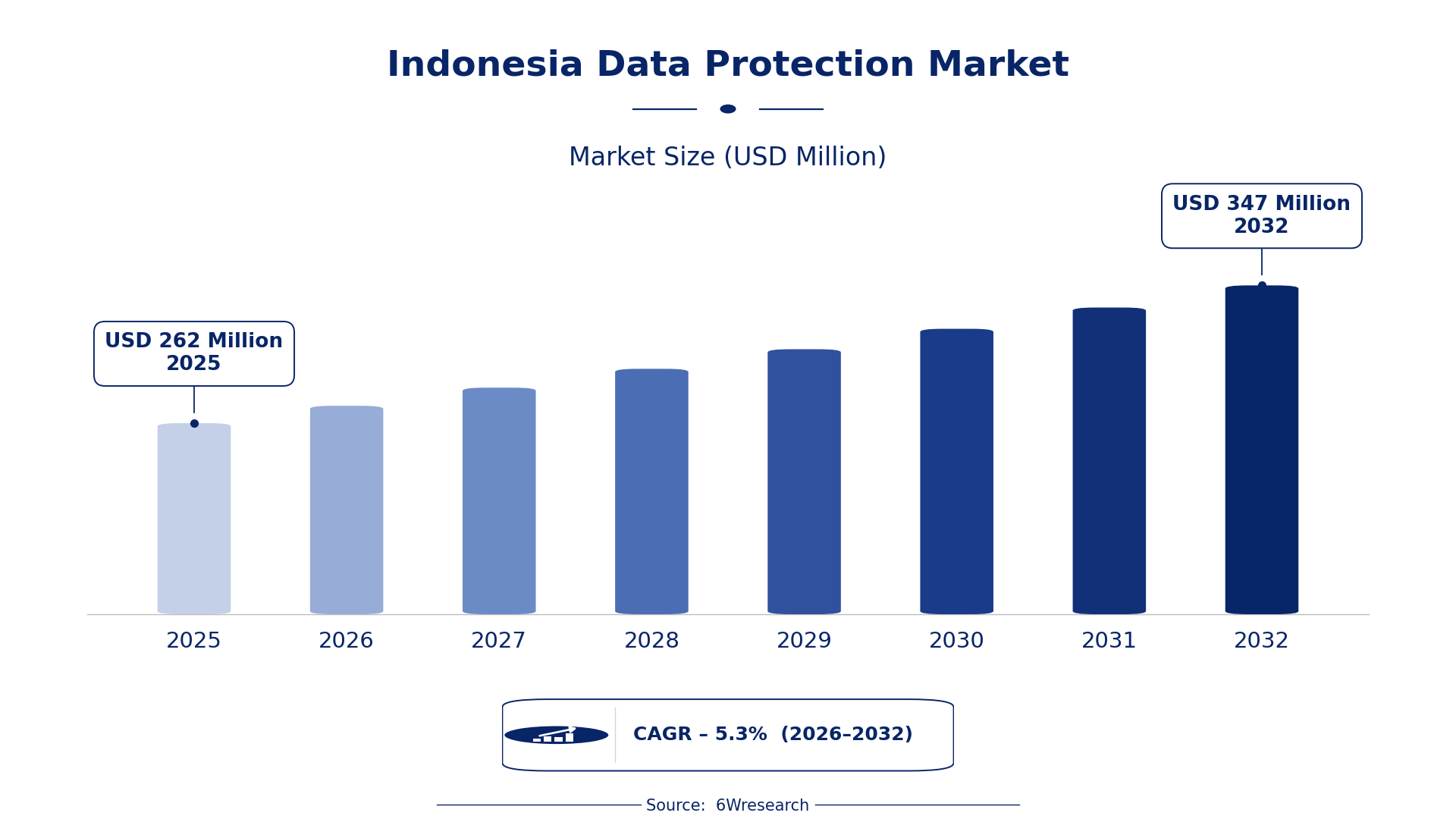
The Indonesia Data Protection Market was estimated at USD 262 Million in 2025 and is projected to reach USD 347 Million by 2032, growing at a CAGR of 5.3% from 2026 to 2032.
Indonesia Data Protection Market Synopsis
The escalating focus on compliance with data privacy regulations is the driving force behind the Indonesia Data Protection Market. Organizations across various sectors are recognizing the urgency to safeguard sensitive information as digital threats rise and regulations tighten.
As Indonesia’s digital economy matures, the protection of data has emerged as a critical concern. Businesses are increasingly aware that data breaches not only result in financial loss but also risk their reputations, pushing them toward investing in more sophisticated data protection solutions.
Indonesia Data Protection Market Year-wise Growth Rate and Key Drivers
This graph illustrates the annual growth rates of the Indonesia Data Protection Market from 2021 to 2032, highlighting a steady upward trajectory and projected expansion over the forecast period.
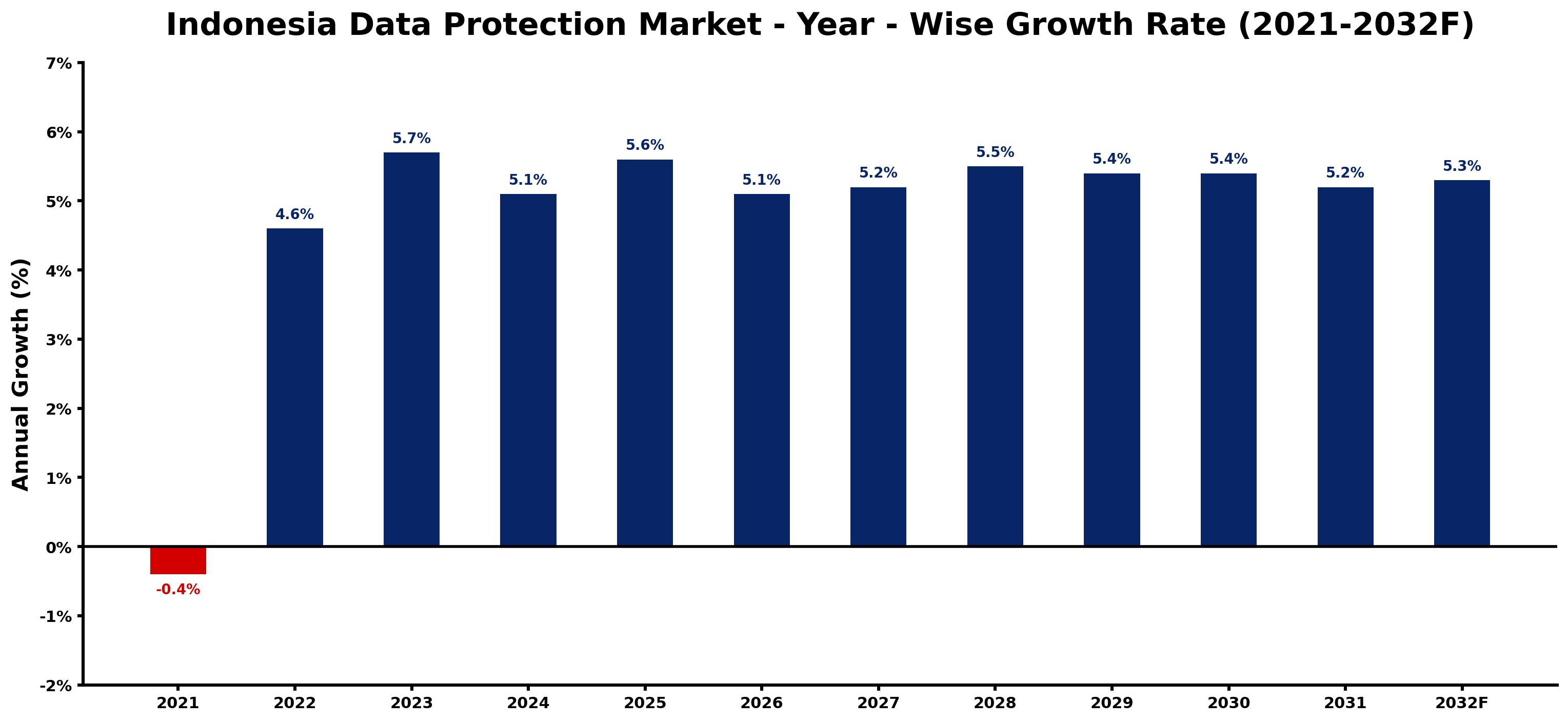
The table below presents the year‑wise growth rates along with the key drivers influencing the market
| Year | Growth Rate | Major Drivers |
| 2021 | -0.4% | Insufficient enforcement of PDPA by Indonesian government. |
| 2022 | 4.6% | Implementation of Indonesia's Personal Data Protection Law boosts compliance. |
| 2023 | 5.7% | Increased consumer awareness of data privacy risks influences demand. |
| 2024 | 5.1% | Growth in e-commerce leads to heightened security requirements. |
| 2025 | 5.6% | Government initiatives enhancing digital infrastructure prioritize data protection. |
| 2026 | 5.1% | Rise in cyber threats prompts stronger data safeguarding measures. |
| 2027 | 5.2% | Growing tech startups require robust data management solutions. |
| 2028 | 5.5% | Surge in mobile usage accelerates demand for secure platforms. |
| 2029 | 5.4% | Increased foreign investment emphasizes need for regulatory compliance. |
| 2030 | 5.4% | Digital transformations in enterprises raise data protection stakes. |
| 2031 | 5.2% | Adoption of cloud services mandates stronger data governance frameworks. |
| 2032 | 5.3% | Emergence of big data analytics requires enhanced protective measures. |
Note: Market size estimations and growth projections presented in this report are based on 6Wresearch's proprietary forecasting methodology, utilizing the latest available industry data, government publications, and primary research inputs.
Indonesia Data Protection Market Key Takeaways
Below are some of the specific key takeaways from the market, including:
- Organizations are compelled to adopt comprehensive data protection measures in light of the impending Personal Data Protection Bill.
- COVID-19 has intensified the urgency for enhanced data security protocols across various sectors.
- Increased awareness of data privacy concerns is driving demand for encryption, backup, and recovery solutions.
- Key industries such as finance and healthcare are leading the charge in data protection investments.
- Emerging technologies are redefining data protection strategies and implementation methods.
Evaluation of Restraints in Indonesia Data Protection Market
The Indonesia Data Protection Market faces several restraints that can impede its growth trajectory. A primary concern is the limited awareness and understanding of data protection measures among smaller organizations. Many lack the resources to implement comprehensive solutions. on top of that, the rapid pace of technological change can outstrip the ability of businesses to adapt, leaving them vulnerable to cyber threats. The fragmented regulatory environment presents another hurdle, where inconsistent implementation of data protection laws creates confusion and uncertainty among businesses.
Indonesia Data Protection Market Trends
A key trend shaping the Indonesia Data Protection Market is the rising importance of cloud-based solutions. As more businesses migrate to cloud environments, securing sensitive data within these platforms becomes paramount. Another noticeable trend is the integration of artificial intelligence (AI) and machine learning technologies in data protection strategies. These advancements allow for more proactive threat detection and incident response. Finally, the increasing adoption of zero-trust security models is gaining traction, requiring all users to be verified before accessing sensitive information.
Indonesia Data Protection Market Opportunities
Several avenues for growth and investment are emerging in the Indonesia Data Protection Market. The anticipated implementation of the Personal Data Protection Bill opens doors for compliance consulting services, enabling organizations to navigate regulatory complexities. Additionally, as companies increasingly adopt remote work models, there’s a growing market for endpoint security solutions. Investing in education and awareness programs will also present opportunities for providers looking to enhance their service offerings.
Government Initiatives in the Indonesia Data Protection Market
The Indonesian government is actively shaping the Data Protection Market through a series of initiatives aimed at enhancing data privacy and security across the country. With the Personal Data Protection Bill currently progressing, organizations will soon face stricter compliance requirements that emphasize the importance of data management. These initiatives reflect a broader commitment to establishing a more secure digital environment within Indonesia.
- A national digital infrastructure upgrade programme is currently underway to improve data security capabilities across government and private sectors.
- Regulatory frameworks being introduced include the Personal Data Protection Bill, which aims for completion by late 2025 and will mandate comprehensive data management practices.
- A public awareness campaign focused on data privacy is planned to launch in early 2026, targeting businesses and consumers alike.
- Ongoing workshops and training sessions are being organized to educate businesses on compliance requirements and data protection strategies.
Future Insights of the Indonesia Data Protection Market
Looking ahead to 2026-2032, the Indonesia Data Protection Market is expected to witness substantial growth driven by heightened regulatory requirements and increased consumer demand for data privacy. As organizations prioritize data protection, investments in advanced technologies and comprehensive security frameworks will be critical. The growing recognition of data as a valuable asset will further propel the market, compelling businesses to adopt more innovative solutions. on top of that, collaboration between the public and private sectors will play a vital role in enhancing the overall data protection environment.
Indonesia Data Protection Market Latest Developments
Recent activity in the Indonesia Data Protection Market indicates a shift towards more integrated and robust data protection solutions. As organizations grapple with the challenges of compliance and security, several initiatives have emerged to address these concerns, reflecting a concerted effort to improve the industry’s resilience against cyber threats.
- A major technology vendor launched a new encryption service designed for small and medium enterprises in Q1 2025, aimed at simplifying compliance with emerging regulations.
- A leading regional operator initiated a partnership with local cybersecurity firms in early 2025 to enhance data breach response capabilities.
- An ongoing project focused on developing cloud-based data protection services has seen significant investments, with initial phases completed by late 2025.
- By mid-2026, a planned rollout of a comprehensive data training program for businesses is expected to start, fostering awareness of best practices.
Indonesia Data Protection Market - Key Attractiveness of the Report
- 10 Years of Market Numbers
- Historical Data Starting from 2022 to 2025
- Base Year: 2025
- Forecast Data until 2032
- Key Performance Indicators Impacting the Market
- Major Upcoming Developments and Projects
Key Highlights of the Report:
- Indonesia Data Protection Market Outlook
- Market Size of Indonesia Data Protection Market, 2025
- Forecast of Indonesia Data Protection Market, 2032
- Historical Data and Forecast of Indonesia Data Protection Revenues & Volume for the Period 2022-2032F
- Indonesia Data Protection Market Trend Evolution
- Indonesia Data Protection Market Drivers and Challenges
- Indonesia Data Protection Price Trends
- Indonesia Data Protection Porter's Five Forces
- Indonesia Data Protection Industry Life Cycle
- Historical Data and Forecast of Indonesia Data Protection Market Revenues & Volume By Component for the Period 2022-2032F
- Historical Data and Forecast of Indonesia Data Protection Market Revenues & Volume By Solutions for the Period 2022-2032F
- Historical Data and Forecast of Indonesia Data Protection Market Revenues & Volume By Services (Professional Services and Managed Services) for the Period 2022-2032F
- Historical Data and Forecast of Indonesia Data Protection Market Revenues & Volume By Deployment Mode for the Period 2022-2032F
- Historical Data and Forecast of Indonesia Data Protection Market Revenues & Volume By On-premises for the Period 2022-2032F
- Historical Data and Forecast of Indonesia Data Protection Market Revenues & Volume By Cloud for the Period 2022-2032F
- Historical Data and Forecast of Indonesia Data Protection Market Revenues & Volume By Industry Vertical for the Period 2022-2032F
- Historical Data and Forecast of Indonesia Data Protection Market Revenues & Volume By Government and defense for the Period 2022-2032F
- Historical Data and Forecast of Indonesia Data Protection Market Revenues & Volume By Banking, Financial Services, and Insurance (BFSI) for the Period 2022-2032F
- Historical Data and Forecast of Indonesia Data Protection Market Revenues & Volume By Healthcare for the Period 2022-2032F
- Historical Data and Forecast of Indonesia Data Protection Market Revenues & Volume By IT and telecom for the Period 2022-2032F
- Historical Data and Forecast of Indonesia Data Protection Market Revenues & Volume By Consumer goods and retail for the Period 2022-2032F
- Historical Data and Forecast of Indonesia Data Protection Market Revenues & Volume By Education for the Period 2022-2032F
- Historical Data and Forecast of Indonesia Data Protection Market Revenues & Volume By Media and entertainment for the Period 2022-2032F
- Historical Data and Forecast of Indonesia Data Protection Market Revenues & Volume By Organization Size Large Enterprises for the Period 2022-2032F
- Historical Data and Forecast of Indonesia Data Protection Market Revenues & Volume By SMEs for the Period 2022-2032F
- Historical Data and Forecast of Indonesia Data Protection Market Revenues & Volume By Large Enterprises for the Period 2022-2032F
- Indonesia Data Protection Import Export Trade Statistics
- Market Opportunity Assessment By Component
- Market Opportunity Assessment By Deployment Mode
- Market Opportunity Assessment By Industry Vertical
- Market Opportunity Assessment By Organization Size Large Enterprises
- Indonesia Data Protection Top Companies Market Share
- Indonesia Data Protection Competitive Benchmarking By Technical and Operational Parameters
- Indonesia Data Protection Company Profiles
- Indonesia Data Protection Key Strategic Recommendations






































