Indonesia Deodorants and Anti-perspirant Products Market: Import Trend Analysis
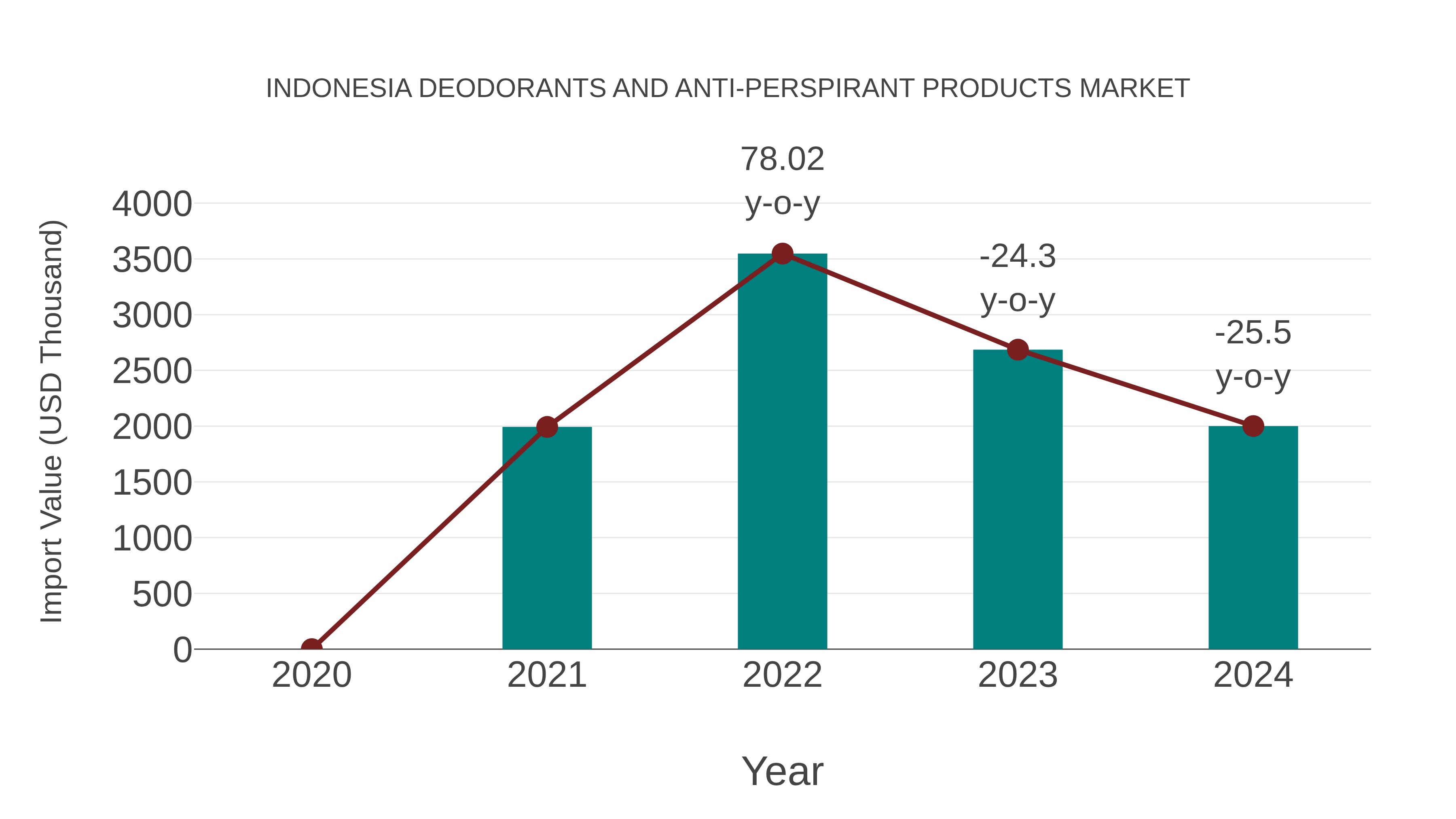
Indonesia`s import trend for deodorants and anti-perspirant products exhibited a decline in growth rate from 2023 to 2024, recording a decrease of -25.5%. The compound annual growth rate (CAGR) for the period of 2020-2024 stood at 0.13%. This decline could be attributed to shifting consumer preferences towards more natural or sustainable personal care products, impacting the demand for traditional deodorants and anti-perspirants in the market.
Indonesia Deodorants and Anti-Perspirant Products Market Synopsis
The Indonesia deodorants and anti-perspirant products market is expected to witness a steadyowing to the rising demand for personal hygiene products. The growing awareness among consumers regarding body odor and the importance of using fragrances are some of the key drivers driving thein this market. Moreover increasing disposable income coupled with changing lifestyle preferences has resulted in increased spending on premium quality deodorants and anti-perspirant products. Furthermore product innovation such as roll-on stick form or gel form deodorants that provide long lasting protection have also been largely contributing towards the market .
Key Factors Driving the Market
The rising awareness about body odor among people has led to an increase in demand for deodorants and anti-perspirant products as people seek ways to avoid unpleasant odors. This factor is one of the major drivers propelling theof this market across Indonesia. An increase in disposable income levels resulting from economic improvements has caused customers to spend more on premium quality deodorants and antiperspiration products available in various forms like sticks gels etc. thereby fueling their demand across Indonesia over recent years.
Challenges Facing the Market
Despite significant regulations by authorities against counterfeit goods these still remain present in the unorganized sector at lower prices than those offered by organized manufacturers leading to decreased salesdue to competition from fake goods which affects profits adversely. Thus the availability of counterfeit goods could be considered a challenge to the further expansion of this . Stringent regulations imposed by government agencies like Food Drug Administration (FDA) hinder entry into local markets which can make it difficult for new entrants into this space thus making it challenging for them to break even. Hence stringent policies need relaxation so as attract new players into thiswho can introduce innovative product offerings with better pricing models.
Key Highlights of the Report:
- Indonesia Deodorants and Anti-Perspirant Products Market Outlook
- Market Size of Indonesia Deodorants and Anti-Perspirant Products Market, 2023
- Forecast of Indonesia Deodorants and Anti-Perspirant Products Market, 2030
- Historical Data and Forecast of Indonesia Deodorants and Anti-Perspirant Products Revenues & Volume for the Period 2020-2030
- Indonesia Deodorants and Anti-Perspirant Products Market Trend Evolution
- Indonesia Deodorants and Anti-Perspirant Products Market Drivers and Challenges
- Indonesia Deodorants and Anti-Perspirant Products Price Trends
- Indonesia Deodorants and Anti-Perspirant Products Porter's Five Forces
- Indonesia Deodorants and Anti-Perspirant Products Industry Life Cycle
- Historical Data and Forecast of Indonesia Deodorants and Anti-Perspirant Products Market Revenues & Volume By Function for the Period 2020-2030
- Historical Data and Forecast of Indonesia Deodorants and Anti-Perspirant Products Market Revenues & Volume By Aerosol Spray for the Period 2020-2030
- Historical Data and Forecast of Indonesia Deodorants and Anti-Perspirant Products Market Revenues & Volume By Cream for the Period 2020-2030
- Historical Data and Forecast of Indonesia Deodorants and Anti-Perspirant Products Market Revenues & Volume By Roll-On for the Period 2020-2030
- Historical Data and Forecast of Indonesia Deodorants and Anti-Perspirant Products Market Revenues & Volume By Gel for the Period 2020-2030
- Historical Data and Forecast of Indonesia Deodorants and Anti-Perspirant Products Market Revenues & Volume By Ingredient for the Period 2020-2030
- Historical Data and Forecast of Indonesia Deodorants and Anti-Perspirant Products Market Revenues & Volume By Alcohol for the Period 2020-2030
- Historical Data and Forecast of Indonesia Deodorants and Anti-Perspirant Products Market Revenues & Volume By Antimicrobials for the Period 2020-2030
- Historical Data and Forecast of Indonesia Deodorants and Anti-Perspirant Products Market Revenues & Volume By Conditioner and Moisturizer for the Period 2020-2030
- Historical Data and Forecast of Indonesia Deodorants and Anti-Perspirant Products Market Revenues & Volume By Fragrances for the Period 2020-2030
- Historical Data and Forecast of Indonesia Deodorants and Anti-Perspirant Products Market Revenues & Volume By Paraben and Propellants for the Period 2020-2030
- Historical Data and Forecast of Indonesia Deodorants and Anti-Perspirant Products Market Revenues & Volume By Others for the Period 2020-2030
- Indonesia Deodorants and Anti-Perspirant Products Import Export Trade Statistics
- Market Opportunity Assessment By Function
- Market Opportunity Assessment By Ingredient
- Indonesia Deodorants and Anti-Perspirant Products Top Companies Market Share
- Indonesia Deodorants and Anti-Perspirant Products Competitive Benchmarking By Technical and Operational Parameters
- Indonesia Deodorants and Anti-Perspirant Products Company Profiles
- Indonesia Deodorants and Anti-Perspirant Products Key Strategic Recommendations






































