Indonesia Disinfectant Market: Import Trend Analysis
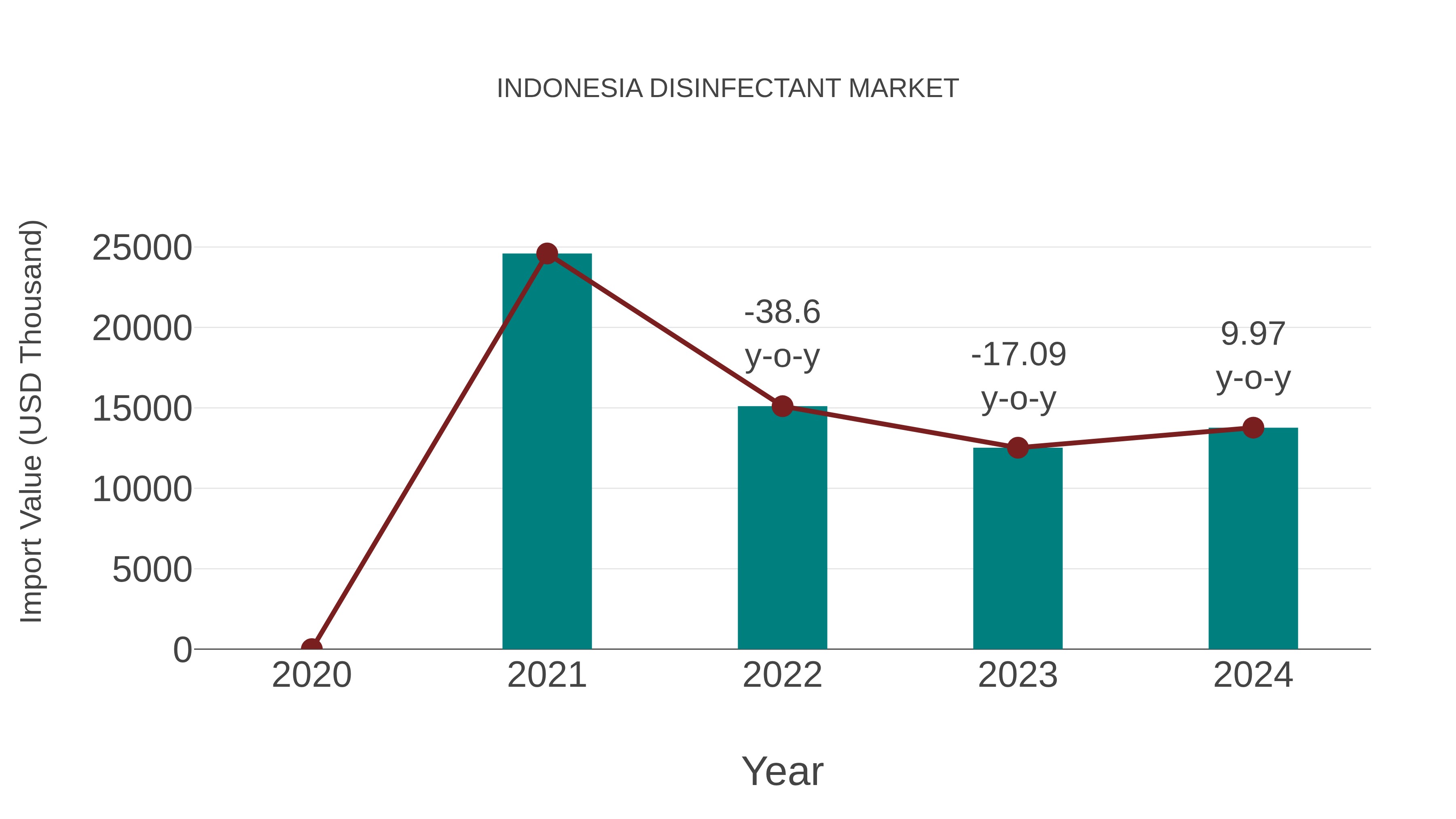
In the Indonesia disinfectant market, the import trend showed a growth rate of 9.97% from 2023 to 2024. However, the compound annual growth rate (CAGR) for imports from 2020 to 2024 was -17.58%. This decline could be attributed to shifts in demand dynamics or changes in trade policies affecting market stability.
Indonesia Disinfectant Market Overview
The Indonesia disinfectant market is experiencing significant growth driven by increasing awareness of hygiene and sanitation practices, particularly in response to the COVID-19 pandemic. Key players in the market are offering a wide range of products including sprays, wipes, and liquids targeting various surfaces and applications. The market is characterized by intense competition, with both local and international brands vying for market share. Factors such as rising disposable incomes, urbanization, and government initiatives promoting cleanliness are further fueling market growth. Additionally, the demand for eco-friendly and sustainable disinfectant products is on the rise, leading companies to innovate and introduce more environmentally friendly solutions. As the focus on health and hygiene continues to be a priority for consumers, the Indonesia disinfectant market is expected to witness continued expansion and diversification in the coming years.
Indonesia Disinfectant Market Trends
The disinfectant market in Indonesia is experiencing a surge in demand due to the ongoing COVID-19 pandemic. Consumers are increasingly prioritizing hygiene and sanitation, leading to a higher adoption of disinfectant products in households, public spaces, and commercial establishments. There is a growing preference for disinfectants that are effective against a wide range of germs, including viruses and bacteria. Eco-friendly and natural disinfectant options are also gaining popularity among environmentally conscious consumers. Manufacturers are focusing on developing innovative formulations, convenient packaging, and user-friendly application methods to cater to the evolving needs of the market. The market is expected to witness continued growth as awareness about the importance of cleanliness and disinfection remains high in the country.
Indonesia Disinfectant Market Challenges
In the Indonesia disinfectant market, there are several challenges that companies face. One major challenge is the presence of a wide range of products at varying price points, leading to intense competition and price wars. Additionally, there is a lack of standardized regulations and oversight in the market, which can result in inconsistent product quality and safety concerns for consumers. Distribution and logistics issues also pose challenges, particularly in reaching rural areas. Furthermore, the ongoing COVID-19 pandemic has increased demand for disinfectant products, putting pressure on manufacturers to meet the growing needs of consumers while also ensuring product efficacy and compliance with health guidelines. Overall, navigating these challenges requires companies to innovate, differentiate their products, and establish strong distribution networks to succeed in the Indonesia disinfectant market.
Indonesia Disinfectant Market Investment Opportunities
Investment opportunities in the Indonesia disinfectant market are promising due to the increasing awareness of hygiene and sanitation practices, driven by the ongoing COVID-19 pandemic. The market is expected to see significant growth with a rising demand for disinfectant products across various sectors such as healthcare, hospitality, and residential. Investors can capitalize on this trend by investing in manufacturing facilities for disinfectant products, distribution networks, or innovative technologies that enhance the effectiveness of disinfectants. Additionally, there is potential for partnerships with local businesses or government agencies to expand market reach. With a large population and a growing emphasis on cleanliness, the Indonesia disinfectant market offers attractive investment prospects for those looking to tap into the rising demand for hygiene products.
Indonesia Disinfectant Market Government Policy
The Indonesian government has certain regulations and policies in place related to the disinfectant market to ensure the safety and effectiveness of products. The National Agency of Drug and Food Control (BPOM) oversees the registration and approval of disinfectant products, requiring manufacturers to meet specific standards and guidelines. Additionally, the Ministry of Health provides guidelines on the proper use and handling of disinfectants to protect public health and prevent misuse. The government also imposes restrictions on the advertising and labeling of disinfectant products to prevent false claims and ensure transparency for consumers. Compliance with these regulations is essential for companies operating in the Indonesian disinfectant market to maintain product quality and safety standards.
Indonesia Disinfectant Market Future Outlook
The Indonesia disinfectant market is expected to experience significant growth in the coming years, driven by increasing awareness of hygiene and sanitation practices, particularly in response to the ongoing COVID-19 pandemic. With a growing emphasis on cleanliness in homes, workplaces, and public spaces, demand for disinfectant products is projected to rise. The market is also likely to benefit from government initiatives promoting health and safety measures, as well as the introduction of innovative disinfectant formulations that are effective against a wide range of pathogens. Furthermore, as the economy continues to recover and consumer spending power increases, the demand for premium and specialized disinfectant products is expected to grow, providing opportunities for market expansion and product diversification. Overall, the Indonesia disinfectant market is poised for robust growth in the foreseeable future.
Key Highlights of the Report:
- Indonesia Disinfectant Market Outlook
- Market Size of Indonesia Disinfectant Market,2025
- Forecast of Indonesia Disinfectant Market, 2032
- Historical Data and Forecast of Indonesia Disinfectant Revenues & Volume for the Period 2022-2032F
- Indonesia Disinfectant Market Trend Evolution
- Indonesia Disinfectant Market Drivers and Challenges
- Indonesia Disinfectant Price Trends
- Indonesia Disinfectant Porter's Five Forces
- Indonesia Disinfectant Industry Life Cycle
- Historical Data and Forecast of Indonesia Disinfectant Market Revenues & Volume By Product Type for the Period 2022-2032F
- Historical Data and Forecast of Indonesia Disinfectant Market Revenues & Volume By Alcoholbased for the Period 2022-2032F
- Historical Data and Forecast of Indonesia Disinfectant Market Revenues & Volume By Hydrogen Peroxide for the Period 2022-2032F
- Historical Data and Forecast of Indonesia Disinfectant Market Revenues & Volume By Quaternary Ammonium Compounds for the Period 2022-2032F
- Historical Data and Forecast of Indonesia Disinfectant Market Revenues & Volume By Application for the Period 2022-2032F
- Historical Data and Forecast of Indonesia Disinfectant Market Revenues & Volume By Surface Cleaning for the Period 2022-2032F
- Historical Data and Forecast of Indonesia Disinfectant Market Revenues & Volume By Wound Care for the Period 2022-2032F
- Historical Data and Forecast of Indonesia Disinfectant Market Revenues & Volume By Industrial Cleaning for the Period 2022-2032F
- Historical Data and Forecast of Indonesia Disinfectant Market Revenues & Volume By End Use for the Period 2022-2032F
- Historical Data and Forecast of Indonesia Disinfectant Market Revenues & Volume By Healthcare for the Period 2022-2032F
- Historical Data and Forecast of Indonesia Disinfectant Market Revenues & Volume By Pharmaceuticals for the Period 2022-2032F
- Historical Data and Forecast of Indonesia Disinfectant Market Revenues & Volume By Foodservice for the Period 2022-2032F
- Historical Data and Forecast of Indonesia Disinfectant Market Revenues & Volume By Form for the Period 2022-2032F
- Historical Data and Forecast of Indonesia Disinfectant Market Revenues & Volume By Liquid for the Period 2022-2032F
- Historical Data and Forecast of Indonesia Disinfectant Market Revenues & Volume By Gel for the Period 2022-2032F
- Historical Data and Forecast of Indonesia Disinfectant Market Revenues & Volume By Spray for the Period 2022-2032F
- Historical Data and Forecast of Indonesia Disinfectant Market Revenues & Volume By Distribution Channel for the Period 2022-2032F
- Historical Data and Forecast of Indonesia Disinfectant Market Revenues & Volume By Online Retail for the Period 2022-2032F
- Historical Data and Forecast of Indonesia Disinfectant Market Revenues & Volume By Offline Retail for the Period 2022-2032F
- Historical Data and Forecast of Indonesia Disinfectant Market Revenues & Volume By B2B Sales for the Period 2022-2032F
- Indonesia Disinfectant Import Export Trade Statistics
- Market Opportunity Assessment By Product Type
- Market Opportunity Assessment By Application
- Market Opportunity Assessment By End Use
- Market Opportunity Assessment By Form
- Market Opportunity Assessment By Distribution Channel
- Indonesia Disinfectant Top Companies Market Share
- Indonesia Disinfectant Competitive Benchmarking By Technical and Operational Parameters
- Indonesia Disinfectant Company Profiles
- Indonesia Disinfectant Key Strategic Recommendations






































