Indonesia Electric Housewares and Fans Market Summary
The indonesia electric housewares and fans market was estimated at USD 263 Million in 2025 and is projected to reach USD 346 Million by 2032, growing at a CAGR of 5.3% from 2026 to 2032.
Indonesia Electric Housewares and Fans Market Year-wise Growth Rate and Key Drivers
This graph highlights how the Indonesia Electric Housewares and Fans Market has steadily grown over the past five years, supported by major growth factors.
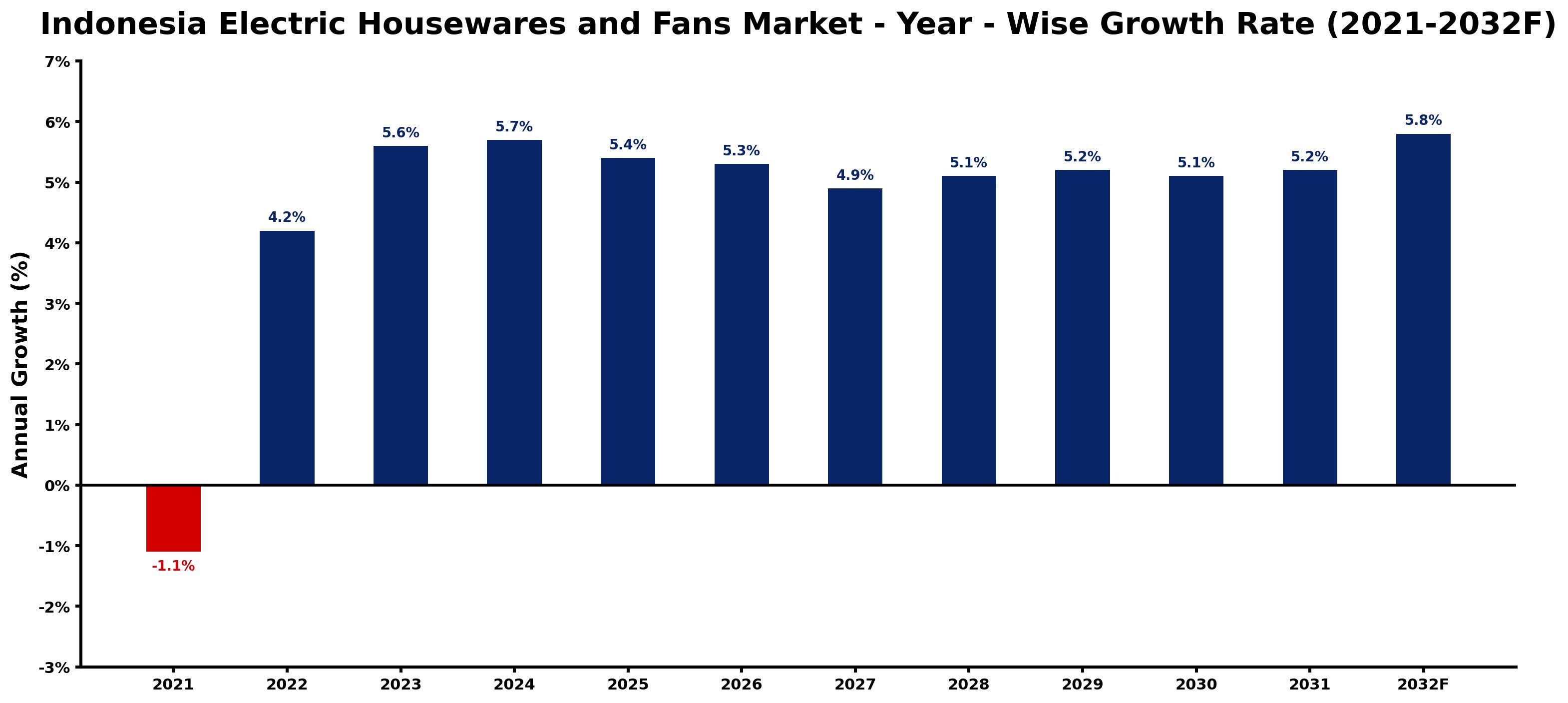
The table below presents the year wise growth rates along with the key drivers influencing the market
| Year | Growth Rate | Major Drivers |
| 2021 | -1.1% | Supply chain disruptions due to pandemicrelated restrictions hindered product availability, lowering consumer purchases significantly. |
| 2022 | 4.2% | E-commerce platforms expand rapidly, providing broader access to diverse houseware brands. |
| 2023 | 5.6% | Urbanization creates demand for stylish, compact appliances in metropolitan areas. |
| 2024 | 5.7% | Innovative product features attract tech-savvy millennials focused on energy efficiency. |
| 2025 | 5.4% | Increased disposable income encourages consumers to invest in premium electric fans. |
| 2026 | 5.3% | Sustainability trends lead manufacturers to design eco-friendly electric housewares. |
| 2027 | 4.9% | Home improvement projects surge as consumers prioritize comfort and aesthetics. |
| 2028 | 5.1% | Integration of smart technology enhances user experience, driving market competitiveness. |
| 2029 | 5.2% | Robust logistics networks facilitate swift distribution of household appliances across regions. |
| 2030 | 5.1% | Local manufacturers gain traction by launching culturally relevant and affordable products. |
| 2031 | 5.2% | Retail partnerships flourish, providing immersive shopping experiences for consumers. |
| 2032 | 5.8% | Growing middle class influences preferences towards high-quality, durable electric housewares. |
Note - Market size estimations and growth projections presented in this report are based on 6Wresearch's advanced forecasting approach, validated with industry datasets as of June 2026.
Indonesia Electric Housewares and Fans Market Synopsis
The Indonesia Electric Housewares and Fans Market is projected to reach 5.3% and witness significant growth during the forecast period (2026-2032). This growth trajectory is primarily driven by a combination of increasing disposable incomes, rising urbanization levels, and an expanding middle-class population. Moreover, there is a growing consumer awareness regarding the advantages of transitioning from inefficient manual appliances to modern electric housewares and fans. Additionally, governmental initiatives aimed at promoting energy efficiency and ongoing technological advancements are expected to provide a robust impetus for the adoption of contemporary electric appliances in Indonesia. The market is further buoyed by active participation from leading corporations that are fostering product innovations to cater to evolving consumer preferences.
Indonesia Electric Housewares and Fans Market Growth Drivers
Several critical drivers are shaping the Indonesia Electric Housewares and Fans Market:
- Increasing Disposable Incomes: With rising disposable incomes, consumers are gaining more spending power, allowing them to invest in durable goods like electric houseware devices and fans. This shift is expected to significantly enhance sales volumes across various categories during the forecast period.
- Rapid Urbanization Levels: The acceleration of urbanization in Indonesia is influencing lifestyle changes, leading to greater demand for modern conveniences such as electric kitchen appliances and cooling systems. This trend is expected to boost market growth as more consumers seek efficient solutions for their homes.
- Expanding Middle Class Population: The growth of the middle-class segment in Indonesia is directly linked to increased demand for luxury items like refrigerators and dishwashers. As affordability improves, consumers are more inclined to choose high-quality electrical appliances over traditional alternatives.
- Consumer Awareness: There's a heightened consumer awareness regarding the benefits of using energy-efficient electric products. This awareness is fueling the demand for advanced appliances that promise cost savings and enhanced functionality.
- Technological Advancements: Continuous innovations in technology are facilitating the introduction of smarter and more efficient electric housewares and fans. The incorporation of IoT and automation is particularly enhancing user experience and operational efficiency.
Indonesia Electric Housewares and Fans Market Challenges and Restraints
Despite the positive outlook for the Indonesia Electric Housewares and Fans Market, there are challenges that could hinder growth:
- High Initial Costs: The higher manufacturing costs associated with advanced electric appliances may deter price-sensitive consumers, affecting overall market penetration.
- Energy Accessibility: In certain regions, inconsistent electricity supply can limit the use of electric housewares and fans, particularly in more remote or rural areas.
- Competitive Market Landscape: The influx of various international brands creates a highly competitive environment, which may impact the pricing strategies and market share of local players.
- Regulatory Barriers: Strict regulations on energy efficiency and safety can pose challenges for manufacturers in terms of compliance and product development.
- Consumer Preferences: Shifting consumer preferences towards sustainable and eco-friendly products might compel traditional manufacturers to adapt quickly or risk losing market relevance.
Indonesia Electric Housewares and Fans Market Government Investment and Initiatives
The Indonesian government has undertaken numerous initiatives aimed at supporting the electric housewares and fans market. These initiatives focus on promoting energy efficiency and encouraging the adoption of modern appliances among consumers. Investments in infrastructure aimed at enhancing electrical coverage in rural areas are crucial in expanding the market reach for electric devices. Additionally, government incentives for energy-efficient appliances, including tax reductions and subsidies, are being implemented to foster consumer interest. Lastly, public campaigns aimed at raising awareness about the benefits of electric housewares are enhancing consumer engagement and driving market demand.
Indonesia Electric Housewares and Fans Market Latest Developments (May 2025 - June 2026)
Recent developments in the Indonesia Electric Housewares and Fans Market indicate a notable shift towards sustainability and innovation. Leading manufacturers are increasingly prioritizing energy-efficient designs to meet growing consumer demand for sustainable options. Additionally, the integration of smart technology into household appliances is gaining traction, offering users enhanced convenience and connectivity. Market participants are also exploring collaborations with tech firms to create multifunctional appliances that align with modern lifestyles. Furthermore, the government's ongoing investments in energy infrastructure are expected to facilitate greater accessibility to electric appliances, particularly in underserved areas.
Indonesia Electric Housewares and Fans Market - Key Attractiveness of the Report
- 10 Years of Market Numbers
- Historical Data Starting from 2022 to 2025
- Base Year: 2025
- Forecast Data until 2032
- Key Performance Indicators Impacting the Market
- Major Upcoming Developments and Projects
Key Highlights of the Report:
- Indonesia Electric Housewares and Fans Market Outlook
- Market Size of Indonesia Electric Housewares and Fans Market, 2025
- Forecast of Indonesia Electric Housewares and Fans Market, 2032F
- Historical Data and Forecast of Indonesia Electric Housewares and Fans Revenues & Volume for the Period 2022-2032F
- Indonesia Electric Housewares and Fans Market Trend Evolution
- Indonesia Electric Housewares and Fans Market Drivers and Challenges
- Indonesia Electric Housewares and Fans Price Trends
- Indonesia Electric Housewares and Fans Porter's Five Forces
- Indonesia Electric Housewares and Fans Industry Life Cycle
- Historical Data and Forecast of Indonesia Electric Housewares and Fans Market Revenues & Volume By Types for the Period 2022-2032F
- Historical Data and Forecast of Indonesia Electric Housewares and Fans Market Revenues & Volume By Housewares for the Period 2022-2032F
- Historical Data and Forecast of Indonesia Electric Housewares and Fans Market Revenues & Volume By Fans for the Period 2022-2032F
- Historical Data and Forecast of Indonesia Electric Housewares and Fans Market Revenues & Volume By Electric Fans Types for the Period 2022-2032F
- Historical Data and Forecast of Indonesia Electric Housewares and Fans Market Revenues & Volume By Ceiling Fans for the Period 2022-2032F
- Historical Data and Forecast of Indonesia Electric Housewares and Fans Market Revenues & Volume By Floor Fans for the Period 2022-2032F
- Historical Data and Forecast of Indonesia Electric Housewares and Fans Market Revenues & Volume By Wall-mounted Fans for the Period 2022-2032F
- Historical Data and Forecast of Indonesia Electric Housewares and Fans Market Revenues & Volume By Electric Housewares Types for the Period 2022-2032F
- Historical Data and Forecast of Indonesia Electric Housewares and Fans Market Revenues & Volume By Air purifiers for the Period 2022-2032F
- Historical Data and Forecast of Indonesia Electric Housewares and Fans Market Revenues & Volume By Blenders for the Period 2022-2032F
- Historical Data and Forecast of Indonesia Electric Housewares and Fans Market Revenues & Volume By Broilers for the Period 2022-2032F
- Historical Data and Forecast of Indonesia Electric Housewares and Fans Market Revenues & Volume By Hair curlers for the Period 2022-2032F
- Historical Data and Forecast of Indonesia Electric Housewares and Fans Market Revenues & Volume By Heaters for the Period 2022-2032F
- Historical Data and Forecast of Indonesia Electric Housewares and Fans Market Revenues & Volume By Toothbrushes for the Period 2022-2032F
- Historical Data and Forecast of Indonesia Electric Housewares and Fans Market Revenues & Volume By Others for the Period 2022-2032F
- Indonesia Electric Housewares and Fans Import Export Trade Statistics
- Market Opportunity Assessment By Types
- Market Opportunity Assessment By Electric Fans Types
- Market Opportunity Assessment By Electric Housewares Types
- Indonesia Electric Housewares and Fans Top Companies Market Share
- Indonesia Electric Housewares and Fans Competitive Benchmarking By Technical and Operational Parameters
- Indonesia Electric Housewares and Fans Company Profiles
- Indonesia Electric Housewares and Fans Key Strategic Recommendations






































