Indonesia Fashion Belt Market: Import Trend Analysis
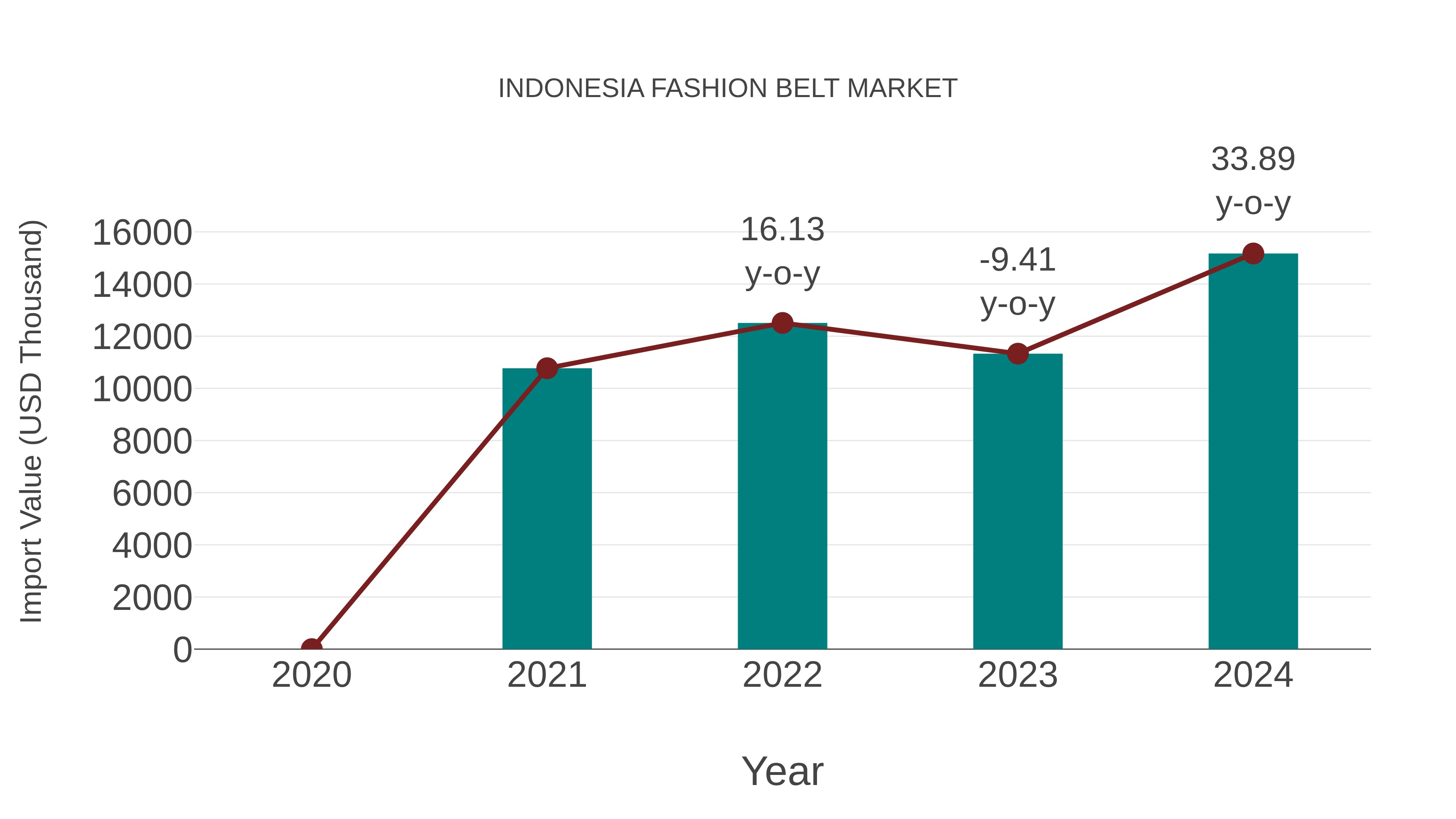
In the Indonesia fashion belt market, the import trend experienced significant growth from 2023 to 2024, with a growth rate of 33.89%. The compound annual growth rate (CAGR) for imports from 2020 to 2024 stood at 12.09%. This import momentum can be attributed to the increasing demand for fashion accessories in Indonesia, reflecting a positive market stability and consumer interest in fashion trends during this period.
Indonesia Fashion Belt MarketSynopsis
Indonesia fashion belt market is a rapidly growing industry, with an estimated annual turnover of almost USD 8 billion in 2025. The country has emerged as one of the top players in the global fashion belts market, due to its large population and rising consumer demand for fashionable accessories. This growth can be largely attributed to Indonesia strong economic performance over the last few years. Additionally, local brands have been leveraging technology and innovating new designs to provide consumers with more options.
Market Trends
The Indonesia fashion belt market is seeing increasing innovation when it comes to design trends. Local designers are creating innovative pieces that combine both traditional and modern influences. There is also an increasing popularity of eco-friendly materials such as hemp or bamboo being used for producing stylish yet sustainable products. Moreover, online shopping through e-commerce platforms has become popular among Indonesia consumers looking for trendy yet affordable items from around the globe, making these platforms key distribution channels for most manufacturers in this sector.
Market Drivers
Some key drivers responsible for driving growth in Indonesia fashion belts market include a robust economy leading to higher disposable income; urbanization; changing lifestyles; availability of international brands at competitive prices; increased number of malls and shopping outlets offering branded clothing lines; introduction of several online stores selling designer clothes at discounted rates; government initiatives such as industrial parks providing tax incentives encouraging investments in apparel manufacturing units etc.; rise in organized retailing coupled with promotional activities by retailers which further boosts sales figures etc.
COVID-19 Impact on the Market
The outbreak of COVID-19 pandemic had an adverse impact on the sales revenue generated by Indonesia fashion belt industry since March 2025 onwards due to imposition restrictions on movement which led to closureof physical stores thereby adversely affecting overall consumption patterns across categories including luxury goods like high end belts & buckles adding up additional pressure on already declining revenues during H1 2025 period. However, post August 2025 ,with gradual easing down restrictions & reopeningof shops there has been some recovery witnessedin revenues earned during Q4 FY21.
Challenges of the Market
Indonesia fashion belt market is highly competitive, with many domestic and international players vying for a share of the market. Due to competition in the market, profit margins are typically low as companies strive to remain competitive on price points and product offerings. Many fashion belt manufacturers in Indonesia rely heavily on established designs and lack creative new ideas or designs to stand out from competitors in the industry. As most Indonesia-made fashion belts are manufactured domestically, it can be difficult for them to reach newer markets such as Europe or North America due to cost concerns or logistical hurdles like shipping and customs requirements.
Industry Key Players
L&L International Group, Deon Leather, Fedrico Belt Co
Key Highlights of the Report:
- Indonesia Fashion Belt Market Outlook
- Market Size of Indonesia Fashion Belt Market, 2025
- Forecast of Indonesia Fashion Belt Market, 2032
- Historical Data and Forecast of Indonesia Fashion Belt Revenues & Volume for the Period 2022-2032F
- Indonesia Fashion Belt Market Trend Evolution
- Indonesia Fashion Belt Market Drivers and Challenges
- Indonesia Fashion Belt Price Trends
- Indonesia Fashion Belt Porter's Five Forces
- Indonesia Fashion Belt Industry Life Cycle
- Historical Data and Forecast of Indonesia Fashion Belt Market Revenues & Volume By Types for the Period 2022-2032F
- Historical Data and Forecast of Indonesia Fashion Belt Market Revenues & Volume By Grommet Belt for the Period 2022-2032F
- Historical Data and Forecast of Indonesia Fashion Belt Market Revenues & Volume By Chain Belt for the Period 2022-2032F
- Historical Data and Forecast of Indonesia Fashion Belt Market Revenues & Volume By Leather Belt for the Period 2022-2032F
- Historical Data and Forecast of Indonesia Fashion Belt Market Revenues & Volume By Others for the Period 2022-2032F
- Historical Data and Forecast of Indonesia Fashion Belt Market Revenues & Volume By Industry for the Period 2022-2032F
- Historical Data and Forecast of Indonesia Fashion Belt Market Revenues & Volume By Online Sales for the Period 2022-2032F
- Historical Data and Forecast of Indonesia Fashion Belt Market Revenues & Volume By Offline Sales for the Period 2022-2032F
- Indonesia Fashion Belt Import Export Trade Statistics
- Market Opportunity Assessment By Types
- Market Opportunity Assessment By Industry
- Indonesia Fashion Belt Top Companies Market Share
- Indonesia Fashion Belt Competitive Benchmarking By Technical and Operational Parameters
- Indonesia Fashion Belt Company Profiles
- Indonesia Fashion Belt Key Strategic Recommendations






































