Indonesia Fatty Acid Supplements Market: Import Trend Analysis
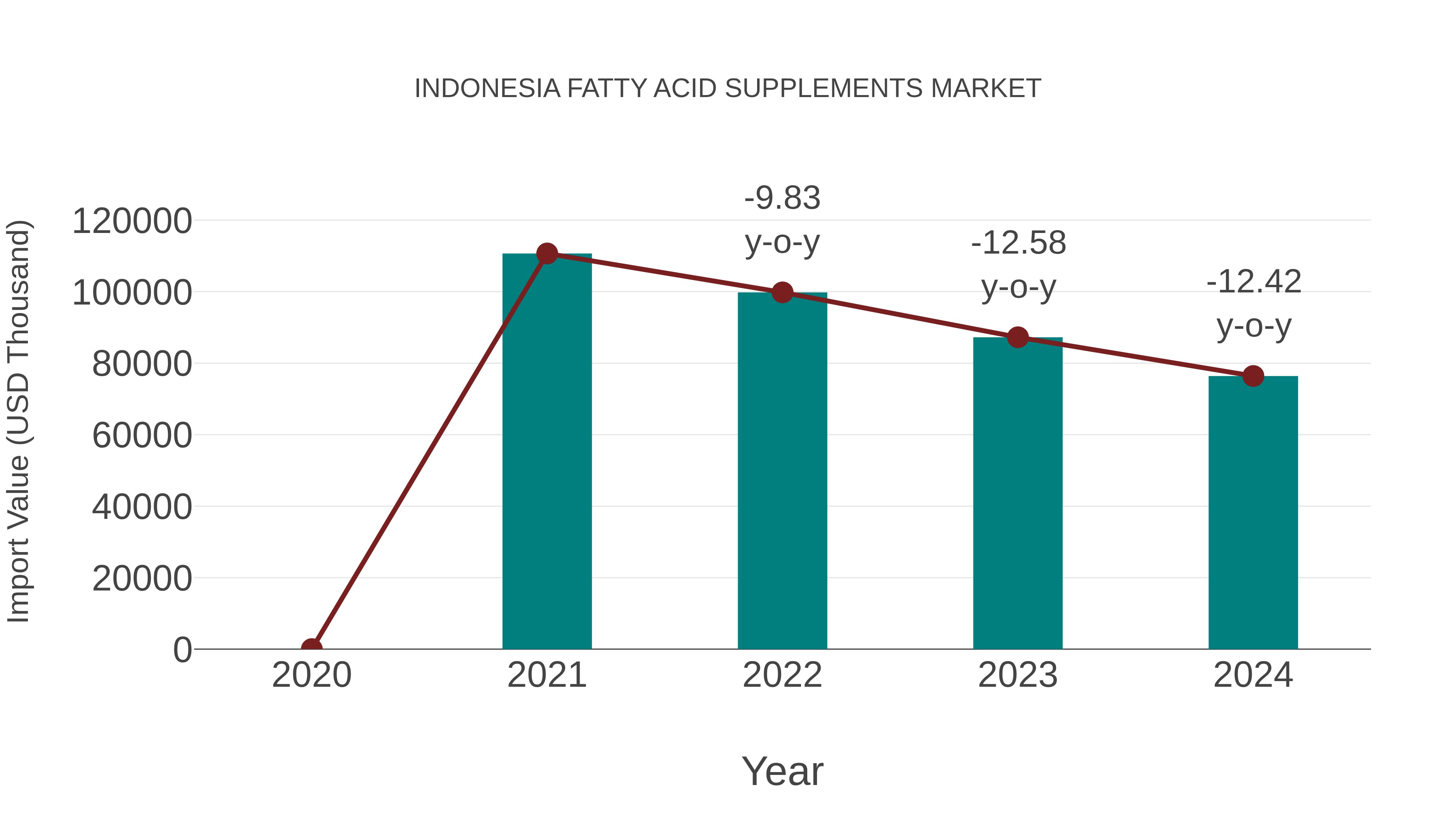
In the Indonesia fatty acid supplements market, the import trend experienced a decline in 2024, with a growth rate of -12.42% compared to the previous year. The compound annual growth rate (CAGR) for the period 2020-2024 was -11.62%. This negative import momentum could be attributed to shifting consumer preferences, regulatory changes, or market saturation impacting demand for these supplements.
Indonesia Fatty Acid Supplements Market Overview
The Indonesia fatty acid supplements market is experiencing steady growth driven by increasing consumer awareness about the benefits of omega-3 and omega-6 fatty acids for overall health and wellness. The market is primarily driven by factors such as rising disposable income, changing dietary habits, and a growing focus on preventive healthcare. Key players in the market are expanding their product offerings to cater to diverse consumer preferences and are investing in marketing and promotional activities to educate consumers about the importance of fatty acid supplements. The market is also witnessing a trend towards the use of natural and sustainable ingredients in these supplements. With a growing health-conscious population and a rising demand for nutritional supplements, the Indonesia fatty acid supplements market is poised for further growth in the coming years.
Indonesia Fatty Acid Supplements Market Trends
The Indonesia fatty acid supplements market is witnessing a growing demand for omega-3 and omega-6 fatty acids due to increasing awareness about the health benefits associated with these essential nutrients. Consumers are becoming more health-conscious and are looking for supplements that can help improve heart health, brain function, and overall well-being. There is also a rising interest in plant-based sources of fatty acids, such as algae and flaxseed oil, driven by the growing vegan and vegetarian population in Indonesia. Additionally, the market is seeing a surge in innovative product formulations, including flavored gummies, liquid supplements, and personalized dosage options to cater to diverse consumer preferences. As a result, manufacturers are focusing on expanding their product portfolios to meet the evolving needs of Indonesian consumers seeking high-quality fatty acid supplements.
Indonesia Fatty Acid Supplements Market Challenges
In the Indonesia fatty acid supplements market, some key challenges include a lack of consumer awareness and education about the benefits of fatty acids, particularly omega-3 and omega-6. This is compounded by the presence of counterfeit or low-quality products in the market, leading to mistrust among consumers. Additionally, regulatory hurdles and varying import regulations can pose challenges for companies looking to enter or expand in the market. Limited distribution channels and competition from traditional supplements and natural sources of fatty acids also impact the growth potential of the sector. Overcoming these challenges will require targeted marketing strategies, quality control measures, and partnerships with local stakeholders to build trust and credibility in the market.
Indonesia Fatty Acid Supplements Market Investment Opportunities
In the Indonesia fatty acid supplements market, there are promising investment opportunities driven by the increasing awareness among consumers about the importance of health and wellness. The rising prevalence of lifestyle-related diseases and the growing aging population in Indonesia have created a strong demand for fatty acid supplements, particularly omega-3 and omega-6 supplements. Additionally, the expanding middle-class population with higher disposable income levels is willing to invest in preventive healthcare products like fatty acid supplements. Investing in research and development to create innovative and differentiated products, as well as strategic marketing to educate consumers about the benefits of fatty acid supplements, could lead to significant growth opportunities in the Indonesia market. Partnering with local distributors and retailers to expand market reach and investing in digital marketing strategies to reach a wider audience could also be beneficial for investors looking to capitalize on the growing demand for fatty acid supplements in Indonesia.
Indonesia Fatty Acid Supplements Market Government Policy
In Indonesia, the government has implemented regulations and policies surrounding the fatty acid supplements market to ensure product safety and consumer protection. The National Agency of Drug and Food Control (BPOM) is responsible for regulating and overseeing the production, distribution, and advertising of dietary supplements, including fatty acid supplements. Companies looking to market these products must obtain marketing authorization from BPOM, which involves submitting product data, labeling information, and proof of compliance with quality and safety standards. Additionally, there are guidelines in place regarding the permissible ingredients and maximum dosage limits for fatty acid supplements to prevent potential harm to consumers. Compliance with these regulations is essential for companies operating in the Indonesian fatty acid supplements market to ensure product quality and safety for consumers.
Indonesia Fatty Acid Supplements Market Future Outlook
The future outlook for the Indonesia fatty acid supplements market appears promising, driven by increasing awareness about the health benefits of fatty acids such as omega-3 and omega-6 among consumers. Growing health consciousness, rising disposable income levels, and a shift towards preventive healthcare are expected to fuel market growth. Additionally, the expanding geriatric population and the prevalence of lifestyle-related diseases are likely to drive demand for fatty acid supplements as part of a healthy diet regimen. Market players are also focusing on product innovation, such as offering vegetarian or vegan options, to cater to changing consumer preferences. Overall, with a favorable regulatory environment and a growing emphasis on holistic wellness, the Indonesia fatty acid supplements market is poised for steady expansion in the coming years.
Key Highlights of the Report:
- Indonesia Fatty Acid Supplements Market Outlook
- Market Size of Indonesia Fatty Acid Supplements Market,2025
- Forecast of Indonesia Fatty Acid Supplements Market, 2032
- Historical Data and Forecast of Indonesia Fatty Acid Supplements Revenues & Volume for the Period 2022-2032F
- Indonesia Fatty Acid Supplements Market Trend Evolution
- Indonesia Fatty Acid Supplements Market Drivers and Challenges
- Indonesia Fatty Acid Supplements Price Trends
- Indonesia Fatty Acid Supplements Porter's Five Forces
- Indonesia Fatty Acid Supplements Industry Life Cycle
- Historical Data and Forecast of Indonesia Fatty Acid Supplements Market Revenues & Volume By Product Type for the Period 2022-2032F
- Historical Data and Forecast of Indonesia Fatty Acid Supplements Market Revenues & Volume By Omega-3 Fatty Acid Supplements for the Period 2022-2032F
- Historical Data and Forecast of Indonesia Fatty Acid Supplements Market Revenues & Volume By Omega-6 Fatty Acid Supplements for the Period 2022-2032F
- Historical Data and Forecast of Indonesia Fatty Acid Supplements Market Revenues & Volume By Medium-Chain Triglyceride Supplements for the Period 2022-2032F
- Historical Data and Forecast of Indonesia Fatty Acid Supplements Market Revenues & Volume By DHA Fatty Acid Supplements for the Period 2022-2032F
- Historical Data and Forecast of Indonesia Fatty Acid Supplements Market Revenues & Volume By Technology Type for the Period 2022-2032F
- Historical Data and Forecast of Indonesia Fatty Acid Supplements Market Revenues & Volume By Cold Press Extraction for the Period 2022-2032F
- Historical Data and Forecast of Indonesia Fatty Acid Supplements Market Revenues & Volume By Encapsulation Technology for the Period 2022-2032F
- Historical Data and Forecast of Indonesia Fatty Acid Supplements Market Revenues & Volume By Molecular Distillation for the Period 2022-2032F
- Historical Data and Forecast of Indonesia Fatty Acid Supplements Market Revenues & Volume By Microencapsulation for the Period 2022-2032F
- Historical Data and Forecast of Indonesia Fatty Acid Supplements Market Revenues & Volume By End User for the Period 2022-2032F
- Historical Data and Forecast of Indonesia Fatty Acid Supplements Market Revenues & Volume By Health Enthusiasts for the Period 2022-2032F
- Historical Data and Forecast of Indonesia Fatty Acid Supplements Market Revenues & Volume By Elderly Population for the Period 2022-2032F
- Historical Data and Forecast of Indonesia Fatty Acid Supplements Market Revenues & Volume By Athletes and Fitness Buffs for the Period 2022-2032F
- Historical Data and Forecast of Indonesia Fatty Acid Supplements Market Revenues & Volume By Pregnant Women and Infants for the Period 2022-2032F
- Historical Data and Forecast of Indonesia Fatty Acid Supplements Market Revenues & Volume By Application for the Period 2022-2032F
- Historical Data and Forecast of Indonesia Fatty Acid Supplements Market Revenues & Volume By Heart Health and Wellness Supplements for the Period 2022-2032F
- Historical Data and Forecast of Indonesia Fatty Acid Supplements Market Revenues & Volume By Joint Health and Anti-Inflammatory Uses for the Period 2022-2032F
- Historical Data and Forecast of Indonesia Fatty Acid Supplements Market Revenues & Volume By Weight Loss and Energy Boosting for the Period 2022-2032F
- Historical Data and Forecast of Indonesia Fatty Acid Supplements Market Revenues & Volume By Brain and Eye Development for Infants for the Period 2022-2032F
- Indonesia Fatty Acid Supplements Import Export Trade Statistics
- Market Opportunity Assessment By Product Type
- Market Opportunity Assessment By Technology Type
- Market Opportunity Assessment By End User
- Market Opportunity Assessment By Application
- Indonesia Fatty Acid Supplements Top Companies Market Share
- Indonesia Fatty Acid Supplements Competitive Benchmarking By Technical and Operational Parameters
- Indonesia Fatty Acid Supplements Company Profiles
- Indonesia Fatty Acid Supplements Key Strategic Recommendations






































