Indonesia Food Dehydrators Market Size, Share & Growth Rate
The Indonesia Food Dehydrators Market was estimated at USD 231 Million in 2025 and is projected to reach USD 308 Million by 2032, growing at a CAGR of 4.2% from 2026 to 2032. This growth trajectory can be attributed to the increasing awareness of food sustainability among consumers and the rising demand for home food preservation techniques. The growing trend of healthy eating, alongside the need to combat food wastage, is also propelling the adoption of dehydrators in both households and commercial settings.
Indonesia Food Dehydrators Market Year-wise Growth Rate and Key Drivers
This graph highlights how the Indonesia Food Dehydrators Market has steadily grown over the years, supported by major growth factors.
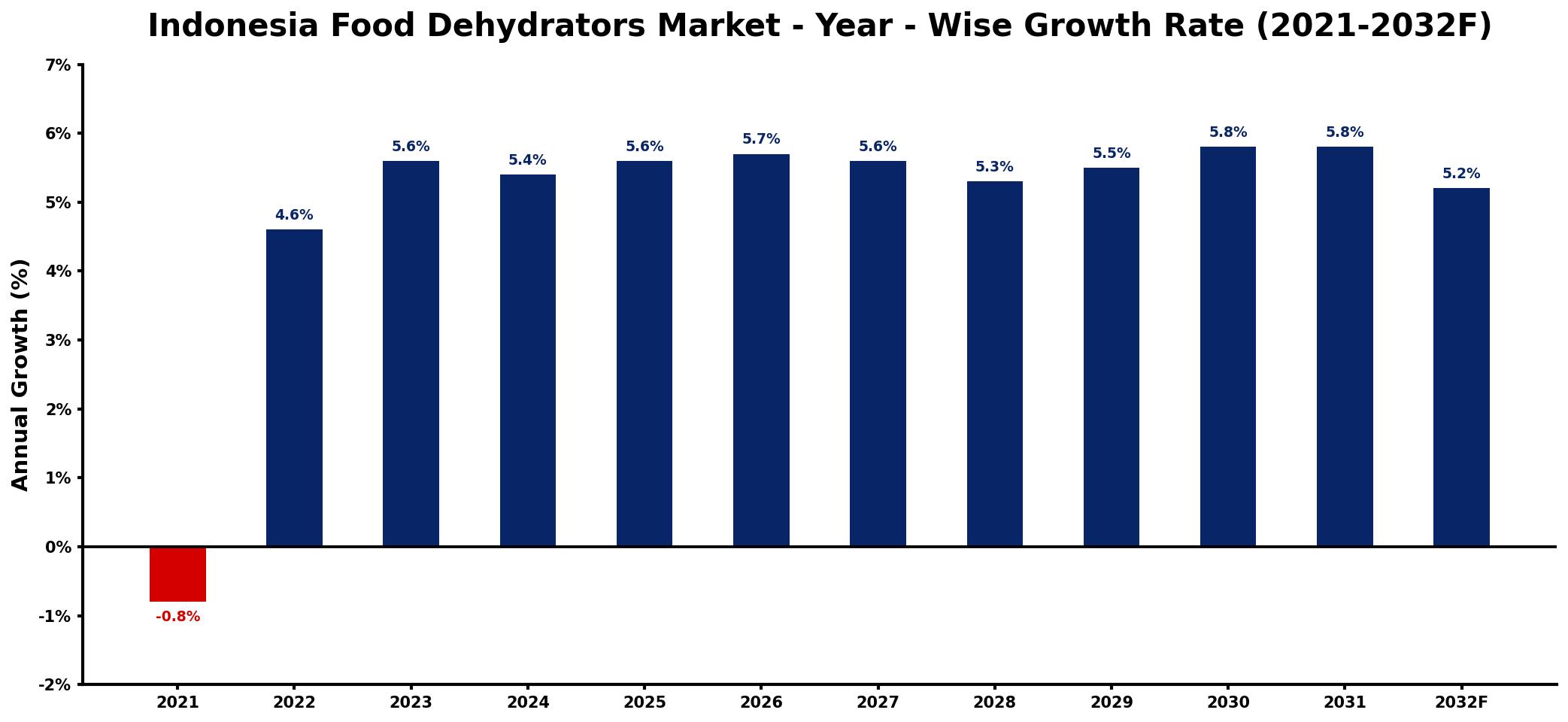
The table below presents the year‑wise growth rates along with the key drivers influencing the market
| Year | Growth Rate | Major Drivers |
| 2021 | -0.8% | decrease in consumer spending habits |
| 2022 | 4.6% | rise in health-conscious consumers |
| 2023 | 5.6% | increased demand for preservation methods |
| 2024 | 5.4% | growing interest in sustainable practices |
| 2025 | 5.6% | expansion of e-commerce platforms |
| 2026 | 5.7% | increased investments in kitchen technology |
| 2027 | 5.6% | higher awareness of nutritional benefits |
| 2028 | 5.3% | emphasis on homemade snacks trend |
| 2029 | 5.5% | growth in urban gardening initiatives |
| 2030 | 5.8% | surge in culinary experimentation culture |
| 2031 | 5.8% | increase in eco-friendly product offerings |
| 2032 | 5.2% | expanding manufacturing base activity |
Note: Market size estimations and growth projections presented in this report are based on 6Wresearch's proprietary forecasting methodology, utilizing the latest available industry data, government publications, and primary research inputs.
Indonesia Food Dehydrators Market Synopsis
A primary force shaping the Indonesia Food Dehydrators Market is the heightened consumer focus on food preservation methods that maximize the shelf life of perishable goods. This shift is largely driven by a combination of lifestyle changes, including the increased time spent at home and a greater inclination towards self-sufficiency in food preparation.
Furthermore, the COVID-19 pandemic catalyzed a surge in home cooking and preservation practices, making food dehydrators a more attractive investment for families and small businesses. As individuals seek convenience and long-term storage solutions, the market is poised to continue its expansion.
Indonesia Food Dehydrators Market Key Takeaways
- Strong growth projected, driven by a consumer shift towards food preservation.
- Increased awareness of health and sustainability propelling market demand.
- Household usage is on the rise, particularly in urban areas.
- Energy efficiency and affordability remain critical factors for consumers.
- The COVID-19 pandemic has accelerated the adoption of home food preservation practices.
Evaluation of Restraints in Indonesia Food Dehydrators Market
Despite the promising growth, several constraints hinder the Indonesia Food Dehydrators Market's full potential. High initial investment costs and concerns regarding energy consumption pose barriers to widespread adoption, particularly among lower-income households and small businesses. Additionally, the limited availability of affordable models could stymie growth in certain demographics, creating a gap between demand and accessibility that needs to be addressed.
Indonesia Food Dehydrators Market Trends
Emerging trends in the Indonesia Food Dehydrators Market include an uptick in technological advancements aimed at enhancing energy efficiency and user-friendliness. Smart dehydrators that integrate with mobile apps for monitoring and controlling dehydration processes are gaining traction. Moreover, a growing preference for natural and organic food preservation methods is driving innovation in dehydrator design, targeting health-conscious consumers.
Indonesia Food Dehydrators Market Opportunities
The Indonesian market presents various growth and investment opportunities, particularly in the development of affordable and energy-efficient dehydrators. Companies can capitalize on partnerships with local producers to create tailored products that meet regional consumer needs. Additionally, educational campaigns that emphasize the benefits of food preservation can further drive market penetration, opening avenues for both established brands and new entrants.
Government Initiatives in the Indonesia Food Dehydrators Market
The Indonesian government has been promoting food security and sustainability through various initiatives aimed at reducing food waste. Policies that support local food production and preservation methods are likely to enhance the demand for food dehydrators. Incentives for energy-efficient appliances could also play a role in encouraging both consumers and businesses to invest in dehydrators as part of their food processing efforts.
Future Insights of the Indonesia Food Dehydrators Market
Looking ahead to 2026-2032, the Indonesia Food Dehydrators Market is anticipated to witness steady growth, fueled by ongoing shifts in consumer behavior towards health, sustainability, and convenience. As technological advancements enhance product features and energy efficiency, consumer interest is expected to rise. The increasing trend of home cooking, coupled with growing concerns over food waste, positions the market well for sustainable expansion.
Indonesia Food Dehydrators Market Latest Developments (2025 - 2026)
Recent developments in the Indonesia Food Dehydrators Market have showcased a heightened focus on integrating smart technologies with traditional dehydrator designs. Innovations aimed at improving energy efficiency and ease of use have become more prominent. Additionally, local manufacturers are beginning to explore sustainable materials for production, aligning with global trends towards environmentally friendly appliances.
Indonesia Food Dehydrators Market - Key Attractiveness of the Report
- 10 Years of Market Numbers
- Historical Data Starting from 2022 to 2025
- Base Year: 2025
- Forecast Data until 2032
- Key Performance Indicators Impacting the Market
- Major Upcoming Developments and Projects
Key Highlights of the Report:
- Indonesia Food Dehydrators Market Outlook
- Market Size of Indonesia Food Dehydrators Market, 2025
- Forecast of Indonesia Food Dehydrators Market, 2032
- Historical Data and Forecast of Indonesia Food Dehydrators Revenues & Volume for the Period 2022-2032F
- Indonesia Food Dehydrators Market Trend Evolution
- Indonesia Food Dehydrators Market Drivers and Challenges
- Indonesia Food Dehydrators Price Trends
- Indonesia Food Dehydrators Porter's Five Forces
- Indonesia Food Dehydrators Industry Life Cycle
- Historical Data and Forecast of Indonesia Food Dehydrators Market Revenues & Volume By Technology for the Period 2022-2032F
- Historical Data and Forecast of Indonesia Food Dehydrators Market Revenues & Volume By Vertical Flow for the Period 2022-2032F
- Historical Data and Forecast of Indonesia Food Dehydrators Market Revenues & Volume By Horizontal Flow for the Period 2022-2032F
- Historical Data and Forecast of Indonesia Food Dehydrators Market Revenues & Volume By End-Use for the Period 2022-2032F
- Historical Data and Forecast of Indonesia Food Dehydrators Market Revenues & Volume By Industrial for the Period 2022-2032F
- Historical Data and Forecast of Indonesia Food Dehydrators Market Revenues & Volume By Commercial for the Period 2022-2032F
- Historical Data and Forecast of Indonesia Food Dehydrators Market Revenues & Volume By Residential for the Period 2022-2032F
- Historical Data and Forecast of Indonesia Food Dehydrators Market Revenues & Volume By Others for the Period 2022-2032F
- Historical Data and Forecast of Indonesia Food Dehydrators Market Revenues & Volume By Energy Source for the Period 2022-2032F
- Historical Data and Forecast of Indonesia Food Dehydrators Market Revenues & Volume By Electricity for the Period 2022-2032F
- Historical Data and Forecast of Indonesia Food Dehydrators Market Revenues & Volume By Biofuel for the Period 2022-2032F
- Historical Data and Forecast of Indonesia Food Dehydrators Market Revenues & Volume By Solar for the Period 2022-2032F
- Historical Data and Forecast of Indonesia Food Dehydrators Market Revenues & Volume By Others for the Period 2022-2032F
- Indonesia Food Dehydrators Import Export Trade Statistics
- Market Opportunity Assessment By Technology
- Market Opportunity Assessment By End-Use
- Market Opportunity Assessment By Energy Source
- Indonesia Food Dehydrators Top Companies Market Share
- Indonesia Food Dehydrators Competitive Benchmarking By Technical and Operational Parameters
- Indonesia Food Dehydrators Company Profiles
- Indonesia Food Dehydrators Key Strategic Recommendations






































